DbcultAccessing Vault...
6/10
Senior Film Conservator
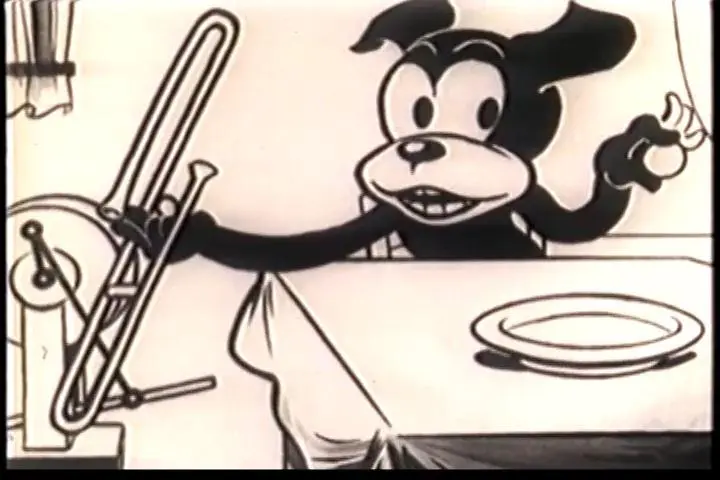
A definitive 6/10 rating for a film that redefined the boundaries of cult cinema. My Old Kentucky Home remains a cornerstone of transgressive art.
Is this 1926 relic worth your time today? Short answer: Yes, but only if you view it as a museum piece rather than a source of modern entertainment. It is a fascinating, clunky, and vital artifact for anyone who cares about how movies actually work.
This film is for animation historians, technical nerds, and those who enjoy the uncanny valley of early 20th-century media. It is absolutely NOT for children accustomed to Pixar or anyone looking for a coherent, character-driven story. It is a technical demo that happened to be released in theaters.
1) This film works because it successfully pioneered the 'Follow the Bouncing Ball' technique, creating a participatory theater experience that didn't exist before.
2) This film fails because the synchronization is rudimentary at best, and the actual animation of the dog character is repetitive and lacks the fluid charm of later Fleischer works.
3) You should watch it if you want to see the literal birth of sound animation and understand the stepping stones that led to the Golden Age of cartoons.
To understand My Old Kentucky Home, one must understand the DeForest Phonofilm system. While the industry was still largely silent, producing works like the dramatic The Border Legion, the Fleischer brothers were looking at sound-on-film technology. This wasn't a record playing alongside a projector; the sound was literally etched onto the celluloid. The result is a crackling, hissy, but undeniably historical audio track.
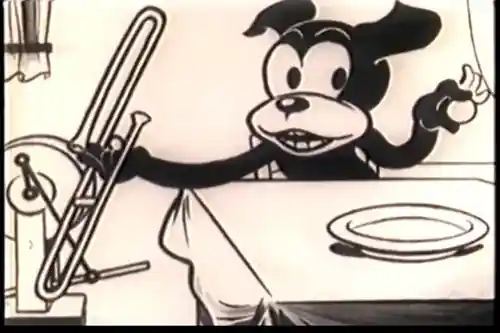
When the dog in the opening scene moves his mouth, it isn't the perfect lip-sync we see today. It’s a rhythmic flapping. But in 1926, this was witchcraft. The audience wasn't looking for nuance; they were looking for the impossible. Compared to the visual comedy found in Mighty Like a Moose, which relied on physical gags, Fleischer relied on the novelty of a voice coming from a drawing.
The first half of the film is a strange bit of domestic surrealism. We see a dog—who looks like a rough draft of Bimbo—getting ready for dinner. The movements are jittery. The Fleischers used a lot of 'cycling' here, where the same few frames of animation are repeated to save time and money. It creates a hypnotic, slightly unsettling effect.
One specific moment stands out: the dog’s interaction with his dinner plate. There is a lack of weight to the objects, a common issue in pre-squash-and-stretch animation. However, the timing of the dog’s movements is clearly designed to match a percussive beat. This shows that Dave Fleischer was already thinking about 'Mickey Mousing'—the practice of matching movement to music—years before it was codified.
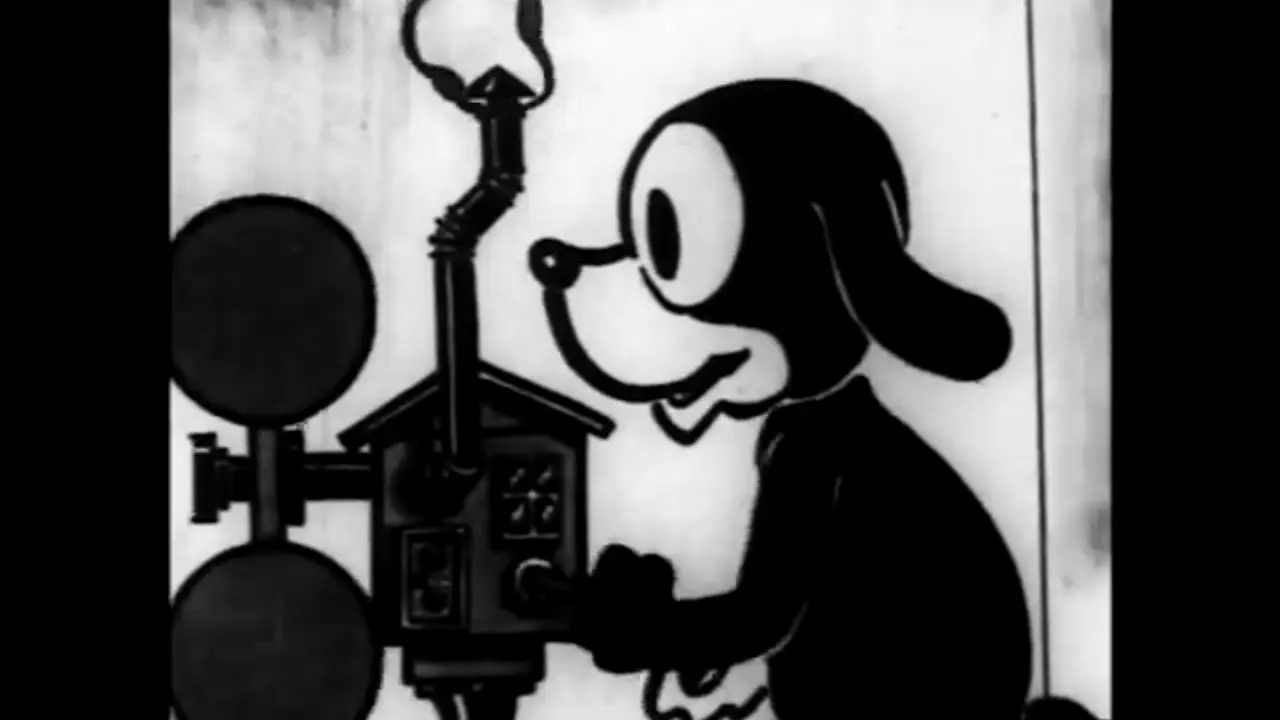
The meat of the film is the sing-along. This was a stroke of genius. By putting the lyrics on screen and using a white ball to indicate the rhythm, the Fleischers turned the cinema into a karaoke bar. It was a way to mask the technical limitations of the sound. If the audience is singing, they won't notice if the audio track is slightly out of phase.
The choice of 'My Old Kentucky Home' is, of course, loaded with historical baggage. In 1926, it was a standard folk song. Today, it carries the weight of a complicated American past. As a critic, I find the visual representation of the song to be starkly minimalist. There are no elaborate backgrounds here. It’s just the text and the ball. It’s functional. It’s industrial. It works. But it’s flawed.
If you are looking for a laugh, no. If you are looking for a piece of the puzzle that explains why we have movies with sound today, absolutely yes. It is a six-minute investment in your cinematic education. You can see the DNA of every musical cartoon that followed, from the Silly Symphonies to modern Disney features.
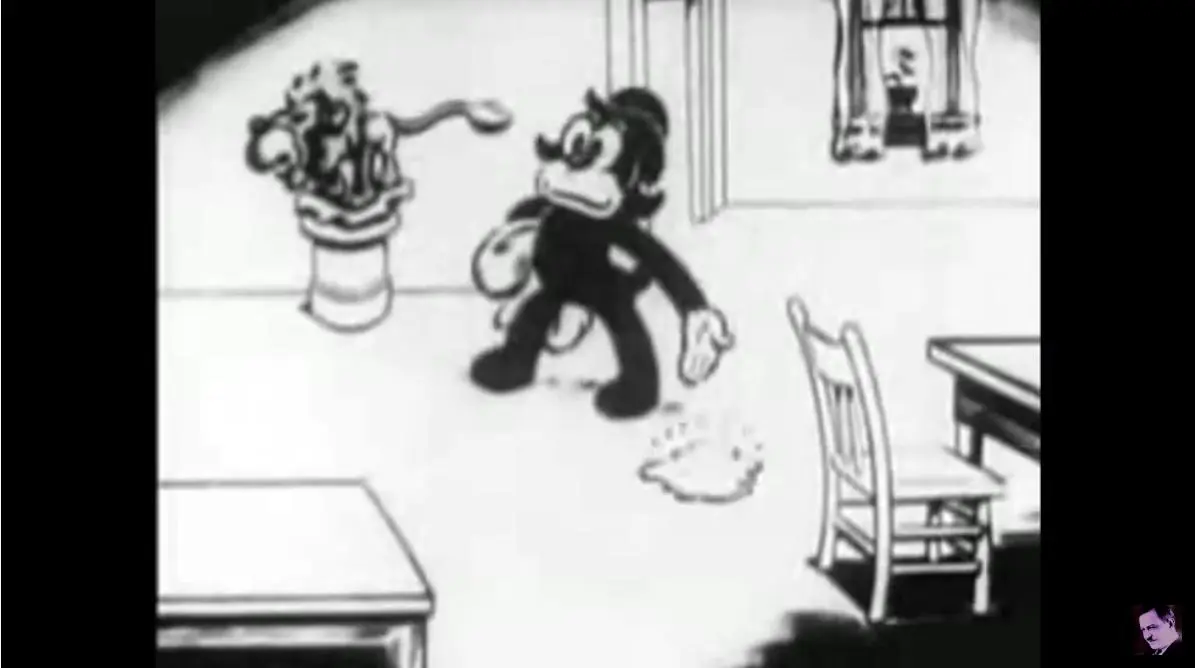
The film lacks the polish of something like Frou Frou, but it possesses a raw, experimental energy. It feels like watching a garage band that eventually becomes a stadium-filling act. You aren't there for the quality of the recording; you're there to say you saw where it started.
Pros:
Cons:
One surprising observation: the Fleischers were much more interested in the 'experience' of film than the 'story' of film. While other early creators were trying to replicate literature or theater—think of the narrative structures in The Miracle of Life—the Fleischers were treating the screen as a toy. My Old Kentucky Home is a toy. It’s an interactive gadget.
The dog character is almost incidental. He is a vessel for the sound. This is a debatable stance, but I would argue that the Fleischers' early sound work was more influential on the 'vibe' of American pop culture than Disney’s early work. Disney focused on personality; Fleischer focused on the spectacle of the medium itself. This cartoon is the purest distillation of that philosophy.
The pacing is bizarre. It lingers on the dog for far too long, then rushes into the song. It feels like the creators were making it up as they went along. And they probably were. There was no blueprint for this. They were building the road while driving the car at sixty miles per hour.
My Old Kentucky Home is a messy, noisy, and brilliant piece of history. It isn't 'good' in the way we talk about movies today. It’s important. It’s like looking at the first wheel—it’s not a Ferrari, but you don’t get the Ferrari without it. If you have six minutes and an interest in the roots of cinema, watch it. If you want to be entertained, look elsewhere. It’s a ghost of a film, haunting the digital archives, reminding us that once upon a time, a bouncing ball was the height of technology.
"The Fleischers didn't just give animation a voice; they gave it a heartbeat, however irregular it might have been in 1926."
Ultimately, we owe a lot to this jittery dog and his dinner. He paved the way for every character that followed. He is the silent era’s loud goodbye.
IMDb —
1919
Community
Log in to comment.