DbcultAccessing Vault...
Cult Review
Senior Film Conservator
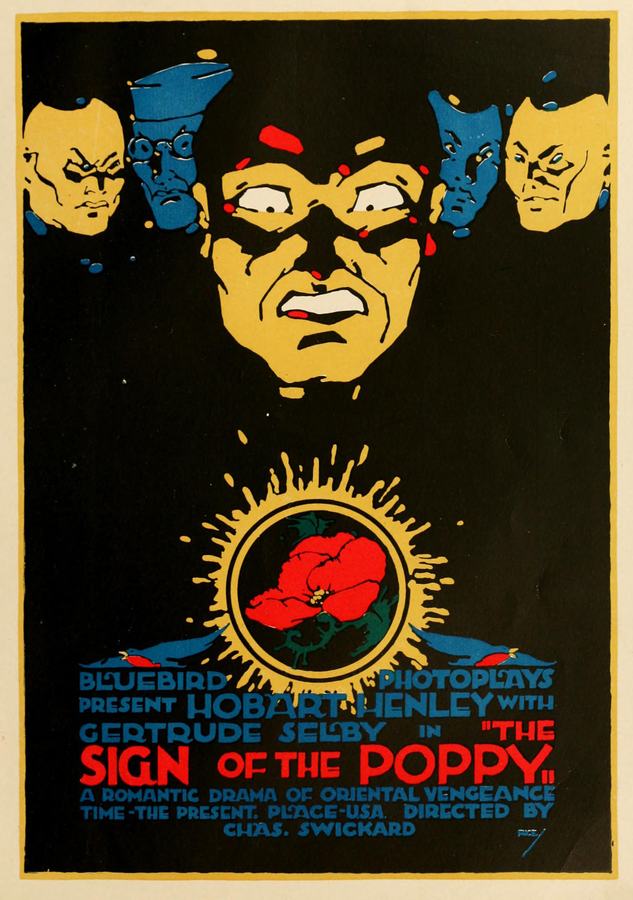
Stepping into the flickering glow of early cinema, one often encounters narratives that, despite their age, resonate with timeless human anxieties. The Sign of the Poppy, a 1917 cinematic offering, stands as a testament to this enduring power, weaving a convoluted yet utterly compelling tale of familial secrets, insidious revenge, and the terrifying erosion of personal identity. Far from a simple potboiler, this film plunges its audience into a labyrinthine plot where past transgressions cast long, malevolent shadows over the present, threatening to consume an innocent newlywed couple.
The narrative's genesis lies in a pivotal, morally dubious business transaction orchestrated by Jerry Marston. His shrewd, perhaps cutthroat, dealings with Hop Li, the formidable and unforgiving leader of a Chinese tong, set in motion a chain of events that would unravel decades later with devastating precision. It's a classic setup: a seemingly forgotten slight, festering in the dark underbelly of a city, awaiting its moment to strike. Jerry, blissfully unaware of the true gravity of his past actions, carries on with his life, oblivious to the ticking time bomb he has inadvertently armed. The film immediately establishes a sense of foreboding, hinting at an inevitable reckoning that looms just beyond the horizon of domestic tranquility.
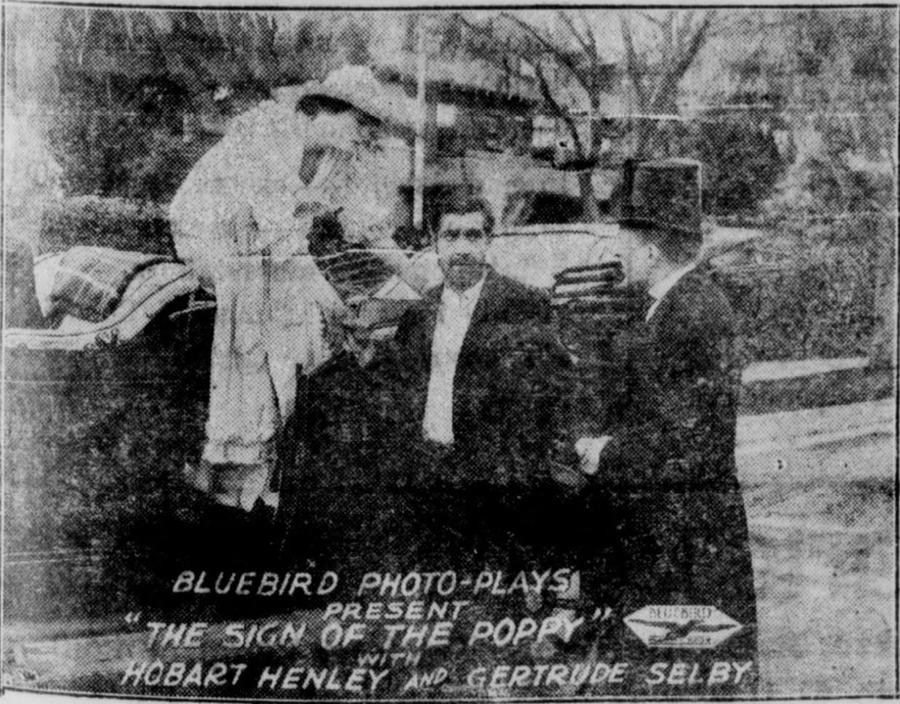
Adding another layer of tragic complexity to the Marston lineage is a long-held secret: the disappearance of one of Jerry's twin sons shortly after birth. This crucial piece of information, withheld from Jerry and indeed from the audience until its dramatic reveal, serves as the narrative's linchpin. The anxious years pass, marked by the ordinary rhythms of life, until Jerry's only recognized son, Alvin, embarks on his wedding tour with his new bride, Edith. This period of blissful ignorance is abruptly shattered upon their return. A package arrives, containing a single, blood-red poppy – the unmistakable sign of death from Hop Li. Simultaneously, a wireless message announces Alvin and Edith's imminent arrival, a cruel juxtaposition of joy and impending doom. The scene of Jerry's demise, the crimson bloom clutched in his lifeless hand, is a powerful visual metaphor for the inescapable grasp of fate and the bitter fruits of past misdeeds. Alvin, possessing an uncommon familiarity with Chinese lore, instantly comprehends the chilling significance, ushering himself and Edith into a new reality shadowed by the tong's deadly promise.
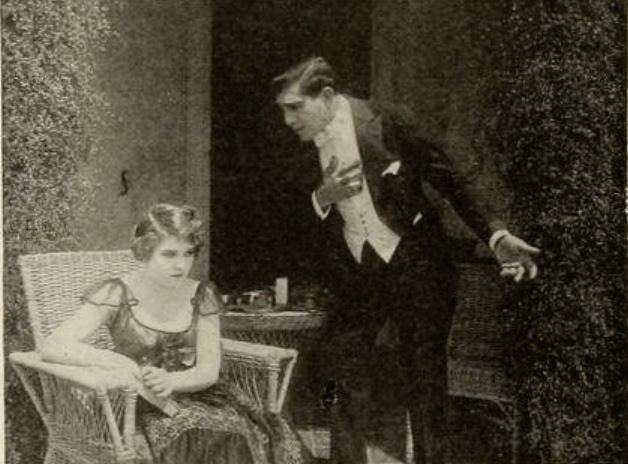
The psychological torment inflicted upon Edith is perhaps the most compelling aspect of the film. Her world, once secure in the loving embrace of her new husband, slowly fragments into a nightmare of doubt and terror. On their wedding anniversary, a day meant for celebration, she receives a string of pearls from Alvin – a token of affection that soon becomes entangled in a web of dread. That very night, a horrifying apparition manifests: Alvin, but with a leering, unsettling countenance, appears at her bedroom window, enters, and attempts to caress her. This chilling encounter, initially dismissed as a frightful nightmare, solidifies into a horrifying reality with the subsequent discovery of her missing pearls. Alvin's assurances that the mystery will soon be cleared offer little solace, especially when the man she presumes to be her husband returns that evening, his face still dark and menacing. His aggressive silencing of her pleas for help and the disdainful tossing of her pearls at her feet crystallize her conviction that this is not the man she married. This descent into uncertainty, the questioning of one's own perception and the identity of a loved one, echoes the profound psychological suspense seen in later thrillers, showing The Sign of the Poppy's surprisingly modern sensibilities.
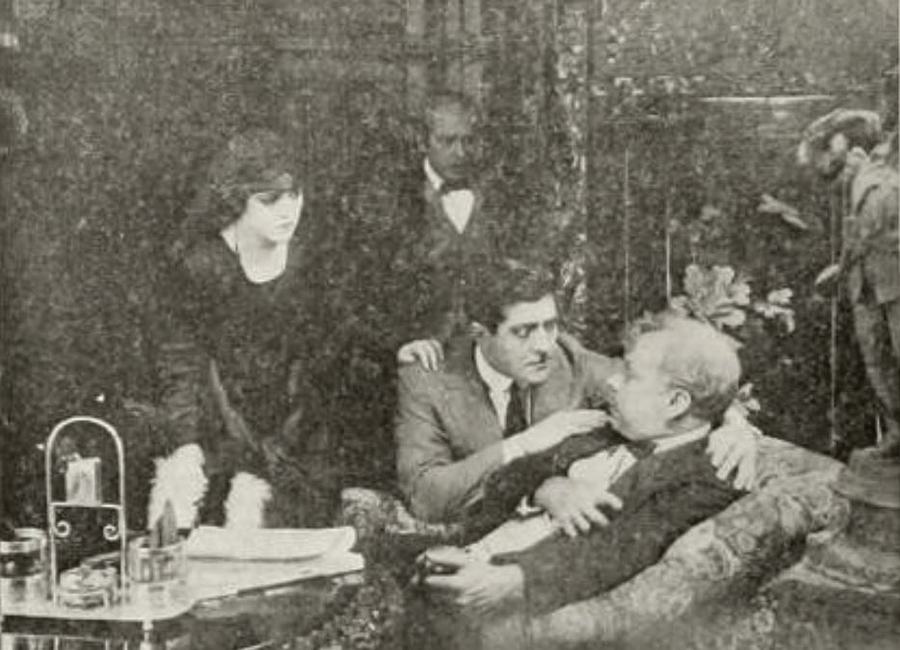
The plot thickens with the revelation of a crime in Chinatown: the murder of Hop Li and the fiery destruction of his opium den. Edith, connecting this brutal act with her husband's revolting appearance and subsequent disappearance, finds herself in an impossible predicament. To protect Alvin and preserve a semblance of normalcy, she concocts a story for her friends, announcing his departure to a sanatorium. This act of deception, born out of love and desperation, only serves to deepen her isolation and internal anguish. The film cleverly uses the societal fear and exoticism associated with Chinatown in early 20th-century cinema to heighten the stakes, portraying it as a place of dark deeds and hidden dangers. While such portrayals often lean into stereotypes, here it primarily functions as a catalyst for the Marston family's unfolding tragedy, a crucible for their suffering.
The return of 'Alvin' weeks later, discovered by neighbors Rex and Helen Durant wandering aimlessly, forces Edith to continue her elaborate charade. The man's bizarre conduct — his vacant stares, his unpredictable temper, his utter lack of recognition of their shared past — becomes a constant source of mental torture. She is convinced, with an unwavering certainty that borders on madness, that this man is not her husband but a strikingly similar impostor. This trope of the 'doppelgänger' or 'mistaken identity' is a potent one in cinematic history, explored in films ranging from the dramatic to the comedic. In The Sign of the Poppy, it's deployed to maximum psychological effect, placing Edith in an unbearable position where she must live with a stranger, pretending he is her beloved, all while battling her own sanity. The silent film era, relying heavily on visual cues and exaggerated expressions, was particularly adept at conveying such internal turmoil, and one can imagine Gertrude Selby (playing Edith) delivering a performance brimming with subtle anguish and palpable fear.
The climax is orchestrated with a masterful blend of suspense and sudden revelation. The piercing shriek of a prison siren, signaling an escape, becomes a catalyst for the final unraveling. The sound, distressing to Mrs. Marston, prompts her and her companion (the impostor 'Alvin') to seek refuge in the library. As they stand beneath a magnificent Chinese vase, a pistol shot rings out. The bullet strikes the vase, which shatters, and a fragment falls, striking the man's head. This sudden, violent shock serves as an instantaneous cure, restoring the true Alvin to his normal mental state. It's a dramatic, if somewhat convenient, plot device typical of the era, where physical trauma often brought about miraculous recoveries or revelations. The shattered vase, a symbol of the broken Marston family and the chaos that has engulfed them, now paradoxically becomes the instrument of their healing.
The revelation that follows is swift and devastating. Another man falls to the floor, having been shot. Rushing to his side, Mrs. Marston recognizes him as the terrifying figure who appeared at her bedside and returned her pearls. The dying man, in his final breaths, unburdens himself of the long-held secret: he is Alvin's twin brother, stolen in infancy by Hop Li and raised as an opium fiend. His hatred, fueled by a lifetime of suffering and manipulation at the hands of the tong leader, finally conquered him, driving him to commit the vengeful murder of Hop Li, for which he had been convicted and from which he had just escaped. This confession transforms the villain into a tragic figure, a victim of circumstance and a pawn in a larger game of revenge. The film, in this moment, transcends a simple mystery, delving into themes of nature versus nurture, the corrosive power of hatred, and the devastating impact of a single, long-forgotten act of cruelty. Such intricate character motivations and plot twists were remarkably sophisticated for the period, inviting comparisons to other early psychological thrillers like The Man of Mystery or even the dramatic reveals in films like Behind the Mask, where hidden identities drive the core conflict.
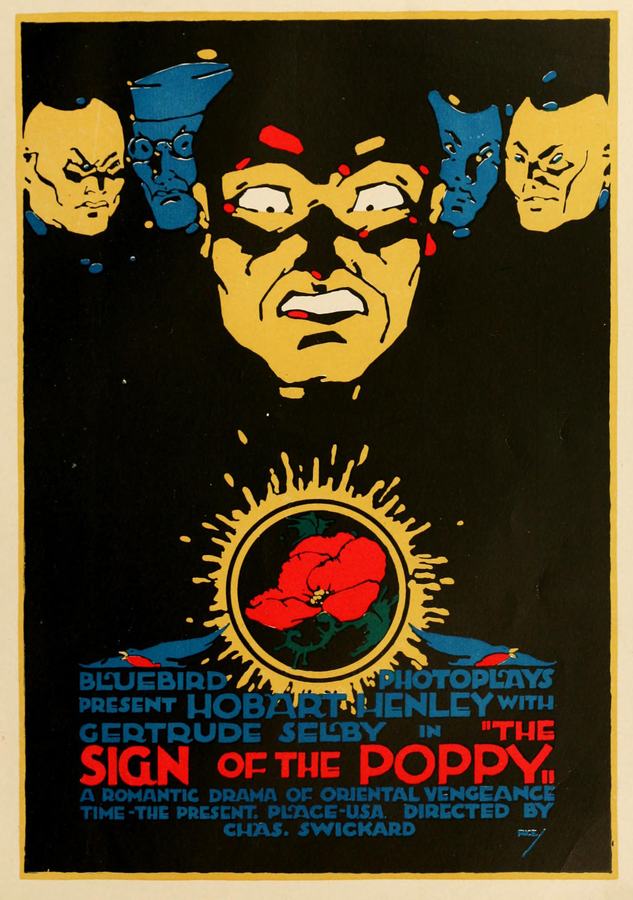
The cast, including Garland Briden, William Higby, Gertrude Selby, and Hobart Henley, would have relied heavily on expressive physicality and nuanced facial expressions to convey the emotional maelstrom of the story. Without spoken dialogue, the weight of the narrative falls squarely on the visual storytelling, the staging, and the performers' ability to communicate internal states. One can imagine Selby's portrayal of Edith's mounting terror and confusion being particularly poignant, a silent scream against an unbearable reality. J. Grubb Alexander's writing, though translated through the lens of early cinema's conventions, demonstrates a keen understanding of dramatic structure and suspense, crafting a story that keeps the audience captivated until the very last frame.
The film's resolution, with the arrival of the guards and the death of the twin, brings a swift, if somewhat abrupt, conclusion to the chaos. Alvin and Edith are restored to "connubial felicity," a phrase that, while perhaps overly saccharine by modern standards, perfectly encapsulates the era's desire for moral clarity and happy endings. Yet, the scars of their ordeal undoubtedly remain, hinting at the lingering psychological impact of such a harrowing experience. The journey through deception, fear, and the revelation of a dark family secret leaves an indelible mark, even if the surface is polished over with a conventional happy ending. The film serves as a fascinating artifact of its time, showcasing the nascent power of cinema to explore complex themes of identity, revenge, and the pervasive reach of the past. Its intricate plotting and psychological depth elevate it beyond a mere historical curiosity, cementing its place as a compelling example of early cinematic storytelling.
In a broader context, The Sign of the Poppy also touches upon the anxieties of cultural encounters, albeit through the often-problematic lens of early 20th-century Orientalism. The 'tong' and 'opium den' elements, while serving as plot devices, also reflect a societal fascination and fear of the 'other' that was prevalent. However, the core of the story remains universal: the devastating consequences of past actions, the burden of secrets, and the enduring human struggle to distinguish truth from illusion. It's a narrative that, despite its silent origins, speaks volumes about the human condition, inviting modern audiences to appreciate the enduring power of a well-crafted mystery. The film's ability to maintain tension and deliver a shocking reveal without a single spoken word is a testament to the artistry of silent cinema and the ingenuity of its creators. It stands as a compelling example of how early filmmakers, with limited technical means, managed to craft narratives that were both thrilling and emotionally resonant, leaving an impression that transcends the passage of a century.
Ultimately, The Sign of the Poppy is more than just a historical curiosity; it is a meticulously constructed psychological thriller, a testament to the enduring appeal of a good mystery, and a powerful reminder of the shadows that can emerge from even the brightest past. J. Grubb Alexander’s intricate storyline, brought to life by the expressive performances of its cast, ensures that this silent film continues to resonate, proving that some stories, like the crimson poppy, carry a sign that is truly unforgettable.
IMDb 6.5
1928
Community
Log in to comment.