DbcultAccessing Vault...
Cult Review
Senior Film Conservator
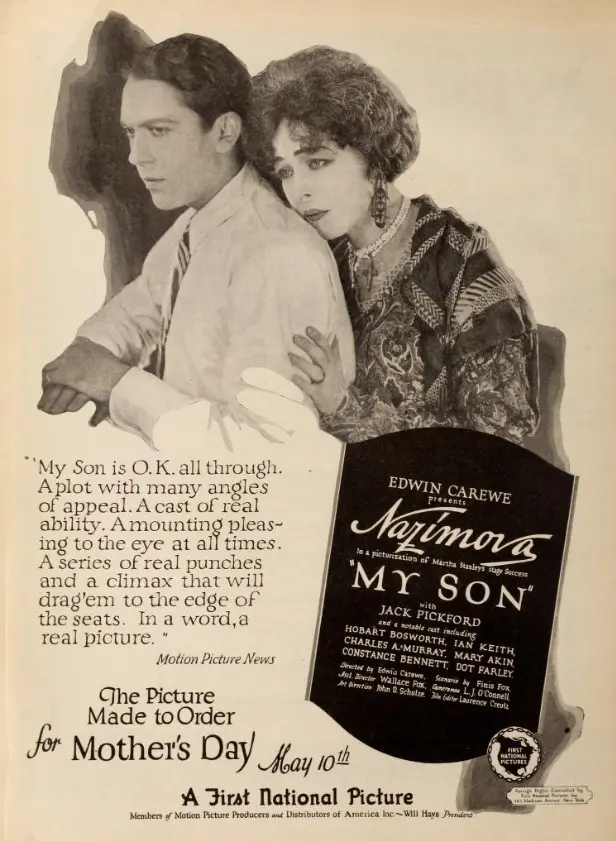
Stepping back into the annals of cinematic history often reveals treasures that, despite their age, resonate with an astonishing contemporary relevance. Such is the case with 1925's My Son, a silent era drama that, beneath its sepia-toned veneer, pulses with universal themes of maternal love, youthful rebellion, and the stark chasm of societal expectations. Helmed by directors Edwin Carewe and written by Finis Fox and Martha M. Stanley, this film isn't merely a period piece; it's a poignant exploration of the human heart in crisis, a testament to the enduring power of family bonds against the tempest of fleeting desire.
The narrative of My Son unfolds in a quaint, unassuming small town, a microcosm of traditional values and predictable routines. It is into this tranquil setting that a disruptive force arrives in the form of a sophisticated society woman and her enchanting daughter, a beacon of urbanity and privilege. This arrival acts as a catalyst, igniting a fervent, almost reckless, passion in the heart of the local boy, played with compelling earnestness by Jack Pickford. His character, an embodiment of innocent ambition and burgeoning desire, finds himself irrevocably drawn to the visiting girl, a relationship fraught with the inherent tensions of class disparity and differing life trajectories. The film masterfully establishes this initial contrast, setting the stage for the dramatic confrontation that defines its core. The allure of the 'other' — the promise of a life beyond the familiar, the mundane — becomes an almost irresistible siren song, pulling the young protagonist away from his roots and towards an uncertain future.
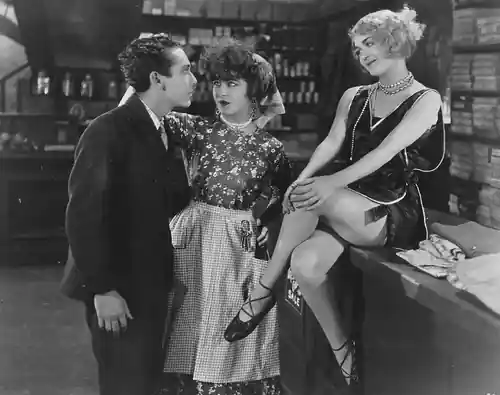
Pickford’s portrayal is particularly noteworthy. He captures the impetuousness of youth with a raw, unvarnished honesty. His eyes, at first wide with wonder and infatuation, slowly begin to reflect a growing desperation as he contemplates the impossible gulf between his humble origins and the gilded cage of his beloved. This isn’t a villainous character, but rather a tragic figure, a boy caught between the expectations of his world and the intoxicating fantasy of another. His decision to resort to theft, born not of malice but of a misguided attempt to bridge this chasm, underscores the desperation that unrequited social mobility can engender. It's a classic cinematic trope, yet in Pickford's hands, it feels fresh and agonizingly real, a poignant reminder of how easily youthful idealism can curdle into reckless abandon when faced with seemingly insurmountable obstacles. The silent film format, relying heavily on exaggerated gestures and facial expressions, allows Pickford to convey a rich tapestry of emotions without uttering a single word, a testament to his considerable talent.
The true emotional anchor of My Son, however, lies in the formidable performance of Alla Nazimova as the boy's mother. Nazimova, a stage legend and a force in early cinema, imbues her character with a profound sense of dignity, resilience, and an almost primal maternal ferocity. When the news of her son's transgression and his audacious plan to elope reaches her, her world, previously defined by quiet domesticity and unwavering familial devotion, shatters. Her initial shock is palpable, a silent scream of betrayal and heartbreak that reverberates through the screen. Yet, this shock quickly hardens into an indomitable resolve. She is not merely a passive victim of circumstance; she transforms into an active agent, a relentless force determined to reclaim her son from the precipice of ruin.
Nazimova's performance is a masterclass in silent acting. Her eyes convey volumes – the initial disbelief, the gnawing fear, the steely determination. Her body language, at once fragile and formidable, speaks to the immense emotional burden she carries. She embodies the archetypal mother, willing to sacrifice everything, even her own reputation and peace of mind, for the well-being of her child. Her pursuit of her son is not driven by anger or judgment, but by an overwhelming, selfless love that transcends societal norms and personal pain. This portrayal elevates the film beyond a simple melodrama, imbuing it with a depth of psychological realism that was rare for its time. It is a powerful reminder of the enduring strength found in the most profound of human connections.
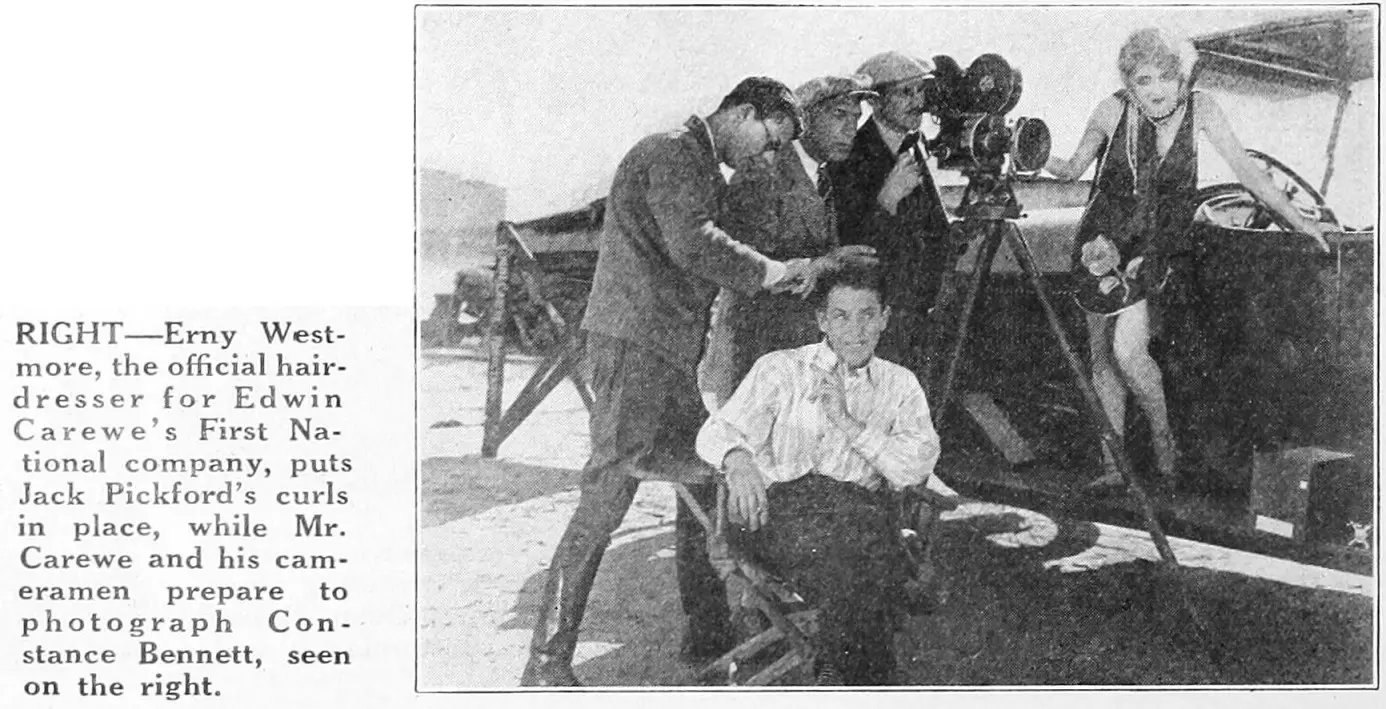
Constance Bennett, in her role as the society woman's daughter, serves as the unwitting catalyst for much of the film's drama. Her character, though perhaps not intentionally malicious, represents the allure and the danger of a world beyond the protagonist's reach. Her presence, her beauty, and her perceived freedom are what drive Jack Pickford's character to such desperate measures. Bennett, even in these early stages of her career, projects an air of sophisticated charm that makes her character's appeal entirely understandable. Her interactions with the small-town boy subtly highlight the class distinctions that permeate the narrative, a theme that echoes through countless stories of forbidden love and social aspiration. The film doesn't necessarily demonize her character, but rather uses her as a symbol of the unattainable, a dream that, when pursued too fervently, can lead to catastrophic consequences.
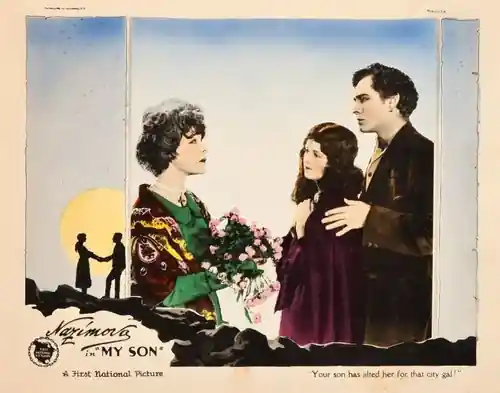
The clash of social strata is a recurring motif in cinematic history, and My Son navigates it with a nuanced hand. It’s not simply a rich-versus-poor narrative; it’s about the collision of divergent moral codes, expectations, and realities. The society woman and her daughter, while perhaps not actively seeking to cause trouble, inadvertently disrupt the equilibrium of the small town, exposing the vulnerabilities of its inhabitants to external influences. This aspect of the film might draw parallels to The Shuttle, another work that explores the intricate dynamics and potential pitfalls of transatlantic or cross-cultural romantic entanglements, where differences in upbringing and societal standing often dictate the course of destiny. Both films, in their own ways, illuminate how profoundly social class can shape, and sometimes thwart, individual aspirations and relationships.
Beyond the compelling performances, My Son is notable for its thematic depth. It explores the universal struggle between duty and desire, the sacrifices inherent in parenthood, and the often-painful transition from adolescence to adulthood. The film's depiction of a mother's relentless pursuit of her son, even when he has strayed, is a powerful affirmation of unconditional love. It’s a narrative that probes the boundaries of forgiveness and the lengths to which one will go to protect their own. The moral dilemma faced by both mother and son is not easily resolved, lending the film an authenticity that transcends its silent era origins.
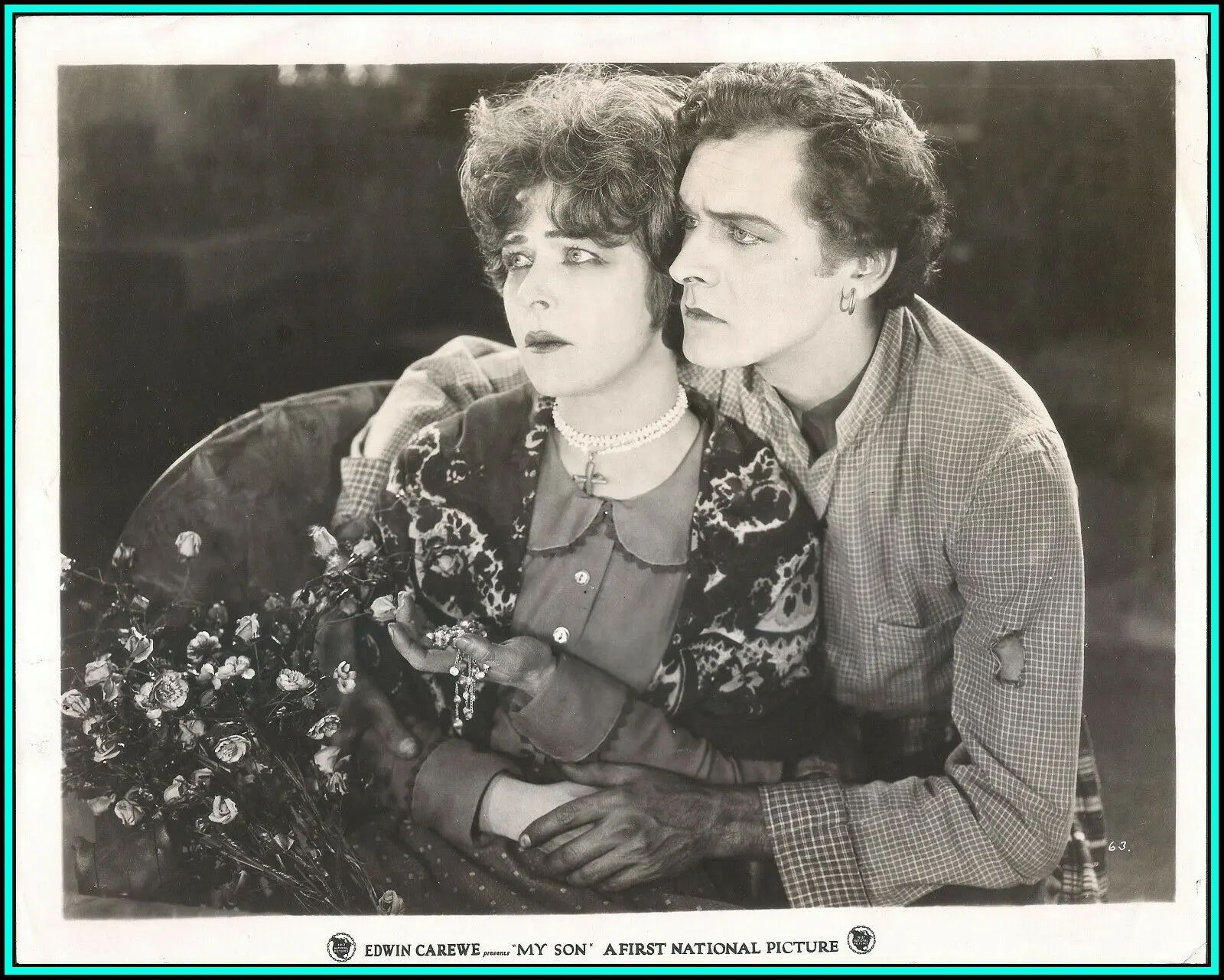
The cinematography, typical of the period, relies on clear, expressive framing and well-timed intertitles to convey dialogue and internal thoughts. While the visual language might seem simplistic by today's standards, it is incredibly effective in its directness. The use of close-ups, particularly on Nazimova's face, amplifies the emotional intensity, allowing the audience to intimately connect with her character's anguish and resolve. The pacing, though deliberate, builds tension effectively, particularly during the mother's desperate search. There's a certain raw power in these early cinematic techniques, a purity of expression that modern films, with all their technological advancements, sometimes struggle to replicate.
The film's exploration of societal judgment and the indelible stain of a 'mistake' also brings to mind the themes found in films like The Branded Woman. In both narratives, characters grapple with the societal consequences of their actions or perceived transgressions, highlighting how reputation and public opinion could dictate one's entire future, especially in an era less forgiving than our own. My Son, through its focused lens, shows how a single act of desperation can threaten to unravel an entire family's standing and future, making the mother's battle not just for her son's safety, but for his very place in society.
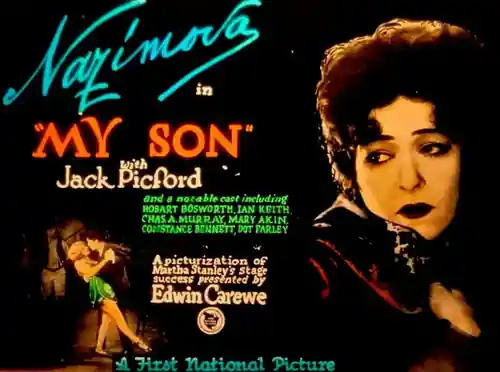
In an era of rapid social change and burgeoning modernity, My Son stands as a powerful artifact, reflecting the anxieties and moral compass of its time. It’s a film that speaks to the timeless struggle of parents to guide their children, and of children to forge their own paths, however perilous. The performances, particularly from Nazimova, are captivating, demonstrating why these silent stars commanded such immense adoration and critical acclaim during their heyday. Her ability to convey such a profound range of emotion without dialogue is a stark reminder of the artistry inherent in early cinema. The film serves as a compelling argument for the preservation and re-evaluation of silent films, proving that their narratives and emotional impact remain as potent today as they were nearly a century ago.
The dramatic tension in My Son, while rooted in a specific plot, taps into universal anxieties about loss, control, and the fierce protectiveness of family. It’s a narrative that, despite its period setting, feels remarkably current in its exploration of familial conflict and the societal pressures that can drive individuals to desperate acts. The film ultimately asks profound questions about the nature of love, sacrifice, and the often-unpredictable journey of life. It’s a testament to the enduring power of storytelling that a film from 1925 can still evoke such deep empathy and provoke such thoughtful reflection. For anyone interested in the foundational narratives of cinema, or simply a powerful human drama, My Son is an essential viewing experience, a quiet masterpiece that continues to resonate with undeniable force.
The supporting cast, including Ian Keith, Mary Akin, Charles Murray, Hobart Bosworth, and Billy Butts, each contribute to the rich tapestry of the small-town setting, grounding the central drama in a believable community. Their reactions and interactions, though often in the background, serve to amplify the stakes for the main characters, painting a vivid picture of a world where everyone knows everyone else’s business, and a transgression reverberates through every household. This collective gaze adds another layer of pressure to Nazimova's character, as she fights not only for her son but for their collective standing within this tight-knit society. The film’s ability to weave these individual performances into a cohesive and emotionally charged narrative is a testament to the skilled direction and the potent screenplay crafted by Finis Fox and Martha M. Stanley, who understood the intricate dance between personal drama and communal impact.
Ultimately, My Son is more than just a historical curiosity; it is a compelling human drama, expertly crafted and powerfully performed. It serves as a reminder that the foundational elements of compelling storytelling – relatable characters, universal themes, and emotional stakes – transcend the limitations of technology or the passage of time. It is a film that deserves to be rediscovered, studied, and appreciated for its contribution to the art form and its timeless message about the enduring, often challenging, nature of familial love. It’s a silent film that speaks volumes, echoing through the decades with its heartfelt narrative and unforgettable performances, particularly that of Alla Nazimova, whose maternal anguish and unwavering strength remain etched in the viewer's memory long after the final frame fades to black.
IMDb 5
1930
Community
Log in to comment.