DbcultAccessing Vault...
6.6/10
Senior Film Conservator
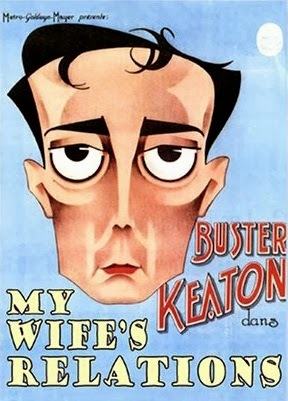
A definitive 6.6/10 rating for a film that redefined the boundaries of cult cinema. My Wife's Relations remains a cornerstone of transgressive art.
There is a moment—easy to miss amid the ricocheting dishware—when Buster Keaton’s eyes, normally two deadpan moons, flicker with genuine terror. It lasts perhaps six frames, but it indicts every fairy-tale platitude about nuptial bliss ever peddled by church or state. My Wife’s Relations, released in the same annus horribilis that saw the first issue of Reader’s Digest sanitize American domesticity, arrives like a brick through the stained-glass window of marital myth. The courthouse set, all soot and tungsten shadows, resembles a livestock auction: clerks stamp papers with the same dispassion they’d brand steers, while the bride—Kate Price in Wagnerian proportions—hovers like a vulture that’s learned to forge signatures.
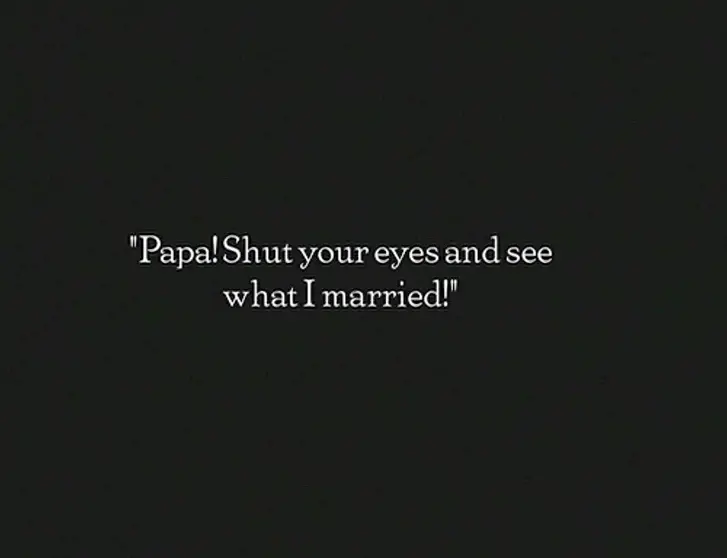
Though dialogue is absent, the picture is loud. Intertitles arrive like slaps: crude, abrupt, misspelled in that delightful Keystone fashion—“Marryed yesterday.” Each bungle underscores the bureaucratic absurdity binding these incongruous souls. Keaton, ever the minimalist, lets props do the shrieking: a suitcase snaps open like a bear trap; a loaf of bread, hurled across the parlor, lands with the thud of a body on a morgue slab. The cumulative effect is cacophony imagined, a trick only silent comedy can pull off—viewers supply the clatter internally, thereby becoming complicit in the mayhem.
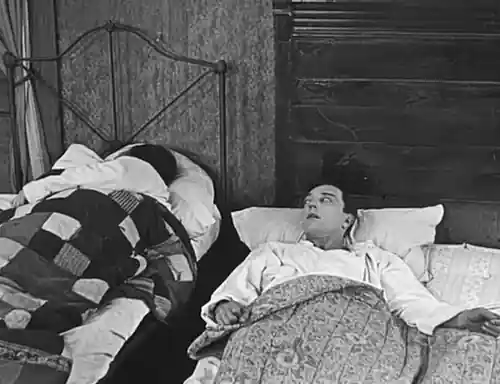
Production designer Fred Gabourie squeezes the tenement until it wheezes. Doorframes are shoulder-narrow; ceilings press down like descending presses. When Keaton attempts to exit, spatial axes revolt: hallways elongate, rooms contract, the kitchen table sprouts grabby in-laws the way mold blossoms bread. The claustrophobia rivals The Lion’s Den, yet whereas that film stages brutality inside a boxing ring, Relations weaponizes the hearth itself, transforming domesticity into a blood-sport venue.
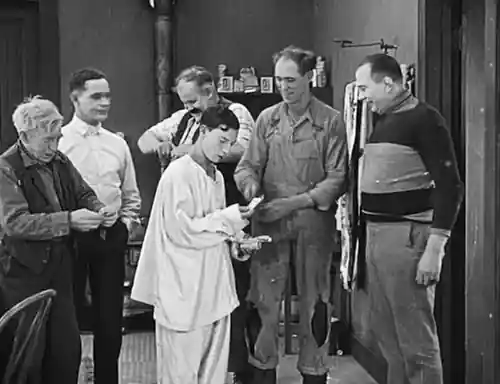
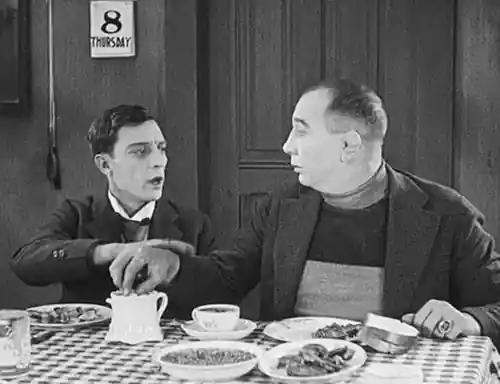
Wallace Beery, later Oscar-feted for burly benevolence, here embodies raw marital id: beard like iron filings, fists swinging like siege towers. His patriarch doesn’t walk so much as arrive, each footstep a declaration of eminent domain. Watch how he devours a chicken leg—grease smearing like warpaint—while Buster, opposite, nibbles crumbs with the caution of a POW. The scene is microcosmic: the haves gnawing marrow, the have-nots grateful for gristle.
Keaton’s comedy obeys thermodynamics: every pratfall conserves momentum. When the Murphy bed catapults him through a wall, the resultant hole—perfect silhouette—pays off twice: first as visual punchline, later as escape hatch during the climactic free-for-all. Compare this engineering elegance to The Kid, where Chaplin wrings pathos from repetition; Keaton prefers chain-reaction, a cinematic Rube Goldberg where each domino is a marital grievance.
Feminist readings may flinch: the wife is tyrant, husband victim, a gendered binary baked in slapstone. Yet Keaton subverts even that. Note how, once lucre enters, Buster morphs into conniving seducer, weaponizing faux infidelity to reclaim autonomy. The power seesaw tilts, tilts again, splinters. Neither spouse escapes unscathed; marriage itself emerges the sole victor, a Pac-Man devouring both players. In 1922, such cynicism felt almost seditious.
Post-WWI audiences nursed survivor’s guilt and bathtub gin; traditional institutions smelled musty. While On with the Dance celebrated flappers and The Whisper Market peddled dime-novel intrigue, Relations carved closer to bone: the contract binding two people was itself the horror. No need for gangsters or war; your ring finger might kidnap you more efficiently than any masked thug.
Buster co-wrote and co-directed, gifting himself the role of perpetual reactive. His face—Caucasian marble—never telegraphs intent, allowing the universe to strike first. The strategy risks passivity, yet payoff arrives in kinesthetic crescendos: watch him sprint atop moving trams, leap through transoms, balance on a banister like a gull on a gale. Physical intellect replaces psychological interiority; the body thinks, therefore it eludes.

Prints of Relations circulated mangled, spliced, projected at wrong speeds—fate befitting a film about bureaucratic bungles. Even残缺 fragments detonate. Modern newlyweds binge-watching reality nuptials should be strapped to chairs Clockwork-Orange style and shown this 22-minute corrective. The divorce rate might skyrocket, but at least it would spike honestly.
Orange for molten fury, the color of iron entering cold water; yellow for the bruised optimism that Buster might escape; sea-blue for the bureaucratic ink that cages him. These hues recur subliminally: a copper kettle, a mustard collar, the carbon paper flapping like a cerulean bird. Silent cinema invites such synesthetic projection; the mind colorizes monochrome when emotions run too scalding for grayscale.
Stack Relations beside His Royal Slyness and watch how both ridicule social mobility, yet whereas the latter lampoons monarchy, Relations demystifies the everyman’s castle—home. Or place it against Hate, a film whose very title flaunts melodrama; Keaton opts for snickering contempt rather than operatic rage, proving silence can slice deeper than tirade.
My Wife’s Relations is a pocket apocalypse, a marriage license soaked in kerosene and struck with a grin. It lasts less time than a bureaucratic coffee break, yet its echo reverberates like tinnitus. Watch it once for the acrobatics, twice for the contempt, thrice for the self-recognition. Then, should you still crave romance, consult Gypsy Love—but be warned: Keaton has already shown that every love story is a trespass we agree to call destiny.
IMDb —
1920
Community
Log in to comment.