DbcultAccessing Vault...
5.8/10
Senior Film Conservator
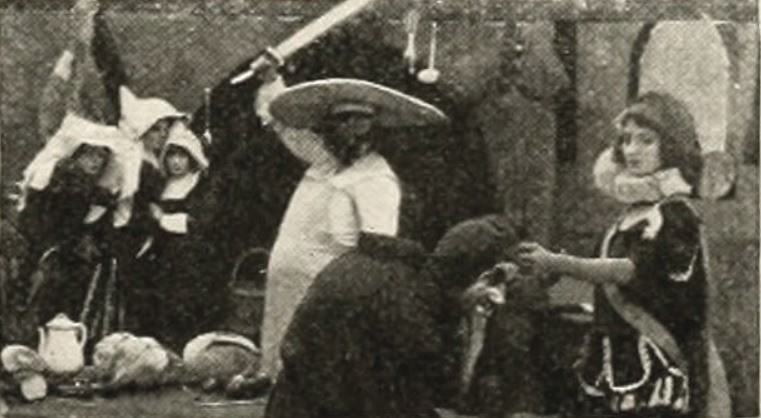
A definitive 5.8/10 rating for a film that redefined the boundaries of cult cinema. Rumpelstiltskin remains a cornerstone of transgressive art.
Stepping back into the nascent days of cinema, one encounters a fascinating tapestry of early narrative experiments, often drawing from the wellspring of folklore. The 1915 adaptation of Rumpelstiltskin stands as a curious artifact, a silent film endeavor to bring the grim magic of the Brothers Grimm to the silver screen. It’s a production that, when viewed through a contemporary lens, offers both a glimpse into the foundational storytelling techniques of its era and a poignant reminder of how deeply ingrained certain archetypes are within our collective consciousness. This isn't merely a quaint historical curiosity; it's a vibrant, if sometimes melodramatic, exploration of human foibles, supernatural bargains, and the enduring power of love against formidable odds.
The early 20th century was a crucible for cinematic innovation, a period where filmmakers were grappling with the language of the moving image. Rumpelstiltskin emerges from this era, a time when narratives were often broad, relying heavily on visual cues, exaggerated pantomime, and explanatory intertitles to convey plot and emotion. Unlike the intricate psychological dramas that would later define the art form, or even the more nuanced character studies seen in contemporary productions like Jealousy, this film embraces the straightforward morality play inherent in its source material. The challenge for these pioneering artists was immense: how to translate the rich, often dark, tapestry of oral tradition into a medium devoid of spoken dialogue, yet brimming with visual potential.
The film’s plot, a faithful, if slightly embellished, retelling of the classic fairy tale, begins with a familiar setup: the miller's daughter, Polly (portrayed with an earnest innocence by Betty Burbridge), becomes the object of desire for the nefarious dwarf, Rumpelstiltskin. His initial offer of two bags of gold for her hand is met with a defiant rejection by her father, a pivotal moment that ignites the dwarf’s "eternal vengeance." This early scene, though brief, sets the stage for the escalating conflict, demonstrating Rumpelstiltskin's manipulative nature and the miller's protective, if ultimately impotent, love for his daughter.
The narrative quickly introduces the second catalyst for Polly's predicament: the King, whose coffers are as empty as his moral compass. Hearing of the dwarf's purported magic, he summons Rumpelstiltskin, inadvertently providing the vengeful creature with the perfect instrument for his retribution. The dwarf, with a cunning born of malice, spins a fantastical lie: the miller's daughter can transform straw into gold. This falsehood, swallowed whole by the avaricious monarch, places Polly in an impossible bind. Confined to a room overflowing with straw, she faces a gruesome ultimatum: weave gold by dawn or face beheading for herself, her father, and, ironically, the dwarf who orchestrated the lie. This moment of sheer terror and desperation is where the film truly begins to explore the darker undercurrents of the fairy tale, portraying the vulnerability of the common folk against the whims of absolute power.
It is in this crucible of despair that Rumpelstiltskin reappears, offering his infernal bargain: he will spin the straw into shimmering gold in exchange for Polly's firstborn child, if it be a girl. Betty Burbridge, through her expressions and body language, conveys Polly's agonizing choice – the immediate salvation of her family weighed against an unthinkable future sacrifice. This Faustian pact is a chilling testament to the lengths one might go to preserve life, even at the cost of one's deepest maternal instincts. The visual representation of straw transforming into gold, likely achieved through early cinematic trickery or dissolves, would have been a marvel for audiences of the time, emphasizing the magical, almost surreal, nature of the dwarf's power.
Just as Polly's world seems to be closing in, a ray of hope appears in the form of Prince Cole, portrayed by Clyde Tracy. Disguised as a humble hunter, the Prince seeks genuine affection, a stark contrast to the transactional nature of royal courtships. His encounter with Polly sparks an immediate, heartfelt connection, a romance blossoming amidst the looming threat of the dwarf. Their planned rendezvous in the forest, a classic trope of romantic escapism, is tragically cut short by Rumpelstiltskin's relentless pursuit. Polly is abducted and dragged to the dwarf's sinister cave, where she is held captive under the watchful, menacing gaze of a Dragon. This sequence, with its elements of perilous abduction and monstrous guardianship, showcases the film's commitment to the fantastical and the perilous journey of its heroine. The special effects for the Dragon, no doubt rudimentary by today's standards, would have aimed to evoke a sense of genuine dread and danger, much like the more elaborate stage productions of the era or the fantastical elements attempted in films such as Pilgrim's Progress.
The narrative then introduces a crucial element of divine intervention: the Good Fairy. Her timely assistance, a common deus ex machina in fairy tales, enables Prince Cole to rescue Polly from the dwarf's clutches and the Dragon's lair. This rescue, while perhaps lacking the kinetic action of later films, would have relied on dramatic tension and the performers' ability to convey urgency and heroism through their physicality. However, their troubles are far from over. The King, driven by his own rigid sense of propriety and perhaps a lingering resentment over the straw-to-gold deception, imprisons his own son for daring to love a miller's daughter. This highlights the class divisions and societal expectations prevalent in both the fairy tale and, arguably, the early 20th-century sensibilities of the audience.
Once again, the Good Fairy intervenes, a consistent beacon of benevolence in Polly's tumultuous life. She facilitates the Prince's liberation, bestowing upon Polly a magic carpet – a truly enchanting visual for the period – enabling the lovers to escape to a distant, idyllic woodland. Here, away from the constraints of court and the dwarf's immediate malice, they find a semblance of peace. They marry, and a baby girl is born, fulfilling the dark prophecy of Polly's earlier bargain. This period of respite, however, is fleeting. Rumpelstiltskin, a force of relentless malevolence, tracks them down and, in a moment of heartbreaking tension, steals their infant. This scene, devoid of dialogue, would have relied entirely on the actors' ability to convey profound grief and terror, a testament to the power of silent film performance.
The Good Fairy, ever vigilant, again comes to their aid, ensuring the child's restoration. This repeated intervention underscores a central theme: while evil may be persistent, good, too, has its champions, and fate, or perhaps divine will, often rights injustices. The King, meanwhile, having exhausted his treasury in the fruitless search for his son and heir, once again commands Polly to spin more straw into gold. This cyclical return to the initial problem highlights the King's unchanging greed and lack of wisdom, contrasting sharply with the growth and resilience of Polly and Prince Cole.
The film culminates in a powerful scene of confrontation and resolution. The Prince and Polly reappear before the King, no longer fugitives but a united front. Their joyful welcome by the now-chastened monarch marks a significant shift, demonstrating the triumph of true love and virtue over rigid tradition and venal desires. They recount their harrowing tale, exposing Rumpelstiltskin's deceit and cruelty. The dwarf, stripped of his power and exposed for his lies, is condemned to spin straw for the remainder of his natural life – a fittingly ironic punishment that turns his instrument of manipulation into his eternal burden. This poetic justice resonates deeply, providing a satisfying conclusion to the long struggle.
The cast, led by Betty Burbridge as Polly, delivers performances characteristic of the silent era: broad, expressive, and often melodramatic, yet undeniably effective in conveying emotion without spoken words. Burbridge captures Polly's journey from innocent vulnerability to resilient motherhood with a palpable sincerity. J. Barney Sherry, likely as the King, embodies the monarch's shift from imperious greed to eventual benevolence, a transformation that would have required nuanced physical acting. Louis Morrison, in the pivotal role of Rumpelstiltskin, would have utilized exaggerated gestures and sinister expressions to establish the dwarf's malevolent presence, making him a truly memorable, if terrifying, antagonist. The effectiveness of such a character is paramount, much like the compelling villainy required in other dramatic silent films of the period, such as The Ticket-of-Leave Man or Business Is Business.
The visual storytelling, while limited by the technological constraints of 1915, would have relied on carefully composed shots, intertitles for dialogue and exposition, and early special effects for the magical elements. The transition from straw to gold, the appearance of the Dragon, and the magical carpet ride would have been key moments for visual spectacle. The set design, from the rustic mill to the opulent royal chambers and the dwarf's dark cave, would have played a crucial role in establishing atmosphere and narrative context. While perhaps not as grand in scale as a historical epic like Du Barry, the film's imaginative use of its limited resources is commendable.
Beyond its narrative, Rumpelstiltskin delves into timeless themes. Greed, personified by both the King and the dwarf, is shown to be a destructive force, leading to deception and suffering. The power of promises and the sanctity of life are deeply explored through Polly's desperate bargain. The unwavering love between Polly and Prince Cole stands as a testament to human connection, capable of overcoming societal barriers and supernatural threats. The repeated intervention of the Good Fairy introduces the concept of fate, or perhaps a benevolent cosmic order, ensuring that justice ultimately prevails. This blend of human struggle and magical intervention gives the film a rich allegorical quality, akin to the moral lessons found in Enhver or As You Like It, albeit with a more fantastical wrapper.
Viewing Rumpelstiltskin today is an exercise in appreciating the origins of cinema. It’s a reminder that even in its infancy, film possessed the capacity to enchant, to terrify, and to tell stories that resonated deeply with audiences. While the acting styles and technical limitations may seem quaint, the core narrative — a battle between good and evil, love and avarice, desperation and hope — remains as potent as ever. This 1915 adaptation, therefore, is more than just a historical footnote; it’s a living testament to the enduring power of fairy tales and the foundational artistry of silent film, a cinematic heirloom that continues to spin its own unique kind of magic for those willing to look beyond the lack of sound and embrace its visual poetry.
IMDb —
1934
Community
Log in to comment.