DbcultAccessing Vault...
6.8/10
Senior Film Conservator
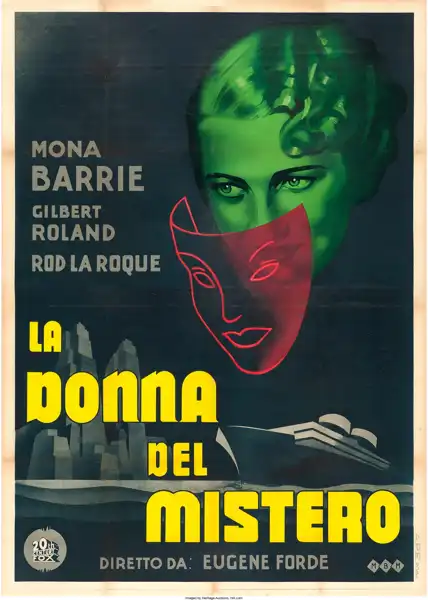
A definitive 6.8/10 rating for a film that redefined the boundaries of cult cinema. Mystery Woman remains a cornerstone of transgressive art.
If you have an hour to spare and love dusty 1930s spy movies where the wife does all the actual heavy lifting, Mystery Woman is actually pretty fun.
Its great for people who like fast, theatrical old melodramas, but you will probably hate it if you need things like "realistic military law" to enjoy a plot. 🕵️♀️
The premise is basically the famous Dreyfus Affair but with more sneaky break-ins. This French officer gets framed for treason and sent to Devil's Island, which sounds like a vacation spot but is definitely not.
His wife, played by Mona Barrie, decides she is not just going to sit around crying in her fancy apartment. She goes full spy mode to find the real stolen document to prove he is innocent.
Honestly, Mona Barrie is the best part of this whole thing. She has this incredibly intense stare that makes you believe she could actually steal secret papers from a bunch of stuffy diplomats.
There is this one scene where she is trying to get into a safe, and the camera just sits on her hands for what feels like three minutes. It is super tense, even though you can tell the safe is probably made of painted wood.
John Halliday plays the villainous spy guy, and he is just delightfully smug. He has this thin little mustache that practically screams "I steal secrets for fun."
Gilbert Roland is also here, looking incredibly handsome and doing... well, not much else. But he does it well!
He has this weirdly long conversation about a lamp that made me laugh out loud. It felt like they needed to fill two minutes of screen time and just told him to talk about furniture.
The writing team actually had Dudley Nichols on it, which is crazy because he wrote huge masterpieces later on. Here, the dialogue is mostly people shouting about "honor" and "the state" in very crowded rooms.
It reminds me a bit of the chaotic energy in Almost Married, where the plot just moves because the director wants to go home.
Some of the edits are incredibly abrupt. One second they are in a fancy Parisian salon, and the next second—boom—we are looking at a very cheap stock footage of a boat.
It is like the editor just ran out of film tape and said, "Eh, the audience will get the point."
Also, Mischa Auer shows up for about five minutes and just completely steals the scene with his giant bug-eyes. I wish the whole movie was just him reacting to things in the background.
If you are into these kinds of vintage prison-adjacent dramas, it is a solid watch, kind of like how You Can't Beat the Law handles its setup with zero realism but lots of heart.
Don't expect some deep masterpiece. It is just a snappy, 70-minute B-picture that knows exactly what it is.
IMDb —
1919
Community
Log in to comment.