DbcultAccessing Vault...
Cult Review
Senior Film Conservator
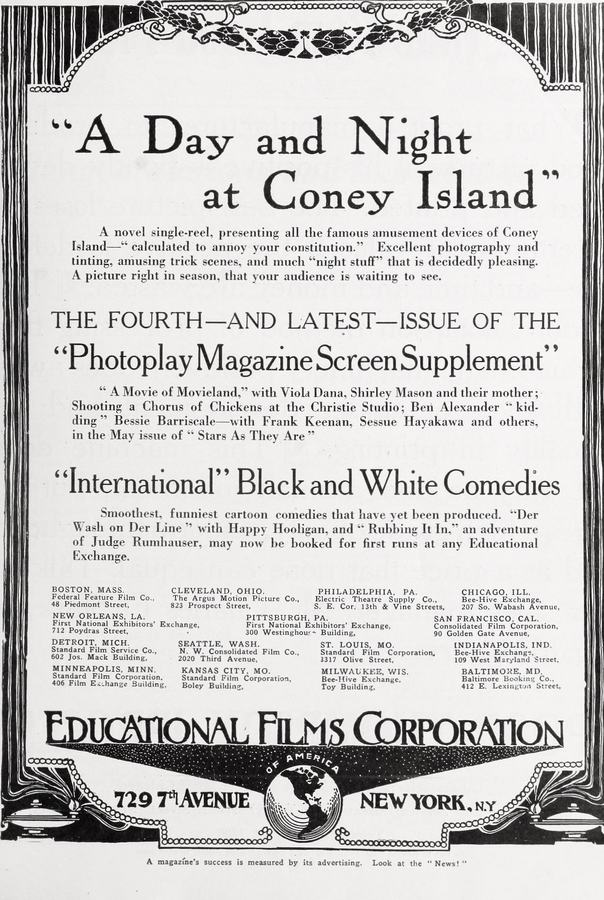
There's something inherently captivating about peering into the past, especially when that past is as gloriously, boisterously alive as the Coney Island depicted in 'A Day and Night at Coney Island.' This isn't merely a film; it's a time capsule, a vibrant, whirring, splashing testament to an era when public amusement parks represented the zenith of technological wonder and communal escapism. As a critic, I've seen countless narratives unfold, but few possess the raw, unadulterated energy of this documentary, which, without a single spoken word, articulates the very essence of human joy and mechanical ingenuity.
The film doesn't bother with preamble or exposition; it simply thrusts you into the heart of the action. You're immediately struck by the sheer scale of the place, a sprawling wonderland of steel, wood, and human ingenuity. The camera, with an almost childlike wonder, glides from one spectacle to the next, allowing us to witness the attractions in their full, glorious operation. The Steeple Chase, for instance, isn't just a ride; it's a spectacle of synchronized motion, where riders on mechanical horses race along a winding track, their faces a mixture of concentration and glee. It's a ballet of man and machine, a precursor to the high-speed thrills that would dominate later decades, yet possessing a quaint charm that modern roller coasters, for all their complexity, often lack. This isn't about fear; it's about the exhilaration of speed, the shared experience of a momentary, controlled challenge.
Then there are The Chutes, a marvel of hydraulic engineering and pure, unadulterated fun. Boats filled with eager passengers slide down an inclined ramp, culminating in a magnificent splash that drenches onlookers and riders alike. The expressions caught by the camera are priceless: wide-eyed anticipation, followed by a burst of laughter and relief. It's a simple pleasure, yet profoundly effective, demonstrating that sometimes the most straightforward thrills are the most enduring. The communal aspect of the splash, the shared gasp and giggle, speaks volumes about the social fabric of early 20th-century entertainment. It fosters a sense of camaraderie, an instant bond forged in a shared moment of watery abandon.
The Ocean Wave presents a different kind of kinetic experience. Here, platforms rise and fall, mimicking the gentle undulation of the sea, offering a somewhat more sedate, yet still delightful, sensation of movement. It's a testament to the variety of experiences Coney Island offered, catering not just to thrill-seekers but also to those who preferred a more whimsical, less jarring form of escapism. This ride, in particular, highlights the imaginative scope of the park's designers, who sought to bring elements of the natural world, albeit in a mechanized form, to the urban masses.
And then, of course, there's The Whip. A ride that, even today, retains a certain chaotic charm. Its sudden, sharp turns and accelerations provide a jolt of exhilarating disorientation, eliciting screams and laughter in equal measure. Watching the patrons being flung about, their bodies momentarily defying gravity, one can almost feel the centrifugal force at play. It’s a beautifully simple concept, yet executed with a flair that makes it an unforgettable part of the Coney Island experience. The Whip is a perfect encapsulation of the park's ethos: to surprise, to delight, and to momentarily suspend the laws of mundane reality.
Perhaps the most peculiar, and undeniably fascinating, attraction showcased is the Human Pool Table. This ingenious, slightly absurd contraption sees individuals, often dressed in comical attire, become the very 'balls' in a giant billiards game, propelled by unseen forces. It's a playful subversion of expectation, transforming passive observation into active, albeit slightly controlled, participation. This ride speaks volumes about the era's willingness to embrace the whimsical, the slightly ridiculous, and to find humor in the most unexpected places. It's a reminder that entertainment, at its core, is about novelty and the willingness to shed inhibitions.
What truly elevates 'A Day and Night at Coney Island' beyond a mere historical record is its profound human element. The film is as much about the people as it is about the machines. The crowds are a living, breathing tapestry of early 20th-century American society. Women in elaborate hats and long skirts, men in suits and fedoras, children wide-eyed with wonder – all converge in this democratic playground. Their faces, captured in candid moments of joy, anticipation, and occasional mild terror, are a window into the past. One can almost hear the cacophony of laughter, shouts, and the whirring of machinery, even without a soundtrack. The film is an essential companion piece to any study of early American social history, offering visual evidence of how leisure time was spent, how communities formed, and how public spaces fostered a sense of shared identity.
In terms of cinematic technique, the film is a masterclass in observational documentary. There are no talking heads, no narrative overlays, just the camera's unwavering gaze. This unvarnished approach lends it an authenticity that is rare even in contemporary cinema. The filmmakers understood the power of simply showing, allowing the spectacle to speak for itself. This directness, this commitment to pure visual storytelling, sets it apart. It's a style that, while seemingly simple, requires a keen eye for composition and an innate understanding of human behavior to truly capture the essence of a moment. Compare its raw, unfiltered look at life to the narrative structures of films like My Best Girl, which, while charming, crafts a specific story around its characters. 'A Day and Night at Coney Island' offers a broader, more expansive narrative – the story of a place and its people.
The film also inadvertently serves as a fascinating study in the psychology of risk and reward. The rides, while seemingly benign by today's standards, represented significant thrills for their time. They offered a safe, controlled environment for individuals to confront their fears, to experience a momentary loss of control, and to emerge exhilarated. This psychological aspect connects, in a thematic sense, to the underlying tension in films like The Mystery of the Poison Pool, where danger lurks in the shadows. At Coney Island, the danger is overt, yet managed; it's part of the allure, a calculated risk for an emotional payoff. The courage to step onto a towering ride, or to plunge down The Chutes, is a micro-drama in itself, echoing the larger moral dilemmas faced by characters in dramas like The Coward, albeit on a much lighter, recreational scale.
One cannot discuss 'A Day and Night at Coney Island' without acknowledging its profound historical significance. Coney Island itself was a microcosm of American innovation and social change. It was a place where class distinctions blurred, where new technologies were showcased, and where the very concept of leisure was being redefined. The film captures this pivotal moment, preserving it for future generations. It's a reminder of a bygone era when entertainment was more tangible, more physical, and perhaps, in some ways, more immediate. The film functions as a vivid counterpoint to the more isolated, often melancholic, settings found in something like The Isle of the Dead, highlighting the vibrant, bustling essence of human gathering versus stark solitude.
The enduring legacy of this film lies not just in its depiction of specific rides, but in its broader portrayal of a cultural phenomenon. It shows us how people sought escape, how they embraced novelty, and how they found connection in shared experiences. The vibrant energy, the sense of wonder, and the sheer democratic joy of Coney Island are palpable throughout the entire runtime. It's an invaluable ethnographic document, offering insights into the societal norms, fashions, and collective psyche of early 20th-century America. It's a testament to the power of public spaces to unite, to entertain, and to provide a temporary reprieve from the everyday grind.
In a world increasingly dominated by digital entertainment, 'A Day and Night at Coney Island' serves as a poignant reminder of the visceral thrill of physical interaction, the roar of the crowd, and the simple, yet profound, pleasure of a well-engineered ride. It's more than just a historical curiosity; it's a living, breathing piece of cinematic artistry that continues to resonate with anyone who has ever sought a moment of pure, unadulterated fun. Its influence, though subtle, can be seen in the very DNA of how we approach large-scale public entertainment. The foundational principles of spectacle, engagement, and shared experience, so vividly captured here, remain as relevant today as they were over a century ago. This film, without uttering a single word, speaks volumes about the human spirit's perpetual quest for joy and exhilaration.
Ultimately, 'A Day and Night at Coney Island' is an essential viewing experience for film historians, cultural anthropologists, and anyone with a nostalgic yearning for a simpler, yet equally thrilling, era. It's a remarkable feat of early documentary filmmaking, a testament to the power of the moving image to capture and preserve the fleeting moments of human experience. It doesn't analyze; it presents. It doesn't judge; it observes. And in doing so, it offers a window into a past that feels astonishingly immediate and alive. It's a celebration of life, laughter, and the audacious spirit of invention that defined an age, a truly timeless piece of cinema that continues to inspire awe and smiles.
IMDb 6
1935
Community
Log in to comment.