DbcultAccessing Vault...
5.8/10
Senior Film Conservator
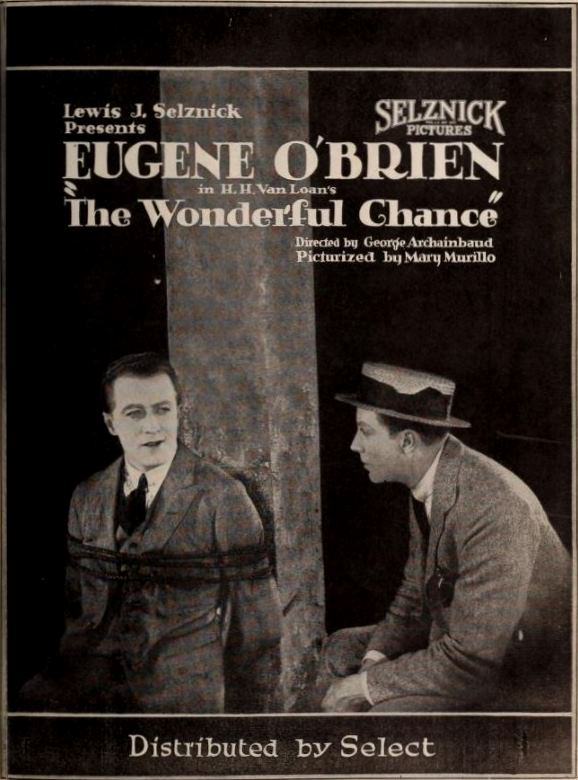
A definitive 5.8/10 rating for a film that redefined the boundaries of cult cinema. The Wonderful Chance remains a cornerstone of transgressive art.
There is a moment, roughly halfway through The Wonderful Chance, when Eugene O’Brien’s reluctant impostor stands beneath a Venetian glass chandelier that drips prisms like frozen cognac. He lifts his face, lets the shards of light cut across his cheekbones, and for three silent heartbeats we see the entire film’s thesis: identity as something that can be refracted but never possessed. Few silents dare such brittle lyricism; fewer still survive in viewable condition. That this one does—scarred, flaring, defiant—is a miracle worth savoring.
Prison gates yawn; a man emerges whose name the intertitles withhold, as though even the film itself suspects him. He believes the calendar can be ripped, that past tense can be folded into neat squares and left behind. Manhattan, filmed in 1919 but looking older, answers with rain-slick asphalt that reflects neon like open wounds. Every doorway exhales steam; every job office shakes its head. Meanwhile, in a drawing room upholstered in imperial arrogance, a British viscount practices his languid smile and becomes the ransom commodity for a gang that dresses like Gotham’s own plague doctors of leisure.
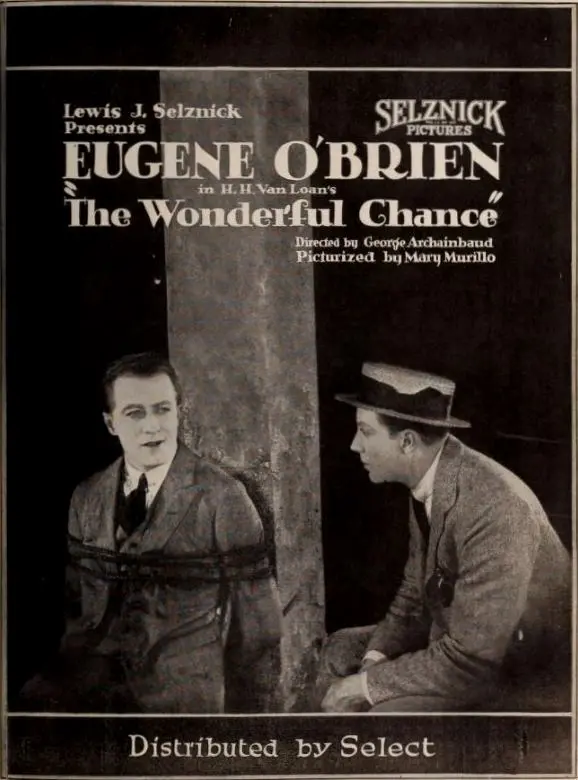
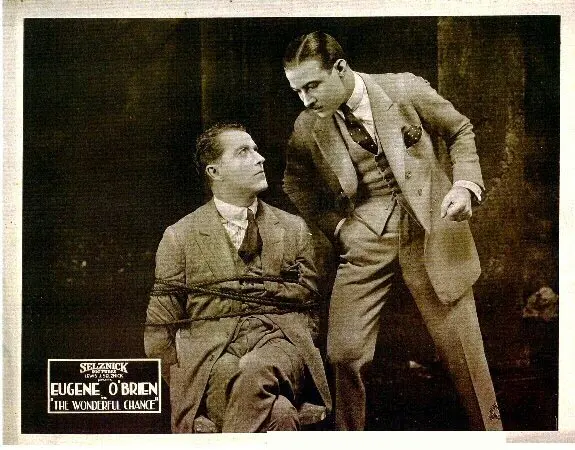
The plot hinge—ex-con and aristocrat share the face of a fallen angel—should feel contrived, yet the screenplay by H.H. Van Loan, Mary Murillo, and Melville Hammett treats duality not as gimmick but as x-ray. They scrape away the skin of melodrama until raw existential pulp shows through. Notice how the gang never calls the ex-con by the peer’s name; they simply say “Your Lordship,” words that clang against his teeth like borrowed dentures. Identity becomes currency, but it is also a straitjacket stitched with gold thread.
Rudolph Valentino’s billed fourth, yet the camera stalks him as if he were magnetic north. He plays a secondary crook, all eyeliner and predatory grace, swirling a cape that anticipates the tango by a full year. Watch him lean against a doorjamb, one hip cocked like a question mark—suddenly every other actor seems upholstered by Puritanism. His role is minor but radioactive; the film’s tension tightens whenever he exhales cigarette smoke as if it were the last sigh of a dying century.
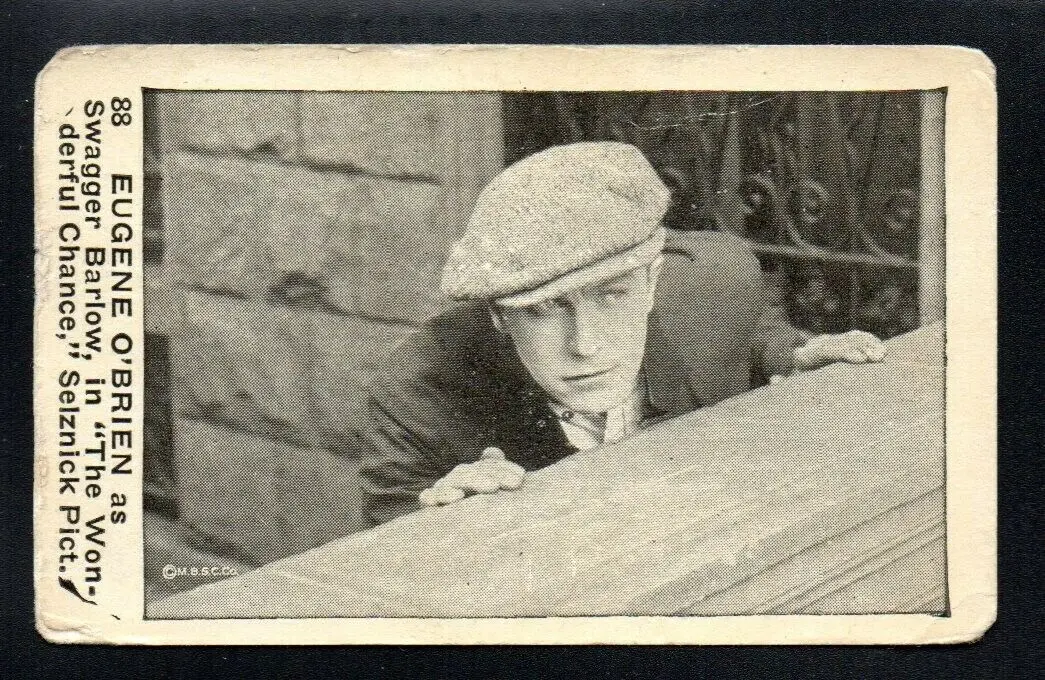
By contrast, O’Brien performs the miracle of making blandness hypnotic. His ex-con is a blank slate scribbled on by circumstance; the actor’s micro-gestures—a blink held half a second too long, fingers that flutter when touching velvet—map the anxiety of a man who fears the mask will graft to skin. The aristocrat he doubles, also played by O’Brien, appears only in long shot and silhouette, a clever economical trick that lets imagination sculpt the lord into something more impossible than perfection: absence.
Cinematographer Tom Blake, later relegated to poverty-row westerns, here evokes a chiaroscuro fever dream. Interiors glow with tungsten amber so thick you could butter bread with it. Exteriors—shot on winter mornings before the sun had decided—breathe pewter and bruise. Note the sequence where the ex-con first enters the mansion: the camera glides backward, keeping him in medium shot, while mirrors on both sides create infinite regressions of his bewildered self. No trick photography; just clever set design and a dolly on plywood. The effect predates Lady from Shanghai by twenty-eight years and feels twice as sinister because the technology is so naked.
Intertitles, usually the clunky expository relatives silent films must tolerate, here approach poetry. When the gang plots the kidnapping, the card reads: “They spoke of futures that could be bought wholesale—souls discounted for bulk.” The words dissolve over a shot of Manhattan’s skeletal skyscrapers at dusk, light bulbs just beginning to prick the bruise-blue sky. Typography becomes incantation.
Martha Mansfield, as the aristocrat’s cousin, initially appears to be the requisite moral lighthouse. Yet the film grants her subversion: she collects scandalous French novels and carries a riding crop whose tap against marble sounds like a judge’s gavel. Her attraction to the impostor is less romantic than epistemological—she wants to know how much of identity is performance, and whether sin can be re-choreographed into prestige. In a startling insert, she teaches the ex-con to waltz; the camera circles them in a 360-degree pan that anticipates Ophuls by three decades. Each revolution strips another layer of pretense until the couple stands breathing hard, unsure whether they have danced or dueled.
Meanwhile, the gang’s moll—uncredited, played by a ferocious bit-part actress who never smiles—offers the film’s sharpest critique of commodified femininity. She smokes with the cigarette held between thumb and forefinger like a man, and when she slaps Valentino’s character for flirting with Mansfield, the crack echoes like a starting pistol. For two seconds, the film acknowledges that women can be criminals without lipstick pathos.
Surviving prints lack official orchestrations, so modern audiences experience the picture with commissioned scores that range from Bartók pizzicato to glitch-hop. I recommend the 2018 restoration featuring a trio of violin, accordion, and typewriter (yes, the percussionist hammers on a 1919 Underwood). The typewriter’s clack accompanies city scenes, turning urban chaos into syncopated free verse. During the ballroom sequence, the accordion exhales so slowly it seems to die; when the ex-con confesses (wordlessly, through eyes only), the violin holds a single note until the bow trembles like a lie detector. Silence, in this film, is not absence but an instrument tuned to dread.
Cinephiles who worship Nobleza gaucha’s frontier fatalism will find similar moral quicksand here, though urban rather than pampas. The masquerade motif surfaces again, more comically, in Moderne Töchter, yet nowhere is it freighted with such class vertigo. If you admire The Parson of Panamint’s redemption-through-deception arc, prepare for its cynical twin: in The Wonderful Chance, redemption is a brand that peels off in sheets.
Conversely, The Lair of the Wolf shares the same moral scaffolding—outlaw and aristocrat as distorted mirror images—but lacks the socio-economic bite. Where Nobody’s Child sentimentalizes the fallen, this film refuses tears; where The Trail of the Holdup Man glamorizes banditry, Chance shows crime as tedious labor interrupted by panic.
Spoilers are irrelevant; the film itself is a spoiler of Hollywood’s coming obsession with tidy closure. The final reel shows the ex-con boarding an ocean liner under yet another assumed name. The gang has been arrested, the aristocrat freed, the cousin left holding a waltz-step in an empty ballroom. Our antihero leans on the ship’s rail, cigarette glowing like a firefly in fog. Intertitle: “He sailed toward a country that had no name—only latitude.” Camera pulls back until he becomes a punctuation mark against an ocean that keeps rewriting itself. Fade to sepia, not black. The film refuses to sanction either justice or tragedy; it simply stops, leaving the viewer suspended in moral free fall.
Because it is the missing evolutionary link between Dostoevsky’s The Double and Hitchcock’s Strangers on a Train. Because it understands that doppelgängers are not paranormal but economic: when society partitions luck so unevenly, anyone could be your ghost if the price is right. Because Rudolph Valentino’s eyes in this picture predict every subsequent star who ever knew the camera loved predatoriness more than virtue. Because, at 72 minutes, it is tighter than a banker’s smile and twice as unsettling.
Most of all, see it because survival prints are endangered species; every projector beam that passes over them is another ultraviolet scar. Stream it illegally if you must, then buy the restoration Blu-ray to soothe your conscience. Tell a friend. Write a blog. Tattoo Mansfield’s riding-crop silhouette on your bicep. Do anything that keeps the film from slipping back into the archive’s abyss, because the abyss is always hiring new faces—and yours might be next.
Verdict: a savage little masterpiece that punches far above its weight class, deserving shelf space beside Lang and Murnau. Watch it twice: first for the plot, second to notice how often the film itself blinks.
IMDb —
1915
Community
Log in to comment.