DbcultAccessing Vault...
Cult Review
Senior Film Conservator
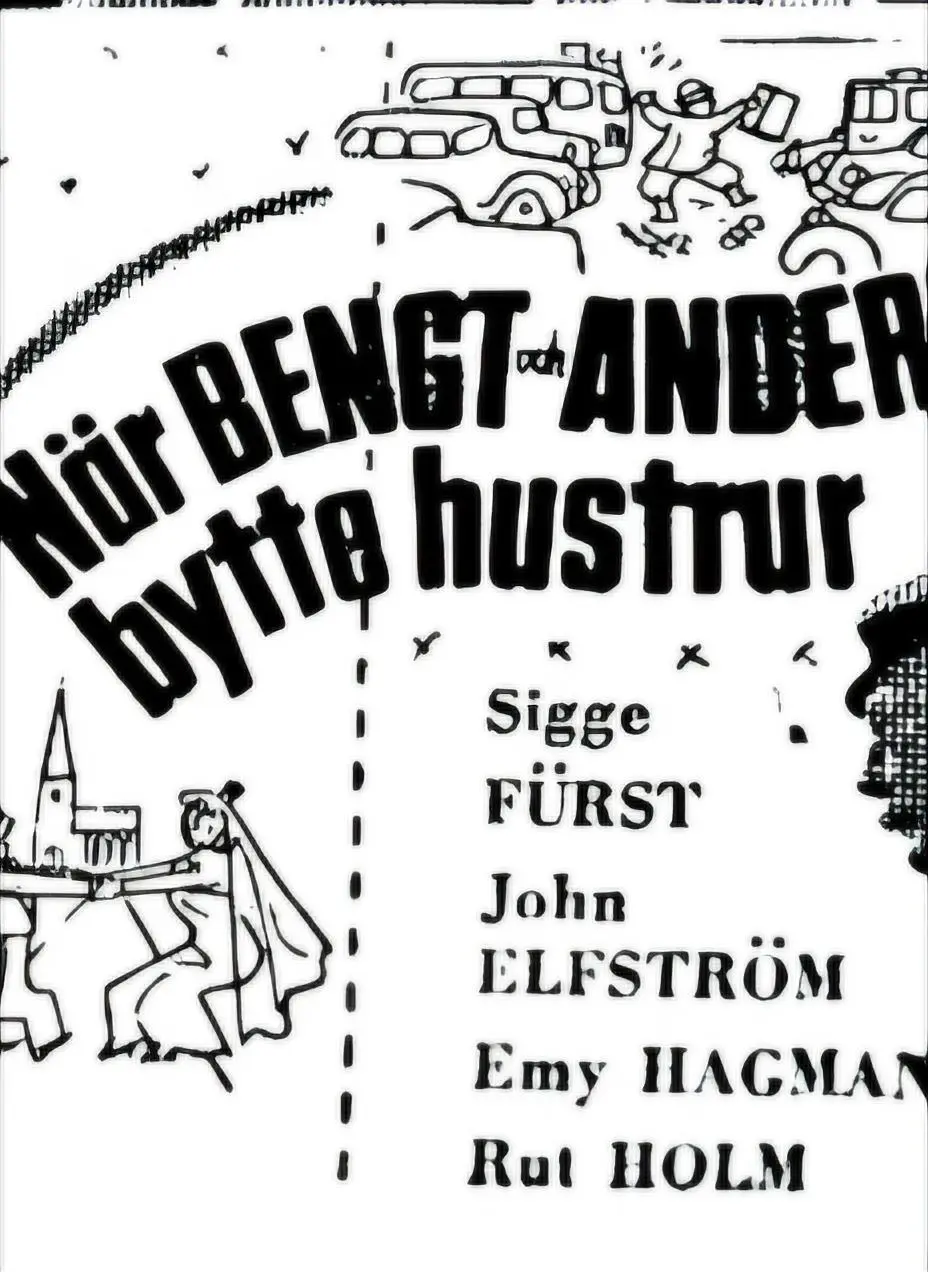
Is 'När Bengt och Anders bytte hustrur' still worth watching today? Short answer: yes, but with significant caveats. This early Swedish farce, a curious relic from 1919, offers a fascinating, if somewhat dated, window into the comedic sensibilities and domestic anxieties of its time.
It's a film for cinephiles, historians of early cinema, and those with a keen interest in the evolution of comedic storytelling. However, casual viewers seeking modern pacing, sophisticated humor, or high production values will likely find its charms elusive and its runtime a test of patience.
Here’s a quick breakdown of its merits and drawbacks:
To fully appreciate “När Bengt och Anders bytte hustrur,” one must first contextualize it within the nascent landscape of early 20th-century cinema. Released in 1919, this film emerges from an era where storytelling was primarily visual, relying heavily on exaggerated physical comedy, clear pantomime, and the occasional intertitle to bridge narrative gaps.
Swedish cinema, while not yet at its international peak, was developing its own distinct voice. This period saw a proliferation of short, often comedic, films that catered to a public eager for novel entertainment. “När Bengt och Anders bytte hustrur” fits neatly into this tradition, showcasing a collaborative spirit common for the time, with Thure Alfe, Carl-Ivar Ytterman (who also stars), and Felix Körling all credited for the writing, and presumably, contributing to the directorial vision.
What makes this film particularly compelling is its role as a historical artifact. It’s not just a story; it’s a time capsule. Watching it offers a rare opportunity to observe the nascent grammar of cinematic comedy taking shape, long before the advent of sound revolutionized the medium. The film’s very simplicity becomes its strength, allowing us to dissect the fundamental building blocks of visual humor and character-driven narrative.
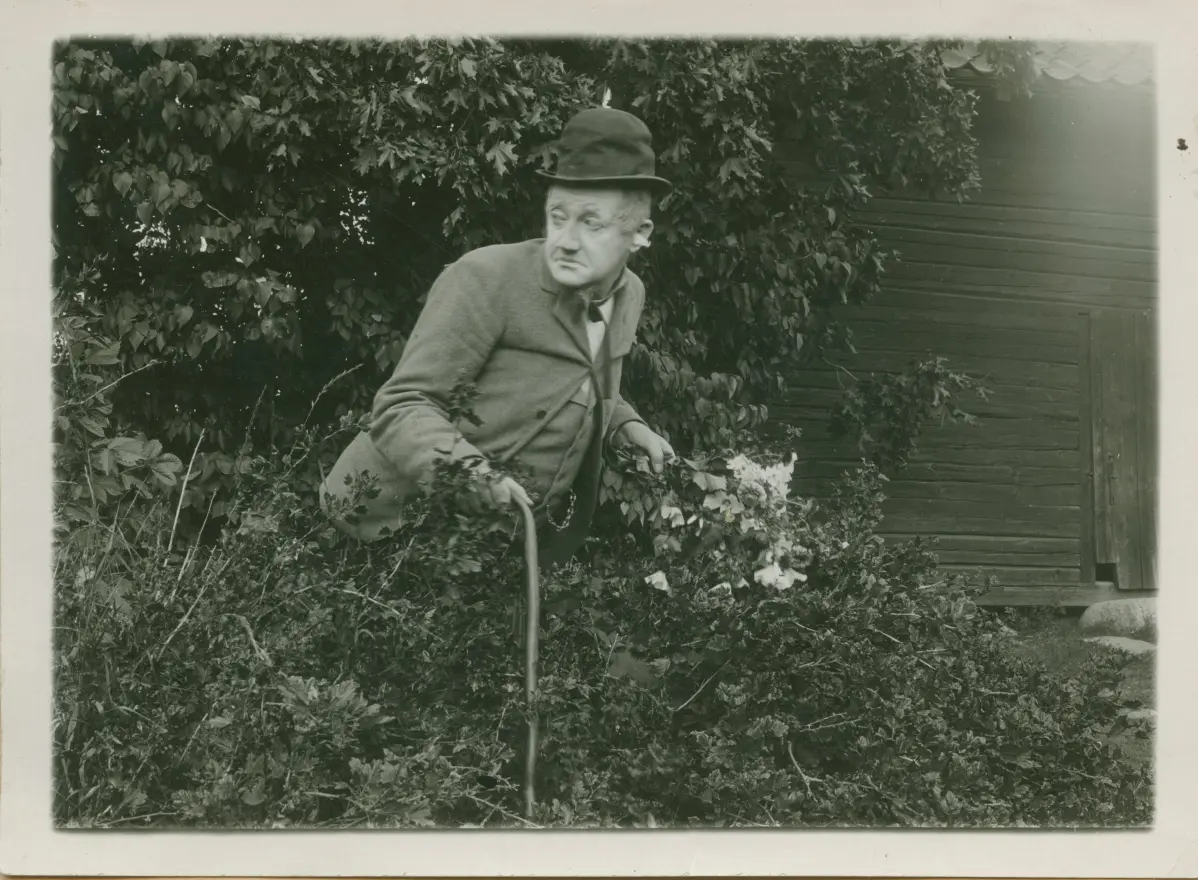
The limitations of the era – static cameras, rudimentary lighting, and the absence of synchronous dialogue – forced filmmakers to be incredibly inventive with visual communication. Every gesture, every facial expression, every piece of set dressing had to convey meaning with utmost clarity. In this regard, “När Bengt och Anders bytte hustrur” is a fascinating case study.
The film’s central premise – two neighbors, Anders and Bengt, both enduring a “miserable time with their wives” – is remarkably potent for its simplicity. It taps into a universal human experience: dissatisfaction within a relationship. In an era where divorce was often socially taboo and economically difficult, the idea of escaping marital woes, even through a farcical “swap,” would have resonated with audiences.
How is this misery conveyed without explicit dialogue? The film relies on classic silent film tropes. We see Anders, played by Carl-Ivar Ytterman, with a perpetually downtrodden posture, his shoulders slumped, a look of resigned exasperation etched on his face. Bengt, portrayed by Arvid Enström, likely mirrors this sentiment, perhaps with more overt displays of frustration, such as exasperated sighs or dramatic head-in-hands gestures.
The wives, while given less agency in the plot summary, are undoubtedly portrayed as the sources of this misery. This often manifested in silent comedies as nagging, demanding, or overly domineering figures. While this portrayal can feel dated and even misogynistic by modern standards, it serves as a lens through which to examine early 20th-century gender roles and societal expectations within marriage.
I contend that despite its seemingly regressive premise, the film subtly critiques the rigidity of these marital expectations. The very notion of a “swap” underscores the idea that marriage, as an institution, could be a source of profound unhappiness for men, not just women. It’s a bold, if comedic, acknowledgement of male domestic dissatisfaction, a theme often overlooked in favor of more overt social critiques.
The film, therefore, functions as a form of social satire, albeit a gentle one. It pokes fun at the domestic sphere, highlighting the absurdities that can arise from mismatched personalities and unfulfilled desires within the confines of a legally binding union. Its enduring relevance lies not in its solution, but in its recognition of the problem.
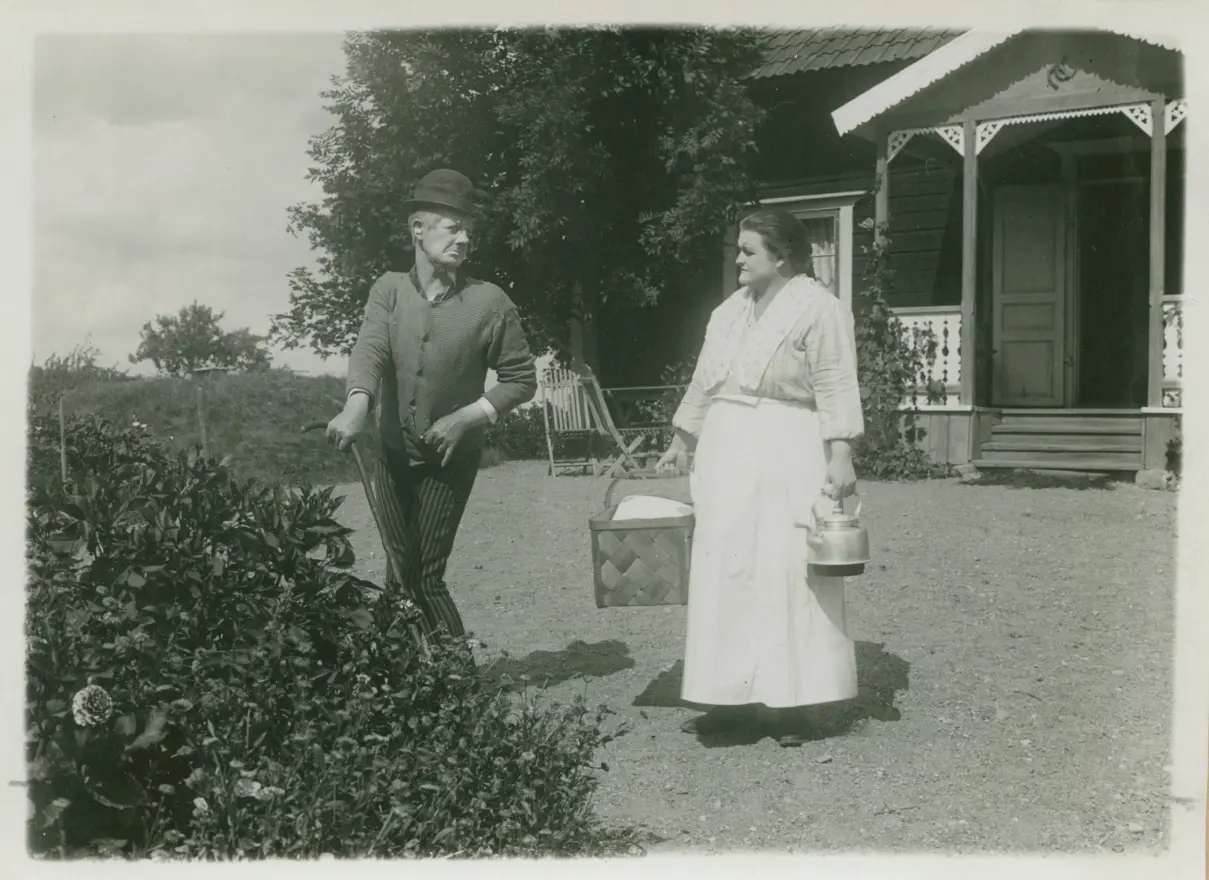
In the realm of silent cinema, acting is a distinct art form. Carl-Ivar Ytterman as Anders and Arvid Enström as Bengt carry the narrative weight through their physicality and facial expressions. Ytterman, also a writer, likely had a deep understanding of his character’s internal world, translating Anders’ quiet desperation into nuanced (for the time) pantomime.
One might observe Anders’ slow, deliberate movements around his home, a stark contrast to a wife who might be depicted with sharp, commanding gestures. This visual dichotomy effectively communicates the power dynamics and the source of his unhappiness without a single word. Similarly, Bengt’s character would have to convey his own brand of marital woe, perhaps through more overt frustration or futile attempts to assert himself.
The supporting cast, including Karin Appelberg-Sandberg, Paul Seelig, Edla Rothgardt, and Frida Sporrong, would have contributed to this visual tapestry. The wives, in particular, would have been tasked with embodying the 'miserable time' aspect, likely through stereotypical 'henpecking' gestures or expressions of disdain. While these portrayals might lack the psychological depth of modern acting, they were effective in conveying character and plot in the silent era.
The direction, credited to Thure Alfe, Carl-Ivar Ytterman, and Felix Körling, demonstrates a clear understanding of visual storytelling. Scenes are staged to maximize comedic effect and emotional clarity. The pacing, though slow by today’s standards, is deliberate, allowing the audience time to absorb the visual cues and the unfolding domestic drama.
Consider a scene where Anders attempts a simple task, only to be interrupted or undermined by his wife. The director would have carefully framed this interaction, perhaps using close-ups on their contrasting expressions or wide shots to emphasize the domestic setting. This careful staging is crucial for a film like “När Bengt och Anders bytte hustrur,” where every visual element must pull its weight. Compared to other contemporary farces like Henpecked and Pecked Hens, which often relied on pure slapstick, this film appears to lean slightly more into character-driven situational comedy.
The cinematography of “När Bengt och Anders bytte hustrur” reflects the technical capabilities and aesthetic preferences of 1919. Expect mostly static camera shots, often at eye-level, designed to capture the entire scene rather than manipulate perspective dramatically. Lighting would have been functional, primarily natural light or basic artificial illumination, aiming for clarity over mood.
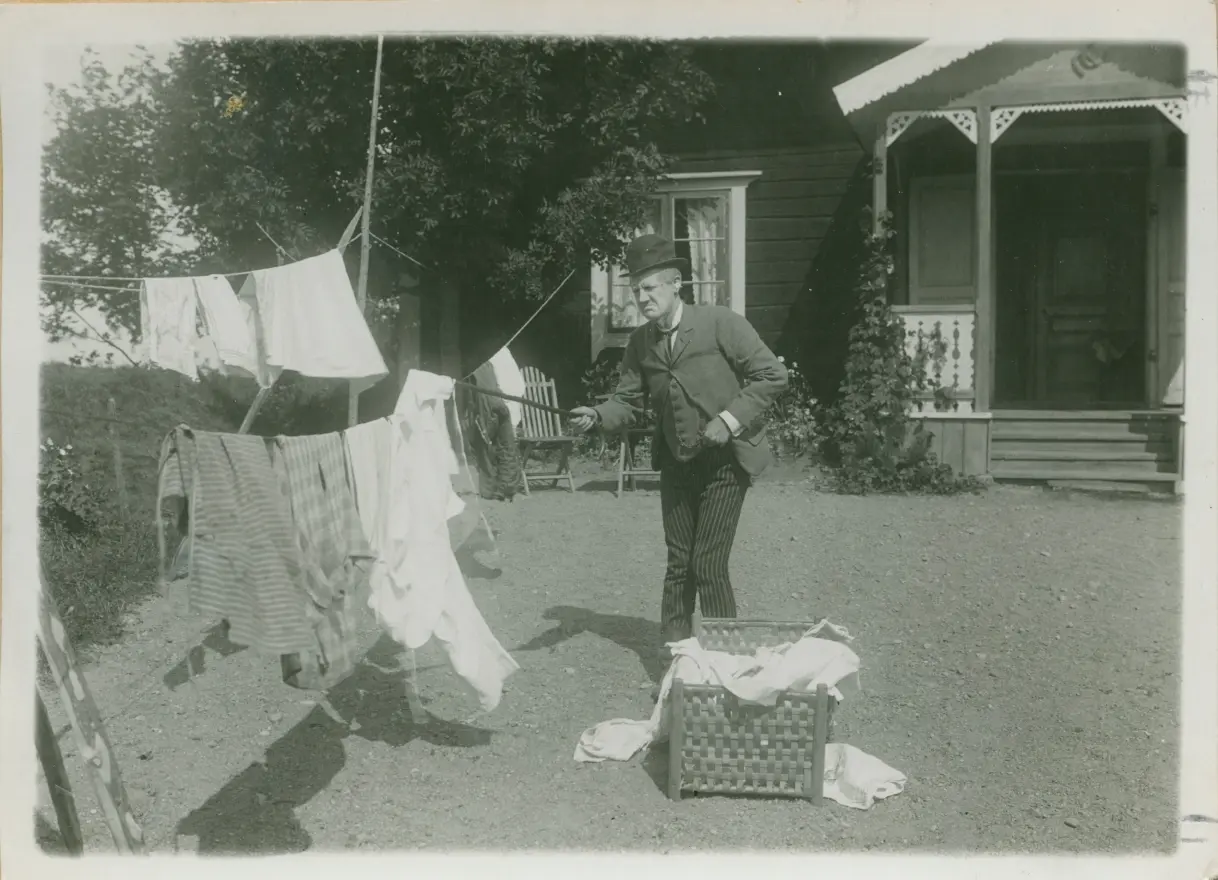
Despite these limitations, the film’s visual language is its primary storytelling tool. The rural settings of Blåsekulla and Snibben would have been captured to emphasize the characters’ isolation and the quiet, unchanging nature of their lives. A wide shot of Anders trudging across a field, perhaps with a distant farmhouse in the background, immediately establishes his world and hints at his solitary burden.
The use of visual contrast would have been key. Perhaps Anders’ home is depicted as cluttered or stifling, while Bengt’s offers a different kind of domestic disarray. Small details, like a wilting plant or a perpetually unmade bed, could subtly underscore the characters’ misery without explicit statements. This is where the artistry of early silent film truly shines: in its ability to communicate complex emotions through simple, yet evocative, visual cues.
For example, a specific moment might involve Anders attempting to read a newspaper, only for his wife to snatch it away or demand his attention. The framing of this interaction, perhaps a medium shot emphasizing their proximity and the tension between them, would be critical. The lack of dialogue forces the audience to become keen observers of body language and facial micro-expressions, engaging them in a more active form of interpretation.
The comedic sensibilities of “När Bengt och Anders bytte hustrur” are undoubtedly a product of its time. The humor likely stems from broad physical comedy, situational irony inherent in the “wife swap” premise, and character-driven gags based on exaggerated personalities. Modern audiences accustomed to rapid-fire dialogue, intricate plot twists, and subtle irony might find its pace and style jarringly slow.
Has it aged well? For a general audience, probably not in the way a Buster Keaton or Charlie Chaplin film might. Its humor is less about universal physical virtuosity and more about the specific social dynamics it lampoons. The laughs, when they come, are often gentle chuckles of recognition rather than belly laughs of surprise. It works. But it’s flawed.
However, this perceived 'datedness' is precisely where the film offers an unconventional and surprising observation. Rather than being a flaw, the film's archaic humor becomes a fascinating archaeological dig into what made people laugh a century ago. It reveals more about cultural shifts, societal anxieties, and the evolution of comedic preferences than just a simple entertainment experience. It’s a window into the collective psyche of a bygone era. We see the roots of domestic comedy, a genre that continues to thrive today, but in a raw, almost primal form. It’s a foundational text for understanding the lineage of marital farces.
The joy of watching “När Bengt och Anders bytte hustrur” for a modern viewer isn’t necessarily in the immediate comedic payoff, but in the historical insight it provides. It allows us to trace the lineage of comedic tropes and understand how simple premises could captivate audiences without the bells and whistles of modern filmmaking.
“När Bengt och Anders bytte hustrur” is not a film for everyone, nor is it a forgotten masterpiece waiting to be rediscovered by the masses. Its value is far more niche, yet no less significant. It stands as a vital piece of cinematic history, offering a direct line to the comedic impulses and social anxieties of early 20th-century Sweden. For those willing to engage with its deliberate pace and silent film conventions, it provides a rewarding, if academically inclined, viewing experience.
It’s a foundational text for understanding the evolution of domestic comedy and the ingenious ways early filmmakers communicated complex ideas with limited tools. While its humor may not elicit hearty laughs from a modern audience, its subtle commentary on marital dissatisfaction and the human desire for change remains surprisingly potent. It’s a film that asks for patience and rewards with perspective. A definite watch for the curious, a skip for the casual.
IMDb —
1926
Community
Log in to comment.