DbcultAccessing Vault...
Cult Review
Senior Film Conservator
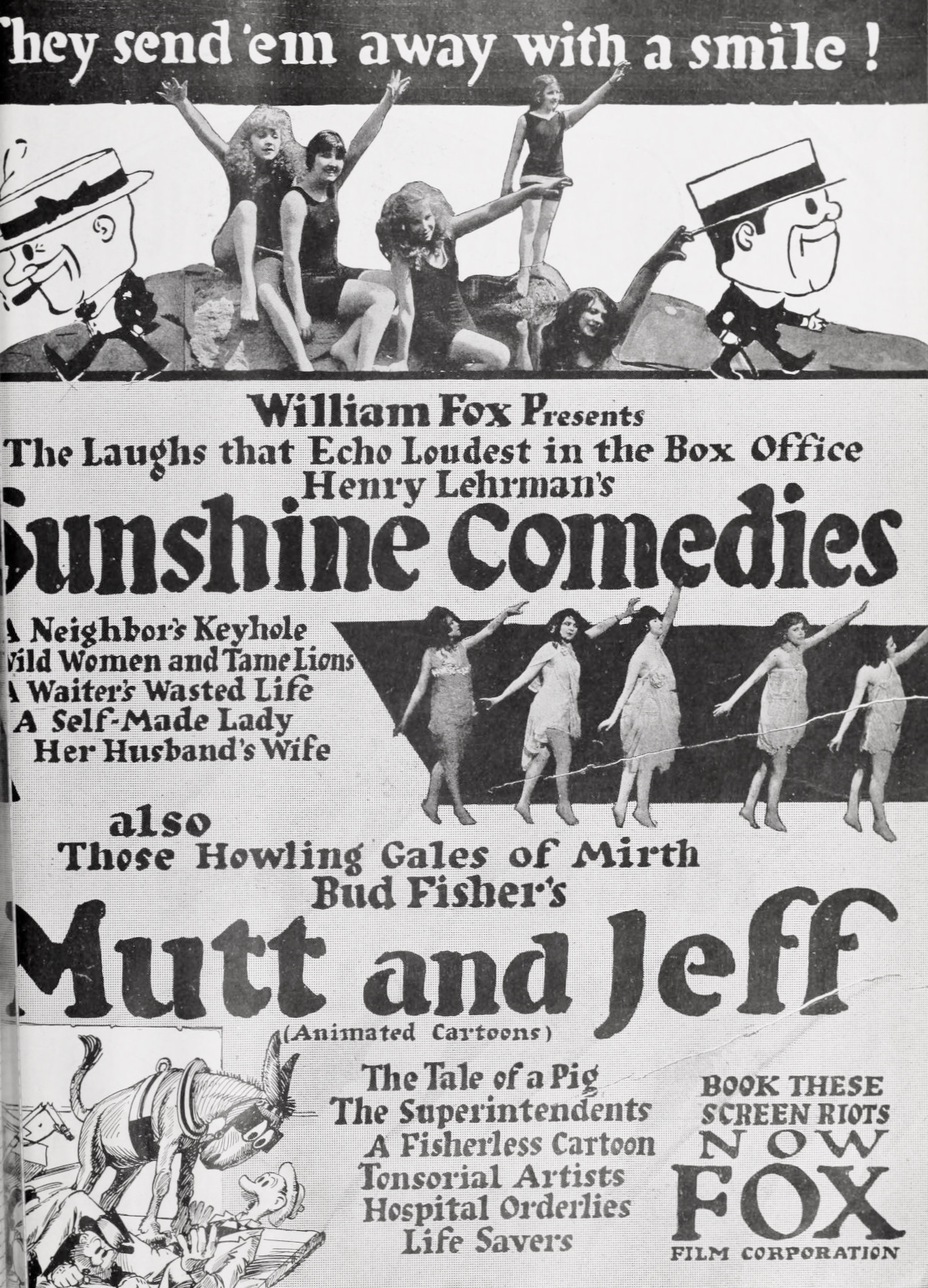
The celluloid landscape of 1918 was a crucible of experimentation, a period where the vocabulary of visual humor was being written in real-time through sweat, sawdust, and the occasional shattered prop. A Waiter's Wasted Life, a production that emerges from the frantic energy of the Henry Lehrman stable, stands as a testament to the era's obsession with the chaotic intersection of labor and leisure. Unlike the more polished, sentimental narratives found in The Love Girl, this film embraces a raw, almost atavistic approach to comedy that prioritizes the visceral impact of the gag over the niceties of plot structure.
Henry Lehrman, often remembered by the moniker "Pathé" Lehrman, brought a specific brand of high-velocity mayhem to the screen. His work often eschewed the nuanced pathos of a Chaplin or the architectural precision of a Keaton. Instead, Lehrman focused on the 'suicide' style of comedy—a relentless barrage of physical stunts that seem to defy the physiological limits of the performers. In A Waiter's Wasted Life, this philosophy is manifest in every frame. The restaurant setting provides a perfect proscenium for this brand of choreographed destruction. While a film like The Vital Question might ponder the moral complexities of the human condition, Lehrman's work here asks a much more immediate question: how many ways can a man fall down while holding a tray of soup?
The casting of Billie Ritchie is pivotal. Ritchie, a veteran of the Fred Karno troupes, shared a stylistic DNA with Chaplin, yet his screen persona in this film is harder, more cynical. There is a jagged edge to his movements that mirrors the frantic pace of the editing. When he interacts with the formidable Tom Kennedy or the lithe Lloyd Hamilton, the screen crackles with a competitive energy. This isn't just a performance; it is a survival exercise. The waiter's life is 'wasted' not merely in the sense of time lost, but in the sense of a human being pulverized by the machinery of service—a theme that resonates with the somber undertones of The Derelict, albeit through a funhouse mirror.
Technically, the film utilizes the limited depth of field of the era to create a sense of claustrophobia. The restaurant interior is a labyrinth of swinging doors and slippery floors. Every entrance by Eileen Percy or Anita Burrell serves as a temporary reprieve from the madness, a brief flash of grace before the next collision. The cinematography doesn't just record the action; it participates in it. The framing is tight, forcing the audience into the middle of the melee. This sensory overload is a far cry from the theatrical staginess of Alice in Wonderland, opting instead for a gritty, immediate realism that captures the soot and steam of the kitchen.
Consider the sequence involving the rival waiter, played with sneering perfection by Jimmie Adams. The rivalry isn't just a plot point; it's a structural device that allows Lehrman to explore the concept of the 'doubled' self—a motif often seen in more serious fare like The Two-Soul Woman. Here, the duality is played for laughs, as the two servers attempt to outmaneuver one another in a ballet of sabotage. The physical comedy becomes a language of its own, communicating social hierarchies and professional jealousy far more effectively than any intertitle could.
While A Waiter's Wasted Life is ostensibly a comedy, it would be a mistake to ignore the sharp social critique simmering beneath its surface. The patrons of the restaurant are depicted as a grotesque bourgeoisie, their appetites as insatiable as their tempers are short. The waiter, standing at the bottom of the food chain, is the recipient of their collective disdain. This exploration of class conflict is a recurring theme in silent cinema, finding echoes in the domestic dramas of Dorian's Divorce or the political machinations of The Ring and the Man. However, Lehrman’s approach is more subversive because it uses laughter to highlight the absurdity of these power dynamics.
The presence of Lloyd Hamilton adds a layer of absurdist brilliance. Hamilton, who would later become a major star in his own right, possesses a unique comic timing that feels almost avant-garde. His interactions with the rest of the cast suggest a world that is slightly off-kilter, a precursor to the surrealism that would eventually permeate the medium. When contrasted with the more traditional melodrama of The Other's Sins, Hamilton’s performance feels like a radical departure, a glimpse into the future of cinematic humor.
The title itself, A Waiter's Wasted Life, carries a weight that seems disproportionate to a two-reel comedy. It suggests a tragic dimension that the film never fully explores but constantly hints at. There is a sense of exhaustion in Ritchie’s eyes during the rare moments of stillness—a realization that the cycle of slapstick is endless. This existential weariness is something we see in the evangelistic fervor of John Redmond, the Evangelist, where the search for meaning is equally fraught. In Lehrman’s world, however, there is no divine intervention, only the next banana peel.
The film’s historical value cannot be overstated. As a document of the Fox Sunshine or L-KO Kompany era, it provides a window into a style of filmmaking that was soon to be eclipsed by the more sophisticated features of the 1920s. It captures a moment when the screen was a place of pure, unadulterated energy, before the advent of the Hays Code and the formalization of narrative conventions. It shares a certain DNA with the celebratory spirit of Desfile histórico del centenario, though its focus is on the micro-history of the common man rather than the macro-history of a nation.
Eileen Percy, often the 'straight man' in these comedic tempests, provides the necessary emotional grounding. Her character represents the elusive 'better life' that the waiter dreams of, a beacon of normalcy in a sea of madness. Her performance is subtle, relying on expressive glances that contrast sharply with the broad gestures of the male cast. This dynamic is reminiscent of the ensemble work in The Mixed Ladies Chorus, where the interplay between different performance styles creates a rich, textured whole. Anita Burrell similarly adds a layer of sophistication, her presence reminding the audience that even in the midst of a food fight, there are stakes involving the heart.
The screenplay by Henry Lehrman—though 'screenplay' is a generous term for what was likely a series of loosely connected gag ideas—shows a surprising amount of internal logic. The escalation of the restaurant conflict is handled with a sense of musicality. Each set-piece builds upon the last, increasing in complexity and scale until the final, inevitable collapse. This rhythmic pacing is something that even contemporary filmmakers struggle to master, and it’s what keeps A Waiter's Wasted Life from feeling like a mere relic. It is a living, breathing piece of cinema that demands to be watched with the same intensity with which it was performed.
To watch A Waiter's Wasted Life today is to engage with the ghosts of a vanished world. We see the dusty streets of early Los Angeles, the primitive lighting rigs, and the sheer bravery of actors who threw themselves into their craft with reckless abandon. It lacks the saccharine sentimentality of The Millionaire Baby or the pastoral simplicity of Way Outback. Instead, it offers a gritty, hilarious, and ultimately moving portrait of human resilience.
The waiter’s life may be 'wasted' in the eyes of his superiors, but in the eyes of the cinema, it is immortalized. Every slip, every slide, and every pie to the face is a badge of honor. As we navigate our own modern labyrinths of service and labor, there is something deeply cathartic about watching Billie Ritchie transform his suffering into art. It reminds us that even in our most desperate moments, there is a potential for comedy, a chance to turn our failures into a spectacle for the ages. Much like the protagonists in On the Trail of the Spider Gang, our hero is constantly pursued by forces beyond his control, yet he continues to run, to jump, and to serve, until the final fade to black.
In the grand pantheon of 1918 releases, this film might have been seen as a disposable distraction. Yet, with the benefit of hindsight, we can see it for what it truly is: a foundational text of physical comedy. It asks the viewer Who Knows? when the next disaster will strike, and encourages us to laugh in its face. Henry Lehrman may not have been an auteur in the modern sense, but in the kitchen of cinematic history, he was a master chef of chaos, and A Waiter's Wasted Life is his most pungent, satisfying dish.
Critic's Rating: 8.4/10
A masterclass in the 'suicide' style of comedy, this film is a relentless, exhausting, and brilliant showcase of silent era physicality. It remains an essential watch for anyone interested in the roots of visual storytelling and the enduring power of the pratfall.
IMDb —
1925
Community
Log in to comment.