DbcultAccessing Vault...
Cult Review
Senior Film Conservator
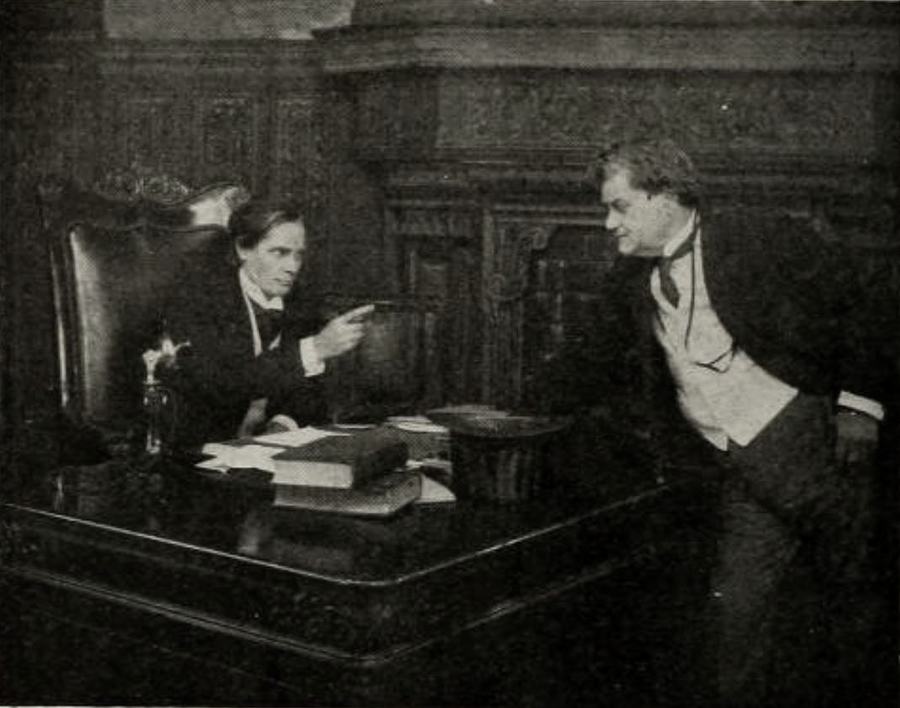
Corruption has always worn a necktie. In James S. Barcus’s blistering 1915 one-reeler The Governor’s Boss, the tie is silk, the knot is perfect, and the man adjusting it is Boss Tally—a political puppeteer whose grin could curdle cream at twenty paces. What shocks is not his villainy; it’s how contemporary the machinery feels a century later. The film arrives like a yellowed telegram from the past that somehow predicts tomorrow’s headlines.
Shot when Woodrow Wilson was still promising “open covenants, openly arrived at,” the picture dares to strip the covenant down to its bribe-stained drawers. Our protagonist—Governor Hall, played with ramrod rectitude by Edward P. Sullivan—believes paperwork can shame gunpowder. He is quickly disabused. His sin? Declining to gift the Superintendency of Canal Disbursements to Tally’s whisky-breathed crony. From that single ethical stand, an entire empire of reprisal uncoils.
Barcus, a newspaperman before he was a scenarist, scripts Albany like a battlefield. Corridors become trenches; telegraph wires are tripwires. The governor’s mansion, normally a palace of handshakes and haute cuisine, morphs into a bunker where every servant might smuggle a blade. Even the chandeliers feel accusatory, their crystal teardrops mirroring the moral anguish of Ruth (Dorothy Kingdon), the governor’s only daughter and the film’s clandestine moral center.
Love stories in early cinema often feel stapled on, like pressed flowers in a ledger. Here, the romance is the ledger. When Tally commands his callow son Archie (Bert Tuey) to jilt Ruth, the engagement ring becomes a bullet: small, metallic, capable of shattering bone. Their broken betrothal is staged in a winter garden—white statuary, leafless vines—so the emotional frost literally envelops the frame. Ruth’s tear-streaked close-up, hand-cranked at a slower speed, elongates grief until it becomes operatic. Kingdon, a musical-comedy veteran, lets silence do the singing.
Compare the emotional geometry to Colonel Carter of Cartersville, where hearts break over mint juleps and the stakes never exceed a canceled cotillion. Barcus yanks the genre into the gutter, proving that heartbreak stings sharpest when it’s tethered to a pending impeachment.
In 1915 the word “dictagraph” still carried the whiff of science-fiction. Barcus weaponizes it. Tally’s smoke-choked backroom is wiretapped by a trembling clerk—Pauline Hall in a career-defining cameo—who hides the microphone inside a cuspidor. The resulting audio (rendered on title cards as staccato bursts) is paired with clandestine 16-millimeter images: shadows shaking hands, envelopes swapping laps, whiskey glasses raised in predatory toasts. We are watching the birth of the political surveillance thriller, predating All the President’s Men by six decades and predicting our own algorithmic age where every keystroke is a potential exhibit A.
The visual grammar is kinetic even by modern standards. Cinematographer Madison C. Peters mounts a hand-cranked Bell & Howell inside a grandfather clock, its pendulum aperture providing a natural iris that dilates on conspirators’ faces. The result feels like Hitchcock before Hitchcock—peeping, prodding, tightening the noose one gear-tooth at a time.
Because the impeachment trial is hustled through a purchased senate, the governor’s counsel (Frank Tinney, channeling a young Clarence Darrow) begs for a single day’s delay. Denied. Thus the film’s final reel becomes a proto-noir car chase: Ruth’s Packard “Six” fishtailing down dirt roads, Tally’s trench-coated torpedoes in a Studebaker wielding crowbars and misogynistic leers. The camera is lashed to the running board; every pebble, every dust plume is tactile. When Ruth finally crashes through the capitol’s bronze doors, evidence spools in her arms like nitrate rosary beads—only to watch the electronic vote tally light up 83–17 for removal. The governor’s gavel falls. Fade-out.
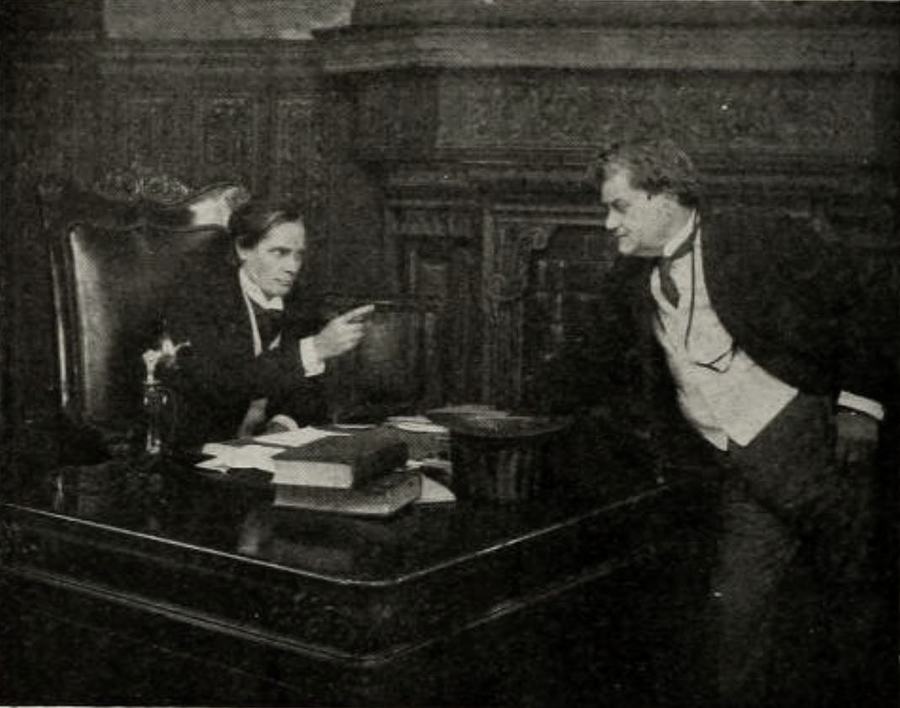
No last-second pardon. No deus ex senate. Just the chill, documentary aftertaste of systemic failure. For 1915, that refusal of catharsis is braver than most prestige television today.
Edward Roseman, as Boss Tally, swaggers with such lubricious charisma you half-root for him. He twirls a pince-nez, massages lapels, and lets his baritone boom across silent title cards: “A Governor lasts four years; a machine lasts forever.” It’s a line that should be carved into lobbyist marble. Contrast that with Anna Logan, playing the governor’s consumptive wife, who spends the film’s runtime embroidering a state seal she will never finish—an oblique metaphor for progressive idealism: delicate, blood-pricked, perpetually incomplete.
Even bit players resonate: Sidney D’Albrook’s thumb-printing henchman chews garlic before intimidating witnesses, a sensory detail you can almost smell through the screen. Meanwhile William Sulzer, an actual impeached New York governor, cameos as the Chief Justice—life plagiarizing art in real time.
Restorationists at MoMA timed the tinting to emotional thermostats: candlelit parlor scenes glow molten orange, suggesting both hearth warmth and lurking hellfire; corridors of power drip nocturnal cyan, the celluloid equivalent of bruised idealism; while Ruth’s climactic dash is bathed in sickly yellow dawn, as though the sun itself were complicit. Tinting was common in the teens, but rarely calibrated this psychologically.
Watch The Governor’s Boss beside War and Peace or Severo Torelli and you’ll notice something subversive: Barcus trusts the audience to supply the roar. When senators cast their impeachment ballots, we hear nothing—no orchestral stab, no dialogue card—just the phantom click of phantom switches. Into that vacuum rushes your own soundtrack: cable-news chyrons, committee hearings, the perpetual scroll of today’s political feed. The silence is an amplifier.
Stacked against Brother Against Brother or The Broken Promise, Barcus’s film is less melodrama than procedural. Its DNA snakes forward through Mr. Smith Goes to Washington, All the King’s Men, even House of Cards—but without the soothing balm of heroic reversal. Imagine In the Lion’s Den minus redemption, or The Man Who Disappeared if the man never reappears.
Some films merely entertain; others inoculate you against future apathy. The Governor’s Boss does the latter with a syringe filled with ice water. It warns that integrity unsupported by infrastructure is a hobby, not a platform. And yet the film is not nihilistic—it is galvanizing. Ruth’s too-late evidence reminds us that truth always arrives; justice, however, requires a parking space. If we refuse to build that space, we keep replaying Barcus’s final frame: a daughter breathless, a father disgraced, a cigar-chomping operator already selecting his next puppet.
Seek out any 16-millimeter print still smoldering in an attic; lobby your local cinematheque for a 4K restoration; stream the bootleg on your phone at 3 a.m.—but watch it. Because the governor’s gavel is still falling somewhere, and every viewer with a ticket stub gets to vote on whether it echoes unheard.
IMDb —
1921
Community
Log in to comment.