DbcultAccessing Vault...
Cult Review
Senior Film Conservator
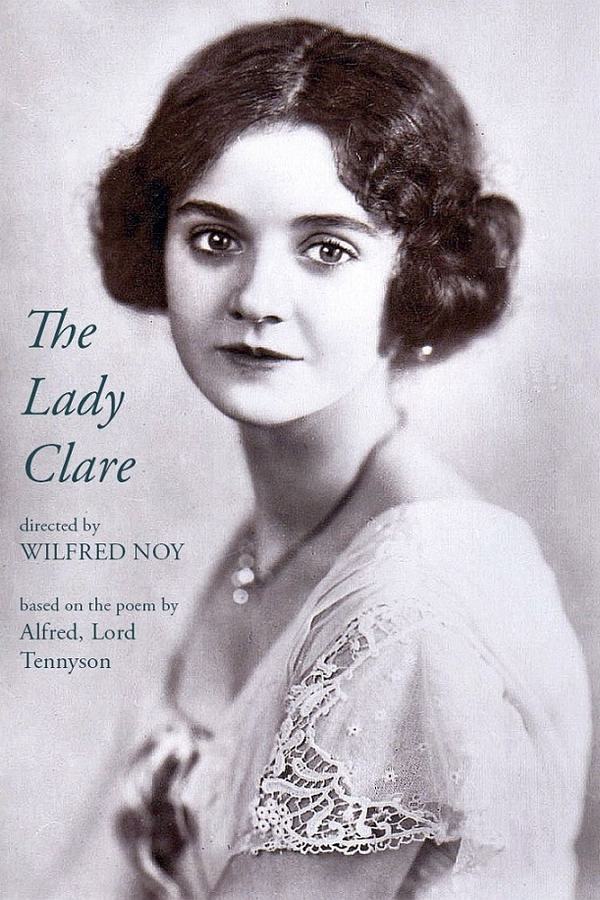
Stepping back into the annals of early cinema, one occasionally uncovers a narrative so rich in its human dilemma that it transcends the limitations of its silent form, speaking directly to the universal heart. Such is the case with The Lady Clare, a cinematic adaptation that, while perhaps not as widely discussed as some of its contemporaries, offers a compelling exploration of identity, class, and the unwavering nature of true affection. Penned by the venerable Alfred Lord Tennyson and adapted for the screen by Dale Lawrence Brunel, this film plunges into a world where lineage is paramount, and a single revelation can unravel a life meticulously woven into the fabric of aristocracy. It’s a testament to the power of storytelling that even without spoken dialogue, the emotional weight of this tale, brought to life by a dedicated cast including Mary Odette, Barbara Everest, and Jack Hobbs, resonates deeply.
At its core, The Lady Clare presents a scenario ripe with dramatic tension: a Lord, deeply enamored, prepares to wed his beloved Lady Clare. Their union appears destined, a perfect match within the rigid societal strata of their time. However, the narrative takes a seismic turn with the discovery that Lady Clare, the epitome of aristocratic grace, is in fact a village child, clandestinely substituted into the noble family during her infancy. This revelation isn't merely a plot twist; it's an existential crisis for all involved, particularly for the Lord, whose world is suddenly cleaved between duty and desire. The film masterfully portrays the visceral shock and subsequent moral quandary faced by the protagonist. His love for Clare is genuine, yet the societal implications of marrying someone of 'humble' birth, especially one whose very identity is a deception, are immense. This isn't just about a secret; it's about the very construct of identity and inherited privilege being challenged by the raw, untamed force of human connection. The film's strength lies in its ability to convey this profound internal struggle through gesture, expression, and the subtle nuances of silent performance.
The success of any silent film hinges almost entirely on the expressive capabilities of its cast, and The Lady Clare is fortunate in this regard. Mary Odette, in the titular role, delivers a performance of remarkable sensitivity. Her portrayal of Lady Clare, initially graceful and serene, then shattered and vulnerable upon the revelation of her true parentage, is nothing short of captivating. Odette employs subtle shifts in posture, delicate facial expressions, and a poignant gaze to communicate a spectrum of emotions – from innocent joy to profound despair. Her quiet dignity in the face of scandal is particularly moving, allowing the audience to empathize deeply with her plight. Jack Hobbs, as the Lord, complements her beautifully. His character's journey from confident suitor to a man wrestling with an agonizing moral choice is conveyed with a gravitas that belies the inherent melodrama of the plot. Hobbs avoids caricature, instead imbuing his Lord with a thoughtful intensity, making his eventual decision feel earned and deeply personal. The tension in his brow, the conflict in his eyes, are palpable even across the decades.
Barbara Everest, a seasoned actress of the era, provides solid support, likely in a role that grounds the narrative or adds another layer of emotional complexity, perhaps as a wise elder or a conflicted relative. The ensemble, including Charles Quatermaine, Simeon Stuart, Fewlass Llewellyn, Gilbert Esmond, Nancy O'Hara, Arthur Cleave, Gladys Jennings, Mary Forbes, and Winifred Evans, collectively contributes to the rich tapestry of the film’s world. Each actor, through their silent craft, enhances the atmosphere of Victorian propriety and underlying emotional turmoil. Their reactions – shock, disapproval, sympathy – serve as a Greek chorus, reflecting the societal pressures that weigh so heavily on the central couple. This collective dedication to character, even in minor roles, elevates the film from a simple melodrama to a compelling character study.
The enduring power of The Lady Clare lies in its trenchant exploration of themes that remain relevant even today. The most prominent is the clash between inherited status and innate worth. Clare's 'true' origins as a village child highlight the arbitrary nature of class distinctions. Is her value diminished because of her birth? The film unequivocally argues against this, asserting that character, integrity, and love transcend the superficiality of lineage. This theme finds echoes in other films that challenge societal norms, though perhaps with different angles. For instance, the rigid social structures and the struggle against them in The King's Game or the constraints imposed by societal expectations in Bondage present similar, albeit distinct, explorations of individuals confined by their circumstances. The Lord's decision to proceed with the marriage, despite the scandal, is a powerful statement against the prevailing snobbery of his age, a radical act of love that prioritizes the individual over the institution.
Another crucial theme is that of identity and deception. Clare has lived her entire life under a false pretense, unknowingly. When her true identity is revealed, it forces her, and those around her, to confront the very essence of who she is. This resonates with narratives like The Cloven Tongue, which might deal with hidden truths, or even The Hiding of Black Bill, where concealment plays a central role. The film asks profound questions: Does a change in one's perceived origin alter who they are as a person? Can love survive the shattering of an illusion? The Lady Clare suggests that while the truth can be painful, genuine love possesses the resilience to embrace it, to see beyond superficial labels to the soul beneath. The scandalous nature of the revelation also brings to mind the social repercussions explored in films like Cross Currents, where personal choices often ripple through the community, creating waves of judgment and gossip.
The film also subtly critiques the hypocrisy of rigid social conventions. The 'scandal' isn't about Clare's character, but about her birth. The aristocracy's fear of contamination, of a 'commoner' sullying their bloodline, is laid bare. Yet, the Lord's decision to marry her anyway is a powerful counter-narrative, suggesting a more enlightened, compassionate path. This progressive viewpoint, even in an early 20th-century film, is striking. It aligns with the spirit of humanism found in stories challenging societal norms, such as the struggles against poverty and class division depicted in The Old Curiosity Shop. The portrayal of love conquering all, despite external pressures, also aligns with the romantic spirit often found in films like Sunshine Alley or The Duke's Talisman, where obstacles are overcome by enduring affection.
From a technical perspective, The Lady Clare exemplifies the sophisticated visual storytelling that characterized the zenith of the silent era. The direction, while perhaps not overtly flashy, is effective in building mood and conveying narrative without dialogue. Cinematography, relying on carefully composed shots and evocative lighting, guides the viewer's eye, emphasizing character reactions and the grandeur of the aristocratic setting contrasted with the implied simplicity of village life. The pacing is deliberate, allowing moments of emotional intensity to fully register, giving the audience time to absorb the gravity of the situation. Intertitles are used judiciously, providing essential exposition or snippets of dialogue, but never overwhelming the visual narrative. This thoughtful approach ensures that the film remains engaging, even for modern audiences accustomed to faster cuts and sound. The artistry lies in the ability to communicate such complex emotional arcs and societal critiques through purely visual means, a skill that was honed to perfection during this period.
Consider the narrative economy required in silent film; every gesture, every prop, every shift in lighting carries significant weight. Unlike more bombastic productions such as Kapten Grogg och fru, which might lean into broader comedic strokes, or the investigative nature of Mistinguett détective, The Lady Clare relies on internal drama. The directorial choices here are about restraint and emotional precision. The film doesn't need exaggerated actions to convey the turmoil; a tear, a clenched fist, a hesitant step – these are the tools of its powerful expression. This subtlety is a hallmark of truly accomplished silent filmmaking, demonstrating that profound stories don't always require grand gestures, but rather deeply felt ones.
The source material for The Lady Clare, Alfred Lord Tennyson's poem, provides a rich literary foundation. Tennyson, a master of Victorian narrative poetry, often explored themes of love, loss, duty, and social standing. His original work likely imbued the story with a certain classical gravitas and emotional depth, which Dale Lawrence Brunel, as the screenwriter, had the delicate task of translating into a visual medium. Brunel's adaptation would have involved distilling the poetic nuances into cinematic action, ensuring that the essence of Tennyson's moral and romantic inquiry remained intact. This process of adaptation is always challenging, requiring a keen understanding of both the source material and the distinct demands of film. Brunel appears to have succeeded in maintaining the integrity of the original while making it accessible and impactful for a silent film audience. The fidelity to the spirit of Tennyson's work is evident in the film's serious approach to its subject matter and its ultimate affirmation of love and human dignity over superficial status. This careful translation of literary work to screen is a vital aspect of early cinema, akin to how other classic narratives, such as those found in The Narrow Path or The Door Between, were adapted to capture their moral complexities for a broader audience.
In an era that often glorified clear-cut heroes and villains, The Lady Clare offers a refreshingly nuanced perspective on human morality and societal constructs. Its exploration of identity, class, and the triumph of genuine affection over inherited status makes it more than just a historical curiosity; it's a timeless drama. The film's ability to evoke such powerful emotions and provoke thoughtful consideration, entirely without spoken word, is a testament to the enduring artistry of silent cinema and the universal appeal of its central message. It reminds us that the human heart, when truly engaged, sees beyond the superficialities of birth and station, recognizing worth in its purest form.
Watching The Lady Clare today is not merely an exercise in historical appreciation; it's an opportunity to connect with a narrative that challenges us to look beyond appearances and embrace the deeper truths of human connection. Its quiet power leaves a resonant echo, compelling viewers to ponder the nature of love, truth, and societal judgment long after the final frame has faded. It stands as a compelling example of how early filmmakers, like those behind Im Schatten des Glücks or 23 1/2 Hours' Leave, were already grappling with complex human experiences, proving that cinema, from its very nascent stages, was a profound medium for exploring the human condition.
IMDb 6.2
1931
Community
Log in to comment.