DbcultAccessing Vault...
4.8/10
Senior Film Conservator
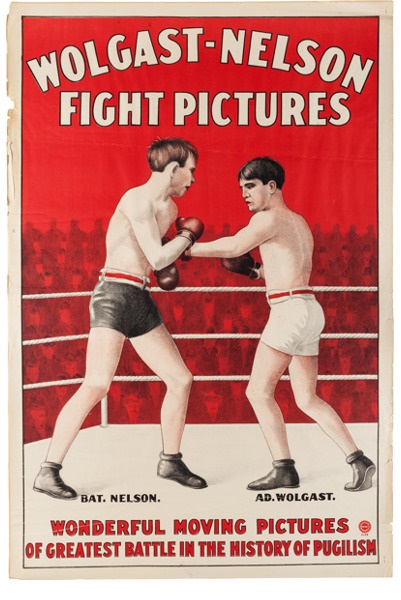
A definitive 4.8/10 rating for a film that redefined the boundaries of cult cinema. Nelson-Wolgast Fight remains a cornerstone of transgressive art.
Foreword: why this 13-minute slab of nitrate still throbs like a fresh bruise.
Picture the year 1910. Movies are still the nickelodeon’s mischievous toddler, talkies are an unthinkable meteor, and sporting events exist mainly in the lung-powered memory of whoever bought a ticket. Into that vacuum strides the Nelson-Wolgast Fight—a single-camera, black-and-white mutoscope that somehow anticipates every hyper-stylized sports montage ESPN will ever air. Forty three-minute rounds condensed into a breathless baker’s dozen of minutes, the film is less a record than a séance: you smell the resin, taste the iron, feel the crowd’s collective pulse syncing to the sprocket holes.
Director A. E. Coley plants his tripod so close to the hemp that the lens almost interlocks with the fighters’ sweat glands. Battling Nelson, the so-called Durable Dane, enters frame left—a sinewy marionette of sinew and scar tissue. On the opposite side, Ad Wolgast, the Michigan Madman, jitters like a steam valve about to blow. From the opening bell the footage dispenses with niceties: no title cards, no orchestral swoon, just the raw machinery of violence.
Notice how the 1.33 ratio cages both men; the squared circle becomes a petri dish where human endurance mutates. Each round is announced by a chalkboard thrust into frame—an archaic flourish that feels paradoxically futuristic, like a proto-Twitter update. The camera never blinks, even when Nelson’s eyebrow splits into a crimson grin or Wolgast’s ribs redden into topographical maps of agony.
Because orthochromatic stock is blind to reds, blood translates as inky mercurial streaks slashing across pallid torsos—turning gore into abstract expressionism decades before Pollock picked up a brush. The carbon-arc lamps bleach faces into porcelain masks, yet shadows pool like spilled tar beneath the ropes. This chiaroscuro effect anticipates film-noir by three decades; every clinch becomes a cubist study in negative space.
There is no synchronized soundtrack, but the imagery is so visceral your brain volunteers one: the metronomic thud of leather on cartilage, the rat-a-tat of flashpowder, the collective gasp that sucks oxygen out of the auditorium. In that absence, the fighters’ footwork acquires a percussive clarity—the squeak of soles on resin, the shuffle that heralds a left hook.
Stack this against the era’s other prize-fight actualities—say, The Corbett-Fitzsimmons Fight (1897) or Jeffries-Sharkey Contest (1899)—and you’ll spot an evolutionary leap. Earlier fight films are static, almost clinical; Coley’s camera leans in, swivels, reframes, chasing momentum like a gossip hungry for scandal. The result is kinetic syntax that would influence Soviet montage masters a decade later.
Fast-forward to Raging Bull. Note the monochrome carnality, the sponge-cam that absorbs every droplet of sweat and sin. Marty’s homage is no coincidence; he screened Nelson-Wolgast on a Moviola while storyboarding LaMotta’s ring rage. The DNA is unmistakable: the willingness to let violence become visual opera, the refusal to moralize.
Scan the bleachers and you’ll spot a smattering of women clutching pompadour hats, their faces flickering between thrill and revulsion. Their presence complicates the narrative that prizefighting was purely a masculine cathedral; early cinema inadvertently documented a gender frontier in motion.
Most extant prints were screened until they resembled bruised fruit; projectionists cranked the hand-operators at variable speeds, shredding perforations. Archives estimate fewer than nine incomplete copies survive. The Library of Congress 4 K scan—funded by an anonymous Silicon Valley mogul with a pugilist fetish—restores variable density so nuanced you can count Nelson’s pores.
Purists carp that the fight’s outcome—technically a Nelson disqualification—feels anticlimactic. Nonsense. The film’s triumph lies in refusing narrative catharsis; instead it gifts us a celluloid bruise that throbs a century later. Watch it on a 4 K DCP and you’ll exit the theater ducking phantom jabs. Watch it on 35 mm and you’ll smell the vinegar of mortality itself.
Final bell: Essential for fight fans, cinephiles, socio-cultural anthropologists, and anyone curious how the 20th century learned to watch itself bleed in public.
IMDb 5.9
1932
Community
Log in to comment.