DbcultAccessing Vault...
5.6/10
Senior Film Conservator
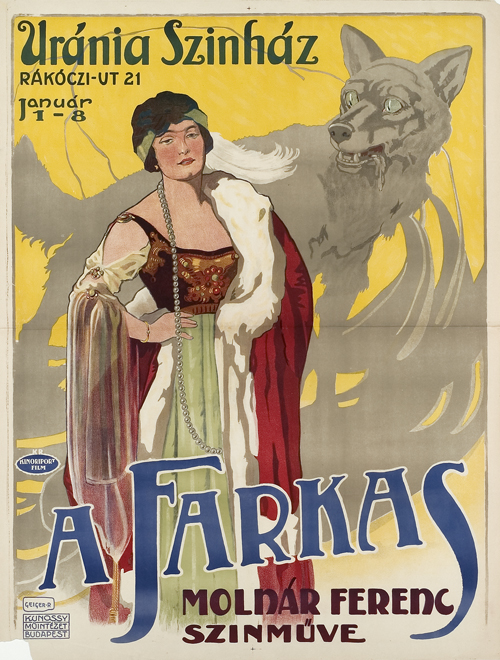
A definitive 5.6/10 rating for a film that redefined the boundaries of cult cinema. Farkas remains a cornerstone of transgressive art.
Stepping back into the nascent days of cinema, particularly the rich, often overlooked tapestry of European silent film, one encounters works that, despite their age, resonate with an astonishing contemporary relevance. Among these, Michael Curtiz’s early Hungarian endeavor, Farkas, stands as a compelling testament to the director's burgeoning genius, a film that, even in its spectral existence, hints at the grand narratives and visual flair that would define his later Hollywood career. To truly appreciate Farkas is to engage in an act of cinematic archeology, piecing together its thematic core and artistic ambition from the fragments of history.
The narrative, penned with a sophisticated touch by Ferenc Molnár and Ladislaus Vajda, plunges us into the gilded cages and shadowy alleys of 1910s Budapest. Here, László Farkas, an architect of immense talent but humble origins, becomes a metaphor for the societal friction of an era teetering on the brink of profound change. His very name, 'Farkas'—meaning 'wolf' in Hungarian—is no mere coincidence; it is a meticulously chosen emblem of his character: cunning, ambitious, and fiercely independent. He possesses an innate ability to discern the vulnerabilities in the social fabric, much like a wolf identifies the weakest link in a herd, yet he also carries a burden of integrity that sets him apart from the predatory elite he seeks to infiltrate. This duality forms the emotional bedrock of the film, allowing for a multifaceted exploration of ambition, class, and the human heart's complex desires.
At the heart of Farkas's journey is Countess Ilona Károlyi, portrayed with exquisite grace by Hermin Haraszti. Ilona is not merely a damsel in distress; she is a woman of discerning taste and quiet strength, her spirit subtly chafing against the restrictive confines of her aristocratic world. Her appreciation for Farkas's architectural vision transcends mere patronage; it evolves into a profound intellectual and emotional connection, a forbidden spark igniting amidst the societal ice. This burgeoning affection, however, is a dangerous game, as Ilona is betrothed to Baron Gábor Varga, a figure embodying the decadent corruption lurking beneath Budapest's glittering surface. Victor Varconi’s portrayal of Varga is a masterclass in nuanced villainy, a performance that eschews overt caricature for a more insidious, believable malevolence. Varga’s charm is a thin veneer over a calculating mind, and his machinations against Farkas are not born of simple jealousy but a more profound fear of genuine talent and disruptive integrity.
Curtiz, even in these early years, demonstrates an uncanny ability to stage scenes of dramatic tension and emotional intimacy. The interplay between Farkas and Ilona, often conveyed through longing glances and subtle gestures, speaks volumes, a testament to the power of silent acting. The visual language of the film, though largely lost to time, can be inferred from Curtiz’s subsequent works and the prevailing cinematic aesthetics of the period. One imagines sweeping camera movements, chiaroscuro lighting emphasizing moral ambiguities, and meticulously composed frames that underscore the characters' psychological states. It's a stark contrast to the more straightforward, almost documentary-like approach seen in some earlier contemporaries like The Boer War, instead leaning into the expressive potential of the medium.
The central conflict revolves around Varga’s audacious scheme to embezzle funds from the opera house project, intending to lay the blame squarely at Farkas's feet. This plot device, while a common trope in melodramas of the era, is elevated by Molnár and Vajda’s script, which imbues the financial chicanery with a palpable sense of moral decay. Farkas is not merely fighting for his reputation; he is fighting for the integrity of his art and his very identity. The film delves into the intricate web of societal power dynamics, where truth is often a malleable commodity, easily twisted by those with influence. Artúr Somlay, Lucy Doraine, Vilmos Lóránth, and Frida Gombaszögi, in their supporting roles, contribute significantly to this intricate tapestry, each portraying characters who either aid or hinder Farkas's desperate quest for justice, adding layers of intrigue and human frailty to the narrative.
The film's pacing, characteristic of the era, likely built tension gradually, allowing the audience to become deeply invested in Farkas's plight. The 'wolf-like' cunning attributed to Farkas is not merely a symbolic flourish; it manifests in his resourceful attempts to uncover Varga's illicit dealings, perhaps involving daring infiltrations or clever deductions. This intellectual cat-and-mouse game provides a thrilling counterpoint to the emotional drama. In this regard, it shares a certain cerebral thrill with films like The Great Ruby, where the unraveling of a complex mystery drives the plot, though Farkas grounds its suspense more deeply in character psychology and social commentary.
The climax of Farkas is orchestrated with a sense of operatic grandeur, befitting its architectural centerpiece. The groundbreaking ceremony for the opera house, intended as a celebration of culture and progress, transforms into a crucible of exposure. Varga’s treachery is laid bare, not without a struggle, and Farkas, despite his vindication, finds himself ensnared by Varga’s careful prior machinations. This moment of public disgrace, followed by a desperate confrontation—perhaps a duel, a chase through the city, or a fervent plea for understanding—would have been a tour de force of silent cinema, relying on the actors' expressive power and Curtiz’s visual storytelling to convey the raw emotional stakes. The film understands that true drama often lies not in simple good-versus-evil but in the messy aftermath of moral ambiguity.
Unlike the clear-cut heroism often depicted in adventure films of the era, such as 20,000 Leagues Under the Sea, the resolution in Farkas leans towards a more profound, melancholic realism. Farkas, though exonerated, cannot simply rejoin the world he fought to enter. His challenge to the aristocracy, his unconventional methods, and his very existence as an outsider who dared to ascend, mark him indelibly. He is the wolf who walked among the sheep and, despite proving his innocence, remains an anomaly. His love for Ilona, too, becomes a casualty of this societal rigidity, a poignant reminder that not all battles end with a happy ever after. This bittersweet conclusion, where integrity is upheld but personal happiness remains elusive, aligns with the more sophisticated dramatic sensibilities of writers like Molnár and the emerging realism in European cinema, a stark departure from the more overt moralizing found in films like Fine Feathers.
The performances in Farkas are central to its enduring appeal. Hermin Haraszti, as Countess Ilona, embodies a delicate balance of vulnerability and inner strength. Her expressive eyes and subtle gestures would have conveyed the depth of her moral conflict and her yearning for a connection beyond her social standing. Victor Varconi’s Baron Varga is a compelling antagonist, his suave exterior belying a ruthless pragmatism. Varconi, who would later find success in Hollywood, demonstrates here an early command of screen presence, making Varga a figure of both allure and repulsion. The chemistry between the leads would have been crucial, and one can imagine the silent sparks flying between Haraszti's refined anguish and Farkas's raw intensity.
Michael Curtiz's direction is the unifying force, orchestrating these performances within a visually rich environment. Even in his earliest works, Curtiz displayed a keen understanding of cinematic rhythm and the power of visual storytelling to convey complex emotions without spoken dialogue. His use of light and shadow, composition, and character blocking would have been instrumental in building the film's atmosphere and driving its dramatic momentum. This early mastery of the craft laid the groundwork for his later iconic films, showing a consistent artistic vision from his Hungarian period through his golden age in Hollywood.
While Farkas, like many silent films, remains a rare and often inaccessible gem, its significance in the oeuvre of Michael Curtiz and in the broader context of Hungarian cinema cannot be overstated. It represents a vital evolutionary step for a director who would go on to shape Hollywood's golden age. The film's themes—the clash between individual ambition and societal constraints, the corrupting influence of power, and the enduring quest for authenticity—are timeless. They resonate as powerfully today as they did a century ago, offering a window into the societal anxieties and moral complexities of an era long past. It’s a work that, through its detailed characterizations and sophisticated narrative, transcends the limitations of its silent medium.
Comparing Farkas to other films of its period further illuminates its unique qualities. While a film like Der Zug des Herzens might focus on more straightforward romantic entanglements, Farkas weaves its romance into a larger tapestry of social critique and personal struggle. It possesses a psychological depth that sets it apart from simpler melodramas, hinting at the sophisticated storytelling that would later define films like The Woman Who Dared, which also explored themes of female agency and societal defiance. The ambition and scale of the opera house project within the film could even draw parallels to the grand narratives found in epics like Pyotr Velikiy, though Farkas maintains a more intimate focus on its characters' inner lives.
Ultimately, Farkas is more than just a historical artifact; it is a vital piece of cinematic heritage, a testament to the enduring power of storytelling and the visionary artistry of its creators. Its echoes continue to inform our understanding of early cinema and the remarkable journey of one of its most prolific directors. To study Farkas is to understand the foundations upon which so much of modern cinema was built, observing the early flourishes of a master's hand before he ventured across oceans to leave an indelible mark on the global cinematic landscape. It's a film that begs for rediscovery, for its silent howl still carries a profound resonance, reminding us that even in an age without spoken dialogue, the human drama can be communicated with astonishing clarity and emotional force. Its complexity, its tragic beauty, and its nuanced exploration of human nature solidify its place as an unmissable, albeit elusive, touchstone of early European cinema.
The intricate dance between love, ambition, and betrayal in Farkas is a microcosm of the grander human condition, a timeless struggle against external pressures and internal demons. Its portrayal of a man who dares to challenge the established order, even at great personal cost, makes it a compelling character study. The film, despite its age, offers a sophisticated commentary on social stratification and the often-unseen sacrifices made in the pursuit of integrity and genuine connection. It's a powerful reminder that the silent era was anything but simplistic, capable of delivering profound narratives with an artistic depth that continues to captivate and challenge audiences today.

IMDb 7.2
1921
Community
Log in to comment.