DbcultAccessing Vault...
5.5/10
Senior Film Conservator

A definitive 5.5/10 rating for a film that redefined the boundaries of cult cinema. Neptune's Daughter remains a cornerstone of transgressive art.
When Neptune's Daughter first flickered across the silver screen in 1925, it arrived amid a burgeoning fascination with aquatic mythos and the silent era’s most daring visual experiments. Directed by the visionary Leslie T. Peacocke and starring the legendary swimmer‑actress Annette Kellerman, the film invites viewers to submerge themselves in a tale where regal vengeance meets tender romance. The premise—an oceanic princess seeking retribution against a mortal prince—might appear straightforward, yet the execution is anything but, offering a layered meditation on grief, identity, and the liminality between two worlds.
Princess Nerissa (Kellerman) inhabits an underwater kingdom ruled by her father, Neptune, a figure rendered with an austere gravitas that recalls the mythic authority seen in The Life and Passion of Christ. The film opens with a striking tableau of coral palaces and schools of fish moving in synchronized choreography, underscored by a plaintive orchestral score that underscores Nerissa’s inner turmoil.
When Prince Alistair (Lewis Hooper) inadvertently casts a fishing net that drags a mermaid sibling into a watery grave, Neretta’s sorrow crystallizes into a cold, calculative fury. Her oath of vengeance is articulated in a haunting soliloquy, delivered with a fluidity that mirrors the undulating sea itself. This moment sets the narrative’s central tension: the clash between the inexorable laws of the deep and the fragile humanity of the surface.

Disguised in a shimmering veil of kelp, Nerissa surfaces in a coastal village where Alistair, a noble yet naive youth, resides. Their first encounter is a study in contrast—her ethereal poise against his earnest curiosity. As they converse, the script subtly shifts from a revenge plot to a lyrical exploration of mutual longing. Alistair’s gentle demeanor, portrayed with a quiet sincerity by Hooper, gradually erodes Nerissa’s resolve, leading to scenes where the ocean’s roar is replaced by the soft rustle of sea‑grass.
Throughout the middle act, the film oscillates between sumptuous underwater sequences—featuring elaborate set pieces that echo the grandeur of Glacier National Park—and intimate terrestrial moments, such as a moonlit dance on the beach where Nerissa’s tail flickers like a living lantern. The narrative reaches its apex when Nerissa discovers that Alistair’s net was not a weapon of malice but a tragic accident, prompting a crisis of conscience that drives the climax.
Annette Kellerman’s performance is the film’s beating heart. A professional swimmer turned actress, Kellerman brings an authentic physicality to the role, executing underwater choreography with a grace that feels both athletic and poetic. Her expressive eyes convey a spectrum of emotions—ranging from icy resolve to vulnerable yearning—without the crutch of dialogue, a testament to the silent era’s reliance on visual storytelling.

Lewis Hooper, as Prince Alistair, offers a counterpoint of grounded earnestness. His measured gestures and earnest gaze render him a believable conduit for Nerissa’s transformation. Supporting actors, notably Millie Liston as the compassionate village matriarch and William E. Shay as the stern but fair King, provide narrative scaffolding that enriches the central romance.
William Welsh’s cameo as a sea‑captain, delivering a cryptic warning about the perils of crossing realms, adds a mythic gravitas reminiscent of the prophetic figures in Les misérables. The ensemble’s chemistry feels organic, allowing the audience to invest emotionally in an otherwise fantastical premise.
Although rendered in black‑and‑white, the film’s visual language is suffused with a palette that, when imagined, would echo the deep blues and verdant greens of the sea. The production design employs towering glass tanks, intricate coral backdrops, and billowing fabrics to simulate underwater currents. The cinematographer’s use of soft focus and diffused lighting creates a dreamlike ambience that feels both intimate and expansive.
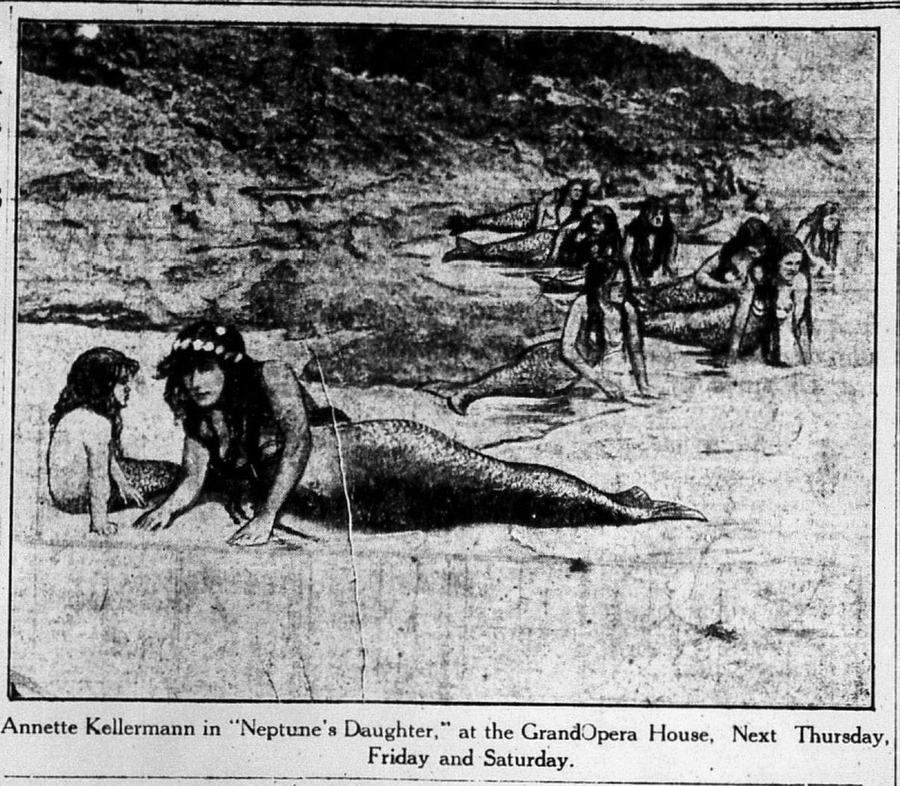
Key set pieces—such as the throne room of Neptune, lit with shafts of light that mimic sunbeams piercing the ocean—are reminiscent of the grandiosity seen in The Queen's Jewel. The film’s most striking visual moments occur during Nerissa’s transformation scenes, where the camera tracks her graceful ascent from the depths, employing a combination of slow motion and practical effects that were groundbreaking for their time.
In the terrestrial sequences, the director employs stark contrasts: the muted tones of the village juxtaposed against the luminous sea. This visual dichotomy underscores the thematic tension between the world of duty and the world of desire.
At its core, Neptune's Daughter is an exploration of how grief can transmute into love. Nerissa’s initial vendetta is rooted in a personal loss that mirrors collective narratives of mourning found in epic poetry. The film asks whether the act of revenge can ever truly heal, or if it merely perpetuates a cycle of sorrow.

Identity is another thread woven through the narrative. Nerissa straddles two realms—her aquatic lineage and the human world she comes to cherish. This liminality reflects broader cultural anxieties of the 1920s, when societies grappled with modernity’s rapid changes. The film subtly critiques the notion of belonging, suggesting that true identity may be fluid, much like water itself.
Furthermore, the romance between Nerissa and Alistair serves as a metaphor for the reconciliation of opposing forces—nature versus civilization, myth versus reality. Their love, fragile yet resilient, becomes a vessel through which both characters confront their deepest fears.
When positioned alongside other silent fantasies, Neptune's Daughter shares thematic kinship with The Mystery of the Black Pearl, where treasure hunting intertwines with personal redemption, and with Atlantis, which also delves into lost civilizations and the allure of the unknown. However, unlike the overt spectacle of The Corbett‑Fitzsimmons Fight, this film leans heavily on emotional resonance rather than physical spectacle.

In terms of visual ambition, the underwater sequences predate and arguably influence later works such as The Life and Passion of Jesus Christ, where the use of practical effects to convey otherworldly realms became a hallmark of the era.
Contemporary critics praised the film’s daring set pieces and Kellerman’s magnetic performance, though some dismissed the romance as melodramatic. Modern scholarship, however, has re‑evaluated the film as a nuanced study of gendered power dynamics—Nerissa’s agency in seeking vengeance challenges traditional passive female archetypes, while her eventual emotional surrender invites debate about the limits placed on female autonomy in early cinema.
From a technical standpoint, the film’s pioneering use of underwater filming techniques paved the way for later aquatic epics, influencing directors who would later experiment with sub‑aquatic storytelling.
In sum, Neptune's Daughter stands as a testament to the silent era’s capacity for grand mythmaking blended with intimate human drama. Its elegant choreography, compelling performances, and thematic depth make it a worthy subject for both casual viewers and film scholars. While the pacing reflects its period, the emotional currents remain resonant, offering a cinematic experience that feels as fresh as a sea‑breeze.

IMDb 6.4
1928
Community
Log in to comment.