DbcultAccessing Vault...
7.2/10
Senior Film Conservator
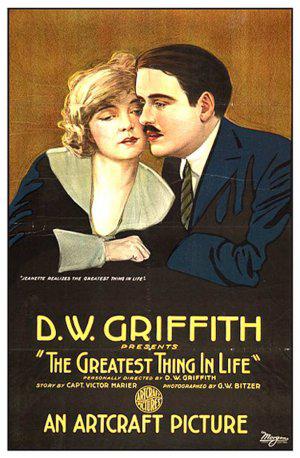
A definitive 7.2/10 rating for a film that redefined the boundaries of cult cinema. The Greatest Thing in Life remains a cornerstone of transgressive art.
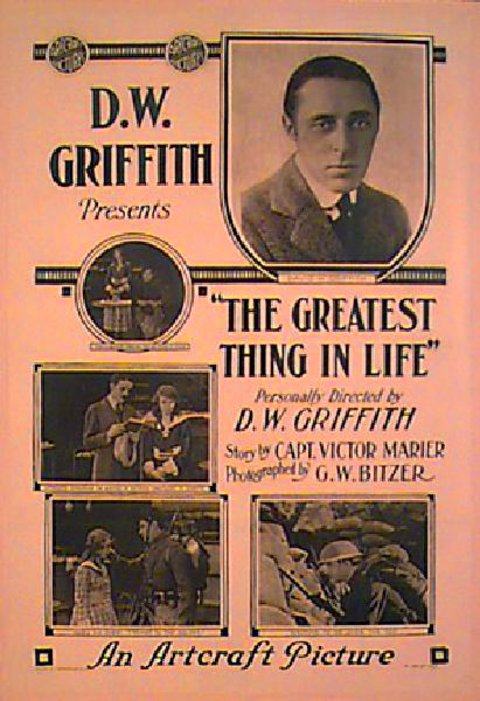
D.W. Griffith’s 1918 silent film, The Greatest Thing in Life, unfolds not merely as a narrative, but as a profound meditation on love, disillusionment, and the crucible of war. It is a work that, even a century later, speaks to the perennial human quest for connection and meaning, particularly when confronted with the stark realities of conflict. Jeannette Peret, brought to life with exquisite nuance by the inimitable Lillian Gish, embodies the spirit of a young woman yearning for something beyond the ordinary, a romantic ideal that the familiar confines of her Greenwich Village existence, rooted in her father’s cigar store, seem incapable of providing. Her transatlantic journey to France is, therefore, more than a change of scenery; it is a symbolic pilgrimage, a reach for an elevated form of affection she believes can only be found in the romanticized landscapes of Europe.
Griffith, ever the master of grand emotional gestures and intricate character studies, crafts Jeannette’s initial French encounter with a blend of charm and eventual irony. Her infatuation with le Bebe, a giant of a vegetable peddler, is initially depicted with a certain rustic allure. He represents a primal, unadulterated masculinity, a stark contrast to the perhaps overly refined, or indeed, utterly absent, romantic prospects in her American life. Yet, as with many idealized visions, reality intrudes. Le Bebe’s unsophisticated ways, his lack of the delicate sensibilities Jeannette unconsciously craves, swiftly lead to disillusionment. This early romantic entanglement serves as a vital thematic precursor, establishing a pattern of seeking grand, externalized forms of love, only to discover their inherent superficiality or incompatibility with deeper emotional needs. It is a poignant commentary on the often-misguided nature of youthful romanticism, a theme explored with different cultural nuances in films like Old Heidelberg, where societal structures and expectations similarly shape and often thwart personal desires.
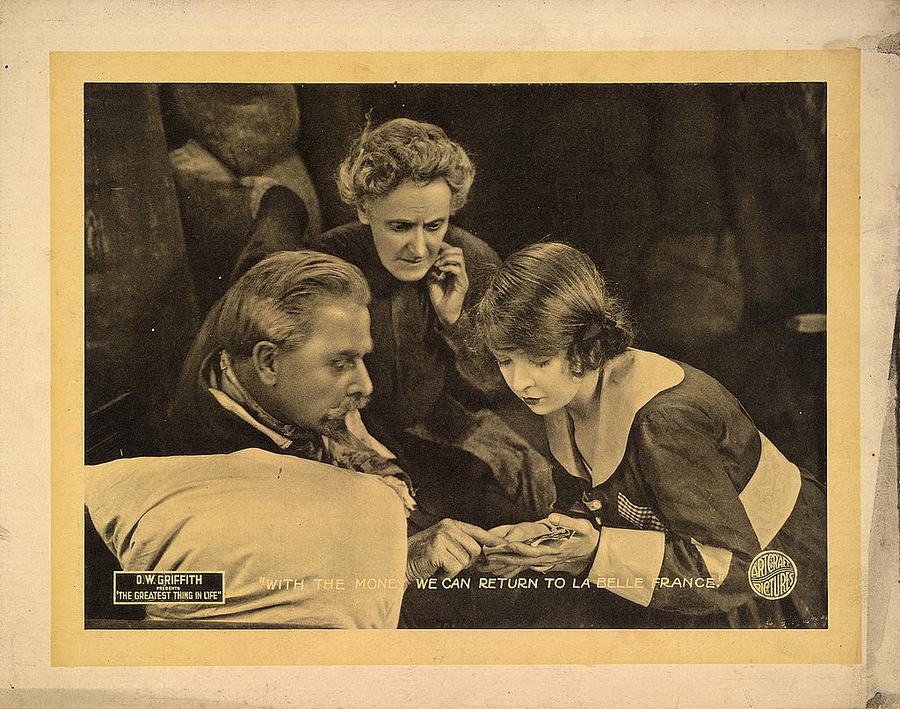
The narrative then introduces a familiar face from Jeannette's past: Edward Livingston, a wealthy young man from her hometown. Previously, Livingston had spurned Jeannette, perhaps deeming her beneath his social standing or simply failing to recognize her unique spirit. His reappearance in France, however, marks a significant shift. He has, presumably through some personal maturation or perhaps simply the altered perspective granted by distance, realized the error of his ways. This turn of events could have easily steered the film into a conventional romantic redemption arc, yet Griffith, along with writers Lillian Gish and Stanner E.V. Taylor, eschews such simplicity. Livingston, despite his newfound appreciation for Jeannette, possesses his own significant flaw, a hidden imperfection that complicates his character and prevents him from becoming the straightforward savior figure. This narrative choice elevates the film beyond mere melodrama, suggesting that even seemingly ideal partners carry their own burdens and complexities, mirroring the intricate human relationships explored in dramas such as The Disciple, where moral ambiguities often define character arcs.
The precise nature of Livingston’s flaw is, for much of the film, a tantalizing mystery, a dramatic device that keeps the audience invested in Jeannette’s journey. It underscores the film’s larger thematic concern: that true love and fulfillment are not found in perfect individuals, but often emerge from unexpected circumstances and through the acceptance of human fallibility. This particular narrative thread is masterfully woven, ensuring that Jeannette's path to peace is hard-won, earned through a series of disappointments and revelations rather than granted by a single, flawless suitor. It’s a testament to Griffith’s understanding of the human heart, its capacity for both error and growth, a theme he often explored in his more ambitious works.
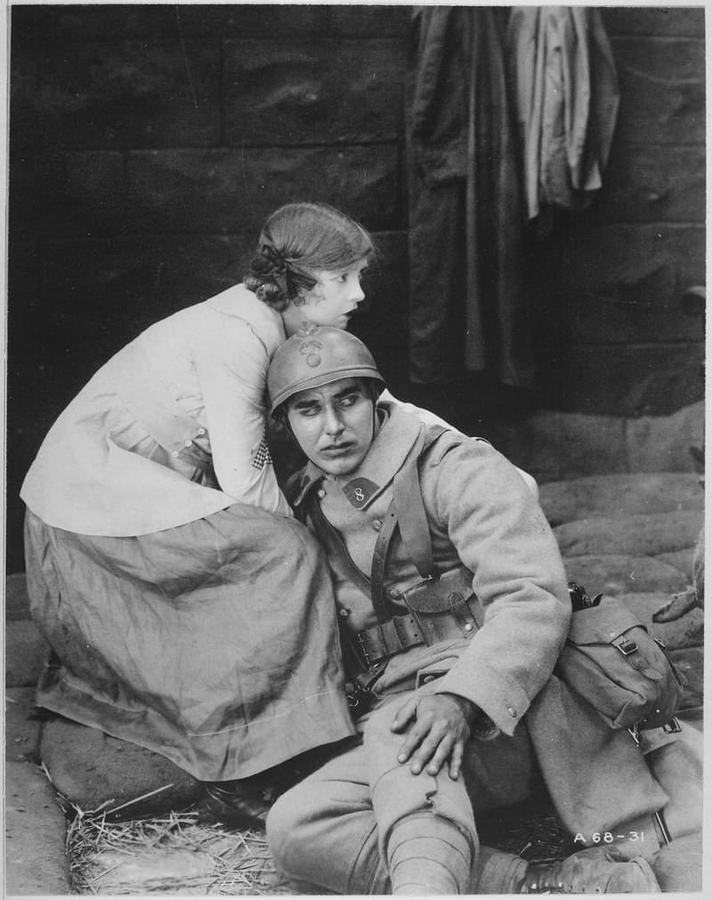
The most striking and, indeed, ironic element of The Greatest Thing in Life is the role played by the outbreak of war. In a profound twist of fate, it is this global cataclysm, with its inherent destructiveness and suffering, that ultimately guides Jeannette to a peaceful conclusion in her quest for love. This is not a superficial romance blossoming amidst tragedy, but a deeper, more existential understanding of what constitutes genuine connection and purpose. War, in this context, strips away the superficialities that had previously defined Jeannette’s romantic pursuits. The grand gestures, the societal expectations, the physical attractiveness—all pale in significance when faced with the raw, brutal reality of survival and sacrifice. It is here, amidst the chaos, that true character is revealed, and priorities are irrevocably reordered. The film posits that sometimes, the most profound revelations come not from idyllic circumstances, but from the crucible of adversity, a sentiment echoed in the transformative power of conflict seen in films like Valdemar Sejr, where personal destinies are irrevocably shaped by larger historical events.
The irony is palpable: the very force designed to tear humanity apart becomes the catalyst for Jeannette’s personal integration and the discovery of a love founded on something more enduring than fleeting attraction. This thematic choice reflects the era in which the film was made; 1918 saw the world grappling with the devastating aftermath of the Great War, and artists like Griffith were attempting to make sense of the profound societal and personal transformations wrought by the conflict. The film suggests that in the face of ultimate sacrifice, the true 'greatest thing in life' is not merely romantic love, but a profound sense of shared humanity, empathy, and perhaps, a love that transcends individual desires for a collective good. This shift from personal romantic quest to a more universal understanding of connection is a powerful, understated message that resonates deeply.
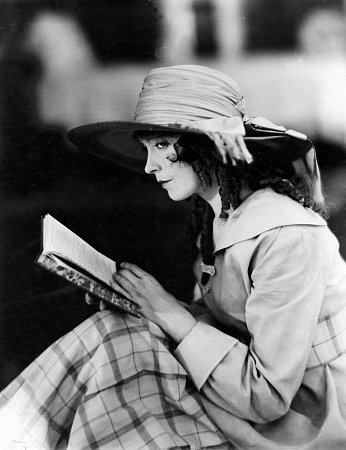
Lillian Gish, a frequent collaborator and muse for Griffith, delivers a performance of breathtaking vulnerability and strength. Her portrayal of Jeannette is a masterclass in silent acting, conveying a vast spectrum of emotions—from hopeful idealism to crushing disillusionment, and finally, to a quiet, hard-won peace—all through subtle gestures, expressive eyes, and a profound understanding of her character's inner turmoil. Gish, who also contributed to the film's writing, brings an authentic depth to Jeannette, ensuring she is not merely a passive recipient of fate but an active participant in her own emotional evolution. Her ability to project complex psychological states without uttering a single word is a testament to her genius and Griffith’s directorial skill in eliciting such nuanced performances.
The supporting cast, while perhaps less prominent than Gish, contributes significantly to the film's fabric. Zasu Pitts, known for her later comedic roles, here provides a different texture, her presence adding to the ensemble's overall dynamic. While specific details of her role are not as extensively documented as Gish's, her contribution, alongside actors like Adolph Lestina and Edward Peil Sr., would have been integral to building the world around Jeannette. The ensemble, under Griffith's meticulous direction, works harmoniously to create a believable social milieu, whether it's the bustling Greenwich Village or the war-torn landscapes of France. Griffith's genius lay not only in his ability to direct his stars but also in his capacity to orchestrate large-scale scenes and extract genuine human emotion from every corner of his frame. His pioneering techniques in close-ups, parallel editing, and dramatic lighting are all evident, serving to heighten the emotional impact and narrative clarity of this silent epic.
In an era defined by visual storytelling, the quality and placement of intertitles were paramount. In The Greatest Thing in Life, as in many Griffith films, the intertitles are not mere explanatory texts but integral narrative elements, often imbued with poetic language or philosophical reflections that deepen the film's thematic resonance. They guide the audience through emotional landscapes, provide crucial plot exposition, and occasionally offer insights into the characters' inner thoughts, complementing the visual performances rather than simply duplicating them. This intricate dance between visual imagery and textual guidance is a hallmark of sophisticated silent cinema, a craft that Griffith perfected and which is essential to fully appreciating the film's narrative flow and emotional impact. The careful pacing, the dramatic shifts from intimate character moments to broader wartime spectacles, all speak to a directorial vision that understood the power of montage and the careful construction of cinematic time.
The cinematography, while limited by the technology of the time, is nonetheless evocative, capturing the romanticized vision of France and the grim reality of the battlefront with equal skill. Griffith often employed natural light and deep focus to create a sense of realism and depth, contrasting with the more theatrical stagings of earlier cinema. The visual language of the film is rich with symbolism, from the confined spaces of Jeannette's home to the expansive, yet destructive, landscapes of war, each setting contributing to the overall emotional arc of the protagonist. This meticulous attention to visual detail and symbolic framing is a trait shared with other silent era masterpieces, underscoring how directors of this period truly spoke through the camera lens.
The Greatest Thing in Life, while perhaps not as widely discussed as some of Griffith’s more controversial or epic works, stands as a powerful testament to his ability to craft intimate human dramas against sweeping historical backdrops. Its exploration of disillusionment, the search for authentic connection, and the transformative power of adversity remains remarkably pertinent. The film subtly critiques superficial romantic ideals, suggesting that true love often emerges from shared experience, mutual understanding, and a willingness to confront reality, however harsh. This nuanced perspective on human relationships is a significant achievement, particularly given the often-simplistic moralizing found in some early cinema.
The enduring relevance of The Greatest Thing in Life lies in its universal themes. Jeannette’s journey from a naive idealist to a woman who finds peace amidst chaos is a narrative arc that resonates across generations. It reminds us that sometimes, the greatest lessons are learned not in comfort, but in struggle; that the 'greatest thing in life' might not be a pre-packaged ideal, but a profound connection forged in the fires of shared experience and understanding. The film’s ability to evoke such deep emotional responses without spoken dialogue is a powerful reminder of the universal language of cinema, a language that transcends time and cultural barriers. It stands alongside other profound character studies of the era, such as The Hater of Men, in its exploration of human psychology under duress, and can be seen as a precursor to later films that delve into the psychological impact of war, demonstrating that cinema was already grappling with these weighty subjects long before the advent of sound.
In conclusion, The Greatest Thing in Life is more than a historical artifact; it is a vibrant, emotionally resonant film that offers a compelling portrait of human resilience and the complex nature of love. Griffith, Gish, and their collaborators delivered a work that, through its masterful silent storytelling, continues to provoke thought and stir the heart, proving that the most profound cinematic experiences often transcend the spoken word. It remains a vital piece of cinematic history, offering insights into both the craft of early filmmaking and the enduring human spirit in times of monumental change. The film, much like Purity, challenged conventions of its time, pushing boundaries not just in narrative but in the very emotional depth it dared to explore within its characters, confirming its place as a thoughtful and impactful contribution to the silent era's artistic legacy.

IMDb 7.1
1932
Community
Log in to comment.