DbcultAccessing Vault...
5.5/10
Senior Film Conservator
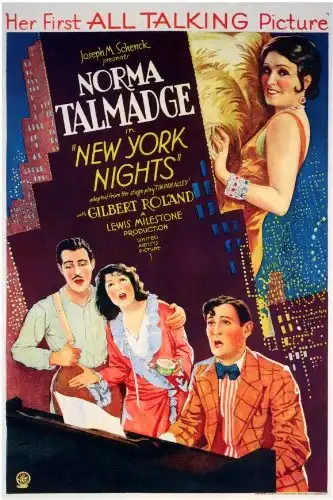
A definitive 5.5/10 rating for a film that redefined the boundaries of cult cinema. New York Nights remains a cornerstone of transgressive art.
"New York Nights" is one of those films. You know, the ones that make you lean in close, not always because the plot is *that* gripping, but because you're trying to catch every little thing, every shift in a performer's face. If you're into early talkies, or just curious about how Hollywood wrestled with that big sound leap, then yeah, give it a shot. Classic melodrama fans will find something here, too. But if you're expecting snappy dialogue or modern storytelling, well, you might find yourself checking your watch. It’s a relic, but a *fascinating* one.
The sound here is a whole thing. It’s one of those early talkies where the silence feels loud, and the spoken parts feel... well, they feel like they’re trying really, really hard. Norma Talmadge, bless her heart, you can almost *see* her trying to adjust to the microphone. Her voice has this slightly pinched quality, a bit higher than you might expect, like she’s still projecting for the back row of a silent picture house.
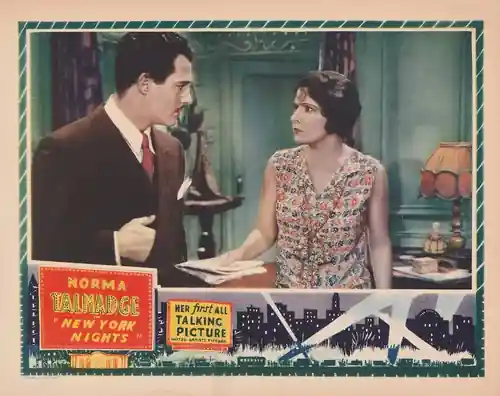
You’ve got these scenes where someone just says a single word, and it’s like the whole crew held their breath. Then the music swells again, and it’s back to the grand gestures. It’s jarring, but also really telling about that moment in cinema. The transition was **not** smooth for everyone.
Jill’s life, as a chorus girl, feels perpetually on the edge. Her husband Fred, played by Gilbert Roland, is just a mess. He drinks, he gambles, he owes money to a *very* scary John Wray. You spend half the movie just wanting to shake Fred and tell him to get his act together. His choices feel less like character flaws and more like plot devices designed to keep Jill in constant peril.
John Wray as Prividi, the gangster, is actually pretty good. He’s got that menacing quietness down pat. There’s a scene where he just stares at Jill for what feels like an eternity, and the air just thickens. No fancy dialogue needed, just that **intense** gaze. He doesn't chew the scenery; he *owns* it with a look.
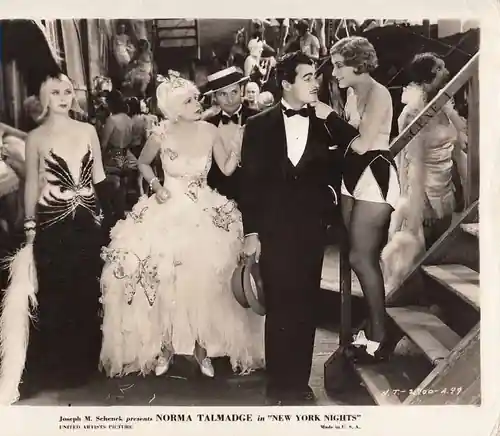
And then there’s Jean Harlow. So young here, barely a blip, really. She pops up in the background a few times. You blink, you miss her. But it’s wild to see her before she became *the* Jean Harlow, just a flash of that unmistakable blonde hair in the ensemble. It's a fun little "didja notice?" moment for fans.
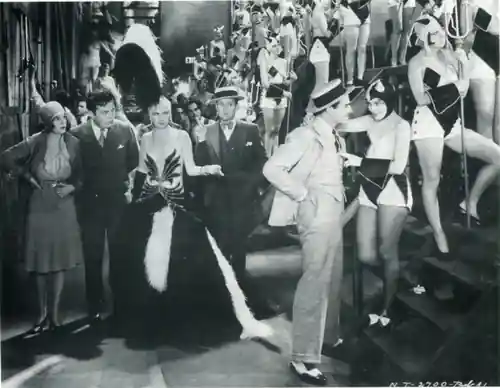
The "New York" of "New York Nights" feels less like a real city and more like a collection of studio backlots. The chorus line numbers are pretty standard for the era, a lot of synchronized kicking and smiling. They’re fine, but they don't exactly stick with you. It’s the quieter, more dramatic moments where the film tries to shine.
There's a moment when Jill is trying to raise money, and she’s just so *tired*. You see it in her slump, the way she pushes a stray hair back. It’s a small thing, but it grounds her. She’s not some grand tragic figure; she’s just a woman trying to keep her head above water. That felt real, even through the slightly creaky sound quality.
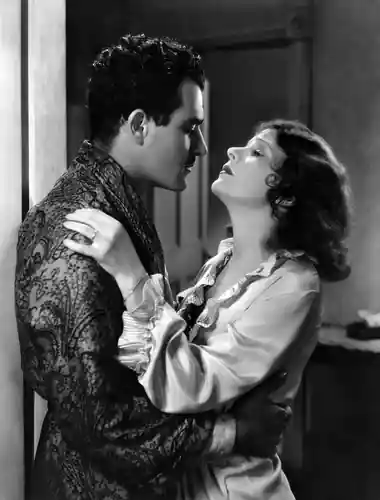
The pacing of the film can be a bit... uneven. Some scenes zip by, others linger for a beat too long, almost daring you to look away. There’s a confrontation between Fred and Prividi that feels like it’s going to explode, but then it just kind of fizzles out into another threat. It leaves you wanting a bit more punch.
At one point, there’s this extra in the background of a club scene, just kind of staring blankly into space. You wonder what he’s thinking. Was he bored? Did he forget his cue? It pulls you out for a second, but then you remember, hey, this is how movies used to get made, before seamless background action was a given. It adds to the charm, almost.
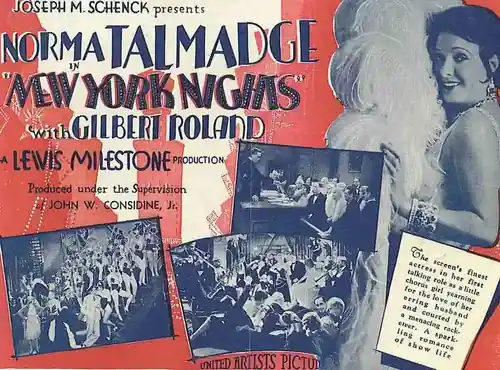
The film *really* wants you to feel the stakes. Every time Fred gets into trouble, Jill’s reaction is dialed up to eleven. Sometimes it works, other times it feels a little much, like the movie is practically screaming "This is important!" But Norma Talmadge sells it, mostly. You believe her desperation, even if the situations feel a bit contrived.
Compared to something like Midnight Lovers from a few years earlier, "New York Nights" feels heavier, less playful. It’s got that early sound era weight to it, trying to prove its dramatic chops with every strained utterance.
So, is "New York Nights" a forgotten masterpiece? Absolutely not. But it’s a **crucial** piece of film history. It’s Norma Talmadge’s swan song, a peek at Jean Harlow’s beginnings, and a fascinating look at the chaotic birth of talking pictures. It’s a bit clunky, a bit over-the-top, but it’s never boring if you're watching it through the right lens. It’s a movie that whispers its secrets, if you’re patient enough to listen.
IMDb 5.7
1937
Community
Log in to comment.