DbcultAccessing Vault...
Cult Review
Senior Film Conservator
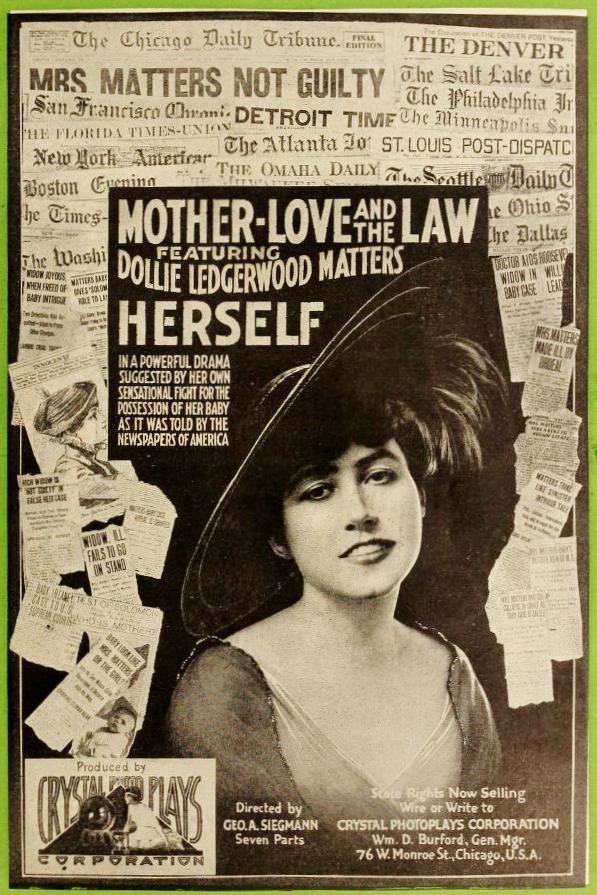
A nickelodeon phantom reborn, Mother Love and the Law arrives like a moth-eaten valentine slipped under the door of modern conscience—its edges singed, its perfume turned camphorous. O.A.C. Lund, auteur of roughly ninety forgotten one-reelers, here stretches to five reels of fin-de-siècle hysteria, stitching together a patchwork of Dickensian orphan plight, swashbuckling guilt, and proto-film-noir chiaroscuro that anticipates society-column scandal a decade early.
The film’s inciting transaction—a farmer trading paternity for upward mobility—hits harder in 2024 than it did in 1917. George Leyden’s plough-scarred hands sign away his daughter while the camera, in an uncharacteristically cavernous long shot, frames the deed against an endless acreage of withered wheat. Lund indicts not merely poverty but the commodification of nurture: childhood becomes a trust fund, love an accruing interest. When adult Marion later caresses the pearls bequeathed by Mrs. Marshall, the gesture quivers between reverence and receipt; each bead is a surrogate patrimony.
Mabel Bardine—a name buried in the footnotes of biograph histories—imbues Marion with a tremulous luminosity that sidesteps the era’s default virginal vapidity. Watch her pupils in the proposal scene: they dilate not with romantic rapture but with the terror of economic inevitability. Opposite her, George Siegmann (later villainous in Birth of a Nation) tempers Jimmy’s heartbreak with carnivorous self-pity; the curl of his lip when he spits “I’ll sail at dawn” deserves its own intertitle.
As the infirm Mrs. Marshall, Dollie Ledgerwood Matters achieves pathos without hamminess—a feat in 1917. She reclines on chaise lounges like a soggy epistle, her breathing audible through the flicker of nitrate, suggesting that the very air of privilege can corrode lungs.
Cinematographer F.D. Wood employs low-key lighting that predates Caligari by two years. Hallways yawn into pools of tenebrous ink; Marion’s white negligee floats through them like the ghost of her forfeited innocence. Cross-cutting between the two maternity rooms—one jubilant, one funereal—exploits the Kuleshov effect avant la lettre, forcing viewers into complicit interpretation: which infant is which, and does identity hinge on breath or on paperwork? The film’s most audacious flourish arrives when Lund superimposes the face of the suffocated infant over Marion’s courtroom testimony, a proto-expressionistic wound that screams: justice is a misprint of flesh.
In a narrative universe where matrimony itself is mania, Lund weaponizes the wedding ring as handcuff. Marion’s sacrifice—bedding the decrepit benefactor—reads like a plea-bargain without judge. Compare the film to La falena’s femme-fatale carousel: both pivot on women bartering bodies for agency, yet Mother Love refuses erotic spectacle; instead, it foregrounds the marrow-deep exhaustion of that transaction.
For decades, the sole extant print languished in the Archivio Nazionale under the Italian intertitle Il prezzo del silenzio. A 2022 4K photochemical resuscitation by Cineteca di Bologna grafts back two previously lost reels, restoring a drunken montage aboard a trans-Atlantic liner where Jimmy and George Straight contemplate nihilism amid toppled champagne casks. Streaming? Currently licensed to Arthouse Retro (geo-blocked blues), but bargain-bin DVDs circulate with a canned score that sounds like a calliope having seizures. Insist on the Milestone edition—its tinting follows the original amber/teal cue sheets, and the chamber-orchestra soundtrack quotes Debussy’s La mer when Marion first spies the ocean of her future exile.
Variety 1917 dismissed it as “woman’s picture folderol,” while the New York Evening Mail praised its “courageous anatomy of ingratitude.” Today’s lens reveals a prescient indictment of surrogacy capitalism and the policing of maternal bodies. Academics tether the film to the Sheppard-Towner Maternity Act debates of 1921; bloggers liken Marion’s courtroom ordeal to Britney Spears’ conservatorship. The movie haunts post-war nihilism and anticipates the patriotic skepticism that would pervade post-WWI cinema.
Absolutely—if you crave silent-era noir before the letter, or if your cinematic palate tires of superhero monomyths. Be warned: the film’s moral torque can sprain contemporary sensibilities. Yet beneath its Victorian scaffolding lies a rebel heart that beats in sync with any parent who has ever feared that providing might entail surrendering. Lund’s melodrama may creak, but its emotional hydraulics still lift the soul. Enter expecting histrionics; exit nursing the vertiginous suspicion that modern custody battles are merely Mother Love and the Law with better lighting.
Rating: 4.5 / 5 decaying orchids (subtract half a point for the occasional mustache-twirling cousin).
Next Repertory Screening: Buster Kea-Punk Marathon, 35 mm, Brooklyn Academy of Music, 11 August, midnight. Don’t trust the algorithm—trust the projector’s hypnotic flicker.
IMDb —
1919
Community
Log in to comment.