DbcultAccessing Vault...
Cult Review
Senior Film Conservator
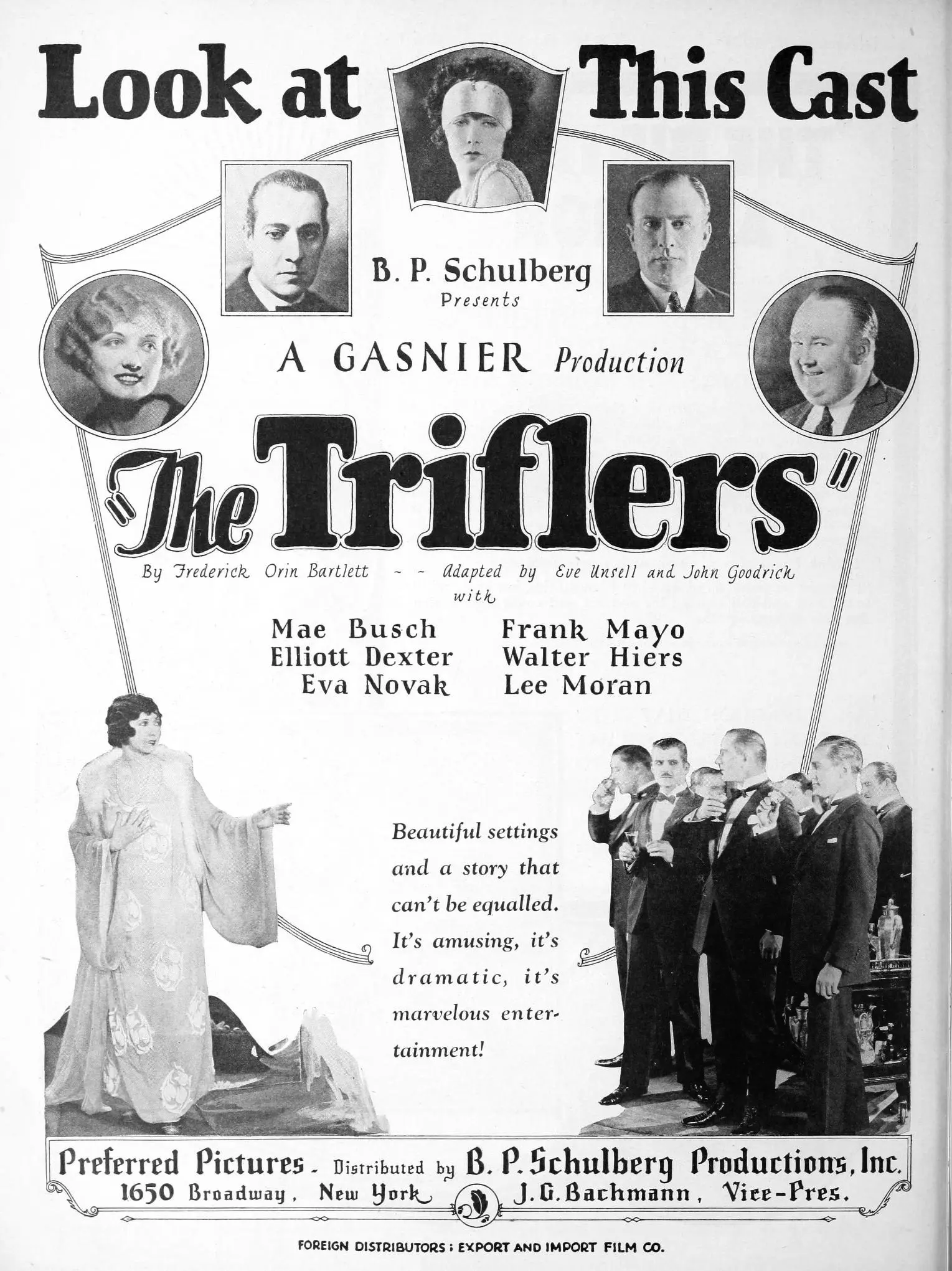
The year 1924 stands as a fascinating epoch in the evolution of silent cinema, a period where the primitive techniques of the previous decade were being supplanted by a sophisticated visual grammar. Within this milieu, The Triflers emerges not merely as a melodrama, but as a biting commentary on the transactional nature of high-society unions. Directed with a keen eye for social stratification, the film dissects the life of Marjorie Stockton, a woman whose immense wealth serves as both a gilded cage and a target for the avaricious. The narrative architecture of the film, penned by the likes of Eve Unsell and John F. Goodrich, avoids the simplistic moralizing often found in contemporary works like The Greatest Question, opting instead for a more cynical, yet ultimately redemptive, exploration of human frailty.
At the heart of the film lies the central conceit of the 'marriage of convenience.' Marjorie Stockton, portrayed with a luminous yet weary elegance, finds herself besieged by suitors who see her fortune as a prize rather than a person. This dynamic mirrors the fiscal anxieties explored in Gimme, where the intersection of romance and capital is laid bare. Marjorie’s decision to marry Monte Covington is a tactical maneuver—a defensive perimeter established against the encroaching tide of fortune hunters. Monte, played by the stoic Elliott Dexter, enters the arrangement with a nonchalance that borders on the pathological. He treats the sanctity of the altar as a mere trifle, a social game played with high stakes but little emotional investment.
However, the cinematic brilliance of The Triflers lies in its subversion of this initial cynicism. As the narrative progresses, Marjorie’s artificial defense mechanism begins to fail—not because of external pressure, but because of an internal shift. She falls in love with the husband she hired. This transition is handled with a delicate touch, utilizing the visual language of the era—lingering close-ups and subtle shifts in lighting—to convey the internal metamorphosis of a woman who finds herself trapped by the very lie she created to find freedom.
The introduction of Peter Noyes, another of Marjorie’s suitors, shifts the film from a drawing-room comedy of manners into the realm of grand tragedy. When Peter is blinded, the film takes on a darker, more psychological tone. Marjorie’s reaction is not one of rekindled romance, but of profound, humanistic pity. It is a nuanced performance that stands in contrast to the more theatrical displays seen in The Tents of Allah. Her devotion to the infirm Peter is an act of altruism that the cynical Monte cannot comprehend. He sees not a nurse, but a lover. He sees not compassion, but betrayal.
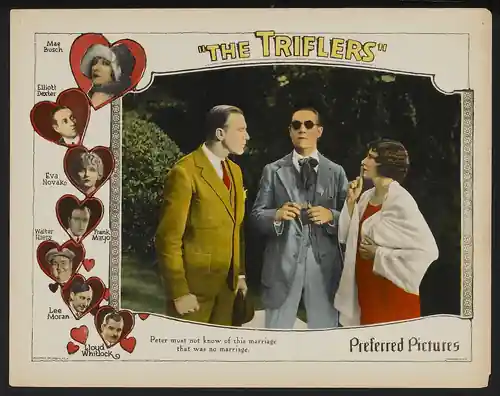
This misinterpretation is the engine that drives the film's final act. The jealousy that consumes Monte is not the fiery passion of a young lover, but the wounded pride of a man who realized too late that he possessed something valuable. The cinematography during these sequences utilizes heavy shadows and sharp angles, creating a visual manifestation of the confusion and resentment festering within the Covington household. It is a claustrophobic aesthetic that heightens the tension, making the eventual outburst of violence feel both shocking and inevitable.
The climax of The Triflers is a masterclass in silent era suspense. Peter Noyes, sensing the emotional currents he can no longer see, becomes a vessel for the collective frustrations of the cast. His decision to shoot both Marjorie and Monte is a desperate attempt to seize control of a narrative from which he has been marginalized. In a perverse twist of fate, the physical wounds inflicted by Noyes serve to heal the psychological rift between the protagonists. As they recover, the superficiality of their 'trifling' relationship is stripped away, leaving behind a raw and genuine connection.
While some might find the resolution too convenient, it reflects the era's demand for redemptive arcs. Unlike the more experimental or bleak endings found in international cinema of the time, such as Os Fidalgos da Casa Mourisca, The Triflers seeks to provide the audience with a sense of cosmic justice. The blood spilled acts as a purification rite, washing away the deceits of the first two acts and allowing for a 'bright future' that feels earned through suffering.
The cast of The Triflers is exceptionally well-assembled. Mae Busch, often remembered for her later comedic roles, delivers a performance of remarkable depth here. She navigates the transition from cold socialite to yearning wife with a precision that anchors the film. Elliott Dexter provides a perfect foil, his understated masculinity providing a steady presence against which the more volatile characters react. The supporting cast, including Frank Mayo and Eva Novak, fill out the social world of the film with distinct, albeit briefly seen, personalities.
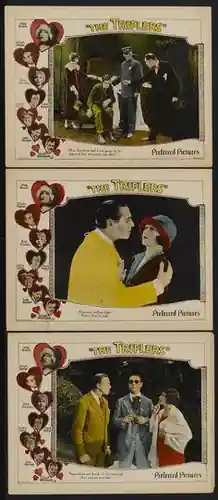
Technically, the film benefits from the high production standards of the mid-20s. The set design is opulent, reflecting the Stockton wealth without becoming a distraction. The pacing is deliberate, allowing the psychological stakes to simmer before reaching their boiling point. In comparison to more action-oriented fare like The Fourth Musketeer or the lightheartedness of Casey at the Bat, The Triflers is a somber, thoughtful piece of work that demands the viewer's full attention.
Revisiting The Triflers in the modern era allows us to appreciate the sophistication of early 20th-century storytelling. While the tropes of the blinded suitor and the marriage of convenience may seem dated, the underlying exploration of how we protect ourselves from emotional vulnerability remains universal. The film stands as a testament to the power of silent acting—the ability to convey a lifetime of regret and a sudden spark of hope without a single spoken word. It lacks the propaganda-like focus of Britain's Bulwarks, No. 1 or the whimsical nature of Beaches and Peaches, positioning itself instead as a serious inquiry into the human heart.
In the broader context of film history, The Triflers is a vital link between the moralistic dramas of the 1910s and the complex character studies of the late silent era. It shares some DNA with the grand historical spectacles like Marc'Antonio e Cleopatra in its sense of destiny, yet it remains intimate and grounded in its personal stakes. Whether one views it as a cautionary tale about the dangers of emotional detachment or a romantic celebration of survival, the film remains a compelling artifact of a bygone age of cinema.
Ultimately, the film asks a question that remains relevant: can love survive when it is born from a lie? For Marjorie and Monte, the answer is a resounding, albeit painful, yes. Their journey from 'trifling' with emotions to experiencing the visceral reality of loss and near-death is a harrowing one, but it is this very ordeal that transforms their marriage from a contract into a covenant. As we look back at this 1924 gem, we are reminded that sometimes, it takes a tragedy to open our eyes to the truths that have been standing right in front of us all along.

IMDb 6.9
1927
Community
Log in to comment.