DbcultAccessing Vault...
6.6/10
Senior Film Conservator
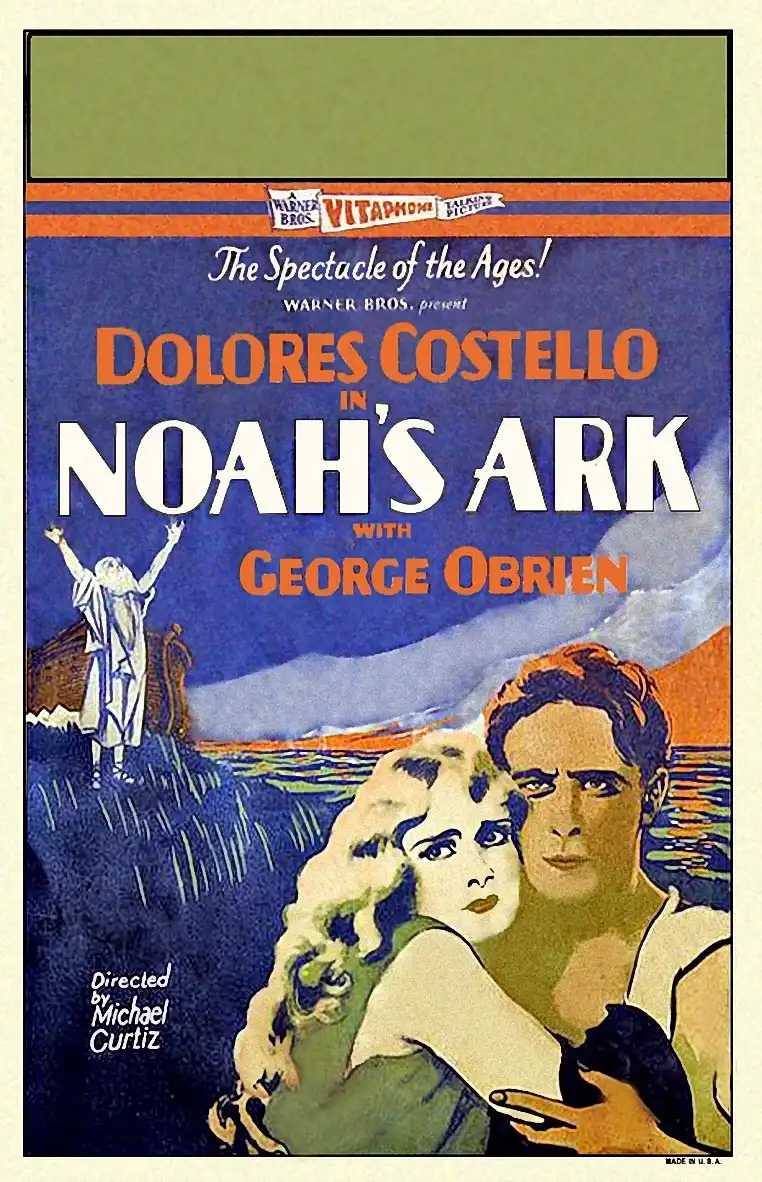
A definitive 6.6/10 rating for a film that redefined the boundaries of cult cinema. Noah's Ark remains a cornerstone of transgressive art.
If you are looking for a seamless cinematic experience, Noah's Ark is not it. However, if you want to witness the exact moment Hollywood outgrew its own ambitions, this film is essential viewing. It is a 'part-talkie' that feels like two different movies fighting for dominance: one is a visually stunning, high-stakes silent epic, and the other is a stiff, awkward experiment in early sound recording. It is worth watching today primarily for its sheer scale and the terrifying realism of its climax, but modern audiences should be prepared for some of the clunkiest dialogue transitions in film history.
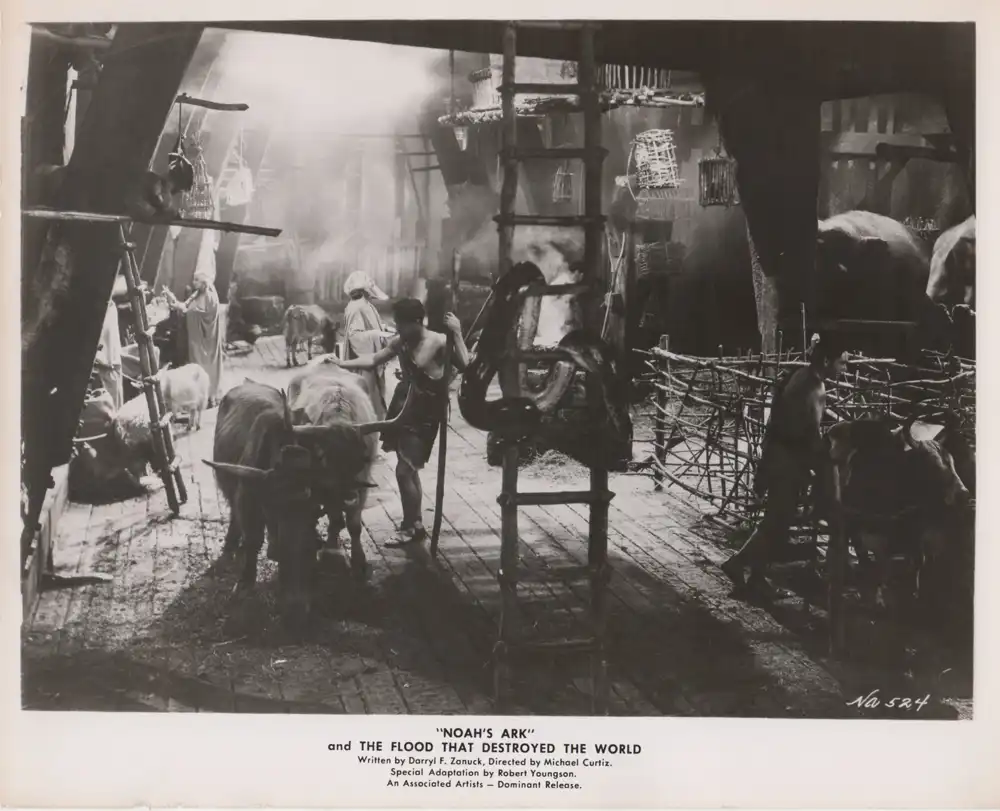
The film opens in the 'modern' day—which, for 1928, meant the trenches of the Great War. George O'Brien and Dolores Costello play Travis and Mary, an American soldier and a German woman who fall in love just as the world catches fire. This section of the film actually moves quite well. Michael Curtiz, even this early in his career, had a knack for staging chaos. There is a train wreck sequence early on that features some truly impressive miniature work and practical debris that looks far more dangerous than anything a modern CGI department would dream up.
But the 'hook' of the film is the parallel narrative. We eventually shift back to the biblical era, where O'Brien becomes Japheth and Costello becomes Miriam. The transition is handled with a heavy hand, typical of Darryl F. Zanuck’s early writing, suggesting that the 'deluge of blood' in 1914 is no different from the deluge of water in the Bible. It’s a bit of a reach, but it gives the film an excuse to build some of the largest sets ever seen in the late 1920s.
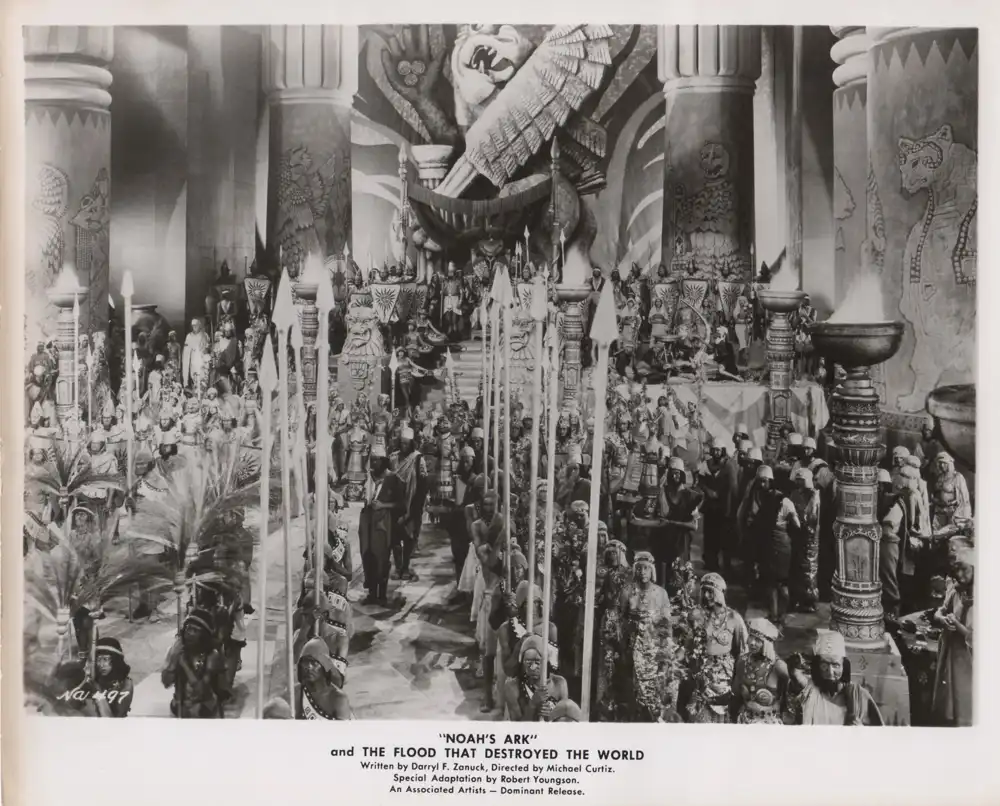
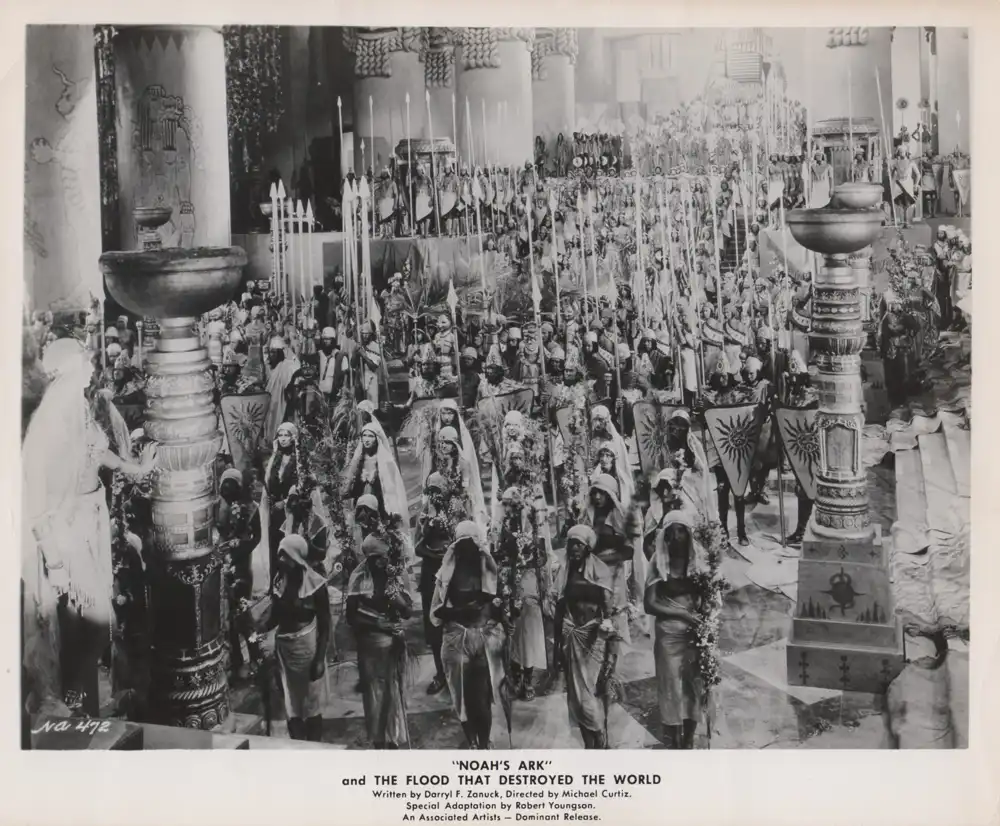
When the movie finally gets to the Ark, the scale is genuinely breathtaking. The Temple of Jaghnut is a massive, oppressive piece of production design, filled with hundreds of extras and flickering torches. You can see where the money went. Unlike modern epics that rely on digital crowds, every person you see on screen is a living, breathing body, and that physical presence gives the biblical scenes a weight that is hard to ignore.
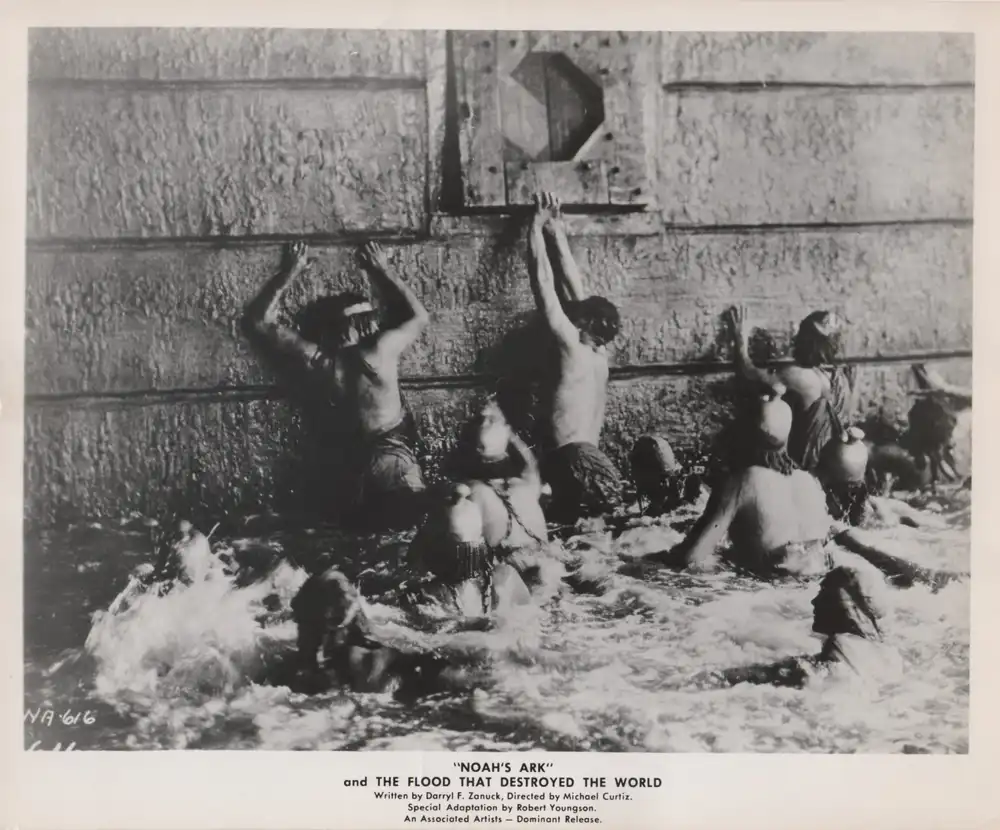
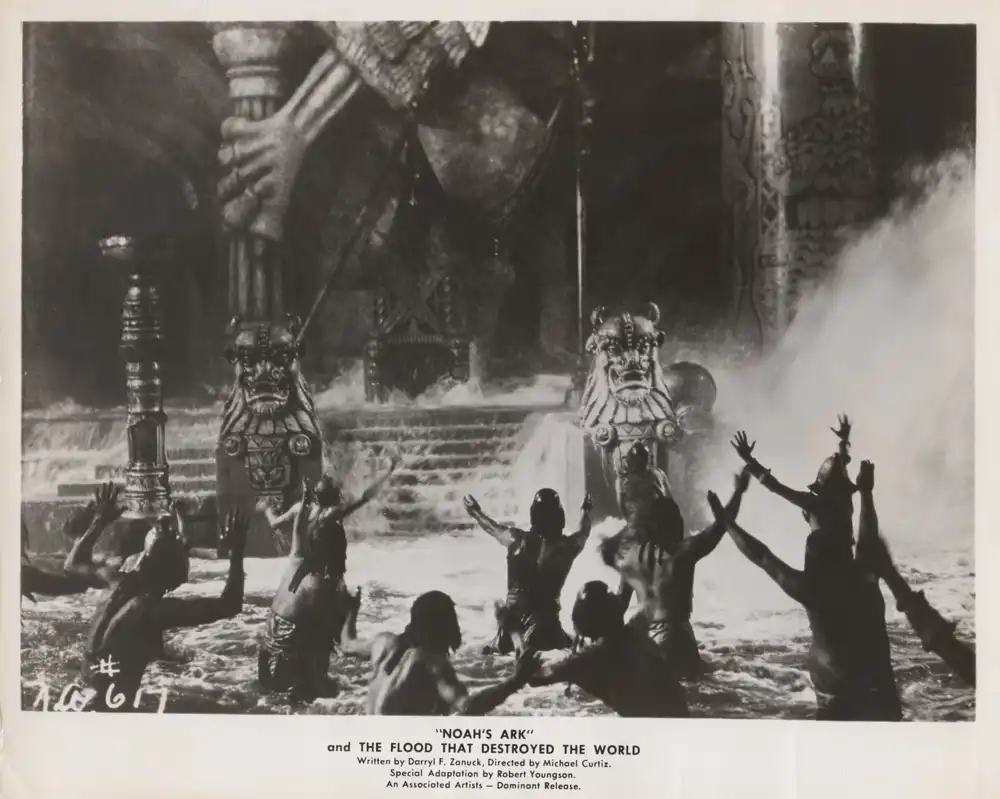
Then comes the flood. It is impossible to watch these scenes without thinking about the infamous production history, where several extras reportedly drowned or were seriously injured because Curtiz insisted on dumping hundreds of thousands of gallons of water on them. On screen, the result is harrowing. The water doesn't just flow; it smashes. You see stone columns—real ones, seemingly—collapsing onto people, and the sheer volume of the spray often obscures the actors entirely. There is a shot of a group of people being swept off a high ledge that looks so real it makes your stomach drop. It is a level of 'stunt' work that simply wouldn't be allowed today, and it gives the film a dark, visceral edge.
Where Noah's Ark stumbles—and stumbles hard—is in its sound sequences. This was produced during the industry's panicked transition to sound, and the 'Vitaphone' segments are painful. When the film stops its fluid silent storytelling to let the characters speak, the rhythm dies. The actors stand perfectly still, staring at where the hidden microphones are placed, and deliver lines with a funereal slowness.
Dolores Costello, who is luminous in the silent portions, sounds trapped by the technology here. The dialogue is repetitive and lacks any of the nuance found in the visual storytelling. One particular scene in a dungeon involves an agonizingly long exchange that could have been handled with two title cards and thirty seconds of acting; instead, it drags on until you’re rooting for the flood to arrive just to pick up the pace.
Beyond the sound issues, there are some strange editing choices. The film often cuts from a massive wide shot of the temple to a very tight, flatly lit medium shot for the dialogue, creating a visual whiplash that reminds you how much the cameras were restricted by the new sound booths. You’ll also notice a very young John Wayne as an extra during the flood scenes, though you have to squint to find him in the chaos.
The lighting in the biblical segment is surprisingly moody, using deep shadows to hide the edges of the sets and create a sense of impending doom. It’s a stark contrast to the flat, bright lighting used in the WWI trenches, which makes the 'past' feel more alive and threatening than the 'present.'
Noah's Ark is a lopsided masterpiece. It is too long, the 'modern' parallels are thin, and the talking sequences are a chore to sit through. Yet, the silent sequences—particularly the destruction of the temple and the release of the waters—are some of the most powerful images from the end of the silent era. It’s a film for people who want to see the limits of practical filmmaking. It isn't 'good' in a traditional sense, but it is undeniably massive. If you can handle the awkwardness of 1928 audio technology, the visual payoff of the final act is worth the wait.

IMDb 5.1
1930
Community
Log in to comment.