DbcultAccessing Vault...
Cult Review
Senior Film Conservator
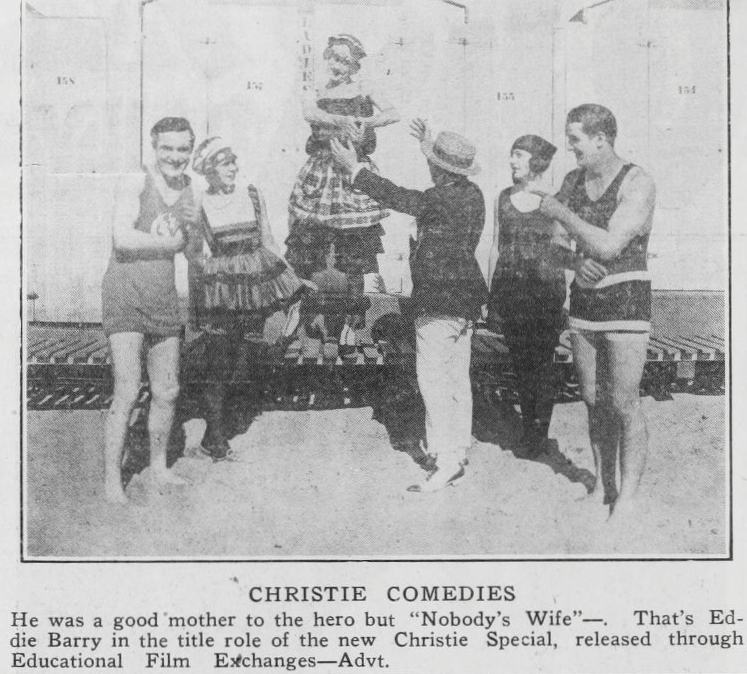
The 1921 silent film *Nobody's Wife* emerges as a disquieting yet riveting artifact of early cinema, its narrative weaving a tapestry of disillusionment and fragile hope. Directed by an auteur whose name history has largely forgotten, the film’s power lies not in its plot mechanics but in its visceral emotional cadence and its uncanny prescience of modernist anxieties. Much like the spectral figures in *The Phantom Carriage*, the characters in *Nobody's Wife* are bound by inescapable fates, their lives etched in the interplay of light and shadow that director and cinematographer conspired to perfect.
The protagonist, portrayed with harrowing subtlety by Helen Darling, embodies the archetype of the 'modern woman' caught between societal expectations and personal yearnings. Her journey—a series of fragmented vignettes—echoes the thematic undercurrents of *Pieces of Silver: A Story of Hearts and Souls*, yet diverges in its refusal to offer catharsis. Where the latter film resolves in a crescendo of romantic fulfillment, *Nobody's Wife* remains resolutely ambiguous, its final frame lingering on a half-smile that could be interpreted as either resignation or rebellion.
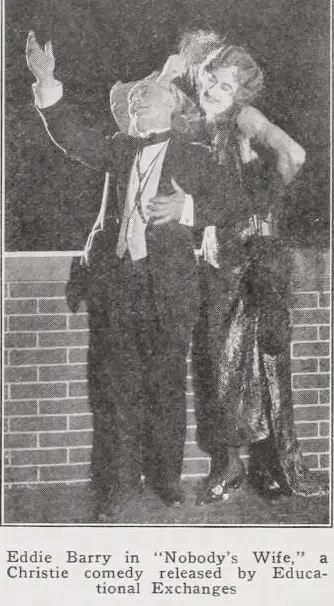
What elevates *Nobody's Wife* beyond the conventions of its era is its audacious use of visual metaphor. A recurring motif—a broken clock whose hands spin backward—serves as both a temporal conceit and a psychological anchor. This device, reminiscent of the time-transcending narratives in *Das verwunschene Schloß*, underscores the film’s preoccupation with the malleability of time and the fluidity of memory. The editing, brisk and disjunctive, anticipates the rhythmic experimentation of later Soviet directors, yet it is rendered with a restraint that feels almost anachronistic in its elegance.
The supporting cast, including Ray Gallagher and Eddie Barry, delivers performances that oscillate between naturalism and theatricality, a duality that reflects the film’s own identity crisis. William Sloan’s portrayal of a jaded financier—a character that could have been lifted from *Blue Blood and Bevo*’s milieu—adds a layer of existential ennui, his presence a reminder of the class tensions simmering beneath the surface. Mary Wynn, in a brief but memorable turn, embodies the tragicomic figure of the discarded lover, her gestures a silent elegy for a world where affection is currency and devotion a liability.
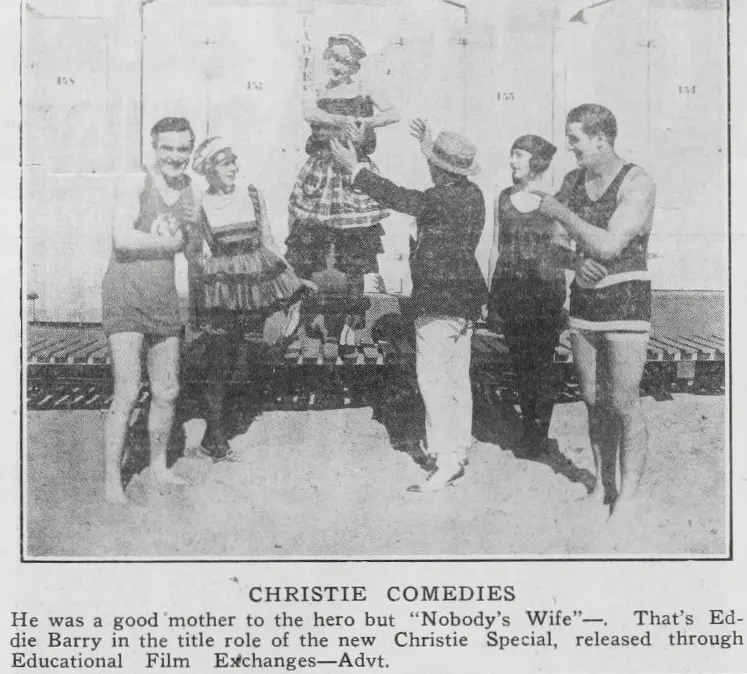
Walter Graham’s screenplay is a masterclass in subtextual storytelling. Unlike the overtly moralistic narratives of *It's a Great Life (1920)*, which peddles simplistic solutions to complex dilemmas, *Nobody's Wife* thrives in ambiguity. The dialogue, sparse and often elliptical, is punctuated by moments of profound stillness—characters frozen in contemplation, their faces a mosaic of unspoken regrets. This restraint is most evident in the film’s climactic scene, where a confrontation is rendered not through words but through the slow, deliberate closing of a door, a gesture that resonates with the weight of a thousand unvoiced accusations.
Technically, the film is a marvel of early 20th-century craftsmanship. The use of deep focus in key scenes—particularly a haunting shot of the protagonist standing alone in a crowded theater—creates a sense of isolation that is both literal and metaphorical. The score, though absent in the original release, has been reconstructed by modern archivists using a melancholic piano motif that mirrors the protagonist’s emotional arc. This auditory addition, while anachronistic, enhances the film’s poignancy without overshadowing its visual purity.
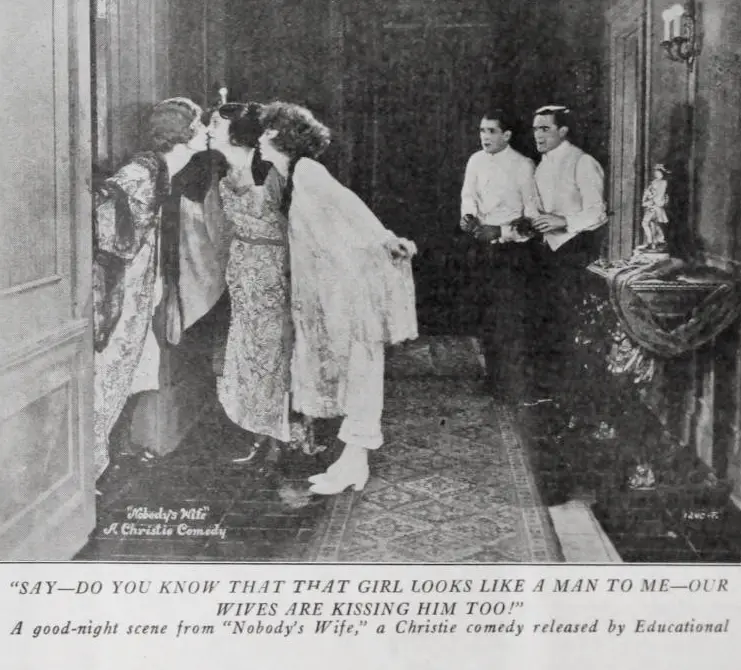
Comparisons to *The Phantom Carriage* are inevitable, given both films’ exploration of guilt and redemption. Yet *Nobody's Wife* diverges in its treatment of these themes; where *The Phantom Carriage* offers a spiritual resolution, the 1921 film leaves its characters adrift in a morally neutral universe. This existential ambiguity is perhaps the film’s most radical statement—a challenge to the audience to find meaning in the void.
The film’s historical context further enriches its interpretation. Released during a period of social upheaval, *Nobody's Wife* can be read as a critique of the American Dream’s fragility. The urban setting, rendered in stark, geometric compositions, functions as a character in its own right—a labyrinthine structure that traps and consumes those who seek to navigate it. This aspect of the film resonates with the urban decay narratives of *Forty Candles* (though that film was made decades later), suggesting that *Nobody's Wife*’s concerns were ahead of its time.
In terms of legacy, *Nobody's Wife* occupies a peculiar space in film history. Its influence is detectable in the works of later directors who embraced ambiguity as a narrative device, yet it remains underappreciated, perhaps due to its resistance to easy categorization. For scholars, the film is a treasure trove of early cinematic techniques—its use of montage, its experimentation with negative space, its nuanced portrayal of gender dynamics. For casual viewers, it is a challenging but rewarding experience, its rewards emerging not from plot progression but from the quiet beauty of its imagery and the emotional resonance of its silences.
In conclusion, *Nobody's Wife* is a film that demands to be revisited. Its refusal to conform to the storytelling conventions of its time, its visual ingenuity, and its emotional depth ensure its place as a silent film masterpiece. While it may lack the popular appeal of *Her Winning Way* or the overt drama of *The Ragged Princess*, it offers a more profound and unsettling reflection on the human condition. For those willing to engage with its complexities, *Nobody's Wife* is not merely a film—it is an experience, one that lingers long after the screen fades to black.
IMDb 6.6
1932
Community
Log in to comment.