DbcultAccessing Vault...
3.6/10
Senior Film Conservator
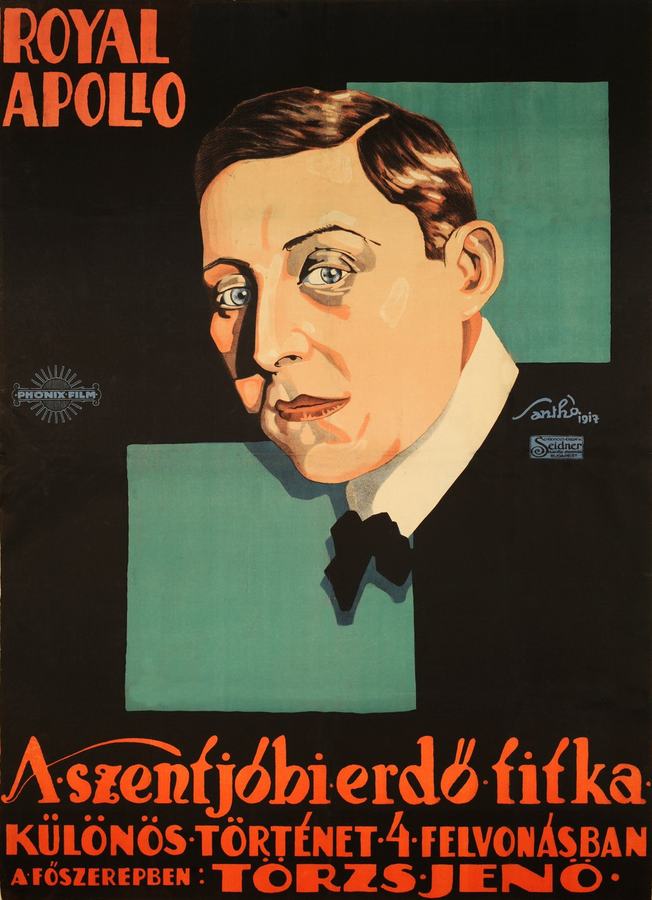
A definitive 3.6/10 rating for a film that redefined the boundaries of cult cinema. A szentjóbi erdö titka remains a cornerstone of transgressive art.
The flickering shadows of a bygone era often hold the most compelling narratives, and A szentjóbi erdö titka (The Secret of Szentjob Forest) stands as a testament to the evocative power of early Hungarian cinema. This film, a brainchild of writers Ladislaus Vajda and Iván Siklósi, transcends its humble origins to deliver a profound, atmospheric, and deeply human tale that continues to resonate with audiences who appreciate the artistry of silent-era storytelling and its immediate successors. It's a journey into the heart of a mystery, but more significantly, into the soul of a land and its people, where the past is not merely prologue but an omnipresent entity.
At its core, A szentjóbi erdö titka is a gothic melodrama, steeped in the kind of familial intrigue and spectral atmosphere that captivated audiences of its time. The plot centers on Éva, portrayed with exquisite delicacy and emotional depth by Ida Andorffy. She is an urbanite, a young woman adrift, who finds herself inheriting a dilapidated estate in the remote, almost mythical region of Szentjob after the sudden passing of a distant aunt. This inheritance is not merely a collection of bricks and mortar; it is a Pandora's Box, a portal to a forgotten lineage and a legacy shrouded in the titular forest's ancient boughs. Andorffy’s portrayal is a masterclass in understated intensity, her expressive eyes conveying a spectrum of emotions from initial bewilderment to dawning horror and ultimately, a resolute determination. She navigates the unfamiliar world of the countryside with a blend of vulnerability and nascent strength, making her character's journey of self-discovery as compelling as the external mystery she seeks to unravel. Her performance, much like that of Lillian Gish in The House of Tears, demonstrates a remarkable ability to convey profound psychological states without the aid of spoken dialogue, relying instead on gesture, posture, and the subtle nuances of facial expression.
The mystery itself is a slow-burn, meticulously constructed by Vajda and Siklósi. It revolves around a long-buried secret: the disappearance of a vast family fortune and the suspicious death of Éva's great-grandfather, an event dismissed as an accident but whispered about in hushed tones by the local populace. The Szentjob Forest, far from being a mere backdrop, becomes an active participant in the drama. Its dense canopy, gnarled trees, and secluded clearings are imbued with an almost sentient presence, serving as both a repository of secrets and a silent witness to past transgressions. The cinematography, even in its early form, manages to capture the oppressive beauty and foreboding aura of this natural setting, making it feel less like a location and more like a character with its own dark past. One can draw parallels to the way natural environments are used to amplify psychological tension in films like The Strangler's Grip, where the setting itself seems to conspire with the unfolding events.
Éva's quest for truth is aided, and at times obstructed, by a colorful cast of characters. Mór Ditrói, as István, the stoic local forester, provides a grounded counterpoint to Éva's initial naiveté. Ditrói imbues István with a quiet strength and a deep connection to the land, his initial skepticism towards Éva's 'city ways' slowly giving way to respect and a burgeoning affection. Their evolving relationship forms the emotional core of the film, adding a layer of romantic tension to the overarching mystery. The chemistry between Andorffy and Ditrói is palpable, conveyed through stolen glances and subtle gestures, a hallmark of the period's romantic storytelling. Their dynamic is reminiscent of the earnest, yet often complicated, relationships seen in films like Dulcie's Adventure, where character growth is intrinsically linked to the unraveling of a larger plot.
The supporting cast is equally compelling. Dezsõ Kertész delivers a memorable performance as the cunning estate lawyer, a man whose polished exterior barely conceals a avaricious core. Kertész masterfully portrays the subtle shifts in his character's demeanor, from feigned helpfulness to thinly veiled menace, making him a truly formidable antagonist. His performance is a prime example of the kind of theatricality that translated so effectively to the silent screen, where every gesture and expression carried significant weight. Similarly, Margit T. Halmi, as the seemingly benevolent but ultimately manipulative village elder, adds another layer of complexity to the human drama. Halmi’s character embodies the ingrained conservatism and hidden prejudices of the rural community, her watchful eyes and knowing silences suggesting a deeper complicity in the forest’s secret. Her portrayal brings to mind the nuanced, often morally ambiguous matriarchal figures found in films like Lydia Gilmore, where appearances can be deceiving.
Other notable performances include Jenö Törzs, whose character, a distraught distant relative, adds a touch of tragic pathos to the narrative, and Lajos Réthey, as a gruff but ultimately loyal groundskeeper, who provides moments of much-needed comic relief and practical wisdom. Andor Kardos, Anikó Ürmössy, Imre Pethes, and Giza Báthory round out the ensemble, each contributing to the rich tapestry of the Szentjob community, ensuring that even minor characters feel fully realized and integral to the story's unfolding. The strength of the ensemble, a hallmark of well-crafted productions, allows the central mystery to feel more organic, more deeply rooted in the fabric of the community.
What truly elevates A szentjóbi erdö titka beyond a simple mystery is its thematic depth. Vajda and Siklósi explore themes of inheritance, not just of material wealth, but of historical burdens and moral culpability. The 'secret' of the Szentjob Forest is not merely a hidden will or a lost treasure; it is the enduring psychological imprint of a family's buried transgressions, a collective guilt that has permeated the very soil of the land. The film delves into the conflict between tradition and modernity, rural superstition and urban logic, and the inexorable march of progress against the stubborn resistance of the past. It suggests that true justice often requires an unearthing of uncomfortable truths, even if those truths shatter long-held illusions. This exploration of generational trauma and the weight of history is a recurring motif in cinema, seen in various forms from the social commentary of Shoes to the more overt class struggles in Der Lumpenbaron.
The direction, though uncredited in some historical records, demonstrates a keen understanding of visual storytelling. The use of natural light, the framing of shots to emphasize the isolation and grandeur of the landscape, and the deliberate pacing all contribute to the film’s hypnotic quality. The moments of suspense are not reliant on jump scares but on a gradual build-up of dread, a creeping realization that something profoundly unsettling lies beneath the surface of the tranquil forest. This approach to suspense, relying on atmosphere and psychological tension rather than overt violence, is a sophisticated choice that speaks to the emerging artistry of filmmaking during this period. It’s a method that allows the audience to participate in the discovery, to piece together clues alongside Éva, fostering a deeper engagement with the narrative. This film, in its quiet power, reminds us that the most terrifying secrets are often those buried not in the ground, but in the human heart and the collective memory of a community.
Beyond its narrative strengths, A szentjóbi erdö titka serves as a valuable historical artifact, offering a glimpse into the burgeoning Hungarian film industry. It showcases the talent of its actors, many of whom were prominent stage figures transitioning to the new medium, and the creative vision of its writers. The film’s enduring appeal lies not just in its engaging plot, but in its ability to transport viewers to a specific time and place, to immerse them in a cultural landscape that feels both distant and intimately familiar. It’s a work that speaks to universal human experiences: the search for identity, the confrontation with one's heritage, and the eternal struggle between light and shadow, truth and deception. Its meticulous craftsmanship and the nuanced performances ensure that it remains a compelling watch, an experience that transcends the limitations of its technical era. For cinephiles and historians alike, it's a profound reminder of the rich storytelling traditions that flourished in early European cinema, often overlooked in favor of more widely distributed works from larger industries. This film, like a rare, precious artifact, offers insights into the foundations upon which modern narrative cinema was built, demonstrating that compelling stories and powerful performances are timeless, regardless of the technological advancements that have since transformed the medium. It’s a quiet masterpiece, waiting to be rediscovered by those willing to venture into the cinematic forest of Hungary’s past.
IMDb 5.3
1916
Community
Log in to comment.