DbcultAccessing Vault...
Cult Review
Senior Film Conservator
If you like old, dusty things or you're a history nerd, yeah. You'll probably dig it.
If you need explosions or people talking without text boxes popping up every ten seconds, you will absolutely hate this.
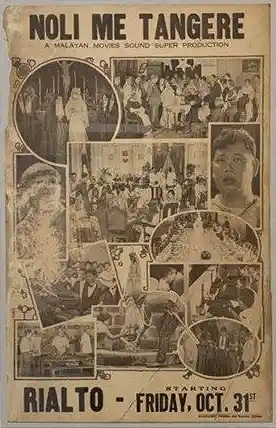
Its the 1930 version of the Jose Rizal book, and honestly, it feels like it was filmed in a basement somewhere. But that's kind of why I liked it.
The film is super grainy. Like, it looks like someone threw a handful of sand into the projector before they started.
But the grain gives it this spooky vibe that fits the story. Everything feels a bit haunted.
Chito Calvo plays Ibarra, and he has this very serious mustache. He spends a lot of time just staring into the distance looking sad.
He looks like he hasn't slept in about three years, which, considering what happens to his dad, makes total sense.
I noticed early on that the camera just... sits there. It doesn't move.
It feels like you're watching a play from the front row, but the actors are all really, really close to your face. It's a bit uncomfortable sometimes.
The church scenes are the best part because the friars are so obviously the bad guys. They don't even try to look nice.
They have these heavy eyebrows and they’re always whispering to each other. It reminded me a bit of the heavy-handed vibes in Life of Christ, where you just know who to root for immediately.
Celia Marcaida plays Maria Clara, and her eyes are doing so much work. Since there's no sound, she just has to look tragic, and boy, does she do it well.
There is this one moment where she is looking at a cross, and the shot just lingers. And lingers.
I think I counted to forty before the scene finally changed. It’s that kind of movie.
The title cards are long. Like, really long. I felt like I was reading the actual novel at some points.
I caught myself skimming the text because I wanted to get back to the weird flickering faces. Is that bad? Maybe.
The costumes are also really interesting. The barong tagalogs look so stiff they might be made of cardboard.
I kept wondering if the actors could even breathe in those things. Chito Calvo moves his neck like it’s stuck in a brace.
There’s a scene by the lake that actually looked pretty beautiful. The old film stock makes the water look like liquid mercury.
It has this shimmering, oily quality that you just don't see in modern stuff. It’s almost dreamlike, or maybe more like a nightmare.
Compared to something like The Guilty Man, this feels way more theatrical. Everyone is gesturing wildly.
If they want to show they are angry, they don't just frown. They shake their whole bodies.
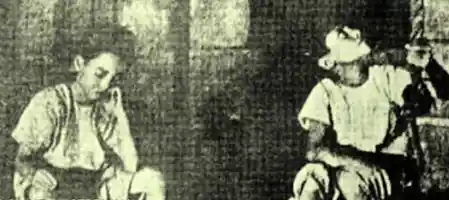
It’s kind of funny if you aren't in the right mood. But if you lean into it, it’s actually pretty effective.
I was surprised by how much of the political stuff they kept in. It’s not just a romance.
You can feel the anger towards the friars and the Spanish government bubbling under every scene. It’s tense.
Monang Carvajal is in this too, and she’s just great. She has this presence that cuts through all the film grain.
The pacing is all over the place. Some scenes fly by, and then you’re stuck in a dining room for what feels like an hour.
I think some of the footage might be missing, or maybe they just edited it with a pair of garden shears. It jumps a lot.
One minute Ibarra is talking, and the next he’s suddenly across the street. No transition. Just boom, he's there.
It’s definitely not as polished as Week-End Wives, which feels like a professional production compared to this.
But there is a soul in this one. You can tell they really cared about getting Rizal’s story right.
There are these weird little details I liked. Like a dog wandering into the back of a shot and then just sitting there.
Nobody told the dog to leave. It just stayed. I like that stuff.
The version I saw had a piano track that was way too happy for what was happening on screen. It was weird.
Ibarra is crying over his father's grave and the piano is playing something you'd hear at a circus. It was a bit of a mood killer.
But that’s part of the experience of watching these old relics, I guess. You take what you can get.
I found myself thinking about The Street while watching the outdoor scenes. There's a similar sense of trying to capture a world that doesn't exist anymore.
The Manila in this movie is long gone. The buildings, the clothes, the way people walked.
It’s like looking at a ghost. A very jumpy, silent ghost.
I wouldn't call it a masterpiece in the modern sense. It’s too clunky for that.
But it’s a fascinating piece of history. And for a 1930 film, it has some real guts.
If you can find a copy that isn't completely unwatchable, give it a shot. Just bring some coffee.
You’re going to need it during those long title cards. ☕
Overall, I'm glad I saw it. It makes you realize how much movie-making has changed, but also how the same stories keep working.
Ibarra's anger still feels real, even without a voice. That's saying something.
IMDb —
1933
Community
Log in to comment.