DbcultAccessing Vault...
Cult Review
Senior Film Conservator
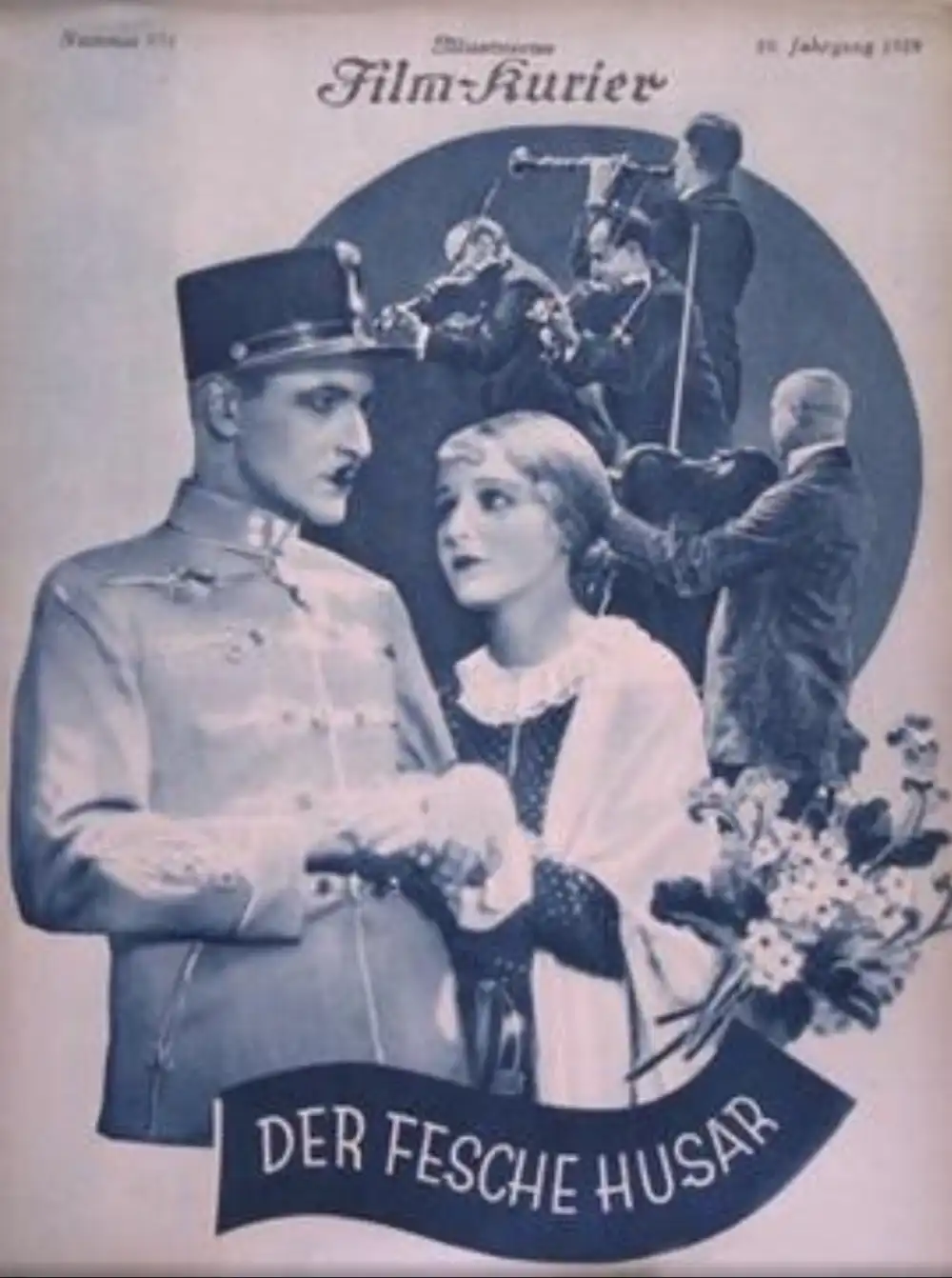
If you’re deciding whether to sit through Der fesche Husar today, you really have to ask yourself how much you enjoy watching people in very tight uniforms struggle to sit down. This is a movie for the kind of person who finds the transition era of silent film—where everything was getting a bit more sophisticated but still felt like a stage play—genuinely cozy. If you need pacing that moves faster than a tired horse, you’ll probably be checking your watch by the second act.
Ivor Novello is, of course, the center of gravity here. There is a shot early on where he’s just standing by a window, and the lighting is doing about 80% of the acting for him. He has this way of looking intensely at things—a letter, a glass of wine, a woman’s hat—as if he’s trying to solve a complex math equation in his head. It’s a bit much, but it works for the 'dashing' persona the title promises. However, his chemistry with Evelyn Holt feels a bit lopsided. She’s doing a lot of work with her eyes, and he’s mostly just being handsome in her general direction.
The real highlight for me wasn't the romance, though. It was Paul Hörbiger. He has this frantic, nervous energy that feels like it belongs in a different movie entirely. There’s a scene in a hallway where he’s trying to fix his jacket while talking to a superior, and he keeps fumbling with a button that looks like it’s actually stuck. It’s a tiny, clumsy moment that felt more real than any of the big romantic gestures. Most of the other actors seem to be waiting for their turn to pose, but Hörbiger is actually behaving.
The sets are... interesting. You can tell they had a decent budget, but there’s a persistent flatness to the interiors. In the ballroom scene, the depth of field is so shallow that the extras in the back look like they’re painted onto the wall. Speaking of the extras, keep an eye on the guy in the far left during the cafe sequence. He spends about three minutes trying to cut a piece of bread and eventually just gives up and stares at the camera. It’s the kind of thing you only notice when the main plot starts to sag, which it does right around the middle.
There’s a weird edit about forty minutes in. We go from a fairly tense conversation about a debt straight to a close-up of a dog. No transition, no logic, just a dog. It’s those kinds of rough edges that remind you this wasn't some polished Hollywood machine product. It feels like they were figuring out the rhythm as they went. It’s not as tightly wound as something like The Trap, which manages its suspense a lot better, but it has a certain shaggy charm.
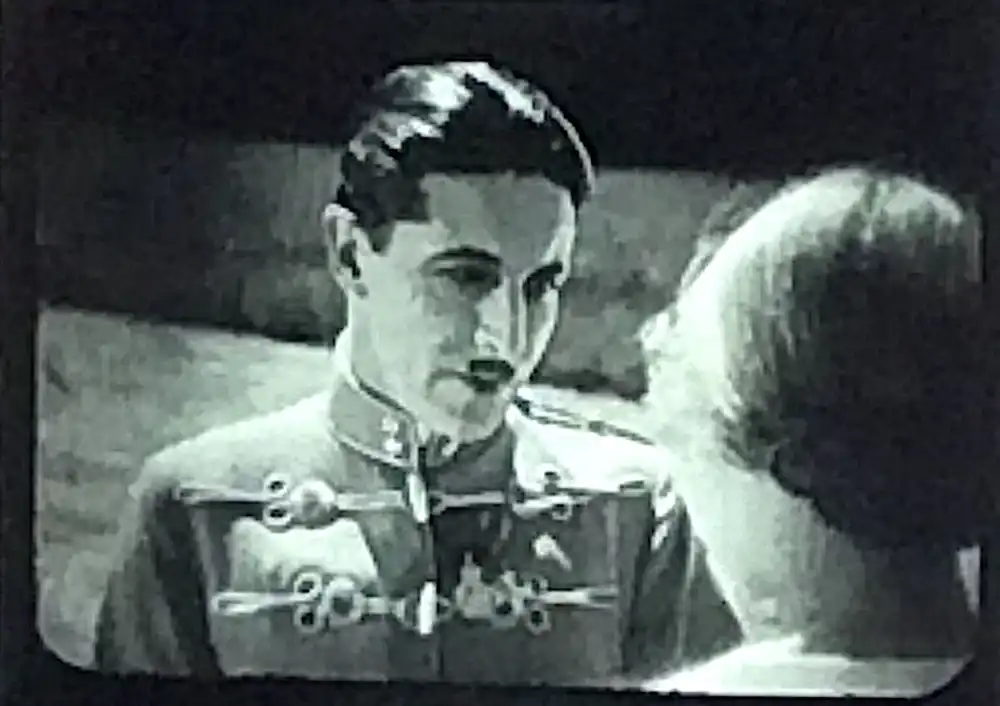
The dialogue titles are also a bit of a chore. Some of them are incredibly long, and because it’s a comedy of manners, you’re stuck reading these flowery explanations of things that the actors have already made obvious with their faces. There’s one point where a character explains he is 'distraught by the turn of events' after we’ve just watched him knock over a chair and bury his face in his hands for thirty seconds. We get it.
I also found the costume design for the women a bit distracting. Hilde Hildebrand is wearing this one headpiece that looks like it’s actively trying to slide off her skull. She keeps tilting her head at this unnatural angle to keep it balanced during a serious conversation. Once you notice it, it’s impossible to focus on what she’s saying. It’s these little physical struggles—the heavy hats, the stiff collars, the oversized sabers—that make the movie feel more like a documentary about actors in uncomfortable clothes than a military romance.
Is it a masterpiece? No. It’s a bit of a relic, and the 'comedy' parts are more likely to make you smile than actually laugh. But it’s worth it for the atmosphere. There’s a specific kind of European melancholy that seeps into these late silents, even the funny ones. The way the light hits the dust in the barracks scenes actually looks beautiful, even if the plot is just a series of misunderstandings that could be solved in five minutes if anyone just spoke clearly.
If you’ve seen Miss Rovel, you’ll recognize that same sort of airy, slightly aimless plotting. It’s a movie that’s happy to just exist in a room for a while. Sometimes that’s enough, and sometimes you just want them to get on with it. By the time the finale rolls around, I was mostly just glad that Novello finally got to take that hat off.
One last thing—the music in the version I saw was a bit of a mess, but if you can find a good score, it probably helps the pacing. Without it, the long silences between the physical gags start to feel a bit lonely. It’s a movie that needs a bit of help from the audience to keep the energy up.
IMDb 6.4
1929
Community
Log in to comment.