DbcultAccessing Vault...
Cult Review
Senior Film Conservator
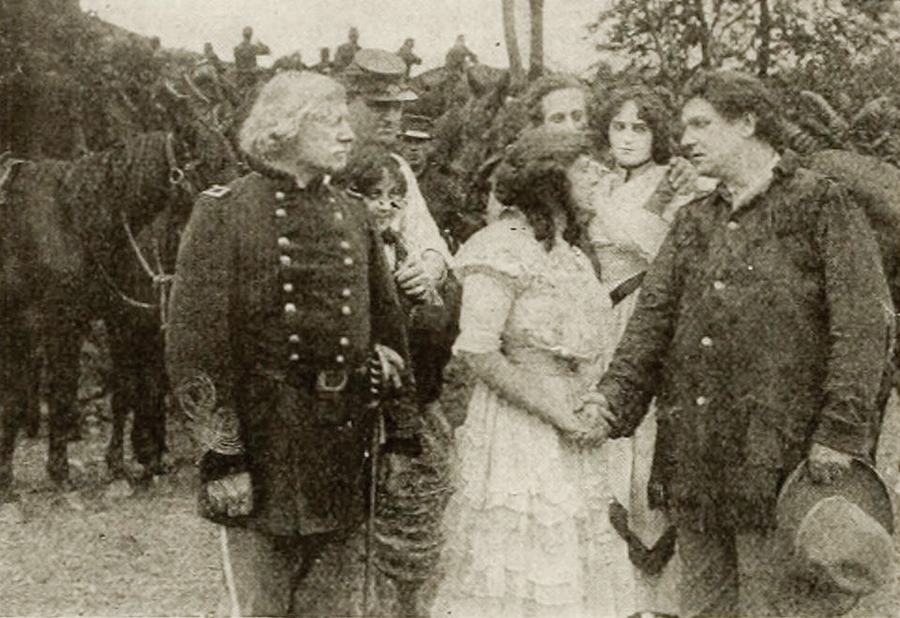
The nickelodeon curtain rises on a tableau of frostbitten blue: a military courier staggers across a frontier parlor, telegram trembling like a loaded pistol. One glance at those carbon-black syllables and Mrs. Gray's womb convulses, etching fear into the neural folds of the creature she carries. In this single, wordless sequence Northern Lights announces its thesis: cowardice can be congenital, not as metaphor but as prenatal wound.
What follows is a diptych of education and erosion. Young Wallace, reared among regimental bugles that ought to solder vertebrae into iron, instead grows sideways, flinching at firecrackers. His college years are shot through with proto-Expressionist shadows—archways yawn like open jaws, lecture halls echo with the laughter of boys who smell blood in the slightest tremor. Enter Swiftwind, stoic as obsidian, yet carrying inside him the same colonial experiment: his tribe's wager that a diploma might outrank a repeating rifle. Their friendship is the film's moral warp, a braid of mutual rescue; whenever taunts ricochet off brick, Swiftwind's hand finds Wallace's shoulder, steadying the quake.
George De Carlton plays Wallace with a physiognomy of perpetual flinch: pupils that dart like trapped minnows, shoulders that fold inward as if the sternum were a book slammed shut. The performance courts melodrama yet lands in a twilight zone of genuine neurosis, a silent-era study in PTSD before the acronym existed. Opposite him, David Wall's Swiftwind moves with glacial self-command, a gait so unhurried it seems to slow the celluloid itself; when he offers a rare smile, the frame warms by several kelvins.
Dr. Sherwood—William H. Tooker's silk-voiced predator—slithers into this dyad wearing civilization's perfume. His agenda is possession, of morphine stocks, of Florence, of narrative itself. The film's middle reel turns on Sherwood's stagecoach rescue, a sequence that crackles with cross-cut tension: arrows thunk into timber, dust clouds churn into solar flares, Florence's veil whips like a surrender flag. Wallace's desertion here is not mere panic but existential split; he abandons not only a woman but the last pretense of hereditary honor.
Director Edwin Barbour orchestrates the desertion with a brutal economy: a close-up of Wallace's boot heel sliding backward in the sand, then a smash-cut to Florence's eyes—two glints of disbelief that burn hotter than any Gatling. The moment is intimate apocalypse, a fracture the film will spend its remainder trying to solder.
Self-imposed court-martial follows, a scene of almost Shakespearean implosion: father-judge, son-coward, death-yearning. Colonel Gray's face—etched by James W. Harkins's script as granite—twitches once, a hairline crack of paternal agony, before sentencing the boy to the pyramids. Those pyramids are not tombs but sun-scorched kilns of shame, where chain-gangs drag iron orbs through alkali flats until the horizon itself feels punitive. Critics often invoke Mute Witnesses for its carceral gloom, yet Northern Lights anticipates it by filming incarceration as cosmic theater—shadows stretch like black lightning, the sun a white-hot inquisitor.
Salvation descends not via angel but via aurora. The Northern Lights—rendered through hand-tinted emerald and amethyst—ripple across the sky like celestial serpents. To the encircled troopers they are merely uncanny; to the Lakota they are prophecy of victory. In this collision of readings, the film stages its philosophical crux: is destiny omen or optics? Wallace, hearing that his father is the doomed nucleus of the canyon, volunteers to ride through the siege line, not from newfound courage but from the calculus of shame—better a bullet than the ball-and-chain.
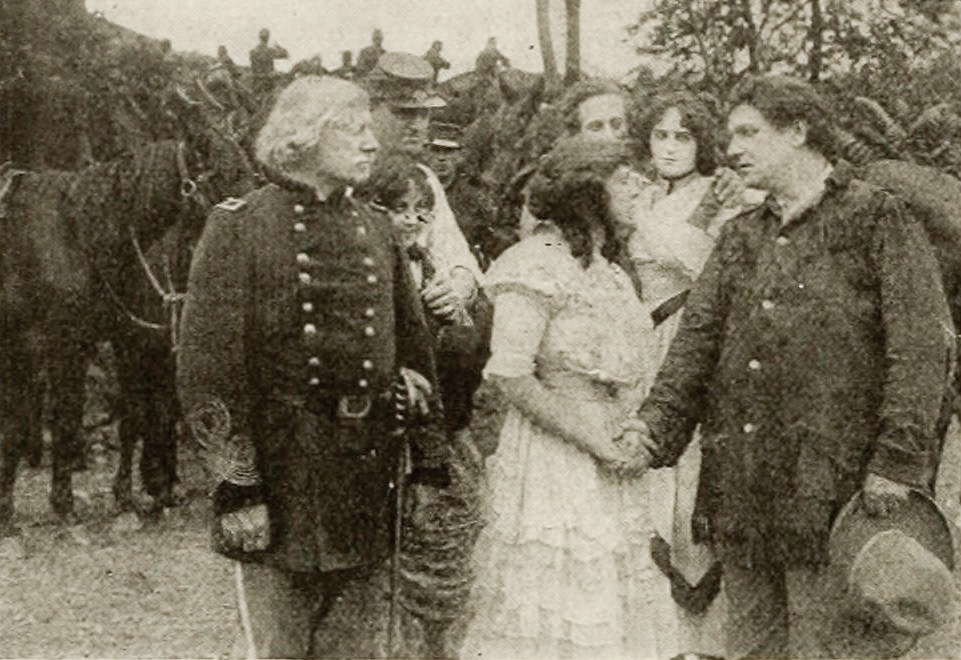
The ride itself is a phantasmagoria of tint and tempo. Barbour double-exposes the galloping horse atop the aurora, creating a ghost-stampede that seems to gallop across the sky's dome. Intertitles dissolve into vaporous letters: "Redemption cannot be ridden; it must be reached by going through oneself." Whether this line is claptrap or koan depends on one's tolerance for silent-era moral algebra, yet the visceral thrill of the sequence is undeniable.
Wallace's arrival thwarts a false-flag parlay; he tumbles from the saddle, message clenched between bloodied knuckles, just as an Indian envoy raises a white cloth masking a Colt. The bullet meant for his father is instead absorbed by a lieutenant's epaulette—an accident that feels like fate's sardonic shrug. In the chaos, Wallace's tremor subsides; the report of rifles no longer liquefies his marrow. Barbour withholds triumphant close-up, opting for medium-shot austerity: a man standing upright amid smoke, nothing more, yet the moment lands with seismic uplift.
Meanwhile, inside adobe walls, Sherwood's scheme curdles. His substitution of cholera culture for morphine is blocked by a kerosene mislabel; in the tussle he is scratched by his own needle. Swiftwind, ever Hippocratic, injects the doctor with what he believes is analgesia, thereby delivering poetic euthanasia. The sequence is lit like a Rembrandt: a single candle throws umber across Sherwood's cheekbones as realization calcifies into horror. His death throes are intercut with the canyon skirmish, Barbour cross-pollinating battlefield exultation with laboratory nemesis.
Resolution arrives not through military promotion but through matrimony. Florence, having witnessed both Wallace's abjection and his apotheosis, rewrites the ledger of affection. Their final clinch—silhouetted against dawn-pink adobe—avoids mawkishness because the film has earned its sentiment through prior lacerations. The last shot tilts upward to a sky now void of aurora, just ordinary morning, implying that cosmic signage has ceded to human choice.
One must address the film's racial optics, unavoidable yet complicated. Swiftwind is the noble archetype, yet the screenplay grants him agency beyond mere martyrdom: he graduates, commissions, even determines the narrative hinge by collapsing from exhaustion, thereby creating the vacuum Wallace fills. Compared to the scalping caricatures in contemporaneous Westerns like Half Breed, Northern Lights at least acknowledges tribal cosmology as coherent worldview rather than savage backdrop. Still, the Indian-as-mentor trope circumscribes indigenous futures within colonial education; Swiftwind's ultimate fate—offscreen once Wallace is redeemed—leaves the political ledger only partially balanced.
Technically, the film is a compendium of 1916 gadgetry: double exposures, hand-tinting, day-for-night photography rendered through cobalt filters that make moonlight feel refrigerated. The tinting scheme is itself a character—sepia for parlor repression, sickly green for the pyramids, iridescent teal for the aurora sequence. Restored prints reveal granularity that lends each frame a graphite shimmer, as though the story were sketched by feverish war correspondent.
Performances ricochet between schools. Iva Shepard's Florence oscillates from damsel to determinant, her close-ups registering micro-tremors of moral arithmetic behind the eyes. Anna Laughlin, as the older Mrs. Gray, has only two scenes yet etches maternal haunting with a single clasp of Wallace's infant wrist—an augury of inherited fragility. Among the troopers, Harry Spingler provides comic relief via moon-faced bewilderment, though the film wisely prunes his antics before the final reel.
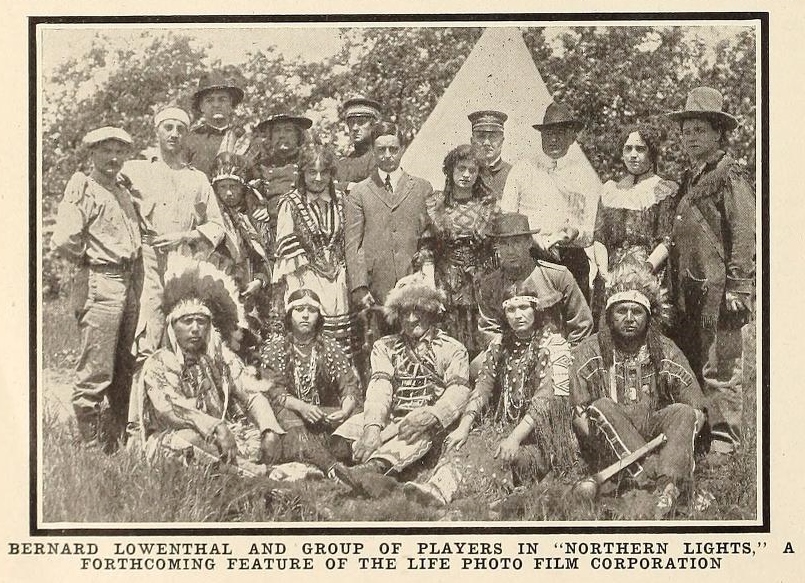
James W. Harkins's screenplay, adapted from an obscure stage melodrama, condenses a decade of incident into under seventy minutes without jettisoning emotional continuity. Intertitles favor biblical cadence—"The sins of the fathers are ball-and-chain unto the sons"—yet occasionally spike modern psychology: "Fear learned before breath becomes the marrow's tenant." Such hybrid diction places the film in liminal territory between Victorian moral tract and emergent psychiatric narrative.
Comparative contextualization enriches appreciation. Where The Golden West (also 1916) aestheticizes manifest destiny through pastoral tableaux, Northern Lights interrogates the psychic cost of imperial conquest, suggesting that the colonizer's child can be internally colonized by terror. Its nearest analogue might be Ivanhoe in theme of paternal shame, yet the transposition onto frontier canvas gives the psychodrama solar plexus impact.
Themes ricochet beyond personal redemption into epigenetic dread: can trauma, like eye color, be transmitted in utero? Contemporary neuroscience might scoff, yet the film's poetic logic endures because it externalizes an interior curvature we still recognize—the way anxiety pools in familial basins. In an era before Freud was household furniture, Northern Lights built a cathedral to inherited angst.
Reception history is fragmentary. Trade papers of 1916 praised the aurora sequence as "visionary as any canvas by Church or Moran," yet the film vanished into regional distribution, eclipsed by Griffith's larger-budget confections. Only a single tinted nitrate survived in a Montana mining-town hall, rescued in the 1970s by an itinerant archivist who smelled vinegar decay from the projection booth. The restoration—now streaming via several boutique platforms—retains cigarette burns and reel-change marks, scars that whisper of a century of Saturday matinees.
Viewing tips: watch after midnight, volume low enough to hear projector hum become prairie wind, allow the greens and ambers to seep into peripheral vision until your own wall seems to ripple with boreal fire. Then consider how seldom modern cinema risks the equation that courage equals not the absence of fear but the decision that something else—love, duty, the mere wish to cease being coward—matters more.
Final calculus: Northern Lights is neither pristine artifact nor flawless allegory; it is a latticework of contradictions—progressive yet patronizing, lyrical yet laced with penny-dreadst clichés. Yet its emotional afterburn lingers, like the retinal ghost of green fire, reminding us that redemption is less a medal pinned on the breast than a horizon one keeps riding toward even when chains still chafe the ankle.
"He who rides through the Northern Lights does not escape darkness; he learns to wear it like a lantern."
In the pantheon of silent Westerns, this lantern still throws strange, beautiful shadows.
IMDb 6.6
1921
Community
Log in to comment.