DbcultAccessing Vault...
5.8/10
Senior Film Conservator
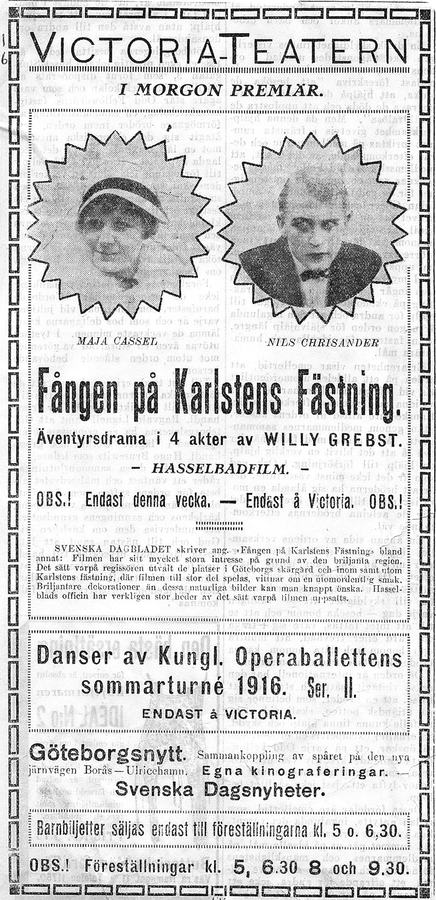
A definitive 5.8/10 rating for a film that redefined the boundaries of cult cinema. Fången på Karlstens fästning remains a cornerstone of transgressive art.
In the pantheon of the Swedish Golden Age of cinema, the names Sjöström and Stiller often eclipse the formidable contributions of Georg af Klercker. Yet, to overlook Fången på Karlstens fästning (1916) is to ignore a pivotal moment where the grammar of the thriller was being meticulously forged. This film, a taut exercise in suspense and architectural dread, serves as a testament to Af Klercker’s idiosyncratic ability to weave landscape and narrative into a singular, suffocating tapestry. Unlike the more pastoral explorations found in Life's Harmony, this work plunges into the dark heart of industrial modernity, where the invention of an explosive formula becomes the catalyst for a harrowing descent into criminality and confinement.
The narrative impetus—a stolen formula for a high-yield explosive—might seem like a quintessential MacGuffin by today’s standards, but in the context of 1916, against the backdrop of a continent consumed by the Great War, it carried a visceral, terrifying weight. Af Klercker, collaborating with writer Willy Grebst, bypasses the melodramatic tendencies of contemporaries like Bryggerens datter, opting instead for a gritty, almost journalistic realism that predates the noir movement by decades. The opening sequences, depicting the theft, are choreographed with a precision that mirrors the cold efficiency of the villains themselves. Gabriel Alw and Frans Oskar Öberg lead a cast that understands the power of the understated gesture, eschewing the histrionics often associated with silent-era performances.
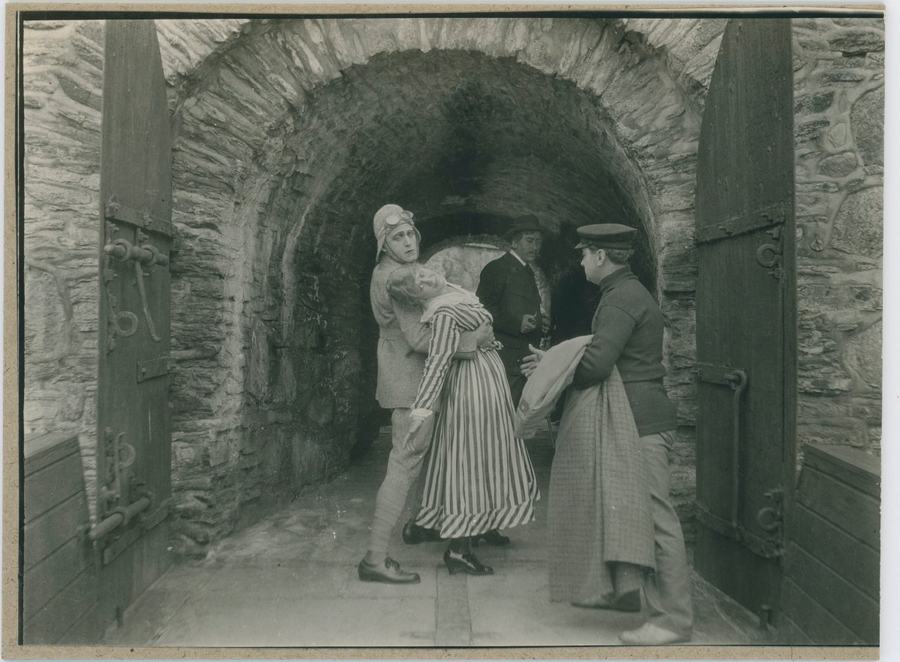
The cinematography utilizes the rugged terrain of Marstrand with a sophistication that rivals the atmospheric depth of The Sparrow. The camera does not merely record the action; it interrogates the space. When the daughter (played with a haunting vulnerability by Eleonor de Floer) is snatched from her world of domestic safety, the transition is visually jarring. The shift from the intimate interiors of her father’s study to the vast, indifferent stone of the Karlsten Fortress mirrors her psychological fracture. It is a transition as stark as the moral decay of the antagonists who prioritize chemical lethality over human life.
Karlstens fästning is not merely a setting; it is the film’s most formidable character. The stone walls, which have historically housed the most notorious prisoners of Sweden, provide a metaphorical resonance that Af Klercker exploits to its fullest potential. The way the light hits the granite—captured in crisp, high-contrast monochrome—creates a sense of permanence that makes the human struggle feel ephemeral and fragile. In comparing this to the sprawling vistas of Robbery Under Arms, one finds a different kind of confinement. While the latter deals with the lawlessness of the open plains, Fången på Karlstens fästning deals with the claustrophobia of history and stone.
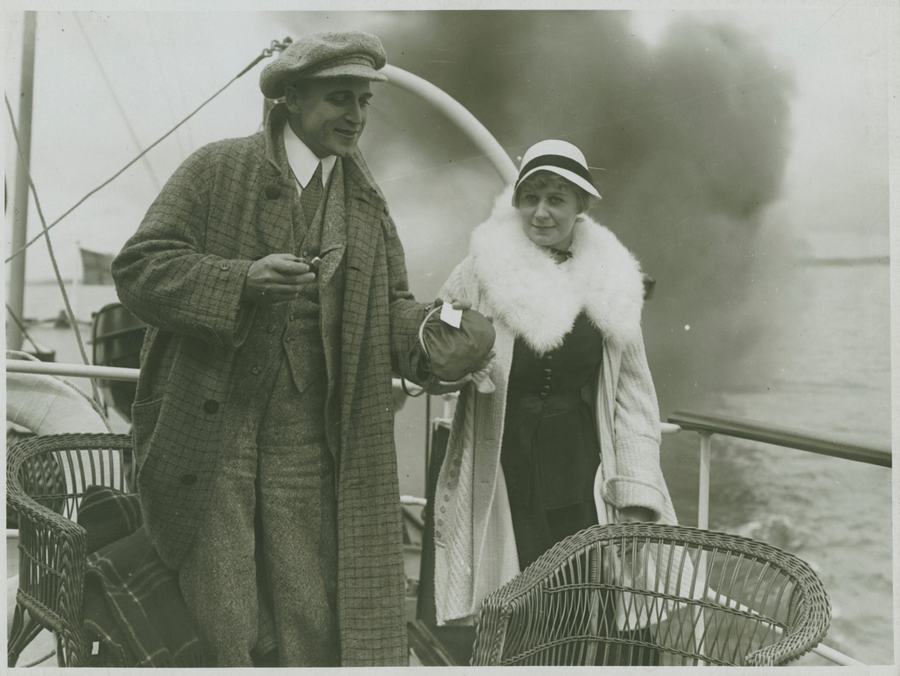
The direction utilizes deep focus to establish a hierarchy of threat. We often see the daughter in the background, a small, pale figure framed by the massive arches of the prison, while the villains loom in the foreground, their faces etched with a predatory focus. This visual strategy creates a persistent anxiety in the viewer, a feeling that escape is not just physically difficult but geometrically impossible. The film shares a certain DNA with the early espionage serials like Protéa, yet it lacks the campy playfulness of the French tradition, replacing it with a somber, uniquely Scandinavian gravitas.
Hugo Björne and Victor Arfvidson provide performances that are masterclasses in silent menace. There is no need for intertitles to explain their motivations; their avarice is written in the sharp angles of their movements and the way they inhabit the frame. This is a far cry from the more sentimental characterizations found in David Copperfield. Here, the characters are archetypes of a new age—men who see the world as a series of assets to be seized. The struggle of the father to reclaim both his child and his invention serves as a poignant critique of the vulnerability of the creator in an era of mechanical reproduction and destruction.
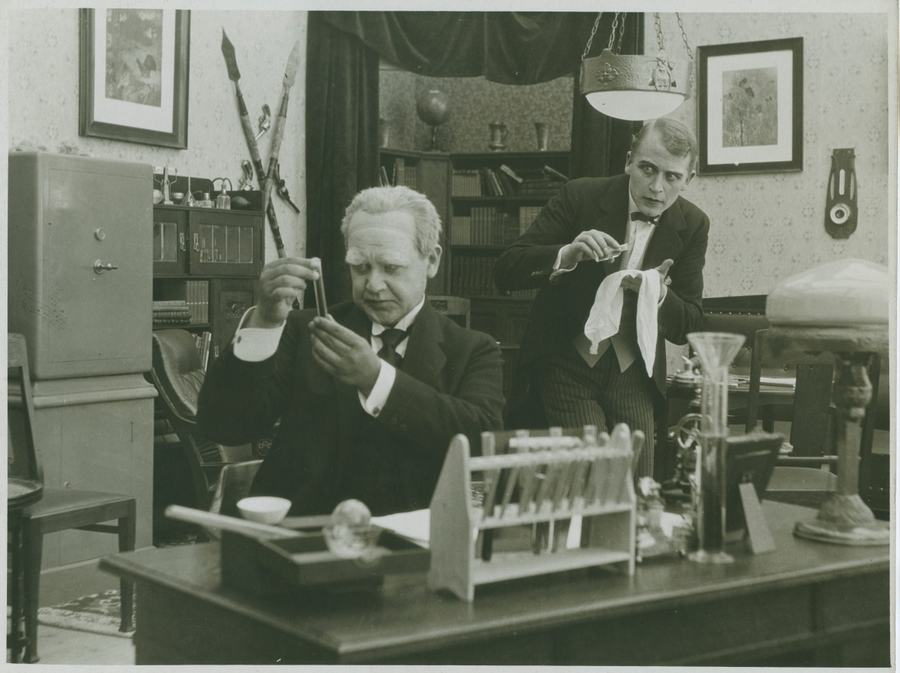
Lilly Cronwin and Gustaf Bengtsson round out an ensemble that operates with a collective rhythm. Each scene is paced with an internal metronome that builds toward the inevitable confrontation. The film avoids the episodic nature of many 1910s productions, such as Homunculus, 1. Teil, which can sometimes feel fragmented. Instead, Af Klercker maintains a narrative fluidity that carries the audience from the initial breach of security to the climactic heights of the fortress with an unwavering intensity.
Analyzing the film through the lens of early 20th-century cinema, one cannot help but notice how it anticipates the psychological thrillers of the 1940s. The themes of surveillance, the witness in peril, and the weaponization of science are all present here in their embryonic forms. While Jealousy or Charity might explore the internal moral compass of their protagonists, Fången på Karlstens fästning is more concerned with the external pressures of a world turning toward violence. It is a film of gears, stones, and shadows.
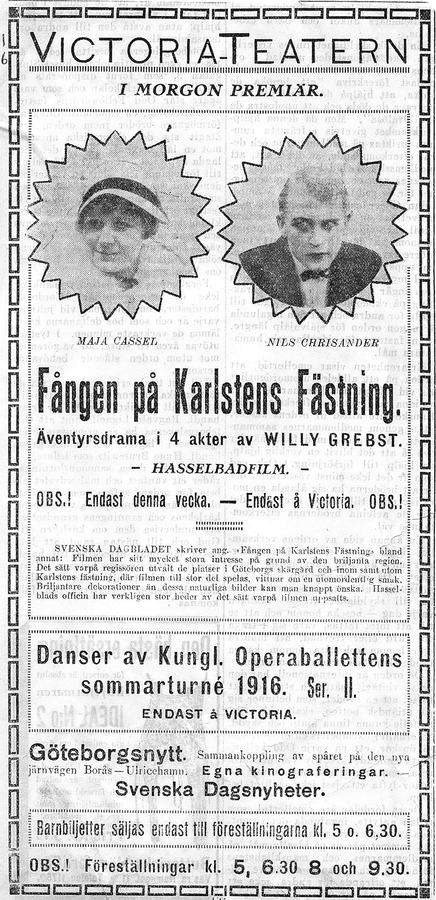
The technical prowess on display—from the location shooting to the sophisticated editing—marks this as a high point for Hasselbladfilm. The production values are remarkably high, avoiding the staginess that plagued many early films like Ranson's Folly. Af Klercker’s use of natural light, particularly the way it reflects off the sea and filters through the narrow windows of the fortress, creates a sense of place that is both beautiful and terrifying. It evokes a similar maritime tension found in The Siren's Song, yet anchors it in a much more grounded, physical reality.
At its core, the film is a meditation on the paradox of progress. The explosive formula represents the pinnacle of human ingenuity, yet its existence necessitates the creation of new forms of imprisonment and violence. This thematic depth elevates the film above a mere kidnapping plot. It mirrors the existential dread found in Sposa nella morte! or the tragic inevitability of Her Triumph. The daughter’s plight is the plight of the innocent caught in the gears of a world that has learned how to blow itself apart but has not yet learned how to protect its own.
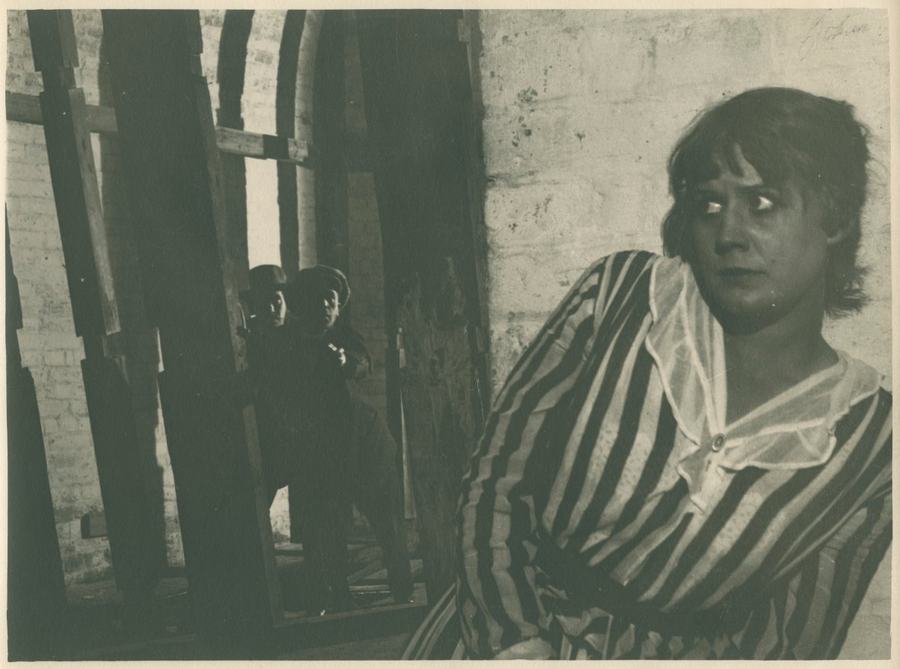
As the resolution approaches, the film does not offer easy catharsis. The rescue is hard-won, and the fortress remains, a silent witness to the folly of men. The final frames leave the viewer with a sense of the sublime—a mixture of awe at the technical achievement of the filmmaking and a chilling recognition of the themes it dares to explore. It is a work that demands to be seen not just as a historical curiosity, but as a vital, breathing piece of cinema that continues to resonate with contemporary anxieties regarding technology and security.
In the broader spectrum of early action cinema, where films like World's Heavyweight Championship Between Tommy Burns and Jack Johnson relied on the raw spectacle of physical prowess, Af Klercker offers a more cerebral form of excitement. He understands that the greatest tension comes not from the punch or the chase, but from the shadow of the stone wall and the silence of a stolen secret. Fången på Karlstens fästning stands as a towering achievement of the silent era, a film that used the limited tools of its time to create a cinematic experience that is, quite literally, explosive.
Ultimately, the legacy of this film lies in its refusal to simplify its narrative. It recognizes that even in a world of villains and heroes, the true conflict often lies in the architecture we build around ourselves—both literal and metaphorical. Whether it is the fortress of Karlsten or the fortress of the mind, Af Klercker shows us that the only way to escape is to face the shadows head-on. This is a essential viewing for anyone interested in the evolution of the thriller, the history of Swedish art, or the sheer, unadulterated power of visual storytelling. It is a masterpiece of shadow and stone, a haunting reminder of the ghosts that linger in the ramparts of our history.
By the time the credits roll—or rather, the final iris closes—one is left with an indelible impression of a director at the height of his powers. Georg af Klercker may not have the international name recognition of his peers, but in Fången på Karlstens fästning, he created something that transcends time and language. It is a film that speaks to the universal fear of loss and the relentless pursuit of power, set against a landscape that is as beautiful as it is unforgiving. It is, in every sense of the word, a classic.
IMDb 6.3
1935
Community
Log in to comment.