A definitive 6.1/10 rating for a film that redefined the boundaries of cult cinema. Nothing Doing remains a cornerstone of transgressive art.
Is Nothing Doing, the 1920s silent comedy starring Charles R. Bowers, worth pulling from the archives and watching today? Short answer: yes, but with significant caveats that speak to its era and specific comedic sensibility.
This film is an absolute must-see for ardent aficionados of early cinema and those with a deep appreciation for the foundational mechanics of slapstick, yet it will likely prove a challenging, perhaps even tedious, experience for viewers accustomed to contemporary narrative pacing and humor.
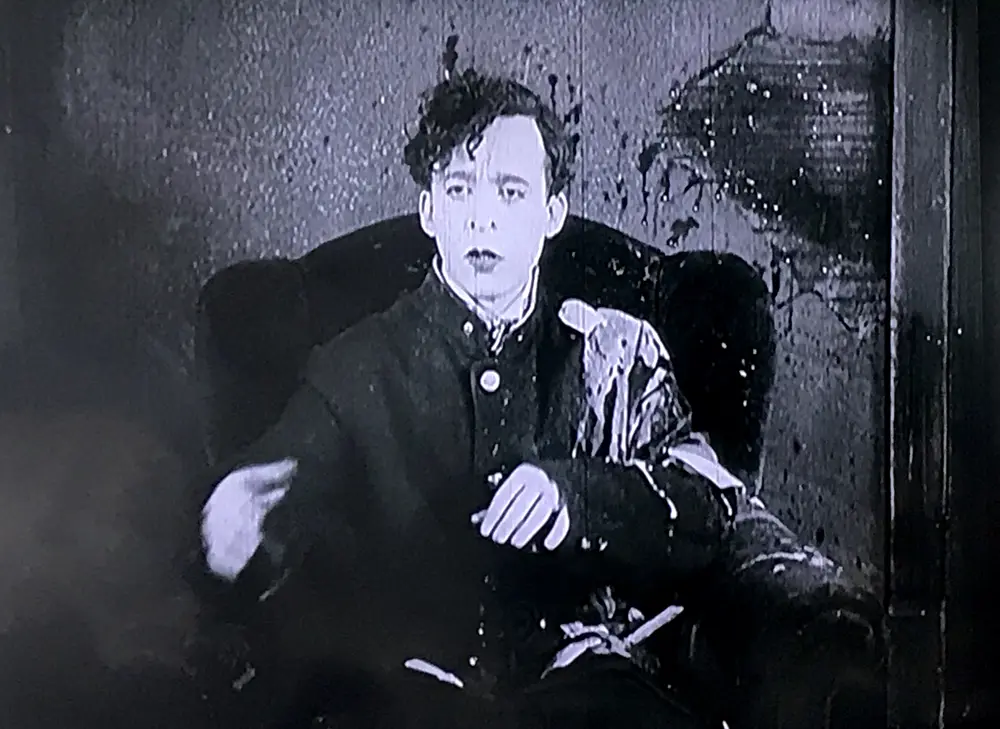
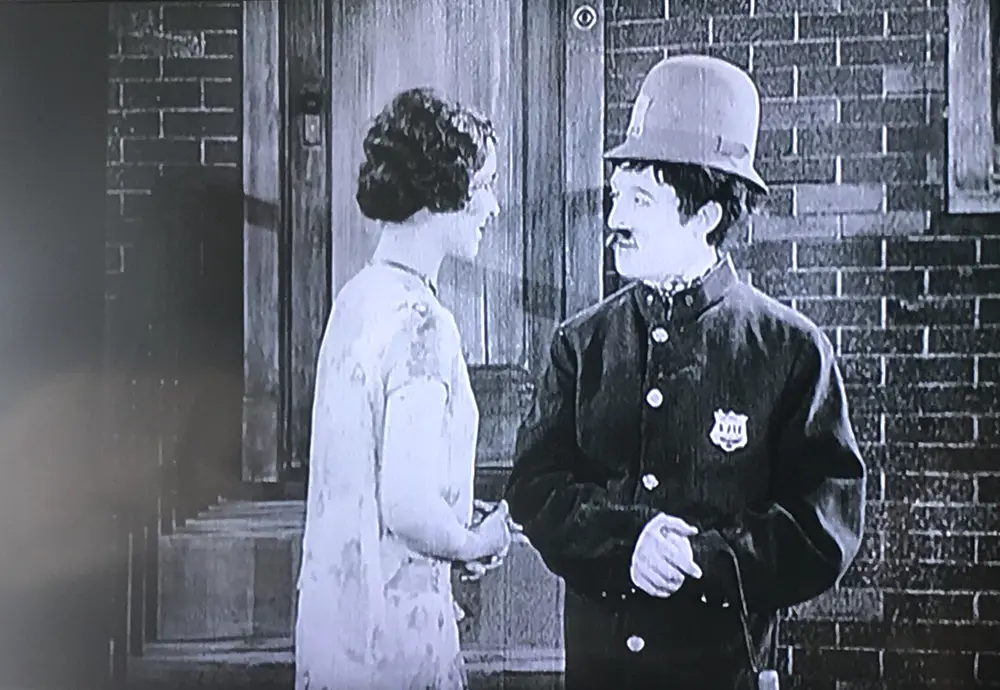
Scene from Nothing Doing
Cinematic perspective: Exploring the visual vocabulary of Nothing Doing (1927) through its definitive frames.
Early on, we can distill the essence of Nothing Doing into a few critical observations:
This film works because of Charles R. Bowers' singular, inventive physical comedy and his uncanny ability to blend mechanical gags with character-driven mishaps, creating moments of genuine, if dated, hilarity.
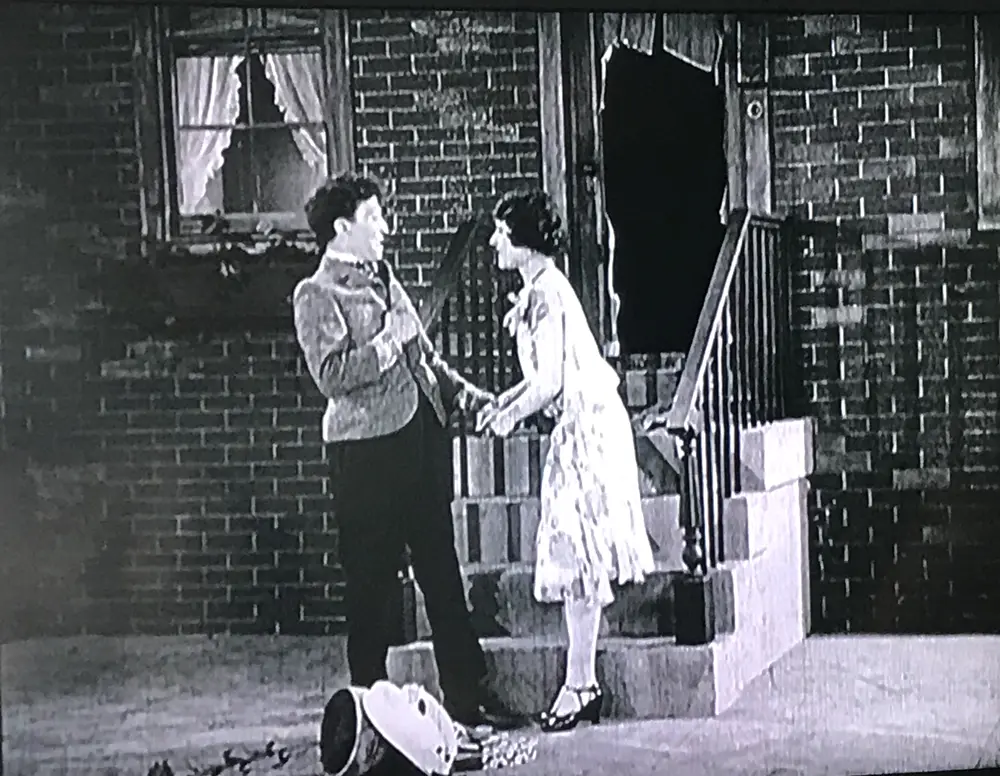
Scene from Nothing Doing
Cinematic perspective: Exploring the visual vocabulary of Nothing Doing (1927) through its definitive frames.
This film fails because its narrative is threadbare, serving merely as a flimsy scaffold for gags that, while clever for their time, often feel protracted and occasionally repetitive by modern standards, lacking the emotional depth or consistent pacing found in the works of contemporaries like Chaplin or Keaton.
You should watch it if you are a film historian, a silent comedy enthusiast, or someone fascinated by the evolution of comedic timing and special effects in early cinema, particularly if you are curious about the lesser-known but equally innovative figures of the era.
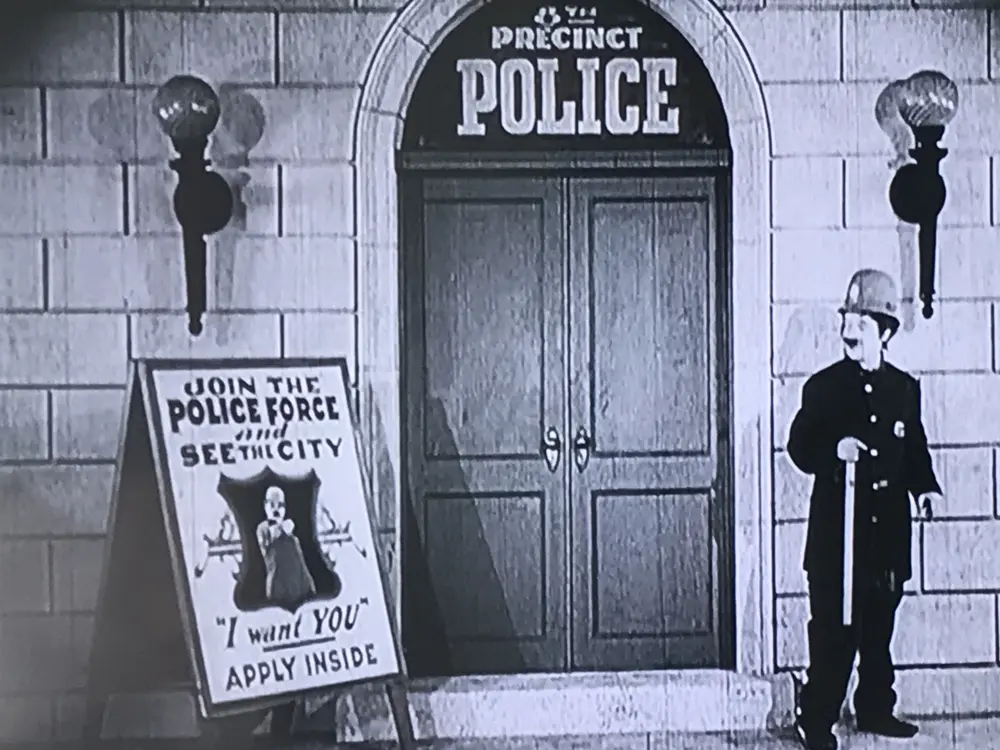
Scene from Nothing Doing
Cinematic perspective: Exploring the visual vocabulary of Nothing Doing (1927) through its definitive frames.
The Silent Detective's Debut: A Plot Reimagined
At its core, Nothing Doing presents the earnest, if somewhat naive, Charley (Charles R. Bowers) as he embarks on a new chapter in his life: joining the local police force. His aspirations are clear, even if his initial competence is debatable. The narrative quickly thrusts him into the thick of things, tasking him with the formidable challenge of apprehending a cunning gang of crooks who have been plaguing the city. This isn't a nuanced character study, nor is it a complex procedural drama. Instead, it’s a vehicle for a relentless series of escalating physical gags and ingenious contraptions, all designed to showcase Bowers' unique brand of mechanical comedy.
The plot, thin as it might be, serves its purpose with admirable efficiency. It sets up scenarios for Charley to repeatedly find himself in precarious, often absurd, situations. From his initial bumbling attempts at police work to the grand finale confrontation with the criminals, every beat is geared towards maximizing comedic potential rather than intricate storytelling. We witness a rookie's trial by fire, where the "fire" is less about dramatic tension and more about exploding pies and collapsing structures. It’s a foundational narrative, a blueprint for countless comedic capers that would follow, yet it carries a distinct charm derived from its sheer simplicity and the era’s storytelling conventions.
Scene from Nothing Doing
Cinematic perspective: Exploring the visual vocabulary of Nothing Doing (1927) through its definitive frames.
This isn't a film that demands deep intellectual engagement with its story. Its strength lies in its immediate, visceral appeal, in the kinetic energy of its star, and the often-surprising ingenuity of its visual humor. It asks little of the viewer beyond a willingness to laugh at the chaotic spectacle unfolding on screen.
Charles R. Bowers: The Unsung Genius?
Charles R. Bowers, often overshadowed by the likes of Chaplin, Keaton, and Lloyd, possessed a comedic voice all his own, one that leaned heavily into the mechanical and the absurd. In Nothing Doing, Bowers is not just the star; he is the gravitational center around which all the film's chaotic energy orbits. His performance as Charley is a masterclass in silent-era physical comedy, characterized by a rubbery elasticity and an unwavering commitment to the bit, no matter how outlandish.
Scene from Nothing Doing
Cinematic perspective: Exploring the visual vocabulary of Nothing Doing (1927) through its definitive frames.
Bowers' humor often stemmed from intricate, Rube Goldberg-esque contraptions and the delightful destruction they wrought. While Nothing Doing doesn't feature his most elaborate inventions, his character's interaction with the world is consistently mechanical and inventive. Consider the moments where Charley attempts to employ rudimentary policing tactics, only for them to backfire spectacularly, often involving unexpected collapses or explosions. This isn't merely slapstick; it's a commentary on the burgeoning industrial age, where machines promised efficiency but often delivered chaos.
His facial expressions, too, are a key component. Bowers could convey a spectrum of emotions—from befuddled frustration to determined resolve—with a subtle shift of his brow or a widening of his eyes. This is crucial in silent film, where much of the character's internal life must be externalized. Charley's initial optimism, his growing exasperation with the elusive crooks, and his ultimate, if accidental, triumphs are all painted vividly across Bowers' expressive face.
What sets Bowers apart, and what is evident in Nothing Doing, is his willingness to push the boundaries of reality for a gag. He wasn't afraid to embrace surrealism, to have objects behave in ways that defy physics, all for the sake of a laugh. While Chaplin might evoke pathos through a tramp's struggles, and Keaton might impress with his stoic defiance of danger, Bowers aimed for pure, unadulterated, often nonsensical, fun. His work here feels like a precursor to the anarchic spirit of Looney Tunes, a bold claim perhaps, but one rooted in the sheer inventiveness of his gags.
Some might argue that his characters lack the emotional depth of a Chaplin or the acrobatic grace