DbcultAccessing Vault...
Cult Review
Senior Film Conservator
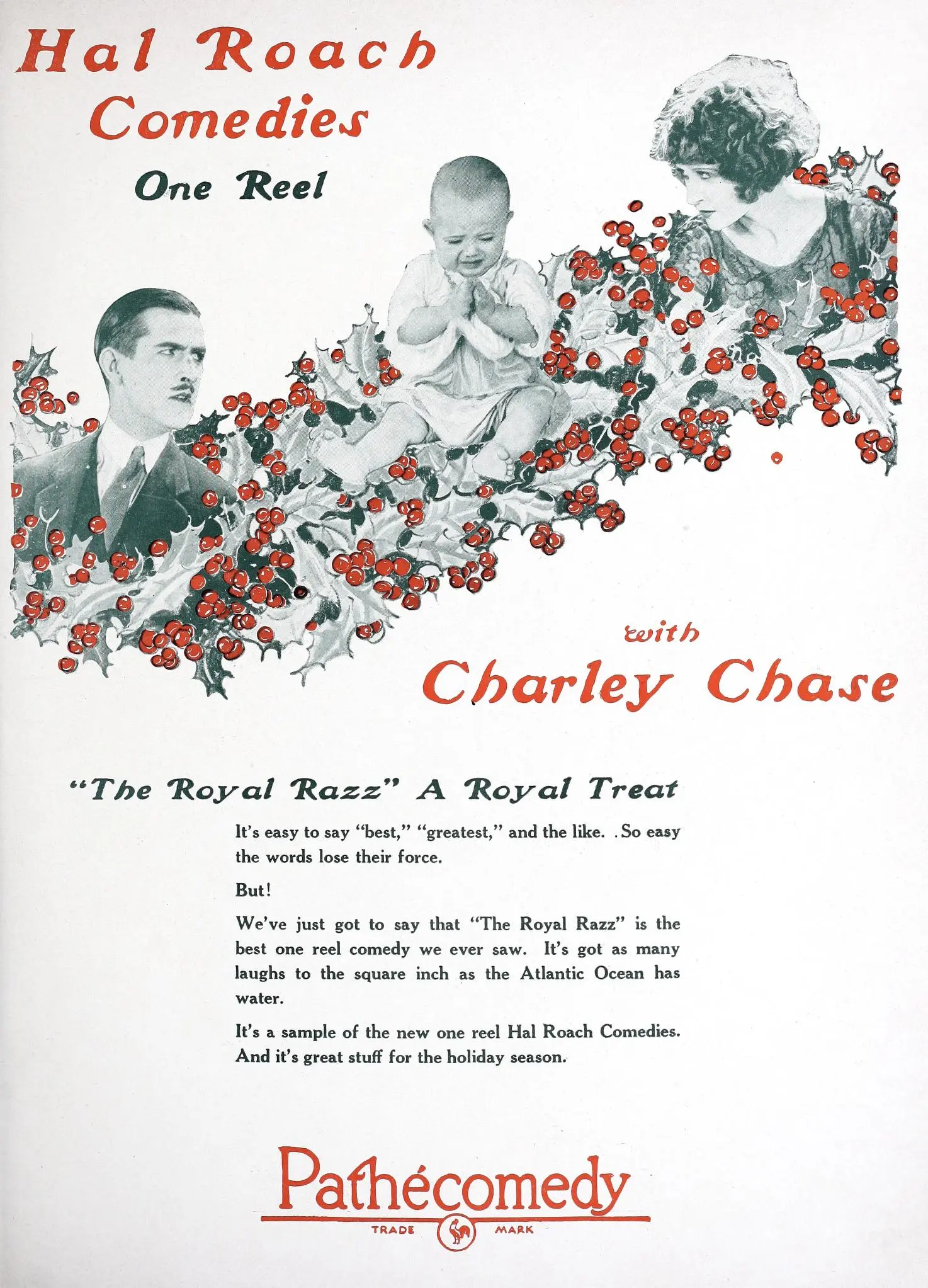
Stepping back into the raucous, enchanting world of silent cinema, one occasionally unearths a gem that, despite its brevity or simplicity, encapsulates the very essence of comedic artistry from a bygone era. The Royal Razz, a delightful slice of early 20th-century slapstick, offers precisely that kind of nostalgic resonance. It's a film that doesn't aim for profundity but achieves something arguably more difficult: pure, unadulterated mirth, born from the most relatable of domestic predicaments. Here, we witness the hilarious collision of festive zeal and public inconvenience, a narrative thread that remains surprisingly fresh even a century after its initial flicker across the silver screen.
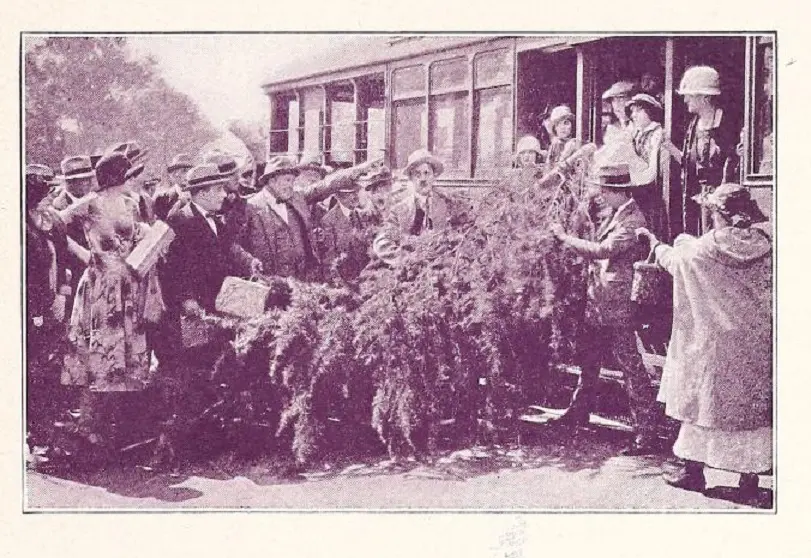
At its core, The Royal Razz is a masterclass in the escalation of a mundane situation into outright chaos. The premise is disarmingly simple: a doting father, embodying the very spirit of Santa Claus for his family, undertakes the seemingly innocuous task of bringing home a Christmas tree. But not just any tree; this arboreal specimen is a titan, an unapologetic declaration of holiday ambition. The moment this colossal conifer leaves the sanctity of the tree lot and attempts to integrate itself into the confines of a public trolley, the film's comedic engine roars to life. It's a testament to the ingenuity of early filmmakers that such a straightforward concept could yield so much sustained laughter.
The trolley itself becomes a microcosm of society, its diverse occupants suddenly united by a shared plight: the overwhelming presence of this green leviathan. What follows is a ballet of physical comedy, a symphony of disgruntled glances, exasperated sighs, and increasingly frantic attempts to navigate around or through the encroaching foliage. The father, portrayed with an endearing blend of obliviousness and determined cheer, remains largely unfazed by the growing tide of annoyance he incites. His singular focus on delivering the perfect Christmas to his loved ones blinds him to the collective suffering of his fellow passengers, a classic comedic trope executed with precision.
This isn't just about a man with a tree; it's about the universal experience of public transport, where personal space is a luxury and shared discomfort a given. The film expertly exaggerates this reality, transforming a common commute into an epic, if miniature, struggle for survival against an inanimate object. The tree, initially a symbol of joy, quickly morphs into an antagonist, its branches poking, its needles shedding, its sheer bulk dominating every frame. It's a brilliant personification of an obstacle, almost a character in itself, driving the narrative forward through sheer physical presence.
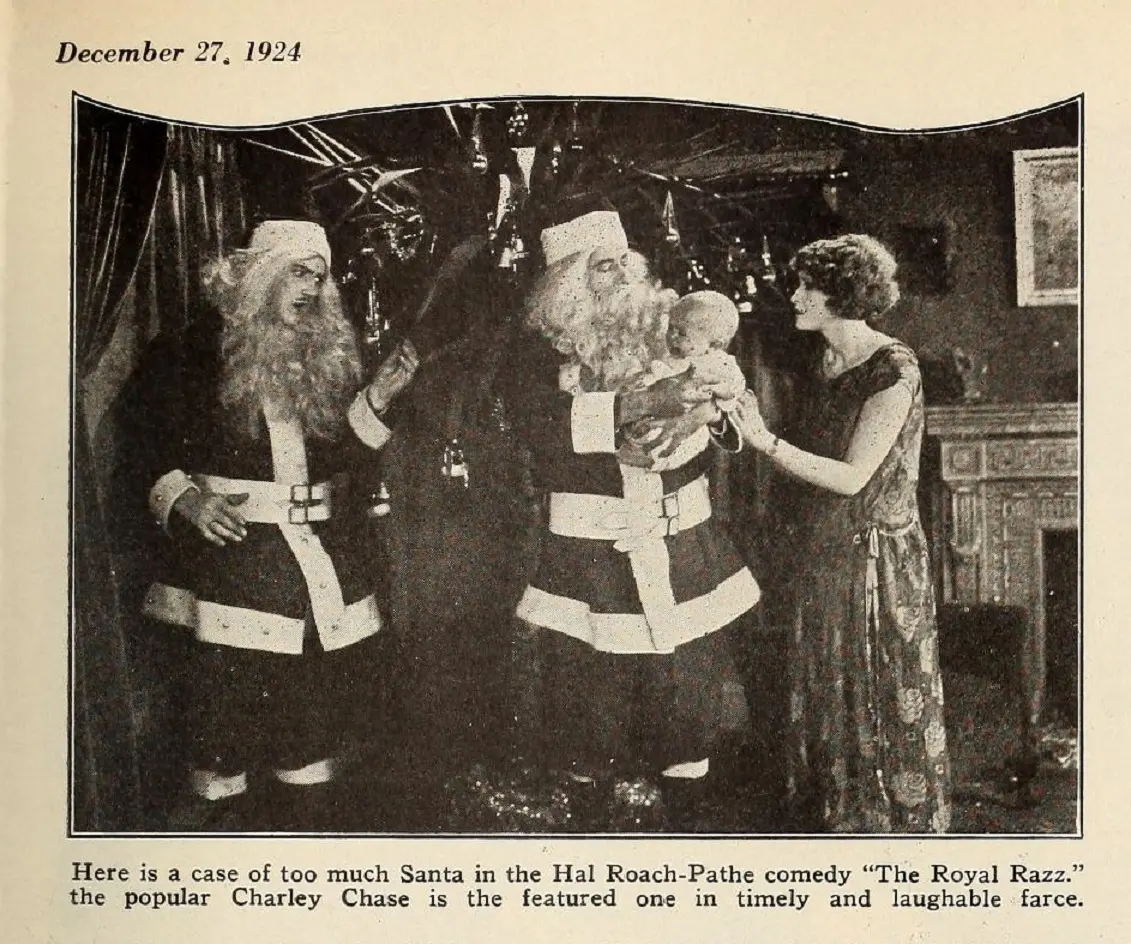
Central to the film's success is the masterful physical comedy of Charley Chase. Chase, a stalwart of silent comedy, brings his signature blend of dapper exasperation and understated charm to the role of the oblivious, yet well-meaning, patriarch. His expressions, his timing, his subtle shifts from cheerful determination to mild confusion as the situation spirals—all are exquisitely calibrated for maximum comedic impact. He doesn't need dialogue; his every gesture, every furrow of his brow, speaks volumes. He's the everyman caught in an extraordinary predicament, and we root for him even as we sympathize with his victims.
Though their roles might be more peripheral in a short film centered on such a singular gag, the contributions of Olive Borden, Katherine Grant, and Jules Mendel are crucial in populating this comedic tableau. Borden, often celebrated for her vivacious screen presence, likely lends her expressive reactions to the ensemble of beleaguered passengers, acting as a foil to Chase's antics. Grant and Mendel, too, contribute to the tapestry of collective annoyance, their silent reactions amplifying the humor. In silent comedy, the ensemble's ability to react convincingly is just as important as the lead's ability to instigate the chaos. Their grimaces, their eye-rolls, their subtle attempts to reassert personal space—these are the brushstrokes that complete the comedic picture, making the audience feel part of the cramped, chaotic trolley ride.
The brilliance of these performers lies in their ability to convey a rich spectrum of emotion without uttering a single word. It's a testament to their craft that even a century later, their expressions of bewilderment, irritation, and sheer resignation resonate so strongly. They are not merely reacting; they are engaging in a silent dialogue with the audience, inviting us to share in their comedic plight. This makes The Royal Razz more than just a series of gags; it's a character study, however brief, of human patience pushed to its limits by a festive, yet formidable, obstruction.
The Royal Razz stands as a charming exemplar of silent comedy's enduring appeal. It's a genre that transcends language barriers, relying purely on visual storytelling, physical humor, and universal human experiences. The film's narrative, while seemingly trivial, touches upon deeper societal currents: the tension between individual desire and communal harmony, the absurdity of everyday life, and the often-unspoken rules governing public spaces. It's a reminder that even in the early days of cinema, filmmakers were adept at crafting narratives that, beneath their veneer of slapstick, offered subtle observations on the human condition.
The comedic timing, the visual gags, the carefully orchestrated chaos—all contribute to a sense of timelessness. One could easily imagine this scenario playing out today, albeit with cell phones instead of newspapers obscuring faces. This universality is precisely what grants films like The Royal Razz their longevity. They tap into a shared understanding of what makes us laugh, often at ourselves, or at the minor indignities of modern existence. The sheer determination of the father, juxtaposed with the growing exasperation of the passengers, creates a dynamic that is both hilarious and strangely poignant.
Comparing it to other works of the era, one might draw parallels with the lighthearted romantic comedies of the time, such as The Summer Girl, in its pursuit of simple, engaging entertainment, though The Royal Razz leans far more heavily into overt physical comedy. While films like The Sweet Dry and Dry might explore societal norms and minor transgressions, The Royal Razz finds its humor in the sheer, unbridled physical disruption of those norms. The film's charm also lies in its unpretentiousness, a quality it shares with many silent-era shorts that focused on delivering immediate, accessible entertainment without the grandiosity of longer features like Du Barry. It's a small, perfect mechanism for laughter.
The director, whoever helmed this particular short (as specific directorial credits for many early films can be elusive), demonstrates a keen understanding of comedic pacing. Each moment builds upon the last, from the initial awkwardness of boarding the trolley to the full-blown, tree-induced pandemonium. The camera angles, though likely straightforward, are chosen to highlight the absurdity of the situation, often emphasizing the sheer size of the tree in relation to its cramped surroundings or focusing on the priceless reactions of the trapped commuters. This deliberate construction ensures that every gag lands, every visual punchline elicits a chuckle.
In an era where cinema was still finding its voice, films like The Royal Razz were instrumental in defining the vocabulary of screen comedy. They established conventions that would influence generations of filmmakers, from the meticulous choreography of physical gags to the art of non-verbal storytelling. The film's simplicity is its strength; it doesn't rely on complex plots or intricate character arcs, but rather on a single, compelling comedic idea executed with precision and flair. It's a testament to the creative resourcefulness of early Hollywood, where inventive concepts often outweighed lavish budgets.
The technical aspects, while perhaps primitive by today's standards, are perfectly adequate for the film's purpose. The cinematography is clear, allowing the audience to fully appreciate the visual humor. The editing maintains a brisk pace, ensuring that the comedic momentum never wanes. There's a certain raw energy to these early shorts that speaks to the nascent excitement of filmmaking itself, a sense of discovery in every frame. It's a world away from the dramatic gravitas of a film like Mr. Barnes of New York (1922) or the intense character studies seen in The Deceiver, positioning The Royal Razz firmly in the realm of pure, unadulterated entertainment.
Furthermore, the film serves as a valuable historical document, offering a glimpse into the everyday life of the 1920s. The trolley, the clothing, the social interactions—all provide a window into a bygone era, making the film not just a source of amusement but also a piece of living history. It reminds us that while technology and fashion change, the fundamental human reactions to absurdity and inconvenience remain remarkably constant. The film's ability to evoke such a vivid sense of time and place, even within its comedic framework, is a testament to its subtle richness.
Even in comparison to other lighthearted period pieces or genre explorations, such as the whimsical adventure of Jack and the Beanstalk (1924), The Royal Razz distinguishes itself through its grounded, relatable premise. There are no fantastical elements here, just the pure, unadorned clash of a man, a tree, and a trolley full of increasingly exasperated citizens. This grounded realism, ironically, is what makes the ensuing chaos all the more hilarious and impactful. It's a micro-drama of urban life, blown up to comedic proportions.
While it may not possess the epic scope of a historical drama or the intricate plotting of a mystery like A Scandal in Bohemia, The Royal Razz secures its place in cinematic history through its sheer effectiveness as a comedic short. It’s a delightful reminder of a simpler, yet equally ingenious, form of entertainment. It showcases the foundational elements of slapstick that would continue to evolve throughout cinema's golden age, proving that sometimes, the most memorable stories are those that find humor in the most mundane, and yet universally understood, situations. The film serves as a wonderful example of how early cinema, even with limited resources, could craft narratives that resonated deeply with audiences, eliciting genuine laughter and a sense of shared experience.
The performances, particularly that of Charley Chase, are a masterclass in silent-era acting, relying on exaggerated expressions and precise physical movements to convey emotion and drive the humor. It's a film that proves the adage that a picture is worth a thousand words, especially when those pictures involve a giant Christmas tree wreaking havoc on a trolley. Its charm is undeniable, its humor infectious, and its place in the pantheon of early comedic shorts well-deserved. It's a film that, despite its age, continues to elicit smiles and chuckles, proving the timeless appeal of well-executed physical comedy and relatable human foibles.
In conclusion, The Royal Razz is more than just a historical curiosity; it's a vibrant, hilarious piece of cinema that continues to entertain. It’s a testament to the power of simple, effective storytelling and the enduring appeal of a good laugh. So, if you ever find yourself lamenting the chaos of holiday preparations or the indignities of public transport, take a moment to revisit this delightful short. It’s a perfect antidote, a joyous, raucous reminder that sometimes, the biggest headaches make for the best laughs.
IMDb —
1924
Community
Log in to comment.