DbcultAccessing Vault...
Cult Review
Senior Film Conservator
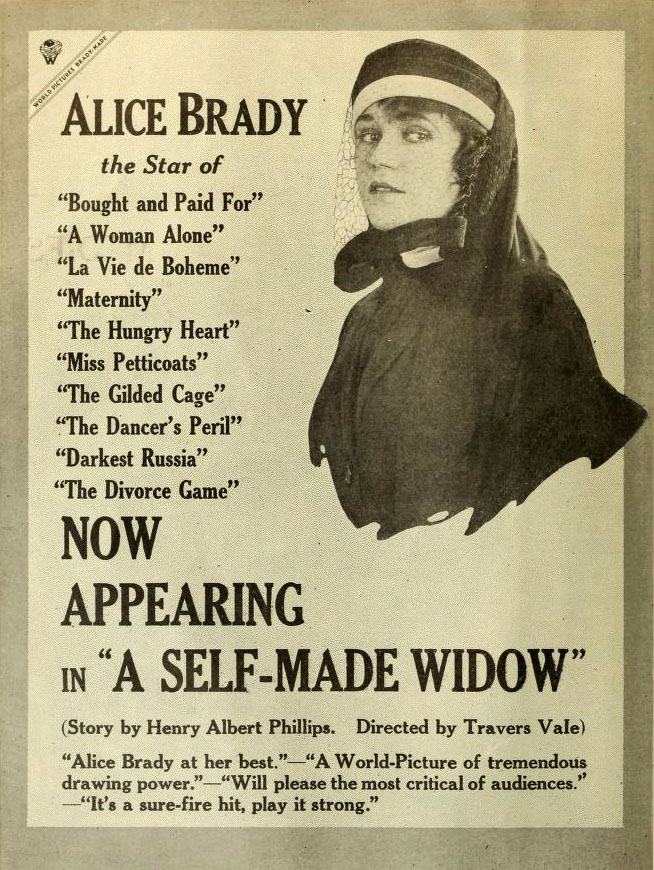
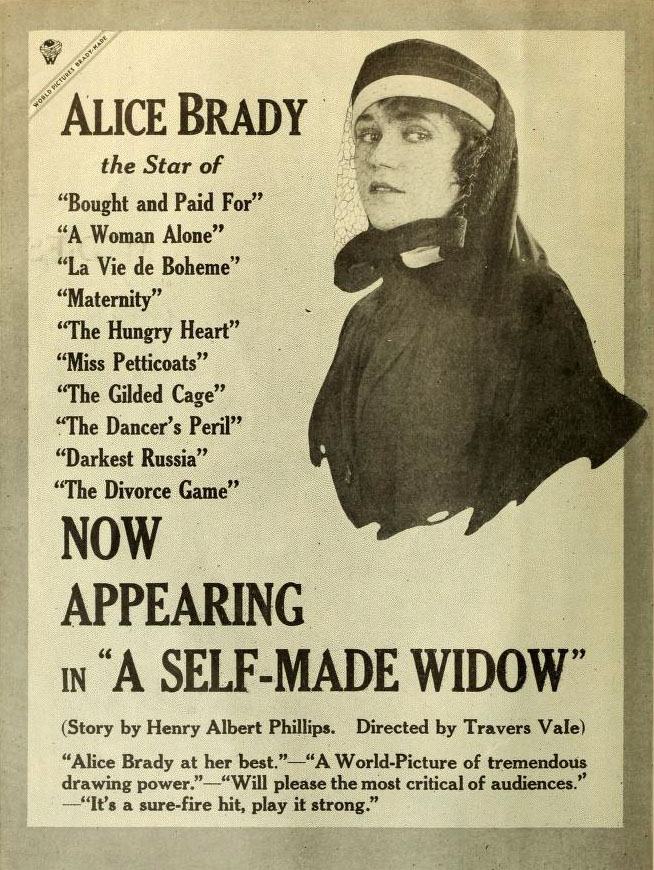
In the annals of early cinema, where narratives often explored the burgeoning complexities of modern life and the enduring power of human ingenuity, A Self-Made Widow emerges as a particularly fascinating artifact. Released in 1917, a pivotal year for both the film industry and global events, this feature, penned by Henry Albert Phillips, masterfully weaves a tale of identity, social maneuvering, and the unpredictable nature of love. It’s a film that, even a century later, speaks to the timeless anxieties surrounding status, reputation, and the lengths one might go to secure a place in a world often unforgiving to the vulnerable.
The narrative commences with Sylvia Smith, portrayed with a compelling blend of naiveté and burgeoning resilience by the remarkable Alice Brady. Hailing from the quaint, unassuming community of Lone Meadows, Sylvia's journey to the bustling, impersonal city is predicated on a promise of matrimony – a sacred vow from a lover who, alas, proves to be as faithless as the urban sprawl is indifferent. The crushing revelation that her intended already possesses a wife leaves Sylvia not merely heartbroken, but utterly adrift, stripped of her dignity and facing the ignominy of returning home a pariah. This initial setup immediately establishes a powerful emotional core, drawing the viewer into Sylvia's profound predicament. It’s a common trope in early cinema, this clash between rural innocence and urban deceit, often seen in films like The Country Mouse, but A Self-Made Widow takes this foundation and builds upon it a structure of truly audacious invention.
It is in this crucible of despair, amidst the bustling anonymity of the city docks, that fate, or perhaps a particularly cynical brand of serendipity, intervenes. Sylvia stumbles upon a suicide note, not a genuine cry of anguish, but a meticulously orchestrated ruse penned by Fitzhugh Castleton, a gentleman of considerable means. Castleton, portrayed by John Bowers, is not fleeing life itself, but rather the shackles of a loveless, pre-arranged marriage, opting for a theatrical disappearance over a lifetime of matrimonial ennui. His note, a theatrical flourish intended to grant him a clean escape, becomes Sylvia’s improbable lifeline. This moment is the narrative’s true pivot, transforming a story of victimhood into one of audacious agency. Sylvia, rather than succumbing to her fate, sees in Castleton's staged demise an opportunity to rewrite her own.
The sheer audacity of Sylvia’s plan is what elevates A Self-Made Widow beyond a mere melodrama. Instead of retreating, she decides to advance, to infiltrate the very societal structures that threatened to crush her. Her solution is as brilliant as it is morally ambiguous: she enlists Crosby, a convicted forger brought to life by the nuanced performance of Curtis Cooksey, to impersonate Castleton. The scheme is simple yet fraught with peril: Crosby is to forge Castleton's name on a marriage certificate, establishing Sylvia as the legitimate widow, and then vanish into the shadows. This act of calculated deception, born from desperation, speaks volumes about the limited avenues available to women in that era, particularly those without social standing or family protection. It echoes the struggles for autonomy and survival seen in other films of the period where women navigate challenging circumstances, such as Her Great Price or The Lily of Poverty Flat, though Sylvia's method here is uniquely bold.
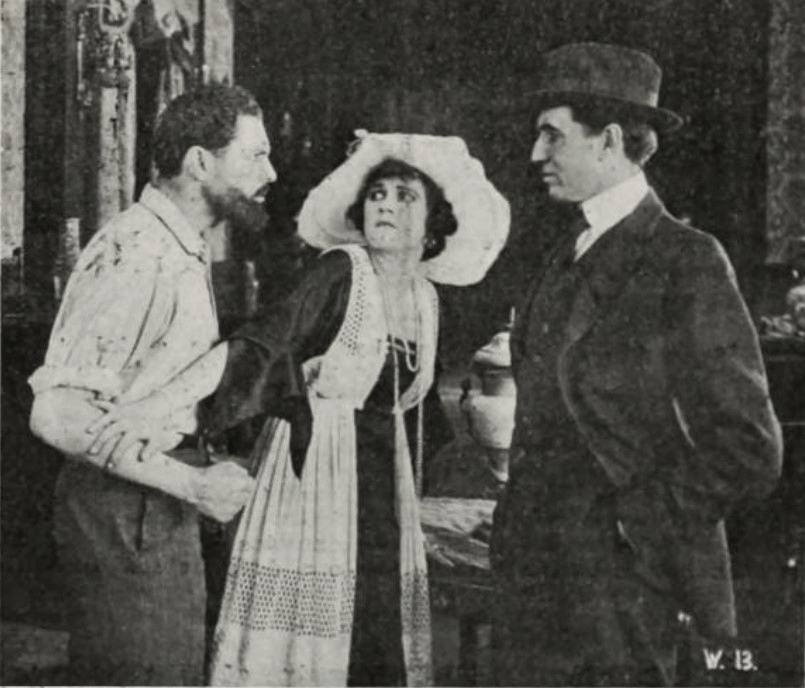
Once the elaborate charade is complete, Sylvia, now the ostensibly grieving Mrs. Castleton, seamlessly integrates herself into the opulent Castleton mansion. The transformation is complete, a testament to her resolve and the convincing nature of the deception. The irony, however, is about to deepen. Fitzhugh Castleton, having successfully evaded his unwanted marriage, returns from his sea voyage. Unbeknownst to Sylvia, and indeed, to almost everyone, he adopts a disguise – a long, concealing beard – and, with a touch of narrative poetic justice, hires himself on as the gardener of his own estate. This narrative contrivance, while delightfully theatrical, sets the stage for the film's most compelling and emotionally intricate developments. It’s a masterful stroke of dramatic irony, placing the two central figures in intimate proximity, each ignorant of the other's true identity and the elaborate web of deceit that binds them.
The blossoming romance between Sylvia, the impostor widow, and Castleton, the disguised master of the house, forms the emotional core of the film. Their interactions are imbued with a palpable tension and a delicate tenderness. Sylvia, having created a new identity, finds herself drawn to the unassuming, hardworking gardener, a stark contrast to the superficiality she might have expected from the wealthy elite. Castleton, in turn, finds himself captivated by the intelligence, grace, and perhaps the underlying vulnerability of his 'widow,' a woman far removed from the societal expectations and arranged marriages he sought to escape. This development is profoundly ironic and deeply human. Both characters are living a lie, yet within that lie, they discover a genuine connection, a love untainted by the very societal pressures that forced them into their respective deceptions. The film subtly explores the idea that true connection can transcend fabricated identities, that the essence of a person can shine through even the most elaborate disguises. This theme of love blooming in unexpected places, often against a backdrop of social artifice, is a recurring motif in cinema, but rarely is it executed with such a delicious sense of dramatic irony as it is here.
Alice Brady's performance as Sylvia is particularly noteworthy. She navigates the complex emotional landscape of her character with remarkable skill, conveying both the initial desperation and the subsequent confidence of a woman who has seized control of her destiny. Her portrayal of Sylvia's internal conflict – the joy of newfound love warring with the constant fear of exposure – is nuanced and deeply affecting. John Bowers, as Castleton, skillfully embodies the dual nature of his character, transitioning from the aloof gentleman avoiding commitment to the earnest, empathetic gardener. His disguise, while visually simple, allows him to explore a different facet of his personality, one that resonates deeply with Sylvia. The chemistry between Brady and Bowers is subtle yet potent, lending credibility to their unconventional courtship.
Henry Albert Phillips's screenplay is a masterclass in building suspense and intricate plotting. The narrative never sags, constantly introducing new twists and turns that keep the audience engaged. The film’s exploration of identity and self-reinvention is particularly potent. Sylvia doesn't just pretend to be someone else; she actively becomes a version of herself that she might not have been able to access otherwise. Her 'widowhood' grants her a certain independence and respectability that her previous status as a betrayed country girl would have denied her. This theme of social mobility, even if achieved through questionable means, resonated strongly with audiences of the era, reflecting a desire for agency in a rapidly changing world. It's a testament to the script's intelligence that it doesn't simply condemn Sylvia's actions but presents them as a complex response to an unjust situation.
The silent film era, often characterized by its reliance on expressive acting, elaborate sets, and evocative intertitles, finds a strong representative in A Self-Made Widow. The visual storytelling is paramount, with the actors conveying a wealth of emotion through gesture, facial expression, and body language. The cinematography, while perhaps not groundbreaking by modern standards, effectively captures the grandeur of the Castleton estate and the contrasting vulnerability of Sylvia's plight. The use of intertitles is judicious, providing essential dialogue and narrative exposition without disrupting the visual flow. These stylistic choices were crucial in an era where sound was yet to be integrated, demanding a heightened sense of visual literacy from both filmmakers and audiences. Comparing it to other films of the time, such as The Family Honor or The Innocence of Lizette, one can appreciate the sophisticated narrative structure Phillips employs, pushing beyond simpler moralistic tales to explore the gray areas of human motivation.
Of course, no elaborate deception can last indefinitely, and the film expertly builds towards its inevitable unraveling. The re-emergence of Crosby, the convicted forger, serves as the catalyst for the climax. His demands for blackmail money introduce a renewed sense of peril, forcing Sylvia to confront the precariousness of her fabricated existence. Her desperate flight to the country underscores the fragility of her situation, highlighting the constant fear that must have gnawed at her beneath the veneer of composure. This sequence effectively ratchets up the tension, reminding the audience that the consequences of her actions, however justified in her own mind, are very real and potentially devastating.
The truth, as it often does in such narratives, comes to light through an unexpected source: Crosby’s jealous wife, portrayed by Justine Cutting. Her interference, fueled by resentment and perhaps a desire for justice, exposes Sylvia’s intricate deception to Castleton. This moment is crucial, as it forces Castleton to reconcile the woman he has come to love with the elaborate lie she has constructed. His journey to Lone Meadows to confront Sylvia is not one of anger or condemnation, but one driven by a desire for understanding and, ultimately, a genuine connection. It's a powerful statement on forgiveness and the enduring power of love to overcome obstacles, even those of one's own making. The resolution, rather than punishing Sylvia for her deceit, celebrates her ingenuity and the authentic love she found, transforming a 'self-made widow' into a legitimately loved wife.
The supporting cast, including Curtis Cooksey as Crosby and Justine Cutting as his wife, deliver solid performances that add depth to the narrative. Cooksey’s Crosby is a man driven by greed and a lack of moral compass, a stark contrast to the more empathetic central characters. Cutting’s brief but impactful role as the jealous wife provides the necessary narrative push for the climax, proving that even minor characters can have significant influence on the plot's trajectory. These performances, though less central, are integral to the intricate machinery of the story.
In conclusion, A Self-Made Widow stands as a testament to the narrative sophistication and emotional depth achievable within the silent film medium. It is a story that, despite its period setting and cinematic conventions, speaks to universal themes of identity, social pressure, and the pursuit of happiness. Alice Brady’s portrayal of Sylvia Smith is a tour de force, embodying a woman who, when faced with humiliation, chooses reinvention. The film’s clever plotting, rich character development, and satisfying resolution make it a compelling watch, not just for enthusiasts of early cinema, but for anyone who appreciates a well-told story of unlikely romance forged in the fires of audacious deception. It reminds us that sometimes, to find our true selves, we might first have to construct an entirely new one, and that love can blossom even in the most unconventional of gardens.
The enduring appeal of A Self-Made Widow lies not just in its intricate plot, but in its nuanced exploration of moral ambiguities. Sylvia's actions, while technically fraudulent, are presented with a degree of empathy, allowing the audience to understand her desperation and her desire for self-preservation. This complexity elevates the film beyond a simple morality play, inviting viewers to ponder the nature of truth, the constraints of society, and the lengths to which individuals will go to secure a future for themselves. It’s a narrative that, in its own silent way, critiques the rigid social structures of its time, where a woman's honor and prospects could be so easily shattered by circumstance or betrayal. The film subtly suggests that sometimes, the 'rules' of society are less important than the authentic human connections that defy them. This theme resonates with other films exploring societal pressures and individual rebellion, such as War Brides, though with a different focus on personal rather than political defiance.
The collaboration between writer Henry Albert Phillips and the cast, particularly Alice Brady, culminates in a cinematic experience that is both entertaining and thought-provoking. Phillips's ability to craft a story with so many layers of deception and revelation, while maintaining a clear emotional through-line, is commendable. The film serves as a valuable historical document, offering a glimpse into the storytelling conventions and societal values of the early 20th century, all while delivering a timeless tale of love, loss, and the daring pursuit of a second chance. It reminds us that even in an era of nascent filmmaking, the power of a compelling narrative and strong performances could captivate audiences and leave a lasting impression. Films like The Student of Prague, while vastly different in tone and genre, share this commitment to exploring complex psychological states through visual means, demonstrating the silent era's artistic ambitions.
Ultimately, A Self-Made Widow is more than just a historical curiosity; it's a vibrant, engaging piece of cinema that continues to resonate. Its themes of reinventing oneself, finding love in unexpected places, and navigating the treacherous waters of social expectation remain as relevant today as they were a century ago. The film is a testament to the enduring power of storytelling, proving that even without spoken dialogue, a compelling plot and heartfelt performances can convey a rich tapestry of human experience. It's a film that encourages us to look beyond surface appearances and consider the deeper motivations that drive us all, whether for survival, love, or a simple desire for a better life. The journey from Lone Meadows to the Castleton mansion, from betrayed girl to audacious 'widow,' is a captivating one, cementing A Self-Made Widow as a noteworthy entry in silent film history.
IMDb 6.3
1933
Community
Log in to comment.