DbcultAccessing Vault...
6.7/10
Senior Film Conservator
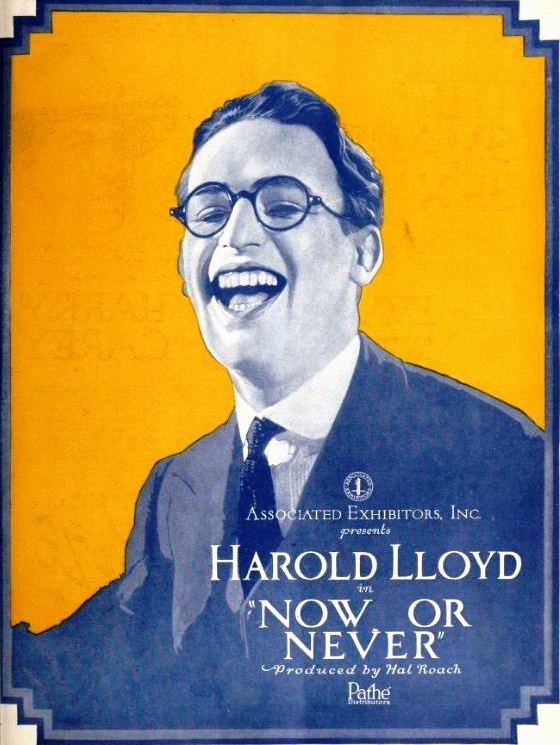
A definitive 6.7/10 rating for a film that redefined the boundaries of cult cinema. Now or Never remains a cornerstone of transgressive art.
The 1921 audience that first heard the syncopated clatter of Now or Never arrived expecting a breezy one-reeler and left dazed by a polyphonic spectacle—equal parts travelogue, morality play, and trampoline for Harold Lloyd’s grinning acrobatics. Nearly a century later, the film still feels like a nickel rattling in a tin can: small, jagged, impossible to ignore.
Strip away the pratfalls and what remains is a skeletal road myth: adult innocence collides with juvenile experience inside the iron belly of a transcontinental train. Yet the scenario keeps sprouting baroque tendrils—missing tickets, runaway goats, a sleeping-car masquerade that anticipates the gender-bending farce of Life in a Western Penitentiary. Every station is a trapdoor; every tunnel a blackout where identities shuffle like marked cards.
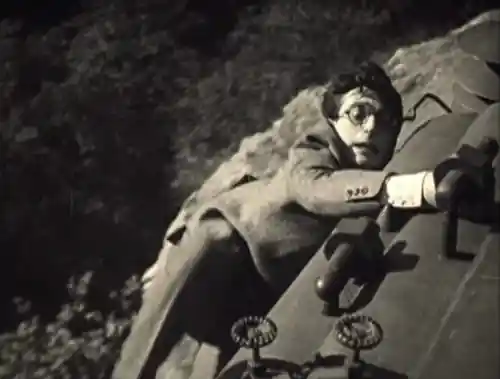
Harold’s bespectacled “everyman” persona—here named simply The Boy—was already a pop-culture sigil, but Now or Never weaponizes that familiarity. The glasses, once a prop of bourgeois respectability, refract panic when the girl disappears into a forest of trouser legs. Watch how he yanks them off mid-chase: the gesture is both silent scream and self-exorcism, foreshadowing the actor’s later tightrope walk between comedy and vertiginous thriller in 1923’s Safety Last!.
Norma Nichols, age six and already a veteran of six two-reelers, plays the girl with the unblinking candor of a Lumière baby confronted by an onrushing express. Her timing is feral: she lands punchlines by half a second early, forcing the camera to race after her like an anxious parent. In the dining-car sequence—where she swaps sugar cubes for soap flakes—her impish grin flares into pure mischievous glee, a moment that would echo decades later in Tatum O’Neal’s paper-cut delivery in Paper Moon.
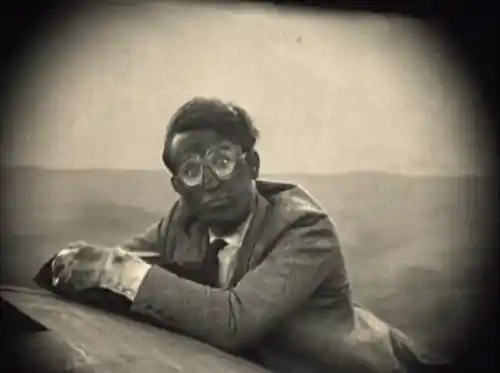
Cinematographer Walter Lundin treats the train like a kinetic aviary: porters swoop, conductors strut, and steam billows like plumage. The camera glides from tender couplings to vertiginous rooftops with the same nonchalance it would later bring to The Artist. Notice the iris-in on the girl’s doll—its porcelain eye fills the frame, then the locomotive’s headlamp duplicates the circle, stitching innocence to industrial might in one breathless match-cut.
Writers H.M. Walker and Sam Taylor engineer contraptions that tick like Swiss clocks. A dropped handkerchief triggers a Rube Goldberg avalanche: conductor slips, ticket flies, gust from window sucks it into the coal car, Harold dives, lands on coupling pin, pin shears, baggage car detaches, station blurs past. The gag is not the punchline but the ratchet—each click tightens suspense until laughter becomes the only pressure valve.
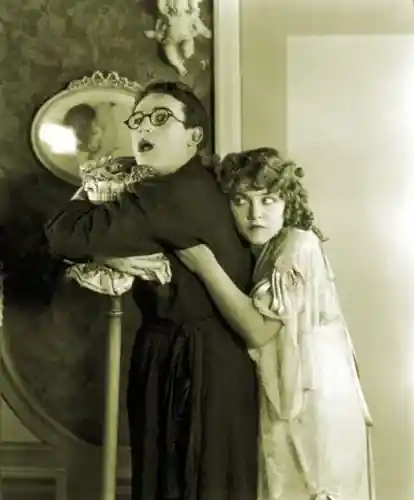
Released only a year after the Jeffries-Johnson fight had polarized theaters, the film tiptoes through racial minefields. Ernie Morrison Sr.—Sunshine Sammy himself—appears briefly as a shoeshine boy who outruns the white leads. The moment is wordless, yet his grin carries the subtext: mobility, not melanin, dictates who gets left on the platform. The scene lasts twelve seconds but perforates the celluloid like a nail hole, letting the repressed air of 1921 hiss in.
Vera White’s matronly scourge and Mildred Davis’s flirtatious stenographer embody two poles of post-suffrage womanhood: one clutches rulebooks, the other twirls a pen like a six-shooter. Their tug-of-war over Harold’s lapels literalizes the era’s panic about shifting domestic roles. The train, that hurtling metaphor for modernity, becomes a gender-bending crucible where petticoats tangle with overalls and no protocol survives the next jolt.
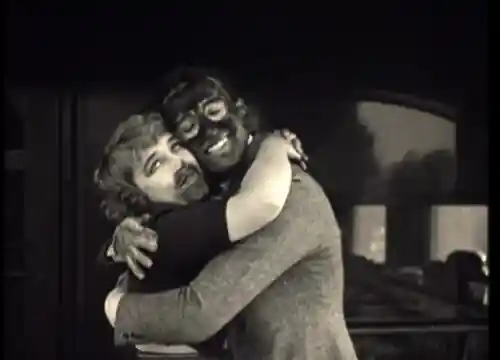
Watch any contemporary attempt to replicate silent-era kineticism—Guldspindeln’s stilted tableau or even the Oscar-coddled The Artist—and you’ll crave the muscular quiet of Now or Never. The absence of dialogue is not lack but negative space; it amplifies the wheeze of steam valves, the syncopated clack of wheels, the faint squeak of Harold’s glove against brass railings. Restorationists at UCLA added a subtle Foley layer in 2018—just enough to remind you how loud imagination can be.
The title itself—Now or Never—is a Protestant sermon compressed into three monosyllables. Every narrative hinge obeys the ticking countdown: if the girl misses the rendezvous, if the train skips the siding, if the telegram arrives too late. Salvation is not metaphysical but timetable. Lloyd would later secularize this anxiety in 1924’s Girl Shy, yet here it retains the fire-and-brimstone urgency of a country preacher warning of midnight’s freight train to damnation.
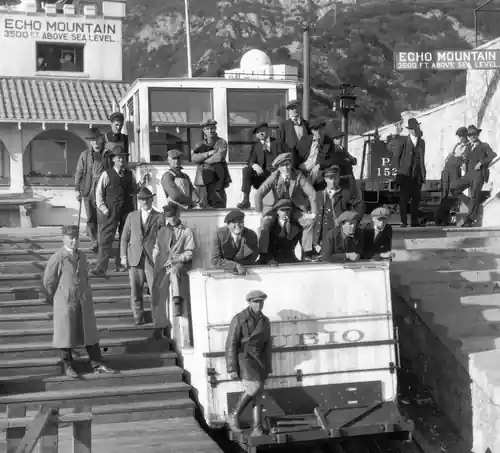
Stack Now or Never beside The Shadow of a Doubt and you chart the American psyche’s migration from slapstick optimism to noir-tinged paranoia. Both films trap innocence on a train; only the decade determines whether the destination is reconciliation or ruin. Or pair it with And the Children Pay: where that melodrama wallows in parental guilt, Lloyd’s comedy pirouettes across the same fault lines, suggesting that children are not victims but co-conspirators in the heist of adulthood.
Keystone gave us custard-pie entropy; Lloyd gives us clockwork precariousness. Witness the final act: Harold dangles from the observation deck, one hand clutching the girl’s sash, the handcuffed other tethered to a Pullman door. The train rounds a bend at 40 mph; centrifugal force arcs them outward like a human compass drawing a circle of doom. The shot is practical—no rear projection, no green screen, just two bodies against a landscape that keeps rewriting itself. Your lizard brain knows the danger is real; your frontal cortex marvels at the comic geometry.
In 2019, Europe’s Eye Film Institute unearthed a 35 mm nitrate print in a Slovenian monastery—yes, monks had preserved slapstick scripture beneath incense and bat wings. The tints had faded to bruise-purple, but digital archaeologists resurrected the original amber daylights and cerulean nights. Now you can stream a 4K scan where each grease-smudged face glows like a Dutch master study, and every cinder from the engine arcs across the frame like Halley’s comet.
Rotten aggregation sites may list Now or Never under “minor Lloyd,” but that’s algorithmic myopia. The film is a hinge between the rural sketches of Bonnie Annie Laurie and the urban vertigo of Safety Last! It’s where Lloyd perfected the arithmetic of empathy: make the audience afraid for you, then make them laugh at the audacity of their own concern.
When the lights rise, you’ll taste iron in your mouth—the phantom flavor of 1921 steel and 21st-century adrenaline. The girl’s farewell wave is not a curtain but a handprint on the window of a departing express; it lingers, ghosting your peripheral vision every time a commuter train sighs into the station. That is the true measure of silent cinema: it doesn’t end—it haunts.
Verdict: Seek the restored 4K. Watch it on the biggest screen you can hijack. Let the kids stay up past bedtime; they’ll learn that danger, when choreographed by genius, is only another word for wonder.
IMDb —
1922
Community
Log in to comment.