DbcultAccessing Vault...
Cult Review
Senior Film Conservator
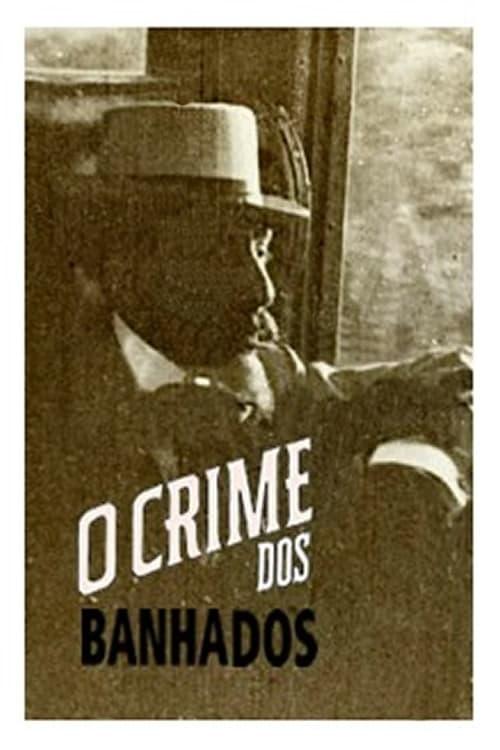
The first time you see the drowned cow, you think it’s a mirage.
Carlos Cavaco’s camera lingers on the carcass so long that heat shimmer turns hide to hammered brass, flies to drifting embers. That single shot is the film’s Rosetta stone: beauty and rot braided, land as both cathedral and charnel house. Made in 1953 but shelved by Getúlio Vargas’ censorship board for “defeatist pessimism,” O Crime dos Banhados surfaced only in 1978 in a duped 16 mm print that smelled of river mildew. Today, after a 4K restoration by Rio’s Cinemateca, it re-enters the world like a returned revenant, mud still under its fingernails.
Forget linearity. Cavaco structures his 87 minutes like a palimpsest scratched by three different hands: a court transcript, a fever dream, a land survey. The titular crime—never explained, always felt—operates the way a Rorschach blot operates: you see in it whatever guilt you brought with you. When the widow (Duarte) murmurs, “Land does not belong; it remembers,” the line detonates retroactively, making every prior frame tremble with accusation. The script’s sparse dialogue feels chiseled from silence; words are precious because they might be subpoenaed later.
Photographer Hélio Silva shot entirely on leftover Agfa stock meant for medical X-rays; its cyan-heavy emulsion turns moonlight into arsenic and skin into pewter. Shadows swallow cheekbones whole, while lantern glare carves faces into topographies of greed. In one staggering dolly shot, the camera glides past a shack whose walls are translucent with rainwater; inside, a child sleeps beneath a mosquito net that billows like bridal lace, and you realize the film’s true subject is not crime but permeability—how guilt, like humidity, seeps through every crack.
There is no score, only ambience: cicadas synced to human pulse, bullfrogs that croak in Morse, a distant pump station wheezing like an asthmatic deity. Cavaco layers these noises until they coalesce into a kind of para-diegetic heartbeat. When the ferryman (Santos) rows, each oar stroke lands with the wet thud of a shovel hitting cemetery soil. The absence of music is so aggressive it becomes its own presence, a negative symphony that makes you hyper-aware of your own blood pushing through the ears.
Graziela Diniz, in her only screen role, possesses the feral languor of Maria Casarès stripped of romanticism. Her spine arches like a question mark when she sleeps on the cracked leather trunk, and you understand the trunk is both coffin and dowry. In a scene destined for anthologies, she wades waist-deep into black water, dress ballooning around her like ink in reverse, and begins to scrub the cow’s skull with river sand. The gesture is at once ablution and archaeology, an attempt to scour history down to bone.
Meanwhile, Francisco Santos’ ferryman never removes his hat; its brim drips water like a leaky roof, implying he was born soaked, will die soaked, and between those two points ferries sinners for a fare no coin can pay.
The film was shot on location in the Banhados de Iguape, a region where Jesuit reductions once stood before Portuguese bandeirantes trafficked the Guarani inland. That colonial echo hums beneath every frame: when the judge (Xavier) unfolds a 1754 land grant sealed by a crown long deposed, you sense the paperwork itself is a vampire, feeding across centuries. Cavaco slyly aligns the 1950s land grab with earlier conquests, implying that the crime referenced in the title is not a single murder but a recursive history of erasure.
Cinephiles will detect DNA strands linking this swamp to the urban miasma of Trompe-la-Mort and the frontier guilt festering inside Call of the Bush. Yet whereas those narratives externalize violence through gunfire or lynch mobs, Banhados internalizes it until sweat itself seems culpable. The closest cinematic cousin might be Den hvide Slavehandels sidste Offer, another film where bodies are traded like titles in a corrupt ledger, though that work’s Expressionist angles cede here to a neorealist torpor that feels heavier than any tilted set.
The regime’s censors demanded three cuts: a close-up of leeches fastening to a baby’s ankle; a line referencing “the English syndicate that will turn our swamp into paper”; and a shot of Diniz unbuttoning her blouse to use breast milk to draw a map on a muddy plank. The removed frames were burned in the Copacabana barracks furnace, leaving literal gaps that now click like missing teeth. Restoration archivists tried digital inpainting, but the holes resist; absence, too, is part of the text.
Critics often label the film Gothic, yet the terror here is not medieval but thoroughly modern: the commodification of earth. Swamp drainage schemes under Juscelino Kubitschek’s presidency loom like prophecy; every acre on screen would, within a decade, be converted into mechanized rice paddies owned by a consortium whose ledgers remain classified. Watching today, you taste the irony of a film denied exhibition for “defaming progress” while that same progress ravaged the very ecosystem it portrays.
In 2019, satellite images revealed illegal fires tracing the exact coordinates where Cavaco’s team once planted tripods. The crime did not end; it merely changed medium from celluloid to smoke. Environmental activists now screen clandestine copies on bedsheet screens in quilombo schools, turning the film into a court exhibit against the state.
The last shot is not a fade-out but a slow-burn superimposition: the cow skull, now clean as porcelain, dissolves into an aerial map of the same region, parceled into technicolor lots. The implication is surgical—history reduced to artifact, geography to commodity. Yet because the skull’s orbitals are empty, the superimposition also suggests a gaze: the land staring back, unforgiven. When the screen finally cuts to black, the afterimage lingers like bruised retinas, forcing you to blink twice before you realize the darkness is real, not metaphoric.
O Crime dos Banhados is not a film you watch; it is a humidity you inhale, a legal brief you discover growing inside your own marrow. It offers no redemption, only the colder comfort of recognition: that every acre we stand on is a crime scene, every glance a deposition. See it on the largest screen possible, then walk home barefoot; the soil will testify against you, and you will deserve it.
Grade: A+ | Availability: 4K restoration Blu-ray from Cinemateca Brasileira, limited to 3,000 numbered units, bilingual booklet with essay by Ivone Margulies.

IMDb 6
1926
Community
Log in to comment.