DbcultAccessing Vault...
Cult Review
Senior Film Conservator
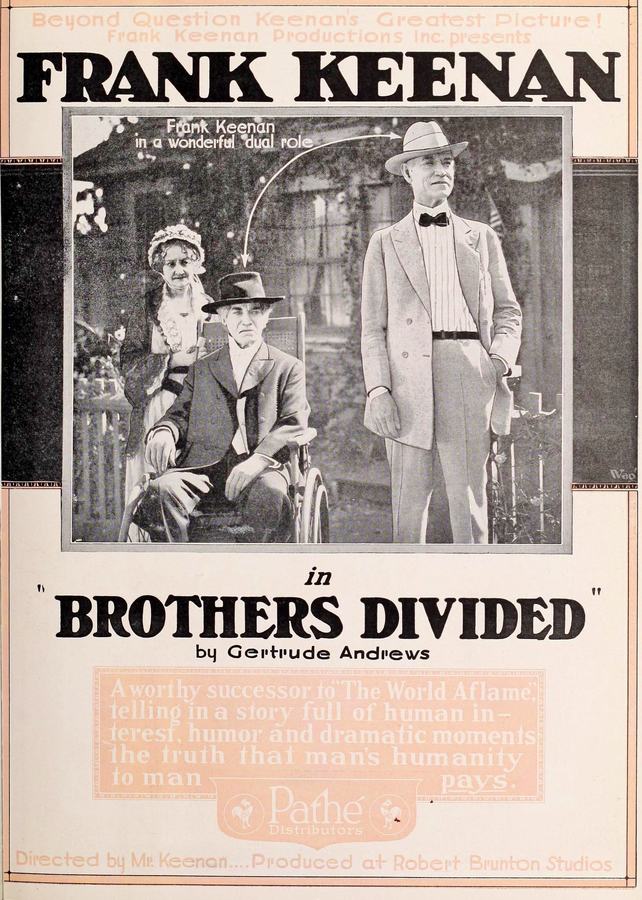
In the pantheon of early American cinema, few narratives grapple with the intersection of systemic labor unrest and personal atonement as deftly as Brothers Divided. Released in 1919, a year defined by the seismic shifts of post-war reconstruction and the burgeoning labor movement, this film transcends the typical melodrama of its era. It presents a world where the soot of the industrial mill is as much a character as the actors themselves, creating a visual language of grime and grace. While many films of the period, such as The Probation Wife, dealt with the intricacies of social standing and legal reform, Brothers Divided dives deeper into the psychological cavern of the 'ex-convict'—a figure usually relegated to the role of the villain or the tragic victim.
The film opens with a sequence that remains visceral even a century later: a prison fire. This isn't merely a plot device to facilitate Tom King’s exit from incarceration; it is a baptism by fire. R.P. Fine’s portrayal of Tom is one of quiet, simmering dignity. Unlike the frantic protagonists seen in Redemption, Tom is a man of deliberate action. His heroism isn't born of a desire for freedom, but from a fundamental human decency that his life sentence failed to erode. This sequence sets the stage for a narrative that consistently asks: Is a man the sum of his worst mistakes, or the potential of his best intentions?
Upon his release, the contrast between the brothers is immediately established. Matthew, played with a chilling, rigid severity by Frank Keenan, represents the old guard of capitalism—unyielding, transactional, and ultimately brittle. His mill is a microcosm of a depressed town, a place where hope is a commodity in short supply. The tension between the brothers isn't just familial; it’s ideological. Matthew’s paralysis serves as a heavy-handed but effective metaphor for the stagnation of his worldview. When he falls, the structure he built threatens to collapse with him, providing the vacuum into which Tom steps.
What makes Brothers Divided particularly fascinating to a modern viewer is its surprisingly progressive take on labor relations. When Tom takes over the mill, he doesn't just manage; he reforms. This thematic exploration of industrial harmony echoes the sentiments found in The Eagle's Wings, yet it feels more intimate here because it is tied to Tom’s personal confession. By admitting his past to the workers, Tom strips away the veneer of the 'boss' and stands before them as a flawed human being. This vulnerability is his greatest strength, earning him a brand of loyalty that Matthew’s fear-mongering could never achieve.
“The mill is no longer a cage of iron and sweat, but a forge for a new community. In Tom’s eyes, the gears only turn when the hearts of the men are at ease.”
The cinematography during the mill sequences utilizes the play of shadows—a technique that would later be perfected in German Expressionism—to highlight the arduous nature of the work while simultaneously celebrating the beauty of the transformation. We see the town physically brighten as Tom’s reforms take hold. The 'depressed town' of the first act evolves into a vibrant ecosystem of shared prosperity. It’s a visionary depiction of the American Dream that acknowledges the nightmare from which it must often emerge.
The emotional core of the film, however, lies in the relationship between Tom and his son, Max. Wallace MacDonald delivers a performance that captures the quintessential angst of a young man whose reality has been shattered. Raised in the shadow of a lie, Max’s reaction to his father’s identity is not one of immediate joy, but of profound embarrassment and existential dread. His fear that Ruth Renaud (the luminous Ruth Langdon) will reject him for his bloodline is a poignant reflection of the era’s obsession with pedigree and social hygiene, a theme also explored in The Girl and the Judge.
Max’s flight to New York to study music is a necessary divergence. It allows the character to develop an identity independent of his uncle’s influence and his father’s stigma. The irony, of course, is that his pursuit of high art is funded by the very labor and 'convict' money he initially flees. This section of the film provides a sharp contrast to the industrial grit of the mill town, offering glimpses of a more cosmopolitan, yet perhaps more hollow, existence. It is only through distance that Max can gain the perspective needed to appreciate the monumental shift his father has orchestrated back home.
The writing by Gertrude Andrews and Richard Schayer avoids the pitfalls of saccharine sentimentality. They understand that for the ending to feel earned, the struggle must be genuine. The reconciliation between Matthew and Tom is particularly well-handled. Matthew’s admiration for the mill’s profit is a character-consistent bridge to his eventual acceptance of Tom. It’s a cynical yet realistic touch: the old capitalist is won over not by a change of heart, but by the undeniable success of a new model. This pragmatism prevents the film from feeling like a mere fable.
When comparing Brothers Divided to other contemporary works like The Oval Diamond or the European sensibilities of Europäisches Sklavenleben, one notices a distinctly American optimism. Despite the heavy themes of prison and paralysis, the film pulses with a belief in the possibility of reinvention. It lacks the nihilism found in Fantômas: The False Magistrate, opting instead for a narrative arc that moves toward the light. The pacing is deliberate, allowing the emotional beats to breathe, which is a testament to the directorial vision that guided these actors.
Frank Keenan’s performance as Matthew is a masterclass in economy of movement. Even after the character is struck with paralysis, his eyes convey a terrifying authority that slowly softens into a bewildered respect. Wallace MacDonald, as Max, manages to navigate the difficult transition from a spoiled youth to a repentant son without losing the audience's empathy. But it is R.P. Fine who carries the film’s moral weight. His portrayal of Tom King is devoid of the theatrical gesturing that plagued many silent films; he relies on a grounded presence that makes the character’s transition from prisoner to patriarch entirely believable.
The supporting cast, including Mae Talbot and Gertrude Claire, provide the necessary domestic texture that grounds the high-stakes industrial drama. They represent the heartbeat of the home, the quiet observers of the storm that rages between the King brothers. Their performances ensure that the film never feels like a dry treatise on labor politics, but remains a deeply personal story about a family trying to heal its own fractures.
As the final scenes unfold with the marriage of Max and Ruth, the film brings its various threads into a harmonious resolution. The 'divided' brothers are united, not just by blood, but by a shared purpose. The town, once a symbol of industrial decay, stands as a testament to the power of empathetic leadership. Brothers Divided is more than a historical curiosity; it is a profound exploration of the human capacity for change. It reminds us that while the past may be written in stone—or prison records—the future is a canvas that can be repainted with enough courage and honesty.
In an age where we are still debating the merits of prison reform and the responsibilities of corporations to their workers, this 1919 classic feels remarkably contemporary. It challenges us to look past the labels we assign to one another and to recognize the inherent dignity in labor and the transformative power of a second chance. If you find yourself wandering through the archives of silent cinema, do not overlook this gem. It possesses a soul that many modern blockbusters would do well to emulate.
***
For those interested in further explorations of social justice and family dynamics in early film, consider viewing The Flight of the Duchess or the whimsical yet socially conscious The Wishing Ring: An Idyll of Old England. Each offers a unique perspective on the societal constraints that Brothers Divided so boldly seeks to shatter.
IMDb 4.5
1925
Community
Log in to comment.