DbcultAccessing Vault...
5.4/10
Senior Film Conservator
A definitive 5.4/10 rating for a film that redefined the boundaries of cult cinema. Israël remains a cornerstone of transgressive art.
Stepping back into the hallowed halls of early 20th-century cinema, one occasionally unearths a gem whose thematic resonance feels startlingly contemporary. Henri Bernstein's 'Israël,' a silent film adaptation of his compelling play, stands as one such artifact. Released into a world still reeling from the Great War and grappling with profound societal shifts, this cinematic endeavor delves into the intricate, often painful, dance between individual ambition and communal identity. It's a film that, despite its vintage, speaks with an urgent voice about belonging, prejudice, and the courage required to stand firm in one's truth.
The narrative, a stark and unyielding examination of a young man's soul, is anchored by Jean-Jacques, portrayed with a compelling blend of aspiration and internal turmoil. His character arc is not merely a personal journey but a microcosm of broader anxieties concerning assimilation and the ever-present shadow of antisemitism. Jean-Jacques, a man of intellect and charm, has meticulously constructed a life designed for acceptance within the upper echelons of Parisian society. His political star is ascendant, his future seemingly limitless, yet this trajectory demands a subtle, almost imperceptible, detachment from his Jewish heritage. This quiet compromise forms the bedrock of his internal conflict, a tension that the film, through its visual storytelling, renders with remarkable clarity.
Central to Jean-Jacques's struggle are two formidable figures representing divergent paths: his Uncle Samuel and his sister, Judith. Alfonso Cassini, as Uncle Samuel, embodies the steadfastness of tradition. His performance, characterized by a quiet dignity and an almost stoic adherence to faith, serves as a powerful counterpoint to Jean-Jacques's more pragmatic aspirations. Samuel is not merely a relative; he is a living repository of history, a reminder of the values and resilience that have sustained their people through generations. His presence throughout the film is a silent, yet potent, challenge to Jean-Jacques's choices, a constant whisper of the heritage he seeks to downplay.
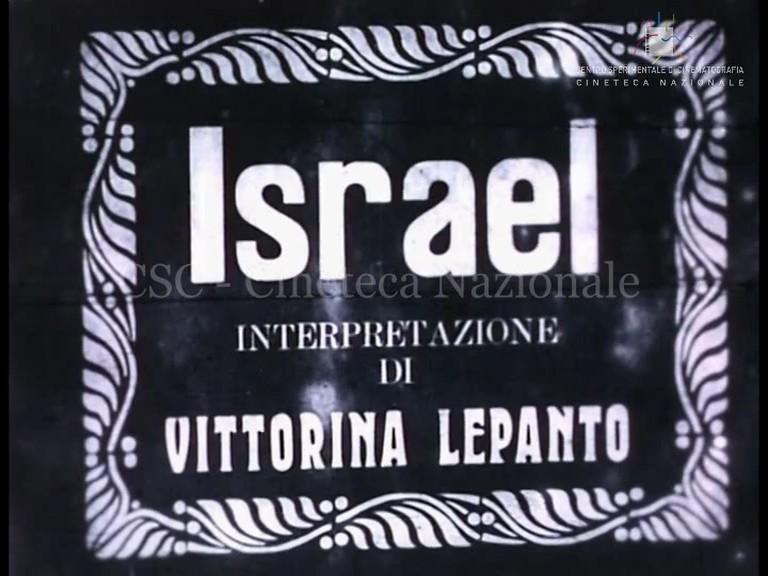
Vittoria Lepanto, however, delivers what can only be described as a tour-de-force as Judith. Her portrayal is a vibrant, impassioned testament to conviction. Judith is the film's moral compass, a character whose unwavering belief in their identity and heritage stands in stark contrast to the societal pressures Jean-Jacques faces. Lepanto imbues Judith with an incandescent spirit, her gestures and expressions conveying a fierce protectiveness of her family's honor and a profound understanding of the spiritual cost of denial. There's a particular scene where Judith confronts Jean-Jacques, her eyes blazing with a mixture of love and disappointment, that captures the very essence of the film's dramatic core. Her performance elevates the film beyond a simple social drama, transforming it into a deeply affecting human story about the fight for self-respect.
The catalyst for Jean-Jacques's ultimate crisis arrives in the form of a politically motivated smear campaign. A rival, recognizing Jean-Jacques's vulnerability and the latent antisemitism simmering beneath the surface of polite society, weaponizes his Jewish background. This plot device, while perhaps conventional in its execution, is devastatingly effective in its impact. It strips away Jean-Jacques's carefully constructed façade, forcing him to confront the prejudices he had hoped to transcend. The film avoids simplistic villainy, instead portraying the rival as a product of his time, a man whose ambition is intertwined with the prevailing bigotries of the era. This nuanced approach lends a chilling realism to the conflict, making it clear that the antagonist is not just an individual, but the societal forces he represents.
The pressure on Jean-Jacques to publicly renounce his faith or convert becomes the agonizing fulcrum of the narrative. The filmmakers, through astute use of close-ups and dramatic staging, convey the immense weight of this decision. One can almost feel the walls closing in on Jean-Jacques as he grapples with the potential destruction of his career against the profound betrayal of his ancestors and his own soul. Vittorio Rossi Pianelli, in a supporting role, contributes to the sense of a society teetering on the edge of intolerance, his character's reactions often mirroring the wider public's fickle allegiances.
As a silent film, 'Israël' relies heavily on visual storytelling, and here it largely succeeds. The cinematography, though perhaps rudimentary by today's standards, effectively utilizes chiaroscuro lighting to underscore the dramatic tension. Shadows lengthen and engulf characters at moments of despair, while shafts of light illuminate faces during declarations of resolve. The sets, depicting opulent Parisian salons and more humble, traditional Jewish homes, are meticulously crafted, serving not merely as backdrops but as extensions of the characters' internal worlds. The contrast between these environments powerfully symbolizes the two disparate worlds Jean-Jacques attempts to straddle.
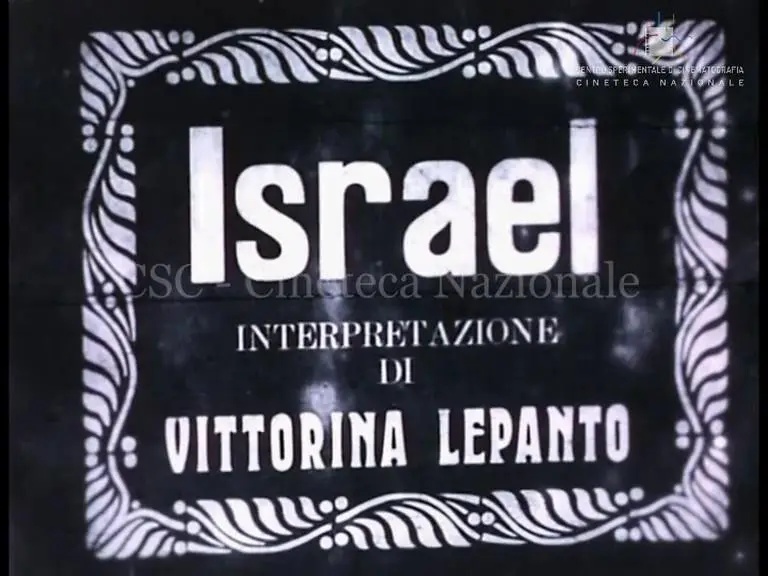
The pacing of 'Israël' is deliberate, allowing the emotional beats to resonate fully. There are moments of quiet contemplation, punctuated by bursts of intense emotional outpouring. The intertitles, rather than simply advancing the plot, often serve as poetic commentaries, reinforcing the film's philosophical underpinnings. Alberto Collo, in a smaller but significant role, contributes to the overall atmosphere of societal scrutiny, his character often positioned as a silent observer whose judgment weighs heavily on Jean-Jacques.
To fully appreciate 'Israël,' one must contextualize it within its historical moment. Released in 1919, the film emerged from a Europe still grappling with the aftermath of World War I, where nationalism was on the rise and minority communities often became scapegoats for societal anxieties. Bernstein's play, and its subsequent film adaptation, bravely tackled the thorny issue of antisemitism head-on, at a time when such direct portrayals were not always common. It serves as a stark reminder of the long-standing nature of such prejudices and the enduring struggle for dignity and acceptance.
Comparatively, 'Israël' shares thematic DNA with other films of its era that explored social injustice and personal conviction. One might draw parallels to the stark social commentary found in films like Souls in Bondage, which similarly grappled with individuals trapped by societal conventions and moral dilemmas. While 'Israël' is more focused on ethnic identity, both films highlight the oppressive forces that can shape or shatter a person's life. Similarly, the political machinations and the struggle against powerful, unseen forces might remind one of the oppressive atmosphere found in The Tyranny of the Mad Czar, albeit with a focus on a different kind of persecution. However, 'Israël' distinguishes itself by its deeply personal focus on one man's internal battle for self-definition against the backdrop of an entire community's struggle.
The film's exploration of identity is also more nuanced than the straightforward heroism often depicted in adventure serials of the time, such as Marvelous Maciste. While Maciste offered escapism and clear-cut good versus evil, 'Israël' plunged into the ambiguities of internal conflict and societal pressure. Even in comparison to more character-driven dramas like Fedora, which also delved into intense personal crises, 'Israël' carves out a unique space by intertwining the personal with the profound, collective experience of a marginalized group.
The ultimate power of 'Israël' lies in its refusal to offer easy answers. Jean-Jacques's final decision, whether it be one of defiant affirmation or tragic compromise, resonates with an authenticity that transcends the silent film era. It forces the audience to confront uncomfortable truths about the human condition: the yearning for acceptance, the fear of rejection, and the profound importance of one's heritage. The film avoids didacticism, instead presenting a complex human drama that invites empathy and reflection.
While perhaps not as widely known as some other silent epics, 'Israël' deserves a place in the canon of significant early cinema. Its courageous thematic exploration, coupled with strong performances, particularly from Vittoria Lepanto, makes it a compelling watch. It is a film that reminds us that the struggles for identity and against prejudice are perennial, and that the quiet strength of conviction can be as powerful as any grand gesture. For those interested in the social dramas of the silent era, or indeed, anyone seeking a profound meditation on belonging, 'Israël' offers a rich and rewarding experience. Its message, delivered through the eloquent silence of its era, continues to echo with profound relevance today.
The film's ability to tackle such sensitive subjects with grace and dramatic flair is a testament to Henri Bernstein's skill as a writer and the filmmakers' interpretive vision. It's a poignant reminder that cinema, even in its nascent form, possessed the power to provoke thought, stir emotions, and hold a mirror up to society's deepest fissures. In an age where identity politics continues to dominate discourse, 'Israël' provides a historical lens through which to examine the enduring human quest for selfhood in the face of external pressures. It's a film that lingers, prompting introspection long after the final intertitle fades from the screen.

IMDb —
1930
Community
Log in to comment.