DbcultAccessing Vault...
6.9/10
Senior Film Conservator
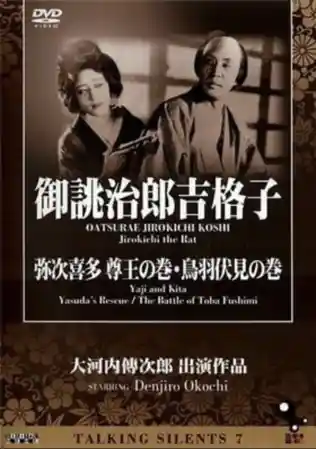
A definitive 6.9/10 rating for a film that redefined the boundaries of cult cinema. Oatsurae Jirôkichi kôshi remains a cornerstone of transgressive art.
If you think silent movies are just guys in makeup tripping over chairs, you really need to see Oatsurae Jirôkichi kôshi. It is worth watching right now if you like stories about losers who try to be heroes but kind of fail at life. You will probably hate it if you can't stand reading a lot of text or if you need 4K resolution to stay awake. But honestly? It's cool.
It’s a samurai movie, but not the kind where everyone is honorable and clean. Everything feels a bit damp and desperate. Denjirō Ōkōchi plays Jirokichi, and he has this incredibly intense way of looking at the camera. He doesn't look like a movie star; he looks like a guy who hasn't slept in three days and just realized he lost his wallet.
The biggest thing people talk about with this movie is the intertitles. Usually, in silent films, the text just sits there on a black screen. Here? The words fly. They grow big when someone is yelling. They slant when things are chaotic. It’s like the movie is screaming at you in text form.
There is this one scene where Jirokichi is running away, and the text basically chases him across the frame. It’s a revolutionary use of editing for 1931. It makes the movie feel like a comic book or a fever dream. I found myself leaning forward just to see how the words would pop up next.
I’ve seen other silent stuff like Astray from the Steerage, which has its own charm, but it doesn't have this specific kind of visual violence. Daisuke Ito, the director, clearly didn't want to play it safe. He wanted the screen to feel alive, and it totally works.
Jirokichi is supposed to be this legendary thief, the "Rat," who robs the rich. But in this movie, he just feels lonely. There is a lot of time spent on him just wandering around, looking at the water, and thinking about women who don't really want him. It’s surprisingly sad.
The scene at the festival is my favorite. The crowd is huge, and the camera moves through it in a way that feels almost claustrophobic. You can almost smell the cheap food and the sweat. Then, suddenly, the mood shifts because Jirokichi sees someone from his past, and the whole movie just stops to breathe for a second.
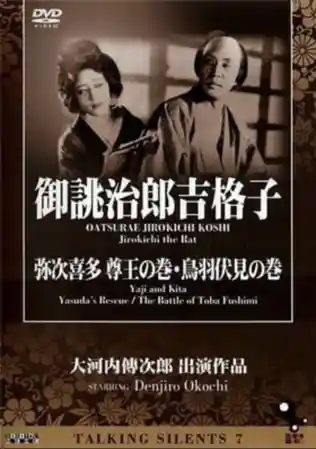
One thing that bugged me was the middle section. It slows down a lot. Like, way too much. There is this whole subplot with his sister and a guy named Nikichi that feels like it belongs in a different, much more boring movie. I kind of zoned out until the police showed up again.
Also, some of the acting is a bit much. I know, I know—it's a silent movie, they have to use their faces. But there is one reaction shot of a woman crying that lasts so long I started checking my phone. It’s dramatic, sure, but maybe dial it back about 10%?
"He’s a man who lives in the dark, but the light keeps finding him anyway."
That quote isn't from the movie, but it’s what I wrote in my notebook while watching. The ending is where things really pick up. The final chase is pure cinema. It doesn't matter that it's nearly a hundred years old. You feel the panic. You feel the rain. You feel the exhaustion in Jirokichi's legs as he tries to climb over those roofs.
The hats. Everyone has these amazing straw hats that look like upside-down buckets. They use them to hide their faces, and it creates this really eerie visual where you’re just looking at a bunch of walking baskets. It’s creepy and effective.
There is also a dog that shows up for about three seconds and then disappears. I wonder if it was a stray that just wandered onto the set. The director kept it in, and I'm glad he did. It makes the world feel real and unplanned.
Is it perfect? No. The plot gets tangled up in its own feet sometimes. But it has so much soul. It’s the kind of movie that makes you realize that people back then were just as stressed out and creative as we are now. If you can find a version with the original benshi narration, do it. The mix of dialects is supposed to be great, even if I didn't catch every nuance.
Anyway, go watch it. Or don't, if you hate old stuff. But you’re missing out on some of the best kinetic energy ever put on film. It makes you realize that "modern" editing isn't as new as we think it is.
IMDb —
1936
Community
Log in to comment.