DbcultAccessing Vault...
6.7/10
Senior Film Conservator
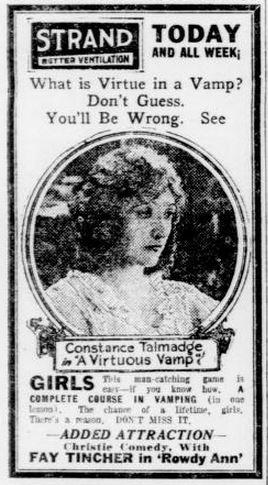
A definitive 6.7/10 rating for a film that redefined the boundaries of cult cinema. A Virtuous Vamp remains a cornerstone of transgressive art.
In the annals of early cinema, where the silent screen often spoke volumes through gesture and expression, some films possess a unique effervescence that transcends their era. A Virtuous Vamp, a 1919 offering starring the incomparable Constance Talmadge, is precisely such a gem. It's a delightful concoction of romantic comedy and social commentary, serving up a narrative that, despite its century-old vintage, still feels remarkably fresh and insightful. The film plunges us into a world where a woman's natural charm, rather than any malicious intent, becomes an unwitting catalyst for chaos, a testament to the potent, often disruptive, power of feminine allure in a traditionally male-dominated space. Talmadge, with her inimitable vivacity and nuanced performance, elevates what could have been a simple farce into a charming exploration of perception, desire, and the subtle art of attraction.
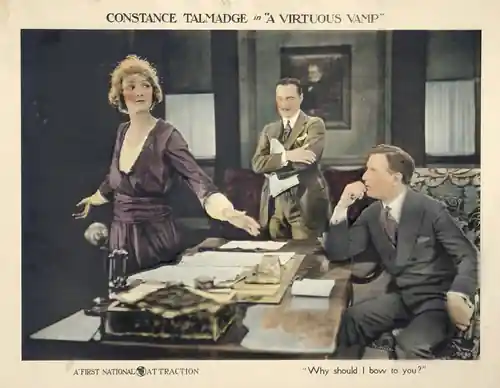
At the heart of A Virtuous Vamp lies Constance Talmadge, an actress whose light truly shone in the silent era. Her portrayal of Gilda Gray is nothing short of captivating. Gilda isn't a femme fatale in the traditional sense; she is simply a young woman endowed with an effortless charm that, upon her arrival at a bustling office, inadvertently transforms the staid corporate environment into a whirlwind of masculine distraction. Talmadge’s performance is a masterclass in silent comedy, relying heavily on subtle facial expressions, graceful gestures, and an infectious effervescence that makes her character instantly endearing. She navigates the delicate balance between being innocently appealing and subtly manipulative, never leaning too heavily into either extreme. Her eyes convey both mischievousness and genuine longing, making Gilda a character we root for even as she upends the lives of her male colleagues. This isn't the dramatic intensity of a Lillian Gish, nor the overt slapstick of a Mabel Normand; instead, Talmadge carves out a niche of sophisticated, effervescent comedy that feels utterly modern. Her ability to command the screen, even amidst a flurry of male attention, underscores her formidable presence and why she remains a significant figure in early Hollywood history.
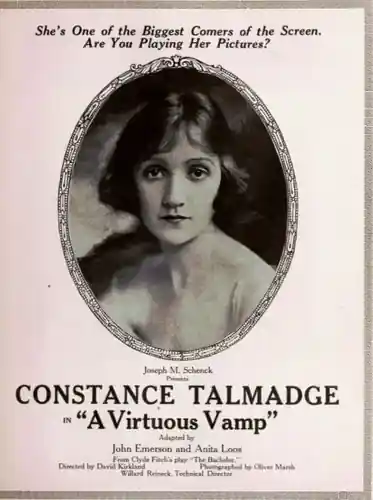
The central conceit of A Virtuous Vamp is deliciously simple yet profoundly effective. Gilda Gray takes a job in an office, and her mere presence acts like a magnet, drawing the attention of every male employee. From the junior clerks to the senior executives, all are smitten, their productivity plummeting as they vie for her notice. This isn't a deliberate act of seduction on Gilda's part; rather, it’s an organic reaction to her inherent attractiveness and vivacious personality. The film cleverly showcases the domino effect of this disruption, painting a humorous, albeit slightly exaggerated, picture of workplace dynamics when confronted with an irresistible force. Desks are abandoned, memos are ignored, and business suffers, all because a charming woman simply exists within their orbit. The comedic brilliance lies in the escalating absurdity of the men’s behavior, their attempts at impressing Gilda becoming increasingly desperate and futile. It’s a timeless setup, echoing through countless romantic comedies that explore the disruptive power of new blood in an established order. In this regard, one might draw a thematic parallel to the social disruption caused by a strong female character in a confined setting, though with a much lighter touch than, say, the more dramatic societal challenges faced by characters in films like Tess of the Storm Country.
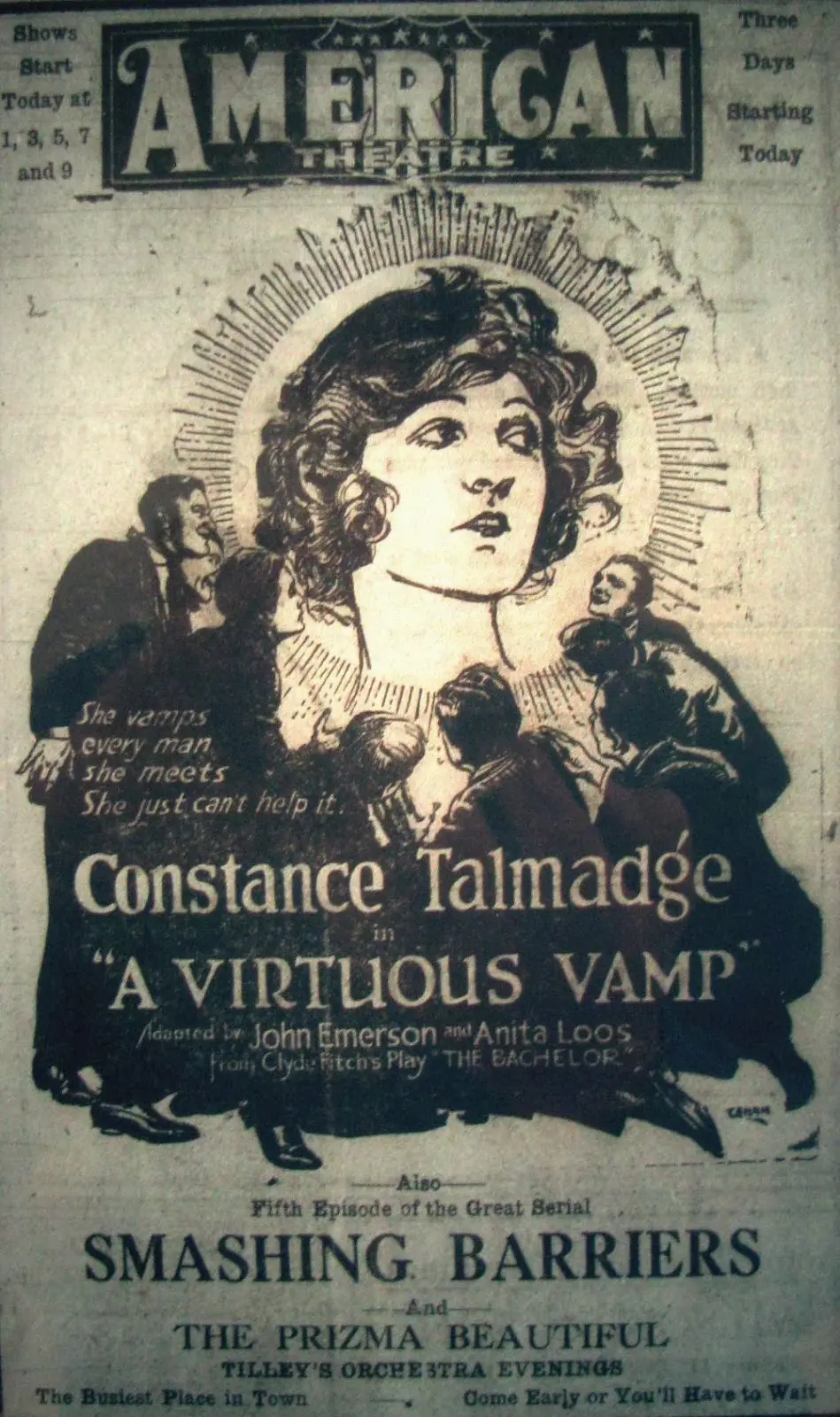
The narrative gains its primary romantic tension from a crucial detail: Gilda’s affections are set on the one man seemingly immune to her charms. This reversal of fortunes – the object of widespread desire now desiring the unattainable – provides the film with its emotional core and its most engaging comedic beats. Conway Tearle, as the object of Gilda's particular fancy, plays his role with a stoic indifference that only serves to heighten her determination. His character, initially portrayed as impervious, becomes the ultimate prize, a challenge that Gilda, despite her seemingly effortless magnetism, must genuinely strive for. This dynamic cleverly subverts the usual tropes of the era, where the beautiful woman is often passively pursued. Here, Gilda is an active agent in her own romantic destiny, employing her wit and charm to win over the one who truly matters. It's a delightful dance of pursuit and evasion, a testament to the enduring appeal of the 'hard-to-get' trope, skillfully executed by the lead actors.
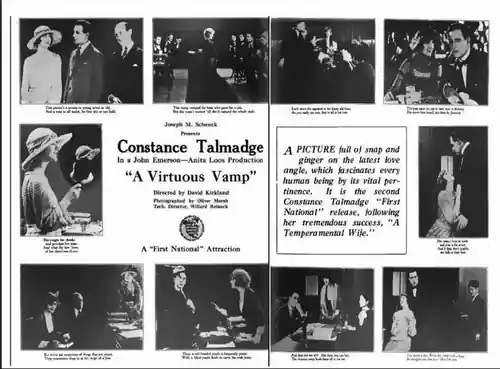
While Talmadge is undoubtedly the star, the ensemble cast surrounding her contributes significantly to the film's comedic success. Jack Kane, William Gaunt, William Eville, and Ned Sparks, among others, portray the smitten co-workers with varying degrees of exaggerated adoration, each adding a unique flavor to the collective infatuation. Their individual attempts to woo Gilda, often clumsy and ill-conceived, provide much of the film’s physical comedy and a humorous commentary on male vanity. Jeanette Horton, Belle Daube, and Margaret Linden round out the female presence, often reacting to the male frenzy with amusement or exasperation, grounding the more farcical elements in a semblance of reality. The interplay between these characters, orchestrated by the direction of John Emerson, ensures a consistent comedic rhythm. The writers, Clyde Fitch, John Emerson, and Anita Loos, deserve immense credit for crafting a script that, while dialogue-free, buzzes with witty situations and character-driven humor. Anita Loos, in particular, was known for her sharp observations on social mores and gender dynamics, and her influence is palpable in the film's nuanced portrayal of Gilda and her impact.
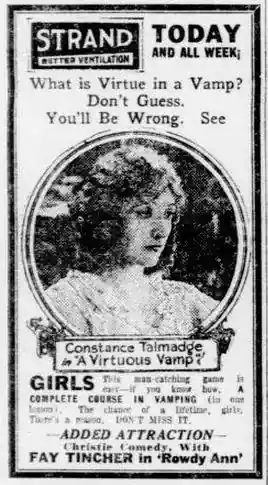
John Emerson’s direction, coupled with the keen eye of cinematographer Alfred Ortlieb, crafts a visually engaging experience. For a silent film, A Virtuous Vamp employs a dynamic visual language to convey its story and humor. Close-ups of Talmadge’s expressive face are used effectively to communicate her emotions and intentions, drawing the audience into her inner world. The staging of the office scenes, with multiple men simultaneously attempting to gain Gilda’s attention, is expertly choreographed, creating a sense of bustling energy and comedic chaos. The pacing is brisk, keeping the narrative moving forward without lingering unnecessarily, a hallmark of well-executed silent comedies. Intertitles are used judiciously, providing necessary exposition or witty commentary without interrupting the flow of visual storytelling. The film’s aesthetic, while simple by modern standards, is highly effective in establishing its lighthearted tone and emphasizing the charm of its lead. It's a prime example of how early filmmakers mastered visual communication, making every gesture, every glance, and every prop contribute to the overarching narrative and comedic effect.
Beyond its undeniable comedic value, A Virtuous Vamp subtly explores several pertinent themes. It delves into the nature of perception – is Gilda truly a 'vamp' or merely a naturally attractive woman whose presence is misconstrued? The film argues for the latter, highlighting how societal expectations and masculine projections can transform innocence into something more provocative. It also touches upon the burgeoning role of women in the workplace during the early 20th century. While Gilda’s impact is played for laughs, it underscores the disruptive potential of female entry into previously male-exclusive domains. This theme resonates with other films of the era that grappled with changing gender roles, though often with more gravitas, like Should a Wife Forgive? or Parentage, which explored the complexities of female agency and societal judgment. Here, the lens is lighter, focusing on the charm and humor rather than the societal struggle, but the underlying commentary on female influence remains potent. Gilda’s power is not derived from overt displays of defiance but from an inherent charisma that she wields, consciously or unconsciously, to navigate her world and achieve her desires. It is a nuanced portrayal of feminine power, one that suggests influence can be as subtle as a glance or a smile.
When considering A Virtuous Vamp within the broader landscape of silent cinema, its charm becomes even more apparent. It stands as a testament to the enduring appeal of romantic comedies that hinge on misunderstandings and the magnetic pull between individuals. The film's lighthearted approach to office romance and the disruption caused by a charismatic woman finds echoes in other contemporary works. For instance, the playful romantic entanglements and social maneuvering seen in The Flirt or the societal impact of a woman's presence in Her Inspiration share a common thread, albeit with different narrative focuses. A Virtuous Vamp distinguishes itself by its particular brand of effortless charm, largely thanks to Talmadge’s performance. It avoids the overt melodrama sometimes found in films like Tangled Lives and instead opts for a more buoyant, optimistic tone. The film's ability to maintain a consistently engaging and humorous atmosphere, even as it subtly critiques societal norms, solidifies its place as a standout romantic comedy of its era. It’s a film that understands the delicate dance of human attraction and the often-comical lengths people will go to for love or attention.
Ultimately, A Virtuous Vamp is more than just a historical curiosity; it’s a vibrant, entertaining piece of cinematic art that continues to resonate. Its exploration of attraction, workplace dynamics, and the power of an individual’s personality is handled with a light touch and genuine wit. Constance Talmadge delivers a performance that is both iconic and deeply human, making Gilda Gray one of the most memorable characters of early romantic comedy. The film reminds us that even in the absence of spoken dialogue, a story can be told with immense clarity, humor, and emotional depth. It’s a testament to the collaborative genius of its cast and crew, particularly the writing team of Clyde Fitch, John Emerson, and Anita Loos, whose collective vision brought this delightful tale to life. For anyone seeking a glimpse into the sophisticated humor and captivating star power of the silent era, A Virtuous Vamp is an absolute must-see. It’s a film that not only entertains but also offers a charming, albeit subtle, commentary on the timeless complexities of human interaction and the magnetic force of an effortlessly charming personality. Its legacy is one of enduring appeal, proving that true charisma, whether on screen or in an office, is truly timeless.
IMDb 6.2
1924
Community
Log in to comment.