DbcultAccessing Vault...
Cult Review
Senior Film Conservator
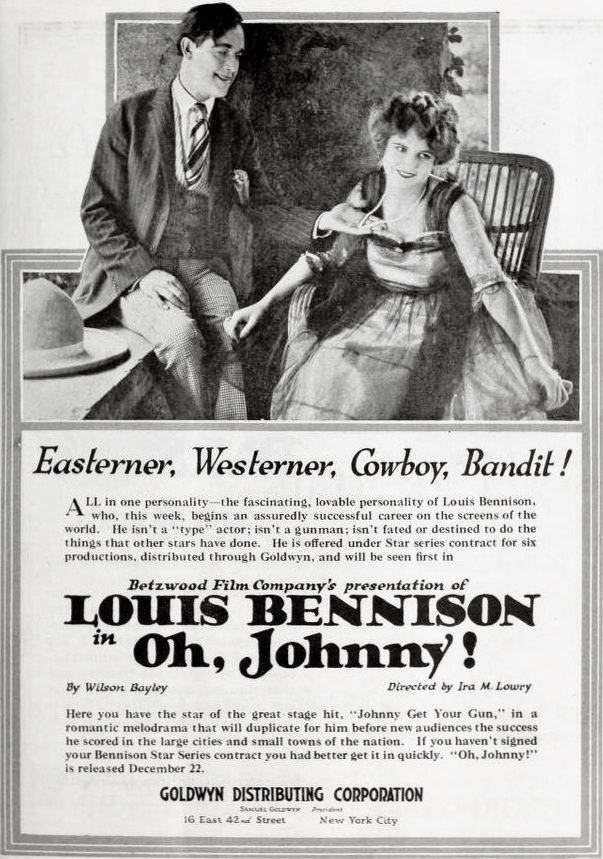
A lantern swings in the assay office, kerosene shivering against the walls like a moth with stage fright; outside, the Sierras crouch blacker than eviction notices. That single shot—grainy, guttering, yet razor-sharp—announces Oh, Johnny! as something rarer than nugget-sized melodrama: it is a silent western that remembers silence can be thunderous.
Russell Simpson, granite-faced and soft-eyed, plays the partner, Blair, with the weary authority of a man who has buried more friendships than most people have had hot suppers. His gait—part saddle-sore, part courtly—carries the whole moral ballast of the picture. When he squares off against Edward Roseman’s pinstripe predator, the confrontation is staged in a doorway split by sunset: one half molten orange, the other bruise-blue, as though the frame itself is being contested. No title card intrudes for a full twenty seconds; the visual dialect is eloquent enough.
Louise Brownell’s orphaned heiress, Ruth, arrives in a pinafore that looks laundered by mountain streams and stubborn hope. Industry convention would have her cloying or hyper-spunky; instead she drifts between bewilderment and flinty resolve, her close-ups lit so that freckles stand out like copper flakes on quartz. Watch the micro-shift in her eyes when she first spies the assay scales—there is the dawning, not of greed, but of measurable worth, the moment childhood is weighed and found negotiable.
Wilson Bayley’s screenplay, cobbled from Saturday Evening Post serials, could have been another plucky-kid-versus-sharks fable. Yet the film keeps jabbing at class bruises: the nouveau riche kin who alight from the Pullman clutch etiquette manuals like prayer books, convinced that civilized pilferage is superior to the saloon variety. Their parlor, wallpapered in funeral-mint damask, becomes a battlefield of lace gloves and fountain pens—ink where blood should be.
Director Ralph Nairn, usually dispatched to shoot two-reel railroad ads, surprises with compositional audacity. Note the mine-cribbing sequence: cameras bolted to timber beams, gazing straight down the shaft so the crib planks form a cruciform vortex. Every time a character descends, the frame swallows them as if the mountain were a confessional. Morality, not just mortality, gets measured in vertical feet.
Frank Goldsmith’s tinting strategy deserves graduate-thesis reverence. Night interiors swim in sodium yellow that makes skin resemble antique parchment, while exterior daylight carries the faint aquamarine of old cyanotype photos. The palette is not nostalgic but mnemonic; it reminds you that memory itself is a chemical process—silver halide, mercury vapor, emulsion scars.
Yet the film’s true pulse lies in its refusal to pair Ruth with a junior prospector or a sprightly newsboy. There is no last-reel betrothal, only a handshake between girl and grizzled partner beside a sluice box, the river gurgling like loose change. Hollywood’s 1923 playbook demanded matrimony; Oh, Johnny! opts for fiduciary fidelity, a covenant of mutual stewardship more romantic than most on-screen weddings.
Compare it to The Girl from His Town where inheritance is pretext for pastoral flirtation, or Other People’s Money which dilutes venality into cocktail banter. Oh, Johnny! keeps its stakes raw: a child, a claim, a canyon echoing with claim jumpers’ boots.
Restoration reports hint that the 16mm print surfacing in Bozeman last year contains two previously lost reels, including the campfire recitative where Blair recounts burying Ruth’s father under a ponderosa so the grave could “watch the sunrise he never got to spend.” The intertitle—white letters on obsidian—lingers long enough to feel like a tombstone you can walk around.
Anita Cortez as a nameless soiled dove provides the film’s most radical grace note. She sashays into frame only twice, yet her sidelong glance at Ruth, equal parts warning and benediction, collapses the Madonna/whore binary without a syllable of preach. When she peels off a garnet earring and presses it into the girl’s palm, the gesture is framed in chiaroscuro so severe the jewel looks like a drop of coagulated fire.
Modern ears may balk at the title—Oh, Johnny! sounds like a flapper musical. In context it is the refrain crooned by a dead miner off-screen, a ghostly jukebox elegy that drifts over canyon walls whenever wind rattles the tin roof. The phrase becomes an aural watermark: every time you hear it (or imagine you do), someone is about to betray or protect, sometimes both.
Criticism? The third-act courtroom transfer, shot on one set dressed to look like Sacramento grandeur, feels cramped—Nairn compensates with barrel-vault shadows that suggest cathedral pilferage, yet the spatial contraction jars after open-sky grandeur. And Alphonse Ethier’s villain twirls a mustache literally; had he a Snidely Whiplash locomotive handy, he’d tie Ruth to it. But these are quibbles, flecks of pyrite in an otherwise solid vein.
Viewers weaned on Carmen of the Klondike or Beatrice Fairfax will notice how Oh, Johnny! sidesteps serial cliffhanger frenzy. Escapes hinge on geological savvy—Ruth pockets nuggets to weight her hem so she can sink beneath a trestle and evade lanterns, a stratagem worthy of a mining engineer rather than a plucky plot puppet.
Scores of silent westerns dissolve into cowboy-kid karaoke; this one remembers that land contests are also genealogical duels. When Ruth’s city cousin sneers that “a mine is just a hole with a liar on top,” the line stings because the camera has already shown us the cadaver of her father interred standing-upright, eyes facing the claim. Land and lineage fuse into a single wound.
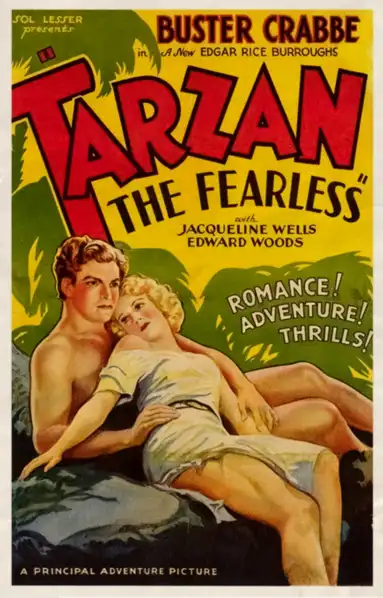
George Folsey, later lensing for Tarzan, was camera operator here; watch the dolly-in on Blair’s boot heel as it crushes a wanted poster—three seconds that predict the kinetic intimacy of 1950s western noir. Silent cinema is often caricatured as locked-down tableaux; Oh, Johnny! glides, cranes, even crash-zooms by rack-focusing from a mule’s blink to distant riders—an embryonic zoom lens achieved by sliding the entire camera on a timber sled.
Sound historians will note the “sound” of this silent: the rhythmic clatter of the hand-crank—audible on set—dictated editing tempo. Editors cut on every fourth crank beat, creating an adrenal 88 bpm that mirrors a galloping heart. View today with a metronome; you’ll find the chase sequences syncopate like proto-drum-and-bass.
Availability remains spotty. A 2K scan toured cinematheques last fall, complete with a new quintet score (viola, musical saw, pump organ, brushed snare, harmonium). The saw’s glissando during the orphan-cabin fire scene produces a wail halfway between coyote and steam whistle—uncanny valley for the ears. Streaming rights are snarled in the old William Selig estate; bootlegs on popular video site are pan-scanned, sapped of the original tints, like watching a sunset through coffee.
Still, seek it. In an era when IP franchises pulverize narrative into brand extension, Oh, Johnny! offers the radical pleasure of finality: the claim is worked, the girl is schooled, the camera pans to a ridge where new-fallen snow resembles unexposed film—pure possibility unsullied by sequel. The last frame is not “The End” but a title card reading “Stake Your Claim,” an invitation for viewers to mine their own moral ground.
If you exhume only one obscure western this year, make it this. Let its silence roar. Let its yellows sear. Let its shadows teach you that sometimes the most authentic gold rush is the one that happens in a darkened room, where beams of projector light sift through dust motes like flour through a prospector’s pan—leaving only the gleam that refuses to be cheated.
IMDb —
1912
Community
Log in to comment.