DbcultAccessing Vault...
Cult Review
Senior Film Conservator
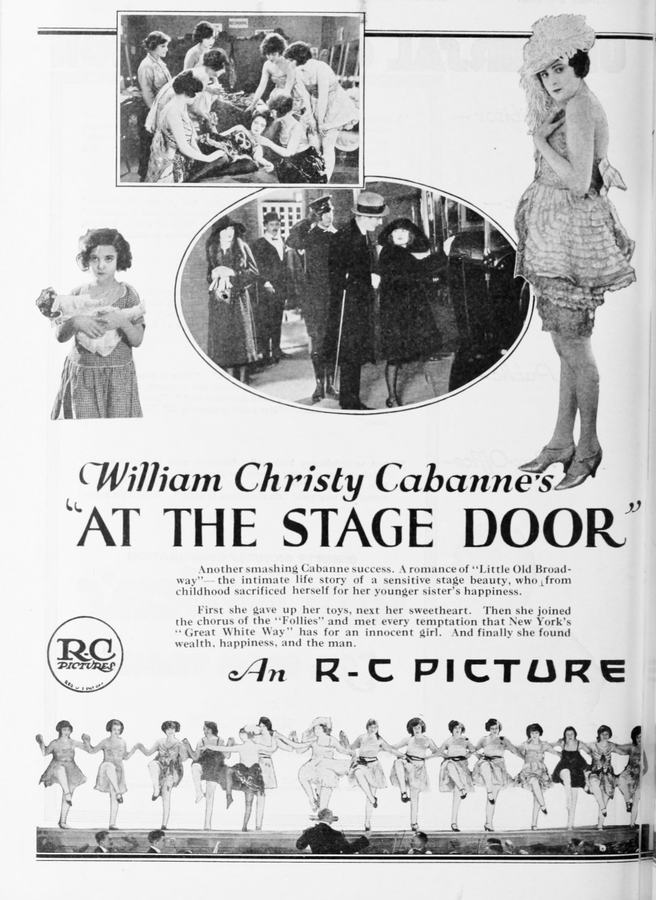
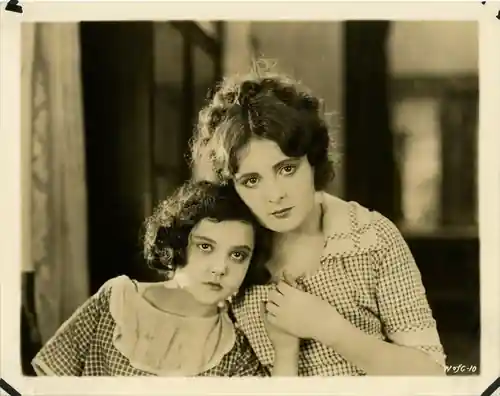
In the annals of silent cinema, few narratives capture the visceral tension of familial discord and the glittering allure of stardom as acutely as At the Stage Door (1924). Directed by Christy Cabanne with the meticulous precision of a stage manager choreographing a dramatic overture, this film dissects the toxic undercurrents of sisterhood and the corrosive power of jealousy. The story orbits the Mathews sisters, Helen and Mary, whose divergent personalities—hers a tempest of selfishness, hers a beacon of compassion—set the blueprint for a tragedy of mistaken priorities and delayed epiphanies.
Early scenes establish the chasm between Helen (Elizabeth North) and Mary (Katherine Spencer) with haunting clarity. The camera lingers on Helen’s sneer as she callously upends her sister’s romantic stability, a gesture that crystallizes her role as both antagonist and cautionary tale. Mary’s subsequent flight to New York, abandoning the suffocating grip of their shared past, is rendered with the poignancy of a moth’s escape from an unlit room. Here, the film’s visual language becomes its most potent narrator: the flickering shadows of the chorus line, the garish lights of the theater district, all serve as metaphors for the duality of Mary’s existence—both spectacle and solitude.
As Mary ascends from anonymity to the intoxicating heights of stardom, the narrative pivots from domestic tragedy to a broader exploration of identity in a world that demands artifice. Her refusal of Philip Pierce (Huntley Gordon), a young millionaire whose earnest affection is drowned in the cacophony of her self-doubt, is less a rejection than a recognition of her own fractured sense of worth. Philip’s obsessive pursuit, portrayed with a mix of pathos and desperation, becomes a mirror to Mary’s internal chaos. Cabanne’s direction here is masterful, juxtaposing the opulence of the theater with the starkness of Mary’s emotional desolation, a contrast that underscores the film’s central thesis: fame is a gilded cage for those who never learn to open the door.
The supporting cast, particularly Doris Eaton and Charles Craig, injects the film with layers of nuance. Eaton’s portrayal of a jaded chorus girl, weary of the industry’s cutthroat whims, offers a counterpoint to Mary’s idealism. Craig’s character, a pragmatic yet secretly vulnerable stage manager, embodies the compromises necessary for survival in this unforgiving world. These performances, though often reduced to archetypes in lesser hands, are elevated by the actors’ ability to convey volumes without a single word.
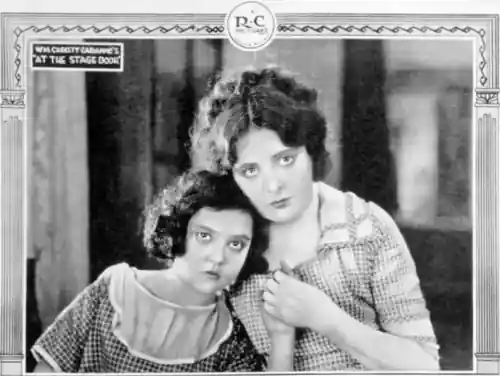
At its core, At the Stage Door is a study in the cyclical nature of betrayal. Helen’s initial act of cruelty—a theft of love, not merely of a man—sets in motion a chain of events that neither sister can fully control. Yet, Cabanne resists the temptation to paint Helen as a mere villain. Instead, she is a flawed, human creature, her malice born from insecurity rather than malice. This complexity is evident in a pivotal scene where Helen, caught in the act of undermining Mary’s career, hesitates—her hand trembling over a letter that could shatter her sister’s newfound success. The moment is fleeting but telling, suggesting a glimmer of redemption that never fully materializes.
Mary’s arc, conversely, is one of gradual awakening. Her transformation from a naive dreamer to a self-aware artist is punctuated by moments of quiet defiance. In one of the film’s most haunting sequences, she dances alone on stage, the spotlight revealing not her triumph but the ghost of her sister’s shadow. This duality—public persona vs. private anguish—is captured in the film’s cinematography, which employs tight close-ups to magnify the subtleties of expression. The score, though now lost to time, presumably swelled with the same urgency as the sisters’ unspoken tensions.
Cabanne’s approach to storytelling is both economical and evocative. The use of intertitles is sparse, allowing the actors’ physicality to carry the weight of subtext. In a particularly audacious sequence, Mary’s growing fame is visualized through a montage of headlines and audience reactions, each shot more garish than the last, until the viewer is left questioning whether the crowd cheers for the woman or the myth. This technique, reminiscent of the expressionist aesthetics later perfected in German cinema, underscores the film’s critique of celebrity culture.
The film’s climax, a confrontation between the sisters in the theater’s dressing room, is a masterclass in silent film acting. Without a word spoken, North and Spencer convey a lifetime of hurt and longing. The camera circles them slowly, the walls closing in as if the very set is complicit in their tragedy. Helen’s final gesture—a trembling hand reaching for Mary’s, then falling away—sums up the film’s tragic core: some bridges are too long to rebuild.
In the pantheon of early Hollywood dramas, At the Stage Door shares thematic DNA with films like American Buds and The Princess of India, both of which grapple with familial strife and the allure of reinvention. Yet, it distinguishes itself through its unflinching portrayal of the psychological toll on women navigating male-dominated industries. The film’s exploration of ambition and identity echoes the later works of Dorothy Arzner, though Cabanne’s focus remains squarely on the emotional granularity of his characters.
Modern audiences may find the pacing of At the Stage Door deliberately slow, a byproduct of its era’s emphasis on narrative restraint. However, this measured tempo allows for the rich development of subplots and character dynamics that lesser films might gloss over. The film’s enduring relevance lies in its examination of how personal histories shape our choices—a theme as pertinent today as it was in 1924.
At the Stage Door is more than a relic of the silent film era; it is a nuanced exploration of the human condition, rendered with the precision of a playwright and the emotional depth of a poet. While its technical aspects—such as the now-faded Technicolor sequences—may not stand the test of time, the story’s resonance is undiminished. For those willing to surrender to its pacing and embrace its visual storytelling, this film offers a rare glimpse into the raw, unvarnished truths of sisterhood, ambition, and the fragile line between love and destruction.
"In the theater of life, we often play roles we don’t recognize, until the curtain falls and the house lights rise." — Anonymous, echoing the spirit of At the Stage Door.
IMDb —
1920
Community
Log in to comment.