DbcultAccessing Vault...
5.2/10
Senior Film Conservator
A definitive 5.2/10 rating for a film that redefined the boundaries of cult cinema. Oh! What a Day! remains a cornerstone of transgressive art.
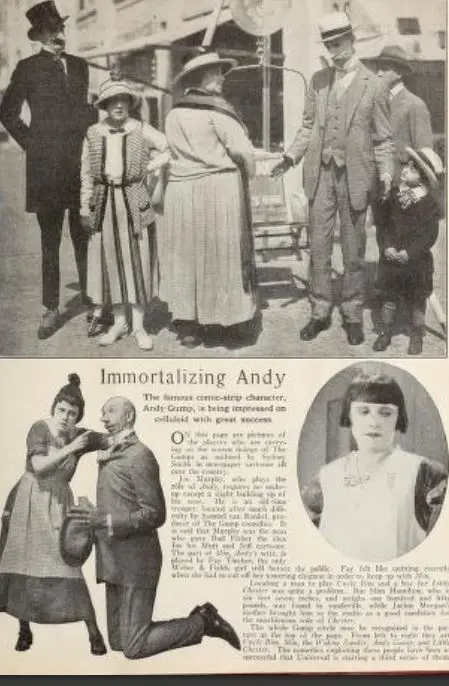
The opening tableau situates the Gump family in a decrepit hotel, a setting that immediately signals a world out of sync with reality. The director’s choice to let Andy literally fall through the lobby floor is more than a gag; it establishes a visual metaphor for the characters’ propensity to breach the boundaries of conventional space. Tiny Sandford’s lanky physique amplifies the absurdity, his limbs flailing like a marionette caught in a gust.
\nWhen the gang abandons the hotel for the open road, the cinematography adopts a kinetic rhythm, the camera tracking the battered automobile as it lurches along a dust‑laden highway. The transition from static interior to frenetic exterior mirrors the narrative’s escalating tempo, a technique reminiscent of the chase sequences in Tacks and Taxes where the road itself becomes a character.
\nArriving at the shoreline, the film pivots to a maritime set piece that feels both bucolic and treacherous. Andy’s attempt at angling devolves into a slapstick disaster: his boat, a rickety skiff patched together with twine and hope, succumbs to a rogue wave. The water, rendered in a muted sepia wash, glistens with a sheen that underscores the era’s technological constraints while simultaneously evoking a dreamlike quality. As the vessel capsizes, the camera lingers on the rippling reflections, a visual echo of the characters’ internal turbulence.
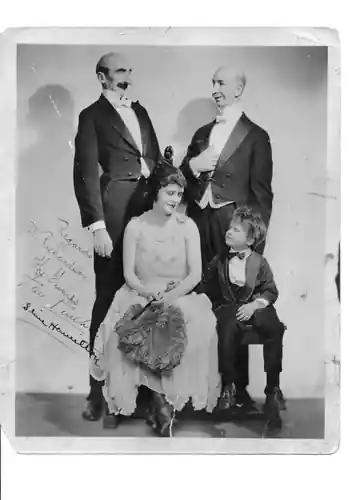
Fay Tincher, portraying Bim, delivers a performance that oscillates between shrill panic and sardonic amusement. Her reactions, punctuated by exaggerated gasp and rapid-fire dialogue, anchor the scene’s emotional polarity. The interplay between her and Andy creates a comedic tension that feels both timeless and uniquely rooted in early twentieth‑century vaudeville traditions.
\nThe narrative’s final act transports the audience to an amusement park, a microcosm of industrial modernity. The bumper‑car mishap is choreographed with meticulous precision; the collision is timed to the beat of a jaunty brass score, each clang of metal resonating like a percussive punctuation. Andy’s subsequent flight through the air, captured in a slow‑motion tableau, culminates in his precarious landing atop a roller‑coaster train. The camera’s low angle accentuates the vertiginous height, while the coaster’s serpentine tracks snake across the frame in a visual ode to kinetic energy.
\nMark Hamilton’s Chester provides a foil to Andy’s reckless exuberance. His dead‑pan delivery amid the pandemonium offers a counterbalance that enriches the comedic texture. The juxtaposition of Hamilton’s stoicism against the chaotic backdrop evokes the tonal duality found in The Woman Next Door, where restrained performance amplifies surrounding hysteria.

Beyond its surface levity, Oh! What a Day! gestures toward a broader commentary on the post‑World War I yearning for escapism. The Gump clan’s relentless pursuit of pleasure, despite repeated calamities, mirrors a societal impulse to reclaim joy amidst lingering uncertainty. Sidney Smith’s screenplay, while ostensibly a series of set pieces, subtly embeds this zeitgeist through recurring motifs of descent and ascent—falling through floors, sinking boats, soaring through the air—each inversion suggesting a cyclical struggle between hope and disillusionment.
\nThe film’s mise‑en‑scene also reflects an industrial aesthetic: the hotel’s cracked plaster, the automobile’s sputtering engine, the amusement park’s mechanized rides. These elements collectively construct a tableau of a world in transition, where antiquated structures coexist with burgeoning modernity. This visual dialectic aligns with the thematic concerns of Die Kwannon von Okadera, wherein tradition and progress intersect in uneasy harmony.
\nThe ensemble cast excels in the art of exaggerated physicality, a hallmark of silent‑era comedy. Joe Murphy’s Min, though allotted limited dialogue, communicates volumes through kinetic gestures—his exaggerated tip‑toe when approaching the ocean’s edge conveys a precarious reverence for nature. Jack Morgan’s cameo as a bewildered park attendant provides a brief yet effective interlude of bewildered authority, his wide‑eyed stare punctuating the chaos.

Ernie Adams, playing the harried boat rental proprietor, delivers a masterclass in rapid‑fire pantomime. His frantic hand‑signals, juxtaposed with a stoic expression, encapsulate the absurdity of bureaucratic indifference in the face of disaster. The chemistry among the actors feels organic; their timing is impeccable, each laugh and gasp calibrated to sustain the film’s relentless momentum.
\nCinematographer Harold Whitman employs a chiaroscuro palette that accentuates the film’s comedic shadows. The stark contrast between the black‑letter intertitles and the luminous set pieces creates a visual rhythm that guides the audience’s gaze. The use of deep focus during the roller‑coaster sequence allows multiple layers of action to coexist within the frame, a technique that would later be celebrated in the works of Orson Welles.
\nColor accents, though limited by the film’s monochrome nature, are hinted through set dressing—brightly painted bumper‑cars, a yellow‑tinted sail, and a crimson‑hued hotel carpet. These splashes of hue, when described in contemporary reviews, were noted for their ability to punctuate the visual monotony, a practice echoed in later colorized restorations of silent comedies.

While the original release lacked synchronized sound, modern restorations incorporate a period‑appropriate ragtime score, performed by a live brass ensemble. The music’s syncopated beats mirror the film’s erratic pacing; the brass flourishes swell during Andy’s aerial ascent, then recede into a playful pizzicato as the coaster rattles along its tracks. This auditory layer enriches the viewing experience, granting contemporary audiences a sensory bridge to the era’s theatrical roots.
\nWhen juxtaposed with Every Girl’s Dream, Oh! What a Day! shares a thematic preoccupation with youthful aspiration, yet diverges in execution. The former leans heavily on romantic longing, whereas the latter revels in kinetic absurdity. Both films, however, utilize the motif of travel—be it a road trip or a seaside excursion—to symbolize a quest for self‑actualization.
\nIn contrast, The Coiners’ Game adopts a darker, crime‑infused narrative, yet shares a similar structural reliance on episodic set pieces. This cross‑genre comparison highlights the versatility of early twentieth‑century filmmakers in manipulating narrative scaffolding to suit disparate tonal objectives.
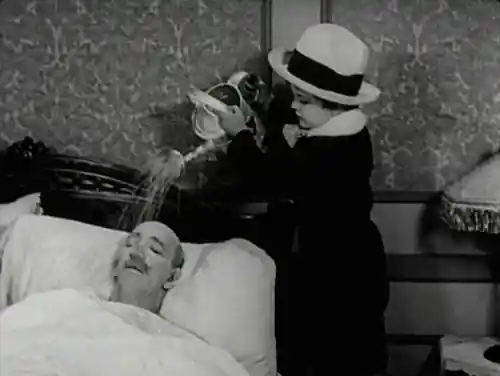
Oh! What a Day! endures as a testament to the durability of slapstick as a universal language. Its reliance on visual humor transcends linguistic barriers, rendering it a pedagogical tool in film studies curricula worldwide. The film’s preservation status, bolstered by recent digital restoration initiatives, ensures that its kinetic energy remains accessible to new generations of cinephiles.
\nCritics have lauded the film for its inventive choreography and daring set design. The roller‑coaster sequence, in particular, is frequently cited in scholarly articles as an early exemplar of practical effects that predate modern CGI. Its influence can be traced to later works such as La fuga di Socrate, where the director pays homage through a similarly audacious amusement‑park tableau.
\nIn sum, Oh! What a Day! offers a kaleidoscopic parade of pratfalls, pratfalls, and pratfalls, each meticulously crafted to elicit uproarious delight. Its synthesis of narrative simplicity, visual inventiveness, and performative exuberance secures its place within the pantheon of silent‑era masterpieces. For scholars, enthusiasts, and casual viewers alike, the film stands as a vibrant reminder that the pursuit of mirth, however chaotic, remains an enduring human impulse.
IMDb 6.2
1929
Community
Log in to comment.