DbcultAccessing Vault...
Cult Review
Senior Film Conservator
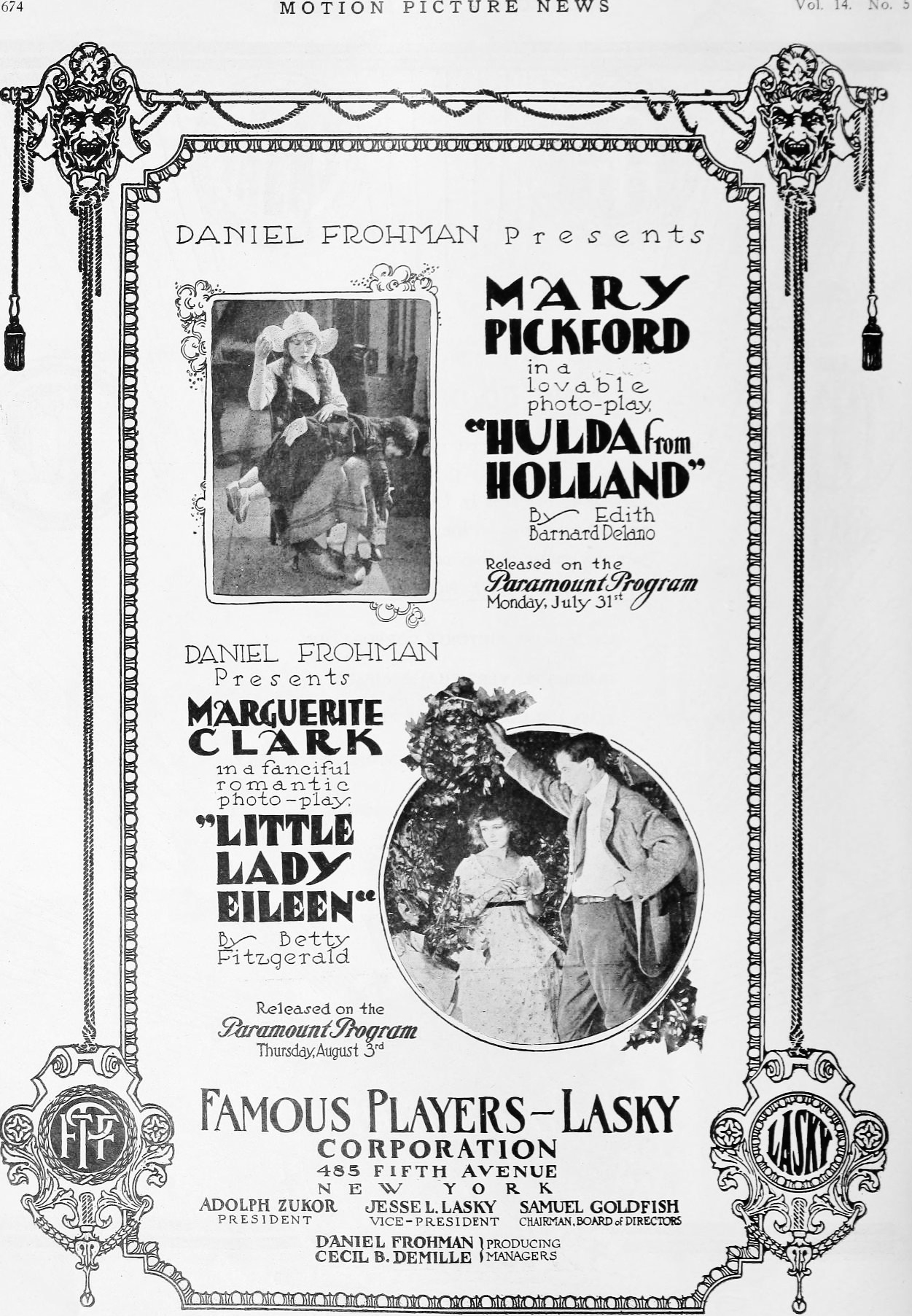
The cinematic landscape of the early 20th century, a crucible of nascent storytelling, frequently drew upon the timeless allure of folklore and the dramatic tension inherent in human relationships. "Little Lady Eileen", a compelling artifact from this fertile period, masterfully weaves a narrative tapestry that is both deeply rooted in Irish mysticism and universally resonant in its exploration of love, deceit, and the inexorable hand of destiny. It posits a world where ancient beliefs hold sway, where a simple glance into water can alter the trajectory of a life, setting in motion a chain of events that are as heartbreaking as they are ultimately redemptive. This silent film, a testament to the powerful visual storytelling of its era, invites viewers to ponder the delicate balance between human agency and the grand, often inscrutable, forces of fate.
At the heart of this poignant drama is Lady Eileen, portrayed with an exquisite blend of innocence and burgeoning spirit by Maggie Fisher. Her character embodies a quintessential purity, a young Irish girl whose worldview is shaped by the rustic charm and ingrained superstitions of her homeland. When a local cobbler, a figure often imbued with folk wisdom, delivers a seemingly innocuous prophecy – that gazing into a well will reveal the face of her future husband – Eileen embraces this pronouncement with an untroubled heart. This act of faith, a simple yet profound gesture, serves as the narrative's inciting incident, a ripple in the calm surface of her life that will soon swell into a turbulent tide. Fisher's portrayal captures the naive optimism that makes Eileen's subsequent trials all the more agonizing, ensuring that her journey resonates deeply with the audience. The cobbler, though a minor character, acts as a pivotal catalyst, his words inadvertently setting in motion a complex chain of events that challenge the very notions of perception and reality.
The prophecy's immediate fulfillment seems almost too perfect, too serendipitous. As Eileen peers into the well's shimmering depths, Stanley Churchill happens by, his reflection merging with hers in the watery mirror. This visual confluence, a powerful piece of silent film symbolism, instantly binds their destinies. Their connection is swift and profound, a love at first sight predicated on a mystical premonition. Yet, this idyllic beginning is merely a prelude to the narrative's central conflict. Stanley, a man of apparent virtue and genuine affection, has a twin brother, George. It is George who introduces the element of malevolence, a dark shadow cast upon the burgeoning romance. The stark contrast between the two brothers, one representing authentic love and the other deceitful desire, forms the moral backbone of the story. This dramatic device, the doppelgänger, is a classic trope, here utilized to explore themes of identity, betrayal, and the vulnerability of innocence. George's cunning plan to impersonate Stanley is not merely a plot contrivance; it is a profound exploration of how easily trust can be manipulated and how swiftly joy can transform into anguish.
The deception orchestrated by George is a masterstroke of villainy, securing Eileen's hand in a marriage founded on lies. The wedding scene, often a moment of joyous culmination in romantic narratives, is here imbued with a chilling undercurrent of impending doom. The audience, privy to George's perfidy, watches with a growing sense of dread as Eileen unknowingly pledges her life to the wrong man. The revelation of the truth – a moment of shattering impact for Eileen – is depicted with an emotional intensity characteristic of the era's best silent performances. Maggie Fisher conveys Eileen's devastation not through dialogue, but through powerful facial expressions and body language: the sudden realization, the crumbling of her world, the profound sense of betrayal that washes over her. Her heartbreak is palpable, a visceral experience that transcends the lack of spoken words. This pivotal turning point transforms Eileen from a passive recipient of fate into an active agent of her own destiny, compelling her to flee the false union and reclaim her agency. The emotional weight of this betrayal is immense, underscoring the film's exploration of trust, identity, and the profound consequences of deceit.
Eileen's desperate flight from her fraudulent husband ignites a thrilling chase sequence, with George in relentless pursuit, galloping on horseback across the Irish landscape. This segment injects a dynamic tension into the narrative, contrasting the serenity of the earlier scenes with a palpable sense of urgency and danger. It is during this pursuit that the film introduces its most enigmatic and critically fascinating plot point: "mysterious sources" trip George's horse, leading to his fatal fall. This intervention is not explicitly explained, leaving its interpretation open to the viewer. Is it an act of divine justice, a cosmic correction to the earlier deception? Is it the manifestation of the very fate that the cobbler's prophecy foreshadowed, now asserting its ultimate will? Or is it a narrative convenience, a convenient deus ex machina designed to ensure the triumph of good over evil? This ambiguity enriches the film, elevating it beyond a simple melodrama into a contemplation of larger philosophical questions concerning destiny, morality, and retribution.
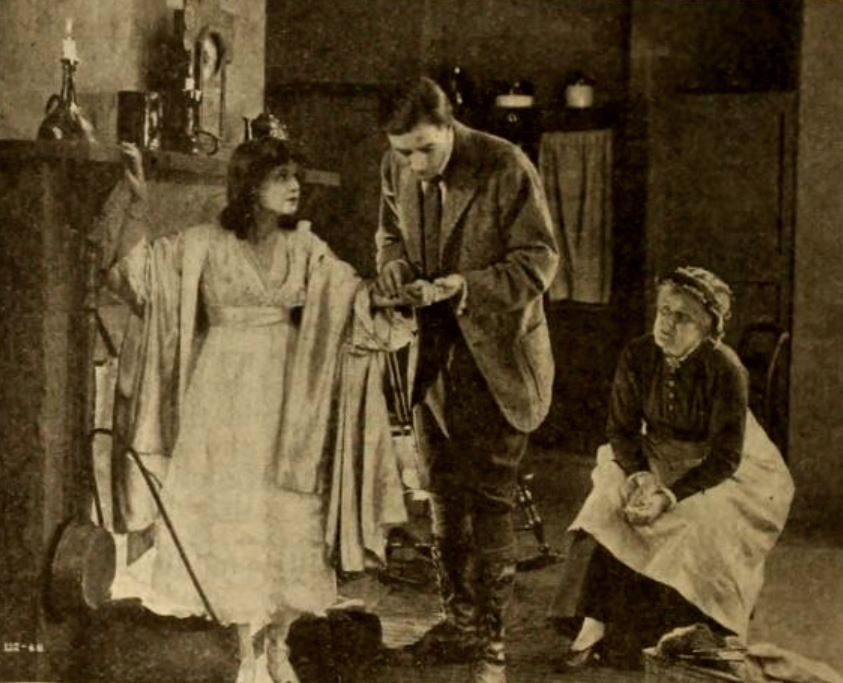
One could draw parallels to other silent films where external forces or karmic justice play a significant role. For instance, in The Disciple, moral choices often lead to inexorable consequences, albeit through more human-driven mechanisms. Similarly, the dramatic interventions of fate, though perhaps less overtly supernatural, can be observed in films like Vampyrdanserinden, where destiny and tragic circumstances often intertwine. The mysterious agency in "Little Lady Eileen" serves to underscore the idea that some wrongs are so egregious, so fundamentally disruptive to the natural order, that they demand an equally profound, if inexplicable, rebalancing. George's demise is swift and absolute, effectively clearing the path for Eileen to finally unite with Stanley, her true love, fulfilling the initial prophecy in its purest, untainted form. This resolution, while perhaps convenient, provides a satisfying sense of closure and justice, affirming the film's underlying moral framework.
The direction by Hugh Ford is a masterclass in silent film artistry, utilizing visual storytelling to its fullest potential. In an era devoid of spoken dialogue, Ford relies heavily on expressive performances, evocative cinematography, and judiciously placed intertitles to convey the narrative's emotional depth and dramatic shifts. The scenic beauty of the Irish countryside is not merely a backdrop; it is an active participant in the story, reflecting the characters' emotional states – from the pastoral serenity of Eileen's early life to the tumultuous landscapes of her flight. The film's pacing, carefully modulated, allows moments of quiet contemplation to breathe before accelerating into sequences of high drama. The use of close-ups to capture Maggie Fisher's nuanced expressions is particularly effective, drawing the audience into Eileen's inner world. Ford's ability to maintain narrative coherence and emotional resonance without the benefit of sound is a testament to his skill and the inherent power of the visual medium. This meticulous craftsmanship stands in contrast to earlier, more documentary-style productions like The Kineto Coronation Series: Royal Progress Through London, highlighting the rapid evolution of narrative cinema.
The ensemble cast, including John L. Shine, J.K. Murray, Marguerite Clark, Harry Lee, Russell Bassett, and Vernon Steele, contributes to the film's overall coherence, each actor fulfilling their role in propelling the intricate plot forward. While Maggie Fisher's Eileen remains the undeniable emotional anchor, the supporting performances provide the necessary texture and credibility to the unfolding drama. Murray, presumably in his dual role as Stanley and George, would have faced the unique challenge of differentiating two physically identical characters through subtle variations in demeanor and expression, a task crucial to the film's central conflict. This theme of mistaken identity and cunning manipulation, while central to 'Little Lady Eileen', echoes across the silent era's diverse offerings. One might draw parallels to the intricate deceptions found in a film like The Ring and the Man, where appearances likewise prove deceptive, or even the subtle machinations at play in The Innocent Lie, albeit with differing moral implications. These comparisons highlight a prevailing fascination with the fragility of truth and the power of perception in early cinema.
The thematic richness of "Little Lady Eileen" extends beyond its immediate plot. It is a profound meditation on the nature of true love, distinguishing it from superficial attraction or coercive desire. It champions justice, even if that justice arrives through extraordinary, unexplained means. The film subtly explores the idea that some bonds are preordained, destined to overcome any obstacle, however formidable. Eileen's resilience in the face of profound betrayal and her unwavering commitment to her initial, pure connection with Stanley speak to an enduring human spirit. This narrative, crafted by Hugh Ford and Betty T. Fitzgerald, transcends its simple premise to offer a compelling vision of a moral universe where goodness ultimately prevails. In an era when narrative cinema was still finding its voice, "Little Lady Eileen" stands as a testament to the power of a well-told story, demonstrating how universal themes can be conveyed with compelling clarity and emotional depth even without the aid of spoken words. Its enduring charm lies in its ability to transport the viewer to a world where magic and reality intertwine, where the heart's true desires are ultimately honored by the hand of fate.
Ultimately, "Little Lady Eileen" is far more than a historical curiosity; it is a vibrant, emotionally charged drama that speaks to timeless aspects of the human condition. It reminds us of the enduring power of belief, the devastating impact of deceit, and the comforting notion that, sometimes, destiny has a way of correcting the wrongs inflicted by human folly. For aficionados of early cinema, or anyone interested in the foundational narratives that shaped the art form, this film offers a captivating glimpse into a bygone era, where simple yet profound stories held audiences spellbound through the sheer artistry of visual storytelling. Its legacy lies not just in its plot, but in its eloquent articulation of hope and justice, affirming its place as a minor gem in the vast treasury of silent film history.

IMDb —
1930
Community
Log in to comment.