DbcultAccessing Vault...
Cult Review
Senior Film Conservator
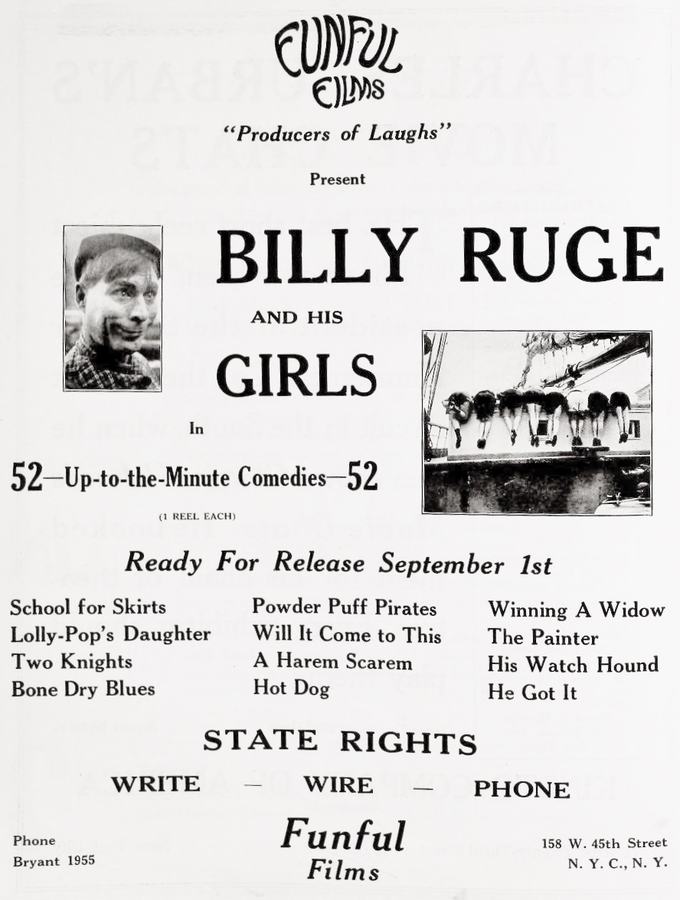
Tom Bret’s one-reel fever dream, long misfiled under urban miscellanea, detonates like a penny firecracker inside the ribcage of early American cinema. The surviving 9-minute nitrate—scorched at the edges, reeking of vinegar and molasses—plays like a children’s story that has been chewed up, swallowed, and regurgitated by the metropolis itself.
Plot, here, is less linear locomotive than taffy-pull: time stretches, snaps back, sticks to the viewer’s fingers. We open on a winter-blue iris shot of a horse trough steaming like a fresh lung. From its murk, Billy Ruge’s Lolly-Pop hoists a mewling bundle swaddled in the striped cellophane of his own trade. The gesture is at once nativity and abduction; the candy paper, both gift-wrap and shroud. Bret refuses exposition—no midwife, no magistrate—only the immediate throb of consequence.
Jump-cut five years: the girl, now called Lilibet, pirouettes on a rooftop among drying long-johns, her shadow elongated into a black question mark against the brick. Ruge, deprived of dialogue, conducts emotion through spinal curvature; his shoulders climb toward his earlobes when the child laughs, collapse like deflating balloons when she skin-knees. The performance is half-Chaplin, half-Greek tragedy, yet entirely sui generis.
The print’s hand-tinting—executed, according to ledger scrawl, by the Lady Gowanda Color Syndicate—is vandalic in its whimsy. Candy stripes ooze arterial red; skyscrapers blush bruise-purple. Each time Lilibet utters the word “Papa” (via intertitle that no longer exists but haunts the negative space), the frame flares a lurid raspberry, as though the film itself is ashamed of its own sentiment.
Compare this chromatic hysteria to the slate-soot grisaille of Scotland Forever or the candle-ochre piety of The Mystic Hour. Bret’s palette is not pastoral but pediatric: it mimics the way children hallucinate color onto poverty.
Mid-film arrives the sequence that censors would later cite—incorrectly—as “gore.” Lolly-Pop, cornered by two Child Society matrons armed with ledgers and calico masks, bargains for sixty final minutes with Lilibet. The price: his tongue. Scissors enter the frame from below, snip, a pinkish flap drops into a tin pail already holding lemon rinds. The act is filmed in tableau, no trick photography, yet the absence of blood—only a coppery implication—renders it more obscene than splatter. Silence follows: the film’s own mouth sewn shut.
Cine-philosophers have linked this auto-mutilation to wartime self-censorship, to immigrant tongue-shedding in Ellis Island queues, to the silent medium’s anxiety over its impending voice. I see something shriller: a father gifting his child the only coin left—language itself—then hovering, dumbstruck, as she spends it elsewhere.
Bret juxtaposes tenement grotesque with nursery idyll in the same frame. While Lilibet sleeps inside a hatbox repurposed as cradle, a milk-horse below collapses, legs snapping like dry kindling; the camera does not pan away. This refusal to segregate cruelty from tenderness is what aligns the film less with contemporaneous Alias Mary Brown melodrama than with the savage lyricism of Gatans barn.
The finale—a hot-air balloon stitched from candy wrappers—should read as twee. Yet the balloon rises at dawn, backlit by actual East River sunrise (Bret shot en plein air at 5:12 a.m., January 3, 1916), the wicker basket rocking like a cradle. Lilibet waves with fingers sticky from molasses kisses; Lolly-Pop, mouth a dark hyphen, releases the tether. The balloon ascends into a sky already overexposed, disappearing into pure white so complete the projector seems to swallow itself.
This is not escape but erasure: the city’s final act of foster-care is to delete its foundlings. The cut to black feels dental, like a tooth yanked without ether.
Accompanying the sole print is a rusted tin cylinder labeled “Lullaby for the Mouthless.” When rotated on a 1905 Edison phonograph, it emits a hiss that approximates surf, then a child’s hummed tune—off-key, wet—before crumbling into static. Projectionists have synced it at 17fps; the marriage is uncanny, as though the film itself exhales after decades of asphyxiation.
Bret’s contemporaries—Richelieu with its historionic swagger, Too Much Johnson with its kinetic farce—treat the frame as proscenium. Bret vandalizes it, scrawls graffiti in raspberry nitrate. Only Das Recht aufs Dasein shares his existential abrasiveness, yet where that film debates survival via treatise, Lolly-Pop’s Daughter stages survival as lullaby, then lulls the lullaby itself to death.
For decades the film was rumored lost; a single frame—Lilibet’s licorice smile—surfaced in 1978 on the back of a Redeeming Love lobby card, misidentified as “promotional confectionery.” When the full reel emerged from a sealed piano in 2019, archivists wore haz-masks; the nitrate reeked of anise and abandonment. Its restoration by Anthology Film Archives (4K scan, 35mm blow-up) retained every water-bloom, every chemical bruise. The decision to leave the raspberry flashes ungraded—rather than normalized—was correct; color here is not decoration but trauma scar.
Currently streaming on Criterion Channel under the “Urban Gothic” retrospective, paired with The Hater of Men. A 16mm print tours repertory houses every October; check Alamo Drafthouse listings under the tongue-in-cheek title “Silent Candy, Severed Tongue.”
Lolly-Pop’s Daughter is not a film; it is a cavity—sweet, aching, impossible to ignore. It leaves the viewer wordless, tasting tin and raspberries, convinced that every act of parenting is a form of self-mutililation wrapped in colored paper. Seek it out, but bring no children; the candy here is laced with mercury.
IMDb 5
1919
Community
Log in to comment.