DbcultAccessing Vault...
Cult Review
Senior Film Conservator
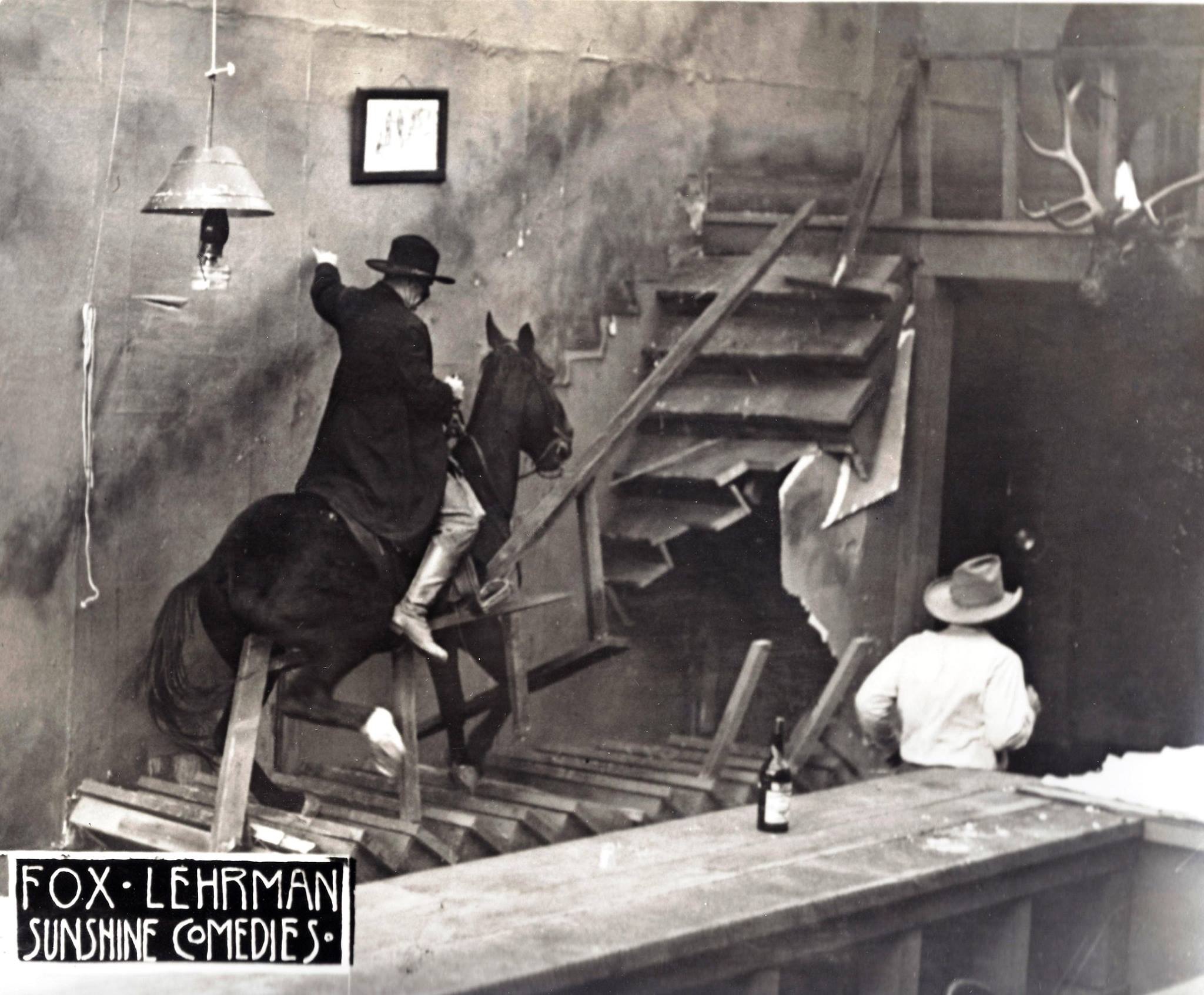
Delving into the annals of early cinema, one occasionally unearths a charming, unassuming relic that, despite its simplicity, speaks volumes about the comedic sensibilities and narrative preoccupations of its era. Such is the case with Oh, What a Knight, a silent film whose very title hints at a whimsical, perhaps even mock-heroic, endeavor. Stripped down to its bare plot, the film centers on Sheriff Jim, a character whose defining traits — an oversized appetite, a pronounced dependence on his mother, and an ardent affection for a young woman named Susan — form the bedrock of its humor and pathos. This seemingly straightforward premise, however, provides a surprisingly fertile ground for exploring the nascent artistry of silent comedy, showcasing how character eccentricities, when skillfully rendered, can transcend the limitations of spoken dialogue to create enduring entertainment.
At the heart of this comedic tableau is Sheriff Jim, portrayed with an endearing blend of bumbling authority and childlike vulnerability by the inimitable Mack Swain. Swain, a veteran of Keystone and a frequent collaborator with Chaplin, possessed a physical presence that was inherently comedic. His substantial frame, often a source of visual gags, becomes in Jim’s case a testament to his prodigious consumption, a direct consequence of his mother’s doting, perhaps even smothering, care. This 'overgrown mother's boy' archetype is not merely a source of cheap laughs; it's a profound commentary on arrested development and the comedic friction that arises when such a character is thrust into a position of public responsibility. Jim’s badge of office, a symbol of law and order, sits almost incongruously upon a man whose primary concerns seem to revolve around his next meal and his mother’s approval. This fundamental incongruity is the film’s comedic engine, driving a series of situations where Jim’s professional duties clash spectacularly with his personal foibles.
The dynamic between Jim and his mother is pivotal. While her presence is implied through his 'mother's boy' status and 'enormous meals,' her influence shapes his entire existence. One can almost picture her, a benevolent but overbearing figure, constantly plying him with food, perhaps unknowingly sabotaging his attempts at adult independence. This relationship, a comedic inversion of the traditional hero’s journey, presents Jim not as a man battling external forces, but as one perpetually entangled in the silken threads of maternal affection. His enormous meals are not just a gag; they are a symbol of this dependency, a comfort blanket that he, despite his adult years and official capacity, is unwilling or unable to shed. This subtle psychological underpinning elevates the film beyond mere slapstick, hinting at a deeper, albeit humorous, exploration of familial bonds and the challenges of self-actualization.
Then there is Susan, the object of Jim’s clumsy affections, brought to life by Ethel Teare. Teare, a prominent actress of the silent era, often played spirited and charming roles. Here, she must navigate Jim’s peculiar courtship with a blend of amusement, exasperation, and perhaps a touch of genuine affection. Her character serves as the catalyst for Jim’s attempts at heroism and self-improvement, however fleeting. The comedic tension arises from the stark contrast between Jim’s earnest, often misguided, efforts to impress her and Susan’s likely desire for a more conventional, or at least less domestically entangled, suitor. How does one woo a woman when one’s primary competitor for affection is one’s own mother, and one’s most notable trait is an insatiable appetite? This romantic predicament is the source of much of the film’s gentle humor, inviting the audience to root for Jim despite his obvious shortcomings, or perhaps, precisely because of them.
The ensemble cast, including Jack Cooper and Glen Cavender, would have played various townsfolk, perhaps Jim's deputies, rivals for Susan's affection, or simply bewildered bystanders. In many silent comedies, these supporting roles are crucial for establishing the comedic environment and providing foils for the protagonist. Cooper and Cavender, both experienced character actors of the period, would have contributed to the film's texture through their reactions, their physical comedy, and their ability to amplify the absurdities of Jim's world. Imagine Cavender as a rival suitor, perhaps a more dashing, albeit less substantial, figure, creating a visual and thematic contrast to Jim's lumbering charm. Or Cooper as a long-suffering deputy, constantly cleaning up Jim's messes, thus highlighting the sheriff's incompetence through their exasperated expressions and actions. Their performances, though uncredited in the plot synopsis, would undoubtedly have been integral to the film's overall comedic impact, serving as a Greek chorus of sorts, reflecting the audience's own reactions to Sheriff Jim’s antics.
The narrative structure of Oh, What a Knight, typical of many early silent comedies, likely relies on a series of escalating comedic situations rather than a complex plot. Jim's attempts to impress Susan, perhaps by performing some heroic act, would invariably be undermined by his gluttony, his mother's interference, or his general lack of grace. This episodic approach allowed for maximum comedic mileage from each gag, a hallmark of the era's filmmaking. The absence of dialogue meant that physical comedy, exaggerated expressions, and the strategic use of intertitles were paramount. Mack Swain's expressive face and considerable physicality would have been key to conveying Jim's internal struggles and external clumsiness, making him a profoundly relatable, if ridiculous, figure. The film, in essence, is a masterclass in visual storytelling, where every gesture, every prop (especially food!), and every character's reaction contributes to the overall comedic effect.
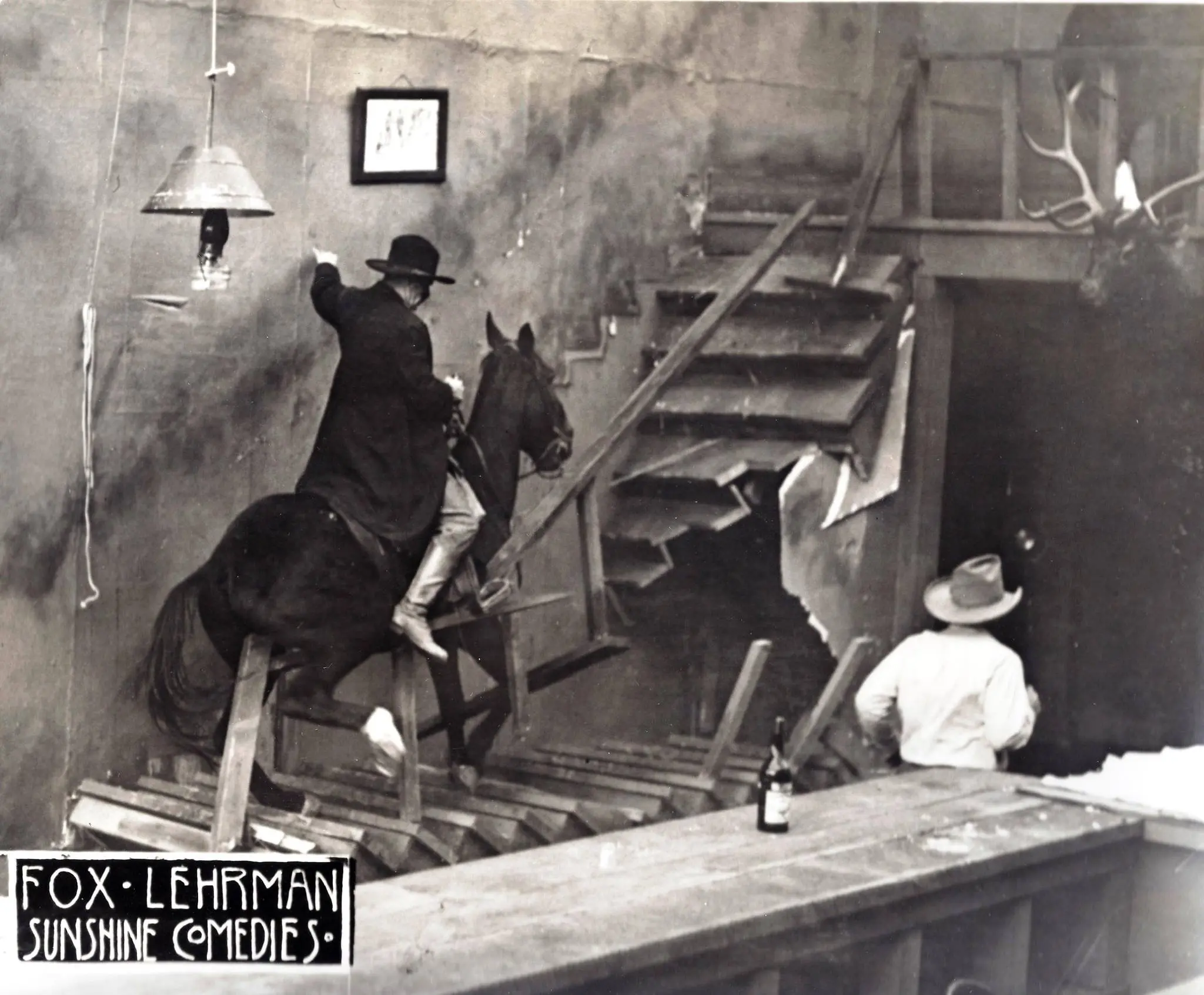
Comparing Oh, What a Knight to other films of its time helps to contextualize its place in cinematic history. While it might not possess the grand narrative ambitions of a The Conquest of Canaan or the intense drama of a St. Elmo, it shares a lineage with the character-driven comedies that were flourishing. Films like Wild and Woolly, while featuring a different kind of comedic fish-out-of-water scenario, similarly relied on the clash of personalities and environments for its humor. The simplicity of Jim’s story, focusing on a single, well-defined character and his immediate world, is a strength. It allows for a deep dive into his eccentricities without the need for intricate subplots. This focus on character over complex plot was a common strategy in early comedies, allowing audiences to connect directly with the performers and their physical humor.
The cinematic techniques employed in Oh, What a Knight would have been representative of early 20th-century filmmaking. One can imagine static wide shots capturing the entirety of a scene, allowing the physical comedy to unfold without excessive cuts. Close-ups would have been reserved for key expressions, particularly those of Mack Swain, emphasizing his comedic reactions. The editing would have been functional, designed to establish spatial relationships and comedic timing, rather than to create a fast-paced, dynamic rhythm. This deliberate pacing, often perceived as slow by modern standards, was essential for the audience to fully absorb the visual gags and the nuances of the actors' performances. The use of intertitles, far from being a mere necessity, would have been an art form in itself, providing witty commentary, advancing the plot, or delivering punchlines with succinct elegance. These textual interventions were vital in shaping the audience's understanding and enhancing the comedic impact.
The enduring appeal of a film like Oh, What a Knight lies in its universal themes, presented through a comedic lens. The struggle for independence, the complexities of romantic pursuit, and the sometimes-suffocating nature of familial love are concepts that resonate across generations. Jim, despite his exaggerated traits, is a fundamentally relatable figure. Who hasn't felt the pull of comfort over responsibility, or fumbled awkwardly in the pursuit of love? His journey, however short or simple, taps into these shared human experiences. It's a testament to the power of silent cinema that such a character, without uttering a single word, can convey so much about the human condition, eliciting both laughter and a touch of empathy. The film serves as a delightful reminder that effective storytelling, regardless of technological advancements, always begins with compelling characters and situations.
Beyond its immediate comedic value, Oh, What a Knight offers a fascinating glimpse into the social mores of its time. The portrayal of a man-child, particularly one in a position of authority, could be interpreted as a gentle critique of societal expectations for masculinity. Jim's inability to fully shed his boyish dependency might have been seen as both humorous and a subtle challenge to the prevailing ideals of self-reliance and stoicism. Similarly, Susan's role, while seemingly passive as the object of affection, could also be viewed through the lens of early feminist stirrings, where women were beginning to assert their preferences in courtship. While these interpretations might be anachronistic, the seeds of such societal observations are often present in seemingly simple comedic narratives, reflecting the subtle shifts in cultural values that were occurring during the early 20th century. Films like What Will People Say?, though likely more dramatic, also explored societal pressures and expectations.
The sheer charm of Oh, What a Knight also stems from its unpretentious nature. It doesn't aspire to grand statements or profound revelations. Instead, it offers pure, unadulterated escapism through laughter. The joy of discovering such a film lies in appreciating the craft of early filmmakers and performers who, with limited resources and nascent techniques, managed to create vibrant, engaging worlds. Mack Swain's ability to embody Jim's character so completely, making his quirks endearing rather than annoying, is a testament to his considerable talent. Ethel Teare's nuanced reactions, conveying a spectrum of emotions without dialogue, further enrich the viewing experience. It’s a delicate balance, achieving genuine humor without resorting to cruelty, and this film walks that tightrope with admirable grace. It makes one ponder the forgotten gems of cinema, those delightful pieces of history that continue to entertain and inform, even a century after their creation.
In conclusion, Oh, What a Knight, while perhaps not as widely known as some of its contemporaries, stands as a testament to the enduring power of character-driven comedy in the silent era. Sheriff Jim, the overgrown mother's boy with an insatiable appetite and a heart full of love for Susan, is a character who transcends the confines of his simple plot. He embodies a delightful blend of human foibles and aspirations, making him both a figure of ridicule and an object of affection. The film, through its clever use of physical comedy, expressive performances, and subtle thematic undertones, offers a captivating glimpse into a bygone cinematic age. It reminds us that sometimes, the greatest stories are found in the most unassuming packages, proving that a knight, even one more preoccupied with his next meal than his next heroic deed, can still capture our hearts and tickle our funny bones. It’s a film that deserves to be rediscovered, not just as a historical curiosity, but as a genuinely charming and insightful piece of comedic artistry.
IMDb —
1918
Community
Log in to comment.