DbcultAccessing Vault...
Cult Review
Senior Film Conservator
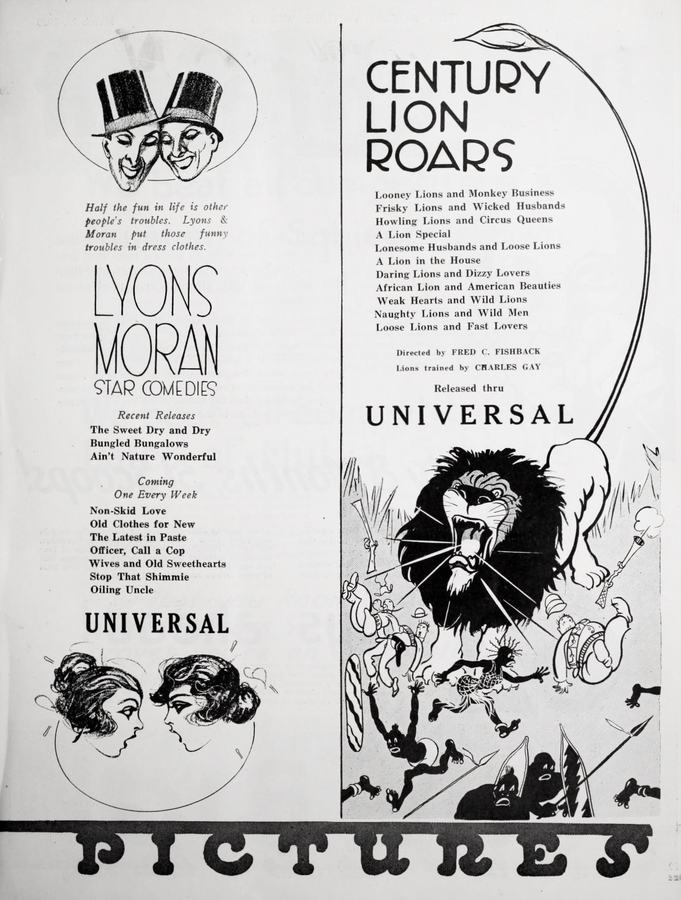
The year 1919 stood as a pivotal threshold in cinematic history, a moment when the primitive antics of the nickelodeon era began to coalesce into the sophisticated visual language of the Roaring Twenties. In this fertile ground, Oiling Uncle germinated as a quintessential example of the 'Lyons-Moran' brand of humor—a brand that, while perhaps less canonized today than the works of Keaton or Chaplin, provided the essential DNA for the situational comedies we consume a century later.
To understand 'Oiling Uncle', one must first acknowledge the structural constraints and opportunities of the two-reel short. Unlike the sprawling narratives of The Fortune Hunter, which sought to bridge the gap between stage tradition and cinematic scope, this short film operates with a surgical focus on pace. The 'oiling' of the uncle is a metaphor for the social lubrication required in a world where class mobility was often a matter of who you could convince of your own competence—or lack thereof.
The film’s direction, shared by its stars, displays a remarkable spatial awareness. The domestic interiors are not merely backdrops; they are obstacle courses. Every doorway is a potential for a collision; every piece of furniture is a prop for a pratfall. This physical engagement with the environment mirrors the thematic struggle of the characters: they are trying to navigate a rigid social structure (the Uncle's house and his rules) while their own chaotic nature constantly threatens to bring the house down.
The chemistry between Eddie Lyons and Lee Moran in this piece is nothing short of mercurial. While many comedy duos of the era relied on the 'fat and skinny' or 'smart and stupid' tropes, Lyons and Moran operated with a shared frantic energy. In 'Oiling Uncle', they function as two halves of a single, desperate brain. Their timing—refined through years of collaboration at Universal—is evident in the way they trade glances and physical reactions. It’s a level of synchronicity that makes the humor feel organic rather than choreographed.
Contrast this with the more somber, industrial focus of contemporary documentaries like Britain's Bulwarks, No. 1: Women Munitioners of England. While the latter captures the grit of the machine age, 'Oiling Uncle' satirizes the 'machinery' of the social elite. The uncle, played with a delightful sturdiness by Fred Gamble, is the machine that requires maintenance. He is the immovable object against which the irresistible forces of Lyons and Moran's ambition must crash.
The inclusion of Charlotte Merriam and Emily Gerdes is not merely decorative. In the landscape of 1919 cinema, the presence of the 'leading lady' often served as the moral compass or the ultimate prize. However, in 'Oiling Uncle', they act as the catalysts for the protagonists' most egregious errors. Merriam brings a certain poise that highlights the absurdity of the men’s behavior, while Gerdes provides a comedic foil that keeps the energy from stagnating. Their roles, while smaller in screen time, are essential in grounding the film's more fantastical slapstick elements in a semblance of social reality.
One might look at The Fibbers to see a similar preoccupation with domestic deception. However, 'Oiling Uncle' leans harder into the physical, using the 'oiling' motif to justify a series of gags that involve literal and figurative slippage. The film suggests that the more we try to smooth over the cracks in our facade, the more likely we are to lose our footing.
Technically, the film utilizes the standard static camera of its time, but it compensates with internal movement. The blocking is intricate. Characters enter and exit the frame with a rhythmic precision that suggests a well-oiled machine—ironic given the title. There is a specific use of 'the look'—the direct address to the camera—that invites the audience into the conspiracy. We are not just observers; we are co-conspirators in the attempt to fleece the uncle.
"The brilliance of 'Oiling Uncle' lies in its ability to transform a cynical premise—the manipulation of an elderly relative for financial gain—into a lighthearted romp that celebrates the ingenuity of the underdog."
When compared to the dramatic weight of something like Hamlet or the high-stakes intrigue of Sylvia of the Secret Service, 'Oiling Uncle' might seem ephemeral. Yet, there is a profound honesty in its commitment to pure entertainment. It doesn't pretend to be a moral treatise; it is a celebration of the 'hustle'—a quintessentially American theme that was just beginning to take root in the national consciousness.
In the broader context of 1919, a year marked by the Treaty of Versailles and the burgeoning Prohibition movement, 'Oiling Uncle' offered a necessary catharsis. The world was changing, becoming more bureaucratic and rigid. The 'Uncle' in the film represents that old-world rigidity—the wealth of the past that is being courted by the frantic, disorganized energy of the future. The film captures the anxiety of a generation trying to find its place in a world where the old rules no longer quite apply, but the old money still does.
We see echoes of this dynamic in Nineteen and Phyllis, where the clash of youthful desire and societal expectation forms the core conflict. In 'Oiling Uncle', however, the conflict is resolved through the sheer audacity of the protagonists. They don't win because they are right; they win because they are persistent. They are the 'grease' that makes the wheels of the plot turn, even if those wheels are spinning toward a cliff.
As a critic, one must evaluate 'Oiling Uncle' not by the standards of modern high-definition cinema, but by the effectiveness of its visual grammar. Does it communicate its humor across the century? Yes. Does it utilize its cast to their full potential? Absolutely. Fred Gamble’s performance is a masterclass in the 'slow burn', providing the perfect counterpoint to Lyons and Moran’s 'high flame'. The writing, credited to the stars themselves, shows a deep understanding of the comedic 'rule of three' and the importance of escalating stakes.
While it may lack the haunting atmosphere of The Forbidden Room or the procedural tension of Mysteries of the Grand Hotel, it excels in its chosen lane. It is a piece of pure, unadulterated joy—a reminder that even in the silent era, the loudest thing in the room was often the laughter of the audience. The film remains a vibrant artifact, a testament to the enduring power of a well-told joke and the timeless appeal of watching someone try to 'oil' their way into a better life.
In the pantheon of short comedies, 'Oiling Uncle' deserves a place of honor. It is a work that understands the fundamental truth of the human condition: we are all, in some way, trying to impress an 'uncle'—be it a boss, a parent, or society itself—and we are all just one slip away from the next great pratfall. It is this universality, wrapped in the charming aesthetics of 1919, that ensures the film’s relevance even as the world it depicted has long since faded into the amber of history.
IMDb 5.8
1932
Community
Log in to comment.