DbcultAccessing Vault...
Cult Review
Senior Film Conservator
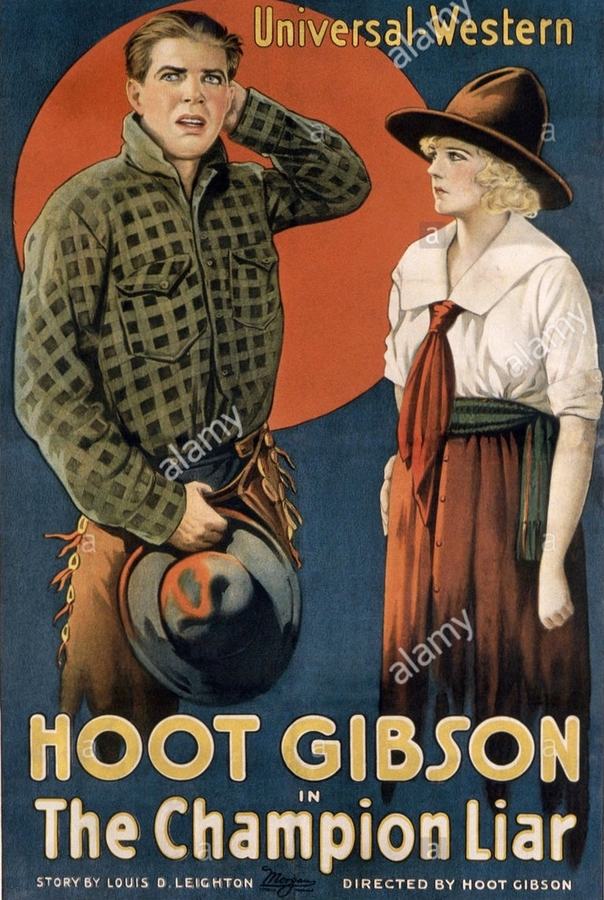
In the annals of early cinema, particularly within the burgeoning genre of the Western, there emerged a distinct sub-current that sought to subvert the stoic heroics and stark moralities often associated with the frontier. 'The Champion Liar,' a charming and intellectually nimble picture from the pens of Robert J. Horner and Louis D. Lighton, stands as a testament to this nuanced approach. It’s a film that dares to ask: what is the true value of a story, and where does entertainment intersect with, or diverge from, unvarnished truth? This cinematic endeavor, starring the effortlessly charismatic Hoot Gibson, doesn’t merely present a plot; it unfurls a compelling philosophical query wrapped in the guise of a delightful romantic comedy, set against the rugged yet picturesque backdrop of the American West.
At its heart, 'The Champion Liar' introduces us to a protagonist whose most striking attribute is not his quick draw or his horsemanship, but his unparalleled ability to spin a yarn. This unnamed Westerner, embodied with a roguish charm by Hoot Gibson, is a veritable artist of the spoken word, a master of fabrication. His 'whoppers' are not malicious; they are conceived for the sheer joy of amusement, designed to elicit gasps of wonder and peals of laughter from his eager audience. He is the life of every gathering, the magnetic center of every fireside circle, his tales painting vivid, if entirely apocryphal, pictures of daring exploits and improbable adventures. This talent, however, is a fascinating paradox: it endears him to the masses yet simultaneously alienates the one person whose affection he truly covets.
The film cleverly positions this core characteristic as both a gift and a curse. Gibson's character is not a villain; he is merely a man who finds truth too pedestrian, too limiting, for his vivid imagination. He represents a certain human inclination to embellish, to elevate the mundane into the mythical, to transform reality into something more palatable, more exciting. Yet, this very inclination proves to be his undoing in the eyes of his beloved, a woman who, with understandable pragmatism, equates truth with trustworthiness and stability. This foundational conflict immediately elevates 'The Champion Liar' beyond a simple comedic romp, inviting viewers to ponder the nuances of honesty and the sometimes-blurry line between creative storytelling and outright deception.
The central romantic entanglement provides the narrative's primary engine, a classic love triangle infused with a compelling thematic twist. Ida Tenbrook, portraying the conflicted object of Gibson’s affections, delivers a performance imbued with a quiet dignity, showcasing the struggle of a woman torn between two vastly different ideals of a partner. Her initial attraction to the Westerner’s vivacity is palpable, a recognition of his unique sparkle. However, the constant stream of tall tales, however harmlessly intended, slowly erodes her trust, leading her to question the very foundation of his character. This disillusionment is not born of spite but of a profound desire for genuine connection, for a love built on an unshakeable bedrock of truth. It's a relatable human struggle, beautifully articulated without a single spoken word, a testament to the power of silent film acting.
Enter the rival: an honest, earnest, yet decidedly less entertaining fellow, whose integrity is beyond reproach but whose conversational repertoire is perhaps limited to facts and figures. Andrew Waldron likely embodies this character, providing a stark foil to Gibson's flamboyant persona. This secondary suitor represents the antithesis of the champion liar – a man whose virtue is his transparency, but whose lack of imaginative spark renders him somewhat… pedestrian. The girl’s attempt to fall in love with him is depicted as a valiant but ultimately futile exercise. It’s a powerful commentary on human nature: while we intellectually value honesty, our hearts often yearn for excitement, for a touch of the extraordinary, even if it comes wrapped in a delightful fabrication. Her journey, fraught with internal debate, highlights the universal quest for a partner who can offer both reliability and exhilaration, a balance that is often elusive.
The success of 'The Champion Liar' rests heavily on the shoulders of its cast, who, despite the limitations of silent film, manage to convey a rich tapestry of emotions and motivations. Hoot Gibson, a true star of the Western genre, brings an infectious energy to his role. His comedic timing is impeccable, his expressions shifting effortlessly from mischievous glee to genuine remorse. He doesn't merely play a character; he embodies a spirit, a certain archetype of the charming rogue that resonates across cinematic history. His ability to evoke sympathy for a character whose primary flaw is a lack of strict adherence to truth is a testament to his considerable talent. He makes the 'liar' not just tolerable, but undeniably lovable.
Ida Tenbrook, as the leading lady, provides the film’s emotional anchor. Her subtle gestures and expressive eyes communicate a depth of feeling that transcends the lack of dialogue. She is not a passive damsel but an active participant in her own destiny, grappling with a profound choice. Her performance ensures that the audience invests in her dilemma, understanding her desire for an honest man while simultaneously rooting for the more exciting, albeit flawed, protagonist. The supporting cast, including Jim Corey, Andrew Waldron, Dorothy Wood, and Jack Walters, contribute to the vibrant tapestry of the Western community, each playing their part in either amplifying the protagonist's reputation or challenging his narrative. Their collective efforts create a believable world where gossip, reputation, and personal integrity hold significant sway.
The narrative precision and thematic depth of 'The Champion Liar' can be largely attributed to its writers, Robert J. Horner and Louis D. Lighton. Their screenplay avoids the simplistic morality plays often found in early Westerns, opting instead for a more sophisticated exploration of human character. They understand that humor often arises from irony and contradiction, and they masterfully deploy these elements to create a story that is both entertaining and thought-provoking. The pacing of the plot, from the initial establishment of the protagonist's character to the crescendo of the romantic conflict and the eventual resolution, is expertly handled, maintaining audience engagement throughout. The dialogue, though unseen, is implied through the actors' expressions and the clarity of the action, suggesting a sharp wit and an astute understanding of human foibles.
Beyond its romantic premise, 'The Champion Liar' delves into profound questions about the nature of truth itself. Is a 'whopper' told for humorous purposes truly a lie in the malicious sense, or is it a form of artistic expression, a way to make life more vibrant? The film suggests that while absolute honesty is a virtue, there is also a profound human need for stories, for escapism, for the thrill of the improbable. The protagonist's journey is one of redemption, not necessarily from being a liar, but from failing to understand the distinction between harmless amusement and genuine deception in matters of the heart. He must learn that while his tales may captivate, true love demands a different kind of authenticity. This exploration of redemption through understanding, rather than mere repentance, gives the film a nuanced moral compass.
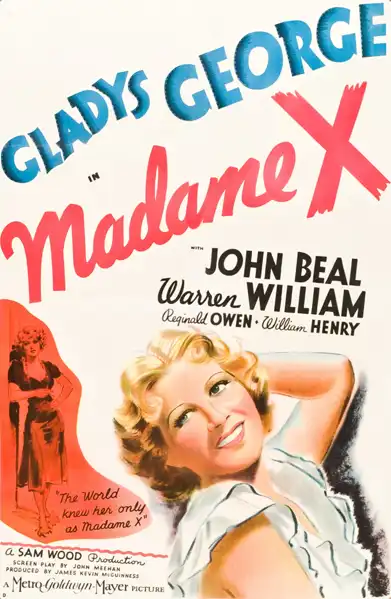
This thematic depth is reminiscent, in a very different tonal register, of films like Pudd'nhead Wilson, which also grapples with identity and public perception, albeit with a far more dramatic and tragic outcome. While 'The Champion Liar' maintains a lighthearted touch, it shares that underlying interest in how a person's reputation, whether earned or fabricated, shapes their destiny and relationships. Similarly, the dilemma of choosing a partner based on seemingly opposing qualities can be found in the more dramatic arcs of films like Ramona or Blazing Love, though 'The Champion Liar' injects a refreshing comedic perspective into the romantic quandary. The film argues that sometimes, the most entertaining person can also be the most genuinely loving, once they learn to channel their gifts appropriately.
Filmed in an era when the Western was still finding its definitive cinematic language, 'The Champion Liar' stands out for its willingness to blend genres. It’s a Western, undoubtedly, with its frontier setting, horses, and a clear sense of community, but it's also unequivocally a romantic comedy. This genre fusion predates many of the more sophisticated genre-bending films of later decades, showcasing an early creative adventurousness. The cinematography, even in its black-and-white simplicity, captures the expansive beauty of the Western landscape, providing a grand canvas for this intimate human drama. The visual storytelling is paramount, relying on expressive performances, clear directorial choices, and well-staged actions to convey the narrative arc and emotional beats.
Comparatively, while films like The Devil's Daughter might explore moral ambiguity in a more dramatic fashion, 'The Champion Liar' finds its strength in its light touch, proving that profound themes can be explored without heavy-handedness. The humor, often situational and character-driven, places it in a lineage with other early comedies like The Merry Jailbirds or Hustling for Health, though its Western setting gives it a unique flavor. It’s a film that understands the fundamental human desire for laughter and connection, and it delivers both with an engaging sincerity that belies its protagonist’s 'whopper'-spinning tendencies.
The resolution of the film, where the protagonist wins back his girl, is not merely a conventional happy ending; it's a statement on the power of growth and understanding. He doesn't necessarily cease being a storyteller, but he learns the crucial lesson of when and where to deploy his imaginative gifts. His redemption is earned through a demonstration of genuine affection and a newfound appreciation for the kind of truth that builds lasting bonds. It’s a satisfying conclusion that affirms the idea that charm and integrity are not always mutually exclusive, and that a vibrant personality can indeed coexist with a truthful heart.
'The Champion Liar' is more than just a relic from a bygone cinematic era; it is a vibrant, engaging piece of storytelling that continues to resonate. It reminds us that sometimes, the most captivating individuals are those who challenge our perceptions, even if they do so with a touch of playful deception. It champions the idea that human connection is complex, built not just on cold facts, but on shared laughter, mutual understanding, and the willingness to accept each other's unique quirks. The film's enduring charm lies in its gentle humor, its perceptive character studies, and its ultimately optimistic view of love and human nature. It’s a delightful journey into a world where a 'whopper' can cause trouble, but a truly honest heart can always find its way home. For anyone seeking a Western that offers more than just dust and daring, but also a healthy dose of wit and warmth, 'The Champion Liar' is a compelling and highly recommended watch.
IMDb 7.4
1935
Community
Log in to comment.