DbcultAccessing Vault...
7/10
Senior Film Conservator
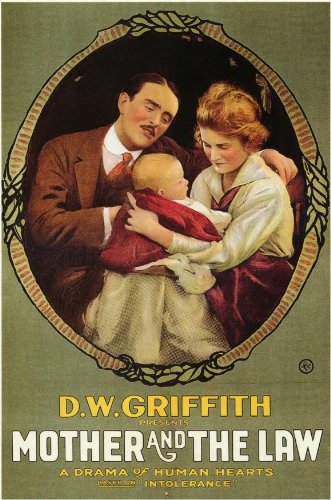
A definitive 7/10 rating for a film that redefined the boundaries of cult cinema. The Mother and the Law remains a cornerstone of transgressive art.
In the annals of cinematic history, few names resonate with the controversial yet undeniably pioneering force of D.W. Griffith. While his magnum opus, 'Intolerance' (1916), often dominates discussions of his work, its constituent parts offer equally fertile ground for exploration. Among these, 'The Mother and the Law' (the-mother-and-the-law), a standalone re-edit of the 'modern' story from the sprawling epic, stands as a potent, searing indictment of social injustice and the unforgiving machinery of the legal system. Detached from its historical and biblical counterparts, this narrative gains an intensified focus, allowing its core themes to pierce through with an almost unbearable clarity. It's a film that, despite its century-old vintage, speaks with an unnerving prescience to contemporary concerns regarding class disparity, judicial bias, and the fragility of innocence in the face of societal prejudice.
The film introduces us to a world teetering on the cusp of profound change, where the idyllic charm of a small town is rapidly being swallowed by the insatiable maw of industrial expansion. Here, we meet 'The Boy' (Robert Harron) and 'The Little Dear One' (Mae Marsh), a pair of young lovers whose tender affection forms a stark contrast to the harsh realities awaiting them. Their initial joy, marked by their marriage and the birth of their child, is tragically short-lived. The local mill, their primary source of livelihood, becomes the battleground for a brutal labor dispute, ignited by the heartless machinations of its owner and exacerbated by a group of well-meaning but ultimately destructive 'uplifters' or 'reformers.' These zealous moralists, portrayed with a chilling blend of naiveté and self-righteousness, embody the very 'intolerance' Griffith sought to critique. They swoop into the lives of the working class, ostensibly to 'improve' them, but in doing so, they often dismantle the very fabric of their existence, imposing their rigid moral codes without understanding the economic desperation that underpins many of the behaviors they condemn.
The strike plunges The Boy into unemployment, a predicament that quickly escalates into abject poverty for his young family. Driven by a primal instinct to provide, he becomes entangled with a local gang, a decision born not of malice but of sheer desperation. This downward spiral is tragically sealed when he is falsely accused of murder, a crime actually committed by the nefarious 'Musketeer of the Slums' (Walter Long), a character embodying pure, unadulterated villainy. The legal process that follows is a Kafkaesque nightmare, a perversion of justice where circumstantial evidence, societal prejudice, and the relentless pursuit of 'moral order' by the 'reformers' conspire against The Boy. He is swiftly convicted and sentenced to death, a chilling testament to the era's punitive legal system and the ease with which the poor and marginalized could be crushed by its weight. The film's brilliance lies in its unflinching portrayal of this systemic failure, making it a precursor to later social dramas that would challenge the fairness of the justice system, such as perhaps even the thematic undercurrents found in The Criminal, though Griffith's vision is far more expansive in its critique.
At the heart of 'The Mother and the Law' are performances that, even in the absence of spoken dialogue, convey a profound emotional depth. Mae Marsh, as The Little Dear One, delivers a portrayal of such raw vulnerability and tenacious spirit that it remains one of the most iconic performances of the silent era. Her expressive face, a canvas for sorrow, hope, and sheer terror, carries the emotional weight of the entire narrative. From the initial blush of youthful love to the agonizing torment of separation from her child and the desperate fight for her husband's life, Marsh embodies a universal maternal anguish. Her frantic, almost primal gestures, particularly in the film's climactic race against the executioner, are masterclasses in physical acting, communicating urgency and despair without a single word. Her performance here is arguably even more impactful than her work in other melodramas of the period, possessing an intensity that few could match. One might draw a faint parallel to the compelling, albeit different, female struggles depicted in films like The Plow Woman, but Marsh’s Little Dear One occupies a unique space of tragic heroism.
Robert Harron, as The Boy, provides a nuanced counterpart to Marsh's emotional fireworks. His performance captures the essence of youthful innocence corrupted by circumstance. His initial optimism, his descent into desperation, and his quiet resignation in the face of injustice are depicted with a poignant realism. Harron avoids overt theatrics, instead opting for a more internalized suffering that makes his character's plight all the more heartbreaking. The chemistry between Marsh and Harron is palpable, grounding the melodramatic excesses of the plot in a believable, human connection.
The supporting cast, under Griffith's meticulous direction, also contributes significantly to the film's power. Walter Long, as the sinister 'Musketeer of the Slums,' is a chilling embodiment of urban decay and predatory violence, a stark contrast to the more sympathetic figures. Ralph Lewis, as the mill owner, represents the callous indifference of industrial power, while Vera Lewis and Kate Bruce, though in smaller roles, lend authenticity to the struggling working-class community. Even minor characters, like the 'uplifters' played by individuals such as Luray Huntley and F.A. Turner, are etched with enough specificity to serve their thematic purpose, highlighting the destructive potential of misguided philanthropy. Miriam Cooper, as the 'Friendless One' who ultimately provides crucial testimony, delivers a memorable performance, her character's transformation from victim to witness adding another layer of depth to the complex moral landscape.
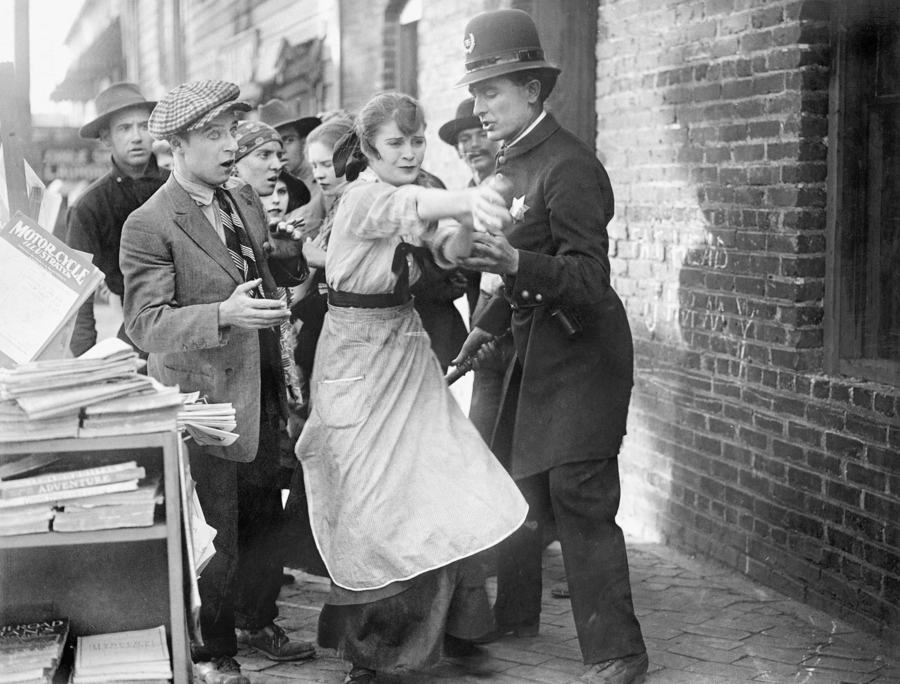
D.W. Griffith's directorial prowess is on full display throughout 'The Mother and the Law.' His groundbreaking use of cross-cutting, particularly in the film's exhilarating climax, is nothing short of revolutionary. The rapid intercutting between The Little Dear One's frantic dash to the governor's mansion, the prison as the execution hour approaches, and the 'reformers'' misguided interventions builds an almost unbearable tension. This technique, which Griffith had refined in earlier works, here reaches a new zenith of sophistication, manipulating the audience's emotions with surgical precision. It's a masterclass in cinematic suspense, a blueprint for countless thrillers and dramas that would follow. The parallel editing creates a sense of imminent doom and desperate hope, pulling the viewer into the narrative's emotional vortex. This is a technique that, while perhaps less overtly experimental than some of the avant-garde movements emerging around the same time, such as those hinted at in Mechta i zhizn, nonetheless cemented its place as a cornerstone of narrative filmmaking.
Beyond the technical wizardry, Griffith's thematic concerns in 'The Mother and the Law' remain profoundly relevant. He critiques not just individual acts of malice, but the systemic flaws that allow injustice to flourish. The film is a powerful commentary on the dangers of moral absolutism, the hypocrisy of those who judge from a position of privilege, and the devastating impact of unchecked industrial power on the lives of ordinary people. It questions the very nature of 'justice' when it is applied unevenly, influenced by class, wealth, and social standing. The stark contrast between the opulent lives of the mill owner and the reformers, and the squalor endured by The Boy and The Little Dear One, serves as a searing visual metaphor for the era's deep-seated social inequalities. This social critique is perhaps even more pronounced than in some contemporary European films, which might have focused more on psychological drama or individual morality, as seen in Sein schwierigster Fall, where the focus is often on personal struggle rather than broad societal systems.
The film's use of symbolism is also noteworthy. The cradle, rocking perpetually even as tragedy unfolds, becomes a powerful emblem of enduring life and hope amidst despair, a poignant counterpoint to the impending execution. The stark imagery of the prison, with its cold, unforgiving walls, stands as a monument to the legal system's impersonality. Griffith's ability to imbue everyday objects and locations with such profound meaning elevates the narrative beyond simple melodrama, transforming it into a profound cinematic statement.
Watching 'The Mother and the Law' today, one cannot help but be struck by its enduring power. While some of its dramatic conventions might appear dated to a modern audience, the core themes of social injustice, the abuse of power, and the desperate fight for innocence remain acutely relevant. It serves as a powerful historical document, offering a window into the social anxieties and moral debates of early 20th-century America. Yet, it transcends mere historical curiosity, speaking to universal human experiences of suffering, resilience, and the relentless pursuit of justice. The film's emotional impact is undeniable, pulling viewers into the characters' plight with an intensity that few films, silent or otherwise, achieve. It reminds us that the struggle for fairness is a timeless one, echoing the sentiments of those who fought against injustice in their own times, much like the characters in Vanity and Vengeance might have, albeit in a different context.
The decision to re-release the 'modern' story from 'Intolerance' as a standalone feature was a shrewd one, allowing this particular narrative thread to breathe and resonate more fully. While 'Intolerance' is an undeniable epic, its ambitious four-part structure can sometimes diffuse the emotional impact of its individual stories. By isolating 'The Mother and the Law,' Griffith allowed audiences to fully immerse themselves in the plight of The Boy and The Little Dear One, creating a more focused and arguably more emotionally devastating experience. This standalone version allows the audience to fully appreciate the nuanced performances and the precision of Griffith’s narrative construction without the constant shifting between historical epochs. It's a testament to the strength of this particular segment that it can stand so powerfully on its own, a truly remarkable feat given its original context.
In conclusion, 'The Mother and the Law' is far more than just a historical curiosity or a footnote to 'Intolerance.' It is a vibrant, emotionally charged cinematic achievement that continues to provoke thought and stir the soul. Its innovative techniques, unforgettable performances, and profound thematic depth secure its place as a masterpiece of the silent era. For anyone interested in the evolution of film, the social history of America, or simply a powerful human drama, this film is an essential viewing experience. It serves as a stark reminder of how easily justice can be perverted and how desperately hope can cling to the most fragile of threads, a theme that has resonated throughout cinema's history, from the early days of melodrama to the complex narratives we see today. It is a cinematic experience that challenges, moves, and ultimately, endures.
IMDb 6.1
1931
Community
Log in to comment.