DbcultAccessing Vault...
7/10
Senior Film Conservator
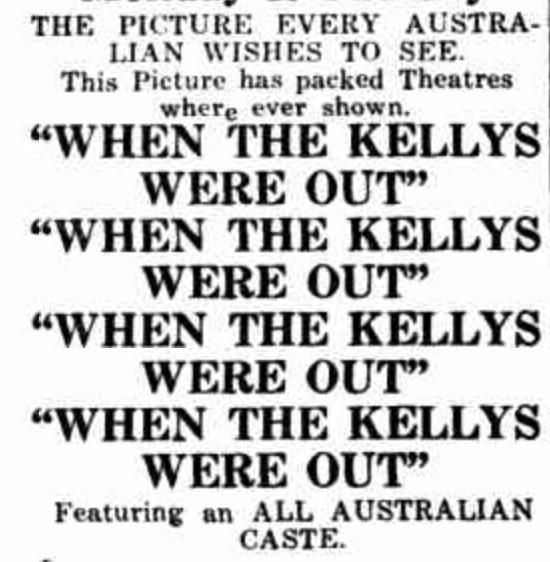
A definitive 7/10 rating for a film that redefined the boundaries of cult cinema. When the Kellys Were Out remains a cornerstone of transgressive art.
To encounter a film like 'When the Kellys Were Out' is to engage in an act of cinematic archaeology. Harry Southwell’s 1923 rendering of the Ned Kelly saga, an ambitious Australian feature-length production, exists today primarily as a spectral presence, its full narrative scope largely lost to the ravages of time and neglect. What remains, however, offers tantalizing glimpses into an early, bold attempt to capture one of Australia's most enduring and divisive figures on the silver screen. This isn't merely a film; it's a historical artifact, a silent echo from a nascent national cinema, and a profound testament to the power of myth-making in a young country grappling with its identity.
The very act of reviewing a film that exists only in fragments presents a unique challenge, akin to assessing a symphony based on a few surviving movements. One must infer, extrapolate, and contextualize, drawing upon a deep understanding of the era's filmmaking techniques, the cultural landscape, and the enduring legend of Ned Kelly himself. Southwell, who also notably starred in the film alongside Don McAlpine, Harry Southwell (himself), Syd Everett, and a host of others including Rita Aslim and Rose Rooney, clearly embarked on this project with a fervent desire to tell a story that resonated deeply within the Australian psyche.
Harry Southwell's directorial ambition for 'When the Kellys Were Out' is palpable even in its truncated form. At a time when Australian cinema was still finding its footing, often overshadowed by imports, Southwell chose a subject of immense national significance. Ned Kelly was not merely a criminal; he was a symbol, a folk hero to some, a villain to others, whose story encapsulated the tensions between colonial authority and the struggling working class. The decision to tackle such a complex and controversial figure speaks volumes about Southwell’s artistic courage and his belief in the power of local storytelling.
The film, even in its incomplete state, showcases an attempt at epic scale. The casting of a substantial ensemble, including William Ellison, Fred Twitchin, and David Edelsten, suggests a commitment to populating Kelly's world with a diverse array of characters, each contributing to the rich tapestry of the narrative. The surviving footage hints at sweeping landscapes, a common feature in early Australian productions like The Jungle Child (1921), which sought to capture the rugged beauty and harsh realities of the Australian bush. This visual grandeur was not merely aesthetic; it was integral to understanding the environment that forged the Kelly Gang.
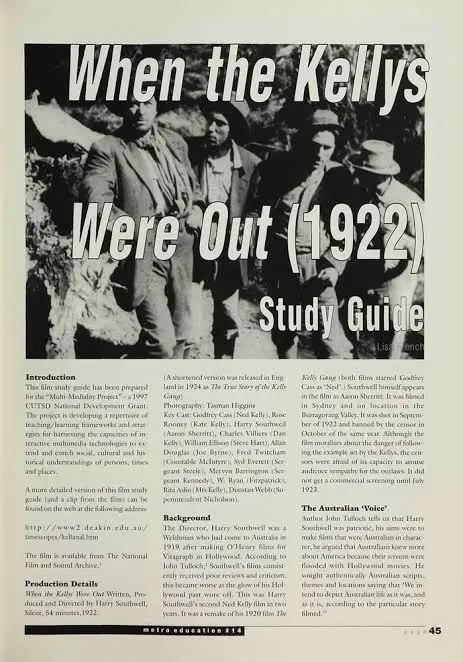
Southwell, as both director and actor, likely infused the production with a personal vision, perhaps aiming for a degree of authenticity or, conversely, leaning into the romanticized myth. Without the full picture, discerning his exact interpretive stance is challenging, yet the very choice of subject and the scale of the undertaking suggest a desire to create a definitive cinematic statement on the Kelly legend, much as The Clarion (1923) might have aimed to capture the zeitgeist of its own American setting.
The 1920s represented a fascinating, if challenging, period for global cinema, and particularly for emerging national film industries. Australian filmmakers, often working with limited resources compared to Hollywood or European studios, displayed remarkable ingenuity. 'When the Kellys Were Out' stands as a testament to this pioneering spirit. The film's use of real locations, and what one can infer were large-scale action sequences, speaks to a dedication to production values that defied the economic constraints of the time.
Silent cinema, by its very nature, demanded a heightened form of visual storytelling. Actors like Don McAlpine, Syd Everett, and Charles Villiers would have relied heavily on exaggerated facial expressions, grand gestures, and physical prowess to convey emotion and drive the narrative forward. The surviving footage would undoubtedly showcase this style, a dramatic departure from modern acting, yet utterly compelling in its own right. One can imagine the intense stares, the desperate struggles, and the stoic defiance that would have characterized the performances of McAlpine as Kelly and the various lawmen and family members surrounding him.
The technical aspects, too, would reflect the era. Cinematography would have prioritized clear, well-composed shots, often with static cameras, though tracking shots and more dynamic framing were beginning to emerge. Lighting, while perhaps less sophisticated than later periods, would have been employed to create mood and emphasize character. The editing, crucial for pacing a silent narrative, would have been designed to build suspense and convey the rapid escalation of events that defined the Kelly story. Comparing it to another film of the period, such as 'Twas Ever Thus (1922), one can appreciate the common visual language of silent storytelling, albeit applied to vastly different thematic canvases.
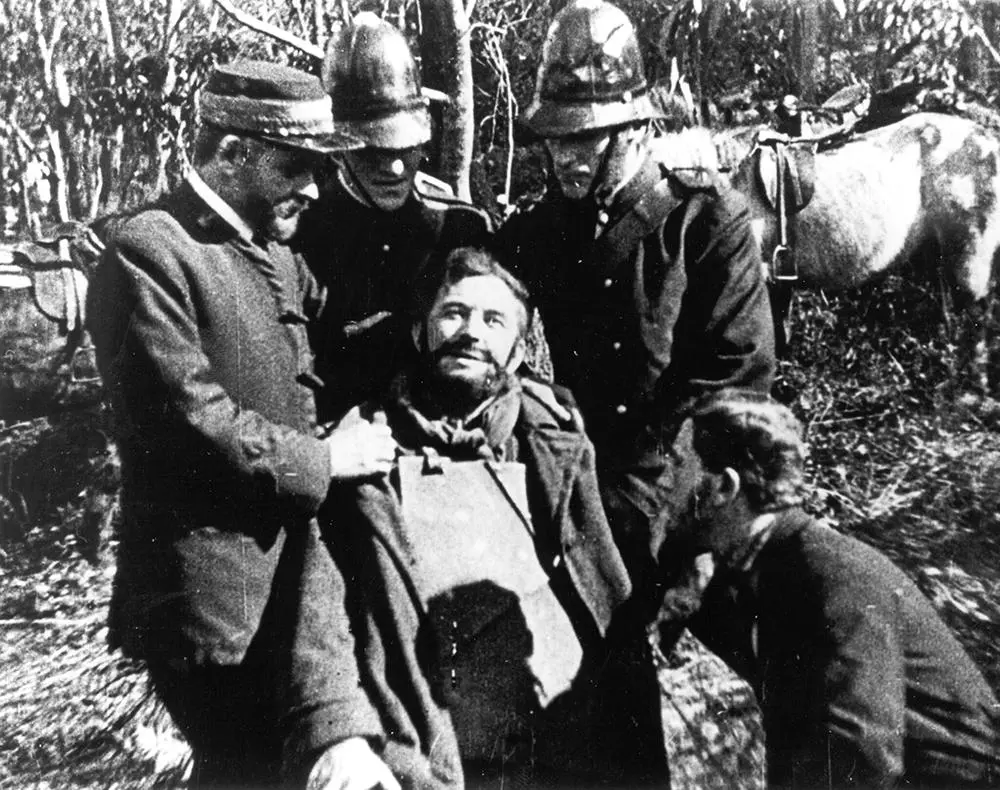
What is it about Ned Kelly that continues to captivate? His story is a crucible of competing narratives: a victim of a corrupt system, a loyal son and brother, a ruthless killer, a symbol of Australian anti-authoritarianism. 'When the Kellys Were Out', even in its incomplete state, likely navigated these complex waters, offering a portrayal that resonated with the contemporary understanding of the legend. The film's title itself suggests a focus on the gang's collective identity and their active defiance, rather than just Kelly as an isolated figure.
The casting choices would have been critical in shaping audience perception. Don McAlpine's portrayal of Ned Kelly would have been a central pillar. Was he presented as a brooding anti-hero, driven to desperate measures, or a charismatic leader who commanded fierce loyalty? The supporting cast, including Dunstan Webb and Mervyn Barrington, playing other members of the gang or figures of authority, would have further fleshed out these interpretations. The presence of female characters like Rita Aslim and Rose Rooney also suggests an exploration of the domestic and emotional toll of the Kelly saga, highlighting the impact on families and communities, an aspect often overlooked in purely action-oriented narratives.
The film's reception in 1923 would have been fascinating. Would it have sparked debate, reigniting old arguments about Kelly's culpability and the justice of his execution? Or would it have served to solidify a particular version of the myth for a new generation? The loss of the complete film leaves these questions tantalizingly unanswered, but the very existence of such a production underscores Kelly's profound and lasting grip on the Australian imagination, a grip perhaps as strong as the allure of the American frontier in films like The Little Shepherd of Kingdom Come (1928), though with a distinctly Australian flavor.
The tragedy of 'When the Kellys Were Out' lies in its partial survival. So many early films, particularly those from smaller industries, suffered this fate, lost to nitrate decomposition, studio clear-outs, or simply a lack of appreciation for their historical value. This loss is not just an academic concern; it's a void in cultural memory, a missing piece of the puzzle that constitutes Australia's cinematic heritage. Each surviving frame becomes infinitely precious, a window into a past that would otherwise be entirely opaque.
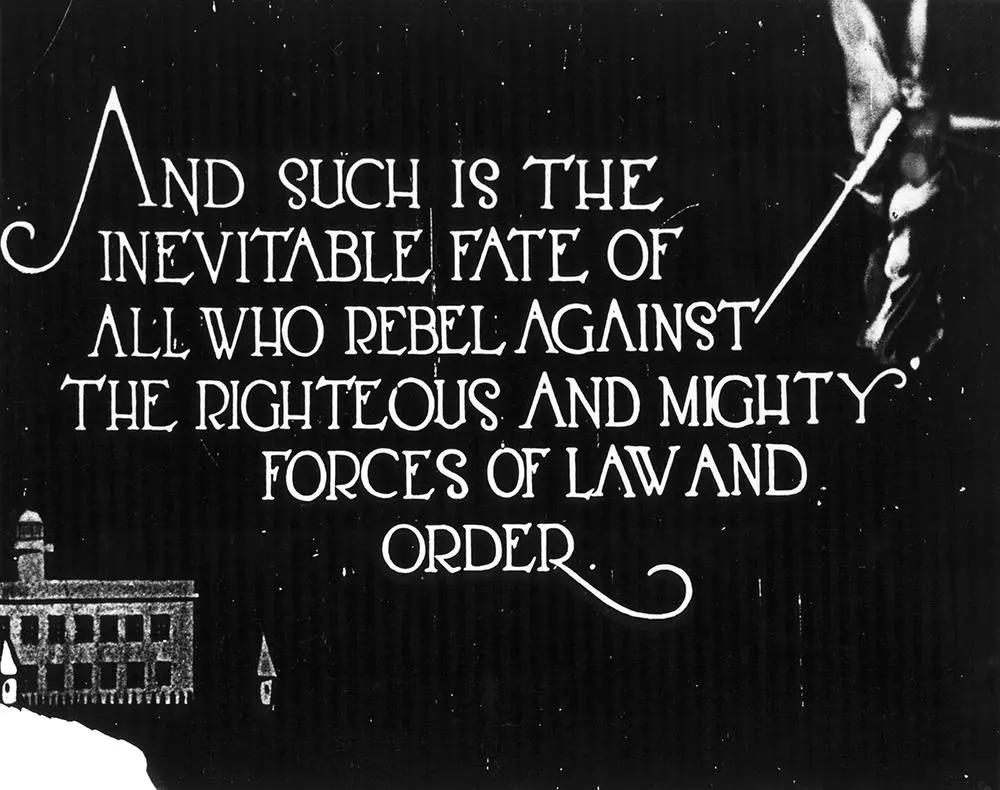
What cinematic techniques did Southwell employ that we can no longer fully appreciate? How did the narrative flow, building tension and character development over its full running time? What were the nuances of performances from actors like Allan Douglas or Beatrice Hamilton, whose work is now largely relegated to fragmented glimpses? These are the questions that haunt the film historian and the passionate cinephile alike. The fragments, however, do allow for an educated guess. One can surmise that the film would have focused on key events: the Stringybark Creek murders, the siege of Glenrowan, the iconic iron armor. The emphasis would have been on dramatic reconstruction, perhaps with a degree of sensationalism, as was common in the silent era to maintain audience engagement without dialogue.
The preservation of such films, even in parts, is a monumental task, and the existence of any surviving footage for 'When the Kellys Were Out' is a testament to the dedicated archivists who recognize the invaluable nature of these cultural relics. It forces us to confront the fragility of film as a medium and the importance of its diligent safeguarding for future generations. Films like Kitchener's Great Army in the Battle of the Somme (1916), though a documentary, similarly offer irreplaceable insights into a past era, highlighting the critical role of cinematic preservation.
Despite its fragmented state, 'When the Kellys Were Out' holds an undeniable place in Australian cinematic history. It represents one of the earliest narrative feature films dedicated to the Ned Kelly story, predating many subsequent interpretations. Its very existence laid groundwork, setting a precedent for future filmmakers who would attempt to grapple with the complexities of this national legend. It's a foundational text, even if incomplete, for understanding how a nation began to tell its own stories through the burgeoning art form of cinema.
The film's influence might be subtle due to its rarity, but its historical significance is profound. It demonstrates that Australian filmmakers, even a century ago, were not afraid to tackle grand, challenging subjects. This courage is a thread that runs through the history of Australian cinema, from the early bush epics to contemporary works. It speaks to a deep-seated desire to explore national narratives, to question authority, and to celebrate or critique figures who have shaped the country's identity.
For modern audiences, encountering the surviving fragments is a unique experience. It requires an imaginative leap, a willingness to fill in the gaps and appreciate the artistry within the limitations. It's a reminder of the raw, unrefined power of early cinema, where storytelling relied more on visual spectacle and the universality of human drama than on dialogue or sophisticated effects. One cannot help but compare it, in spirit, to other early cinematic experiments that sought to capture the essence of a place or a people, such as the ethnographic efforts seen in films like Tulagi: A White Spot in a Black Land (1926), though Southwell's film is clearly a narrative drama.
The film also serves as a poignant reminder of the ephemeral nature of art, particularly in its early forms. The sheer volume of silent films that have been lost forever is staggering, making every surviving reel a treasure. 'When the Kellys Were Out', even as a phantom, continues to speak to us, whispering tales of a bygone era, of audacious filmmaking, and of a legendary figure whose shadow still stretches across the Australian landscape.
Ultimately, 'When the Kellys Were Out' is more than just a film; it’s a conversation starter, a historical document, and a powerful symbol of the challenges and triumphs of early Australian cinema. It compels us to consider the myriad ways history is interpreted and reinterpreted through art, and how these interpretations shape our understanding of national heroes and villains.
While we may never witness Southwell's complete vision, the surviving fragments offer enough to ignite the imagination and appreciate the monumental effort involved. The performances, the attempts at historical accuracy (or myth-building), the sheer scale of the production for its time – all these elements contribute to a profound sense of what was. It’s a film that demands not just viewing, but contemplation, an active engagement with its missing pieces, and a recognition of its enduring cultural weight.
In an age of endless content, the scarcity of 'When the Kellys Were Out' imbues it with a unique allure. It stands as a testament to the early pioneers of Australian cinema, to their courage, their innovation, and their unwavering belief in the power of storytelling. It’s a ghost of a film, perhaps, but one whose spectral presence continues to enrich our understanding of both Ned Kelly and the cinematic landscape of a century ago. Its legacy, though incomplete, is undeniably significant, a flickering flame in the annals of film history that continues to cast a long, intriguing shadow.
The absence of the complete work only amplifies the power of what remains, turning each surviving frame into a precious artifact. It reminds us that even in fragmentation, art can provoke, inspire, and connect us to the past in profoundly meaningful ways. Southwell's film, though largely lost, remains an essential chapter in the ongoing narrative of Australian identity, told through the captivating lens of the moving image. And for that, it deserves our continued attention and study.
IMDb —
1924
Community
Log in to comment.