DbcultAccessing Vault...
Cult Review
Senior Film Conservator
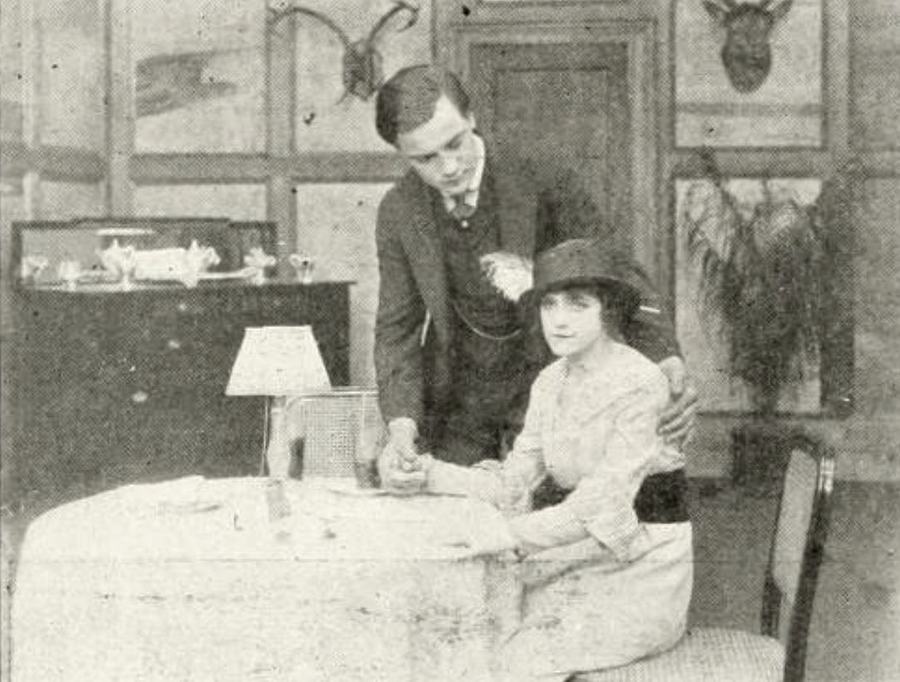
Stepping back into the flickering glow of early 20th-century cinema, one encounters 'On Dangerous Paths,' a film that, despite its seemingly straightforward narrative, encapsulates a timeless human dilemma. This isn't just a motion picture; it's a social commentary, a moral fable, and a testament to the enduring power of experience over inherited wisdom. At its core, the film explores the universal journey of a young soul yearning for self-discovery, even if that path is fraught with peril and paved with hard-won lessons.
The narrative pivots on Eleanor Thurston, a character brought to life with captivating nuance by the luminous Viola Dana. Eleanor is presented as a young woman of considerable charm and beauty, already the object of deep affection from a desirable young man. Yet, beneath this seemingly idyllic surface, a restless spirit stirs. She feels an imperative, an almost primal urge, to forge her own destiny, to earn her own living, and to understand the world not through the filtered lens of others' advice, but through the crucible of personal experience. This yearning for independence, a nascent feminist ideal perhaps, pushes her away from the comfortable familiarity of her rural existence and towards the siren call of the burgeoning metropolis.
This central conflict — the pull between security and self-actualization — is rendered with a subtlety that belies the film's era. Eleanor's decision to leave for the city isn't merely a plot device; it's a profound statement on the societal shifts occurring at the time. Women were, increasingly, seeking roles beyond the domestic sphere, and films like 'On Dangerous Paths' reflected these changing tides, even while often couching them in cautionary tales. Dana's portrayal here is crucial; she imbues Eleanor with a vulnerability and an earnestness that makes her 'foolishness' relatable rather than simply naive. Her eyes, often wide with a mixture of wonder and burgeoning self-awareness, convey an inner life that transcends the limitations of silent storytelling.
Upon arriving in the city, Eleanor secures a position as a nurse in a large hospital, a profession that itself speaks to a growing space for women in public life. The hospital setting, ostensibly a place of healing and care, quickly becomes the backdrop for her gravest challenge. Here, she encounters a young doctor, a character painted with broad strokes as a 'lady killer' – a familiar archetype of urban sophistication and moral ambiguity. His infatuation with Eleanor's 'fresh young beauty' is immediate and intense, and he pays her ardent attention, drawing her into a world far removed from the honest, if uncomplicated, affections of her country lover.
The film masterfully contrasts the doctor's polished, manipulative charm with the genuine, if less flashy, devotion of Pat O'Malley's character. O'Malley, known for his 'finished performance,' brings a quiet strength and unwavering loyalty to the role of the spurned, yet persistent, suitor. His presence, though often off-screen during Eleanor's urban escapade, serves as a moral compass, a reminder of the values she has temporarily forsaken. The doctor, meanwhile, represents the insidious dangers lurking beneath the glittering surface of city life. His intentions, dishonorable from the outset, are lost on the unsophisticated Eleanor, who is 'carried off her feet' by his relentless pursuit. This segment of the narrative serves as the film's most direct 'dangerous path,' illustrating how easily innocence can be exploited when confronted with calculated deception.
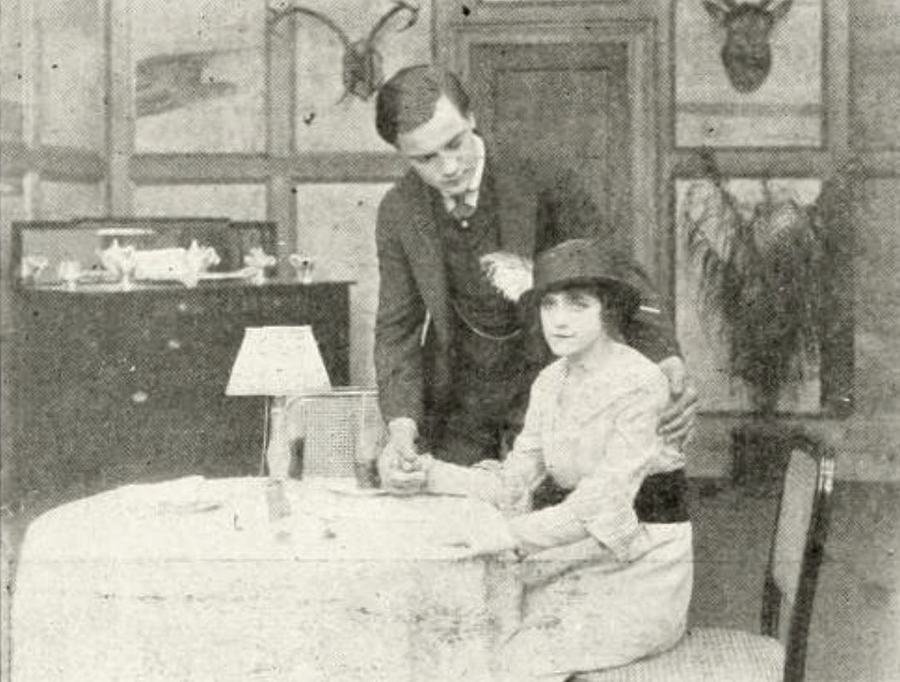
The core thematic thrust of 'On Dangerous Paths' lies in its exploration of the tension between youthful naiveté and the hard-won wisdom of experience. Eleanor's insistence on learning 'through experience rather than take the advice of those who had already gone through the mill' is the film's explicit thesis. This isn't merely a quaint notion; it's a profound observation on human nature. How many times must each generation, each individual, touch the flame to truly understand its heat? The film posits that some lessons, particularly those concerning the complexities of human relationships and the darker corners of the human heart, cannot be imparted through mere words; they must be lived.
This narrative echoes similar cautionary tales of the era, though 'On Dangerous Paths' avoids didacticism by grounding its lesson in character rather than abstract preachment. One might draw parallels to films like Dope, which also explored the perils of urban vices, or The Other Girl, where innocent young women faced moral quandaries. However, 'On Dangerous Paths' distinguishes itself by emphasizing the internal motivations for Eleanor's journey – her desire for independence – rather than merely external pressures or chance encounters. The film's 'saving grace,' as contemporary critics noted, is its profound relatability; it captures a universal 'story that nearly every young girl has to learn.'
The narrative reaches its crescendo as Eleanor finds herself in a 'compromising situation,' a euphemism of the era that suggested a profound threat to her reputation and moral standing. The film carefully builds to this moment, showing Eleanor's gradual descent into a state where her judgment is clouded by infatuation and her innocence is on the verge of being irrevocably lost. The tension is palpable, even in a silent film, conveyed through Viola Dana's increasingly desperate expressions and the predatory confidence of the doctor. This sequence is designed to elicit a strong emotional response, a mixture of anxiety for Eleanor's fate and a recognition of the 'dangerous path' she has chosen.
It is at this critical juncture that her country lover, having followed her to the city or perhaps simply driven by an innate sense of her predicament, intervenes. His timely rescue is not just a convenient plot resolution; it's a powerful affirmation of enduring love and loyalty over fleeting, superficial attraction. It underscores the film's underlying message: while independence is laudable, it must be tempered with wisdom and a discerning eye for true character. The rescue is a moment of catharsis, not only for Eleanor but for the audience, who have witnessed her near-fall from grace. The film, in this sense, offers a narrative arc that moves from hubris to humility, from misguided ambition to a renewed appreciation for genuine affection.
While Viola Dana and Pat O'Malley rightly command much of the screen's attention, the supporting cast plays a crucial role in grounding the narrative. Helen Strickland, William West, Mrs. William West, Margaret Prussing, Robert Conness, Grace Williams, and Johnnie Walker contribute to the film's atmospheric depth and character tapestry. In silent cinema, the nuanced expressions and gestures of even minor characters could significantly impact the audience's understanding and emotional engagement. The 'balance of the cast was good,' a testament to the directorial skill in eliciting credible performances that filled out the world Eleanor inhabston inhabits. From the stern, advising figures who warn Eleanor against her path to the urban denizens who populate her new environment, each actor contributes to the verisimilitude of this moral drama.
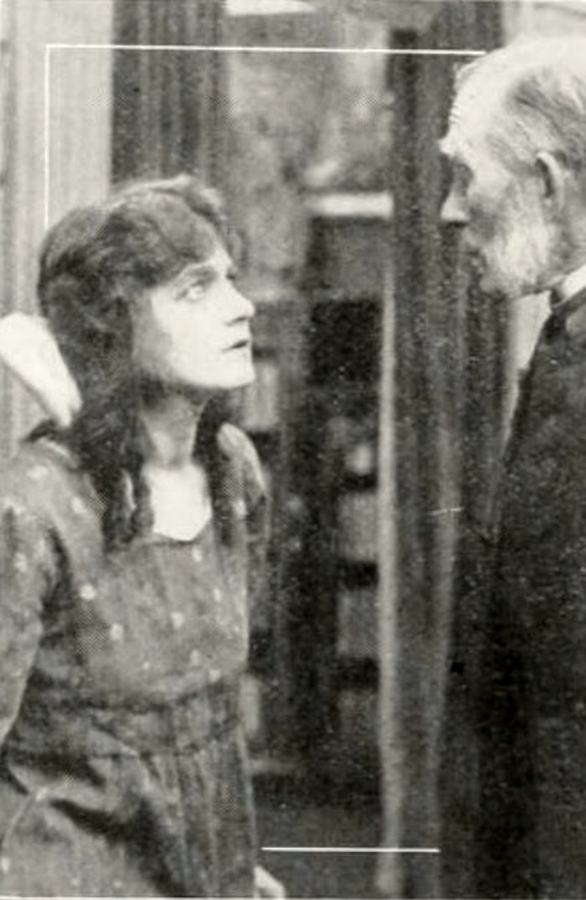
Such ensemble work was vital in an era where intertitles carried much of the dialogue, demanding that actors convey complex emotions and relationships through physicality and facial expressions alone. The effectiveness of the supporting players in 'On Dangerous Paths' ensures that the film's message resonates, creating a believable world in which Eleanor's choices and their consequences feel genuinely impactful. Compare this to the often larger-than-life portrayals in spectacles like Marvelous Maciste, where individual charisma might overshadow ensemble acting; 'On Dangerous Paths' relies on a more grounded, collective effort to tell its intimate story.
Though specific details on the film's direction and cinematography are scarce, one can infer much about its craft from the period. Silent films, particularly dramas like 'On Dangerous Paths,' relied heavily on clear visual storytelling, expressive acting, and effective use of intertitles to convey plot and emotion. The transition from the idyllic countryside to the bustling, potentially dangerous city would have been emphasized through contrasting shots – perhaps wide, serene landscapes for the former, and tighter, more frenetic urban scenes for the latter. The 'compromising situation' would have been depicted with careful staging and lighting to maximize dramatic impact without explicitly showing anything deemed inappropriate for the time. The visual language of silent film, while different from today's, possessed its own powerful lexicon, capable of conveying complex emotional states and moral dilemmas with striking clarity.
The enduring relevance of 'On Dangerous Paths' lies not just in its historical snapshot of early 20th-century social anxieties, but in its universal themes. The struggle for independence, the allure of the unknown, the dangers of naiveté, and the ultimate value of genuine human connection are themes that transcend time and medium. While the specific societal pressures and gender roles depicted may have evolved, the underlying human desires and vulnerabilities remain constant. Every generation, in its own way, confronts the 'dangerous paths' of life, often insisting on learning lessons firsthand. This makes the film a poignant reminder that while advice from 'those who have already gone through the mill' can be invaluable, the journey of self-discovery often demands a few stumbles along the way.
In an era that also produced films exploring various facets of human experience, from the historical drama of Barnaby Rudge to the more sensationalist narratives of films like The Naked Truth, 'On Dangerous Paths' carved its niche as a morally resonant drama. It didn't rely on grand spectacle or overt sensationalism, but rather on the relatable human drama of a young woman's coming-of-age. Its power resides in its simplicity and its profound understanding of human nature, a quality that allows it to speak to audiences even today, long after the flickers of its original projection have faded.
Ultimately, 'On Dangerous Paths' serves as more than just a historical artifact; it's a mirror reflecting persistent human tendencies. Eleanor Thurston's journey is a microcosm of countless individual quests for identity and purpose. Her initial 'foolishness,' her insistence on experiential learning, is not condemned but understood as a fundamental aspect of growth. The film does not preach; it illustrates. It invites viewers to empathize with Eleanor's desire for independence while simultaneously recognizing the pitfalls that await the unwary. The resolution, with her rescue by the country lover, might be seen through a modern lens as somewhat conventional, perhaps even undermining her initial quest for autonomy. However, within the context of its time, it represented a form of redemption, a reaffirmation of values that were considered paramount.
The film's strength lies in its ability to present a moral tale without becoming overly judgmental. It acknowledges the allure of the unknown and the genuine desire for self-reliance that drives Eleanor, even as it highlights the hazards. Viola Dana's performance is the linchpin, her 'winsomely pretty' demeanor allowing the audience to forgive Eleanor's missteps and root for her eventual enlightenment. Pat O'Malley's steadfast presence provides the necessary counterbalance, embodying the stable, honorable alternative to urban deceit. The collective efforts of the cast and crew crafted a narrative that, while rooted in a specific era, speaks to universal truths about growing up, making choices, and the eternal dance between innocence and experience. This makes 'On Dangerous Paths' a valuable piece of cinematic history, resonating with a quiet wisdom that continues to inform and engage.
IMDb 6.3
1930
Community
Log in to comment.