DbcultAccessing Vault...
Cult Review
Senior Film Conservator
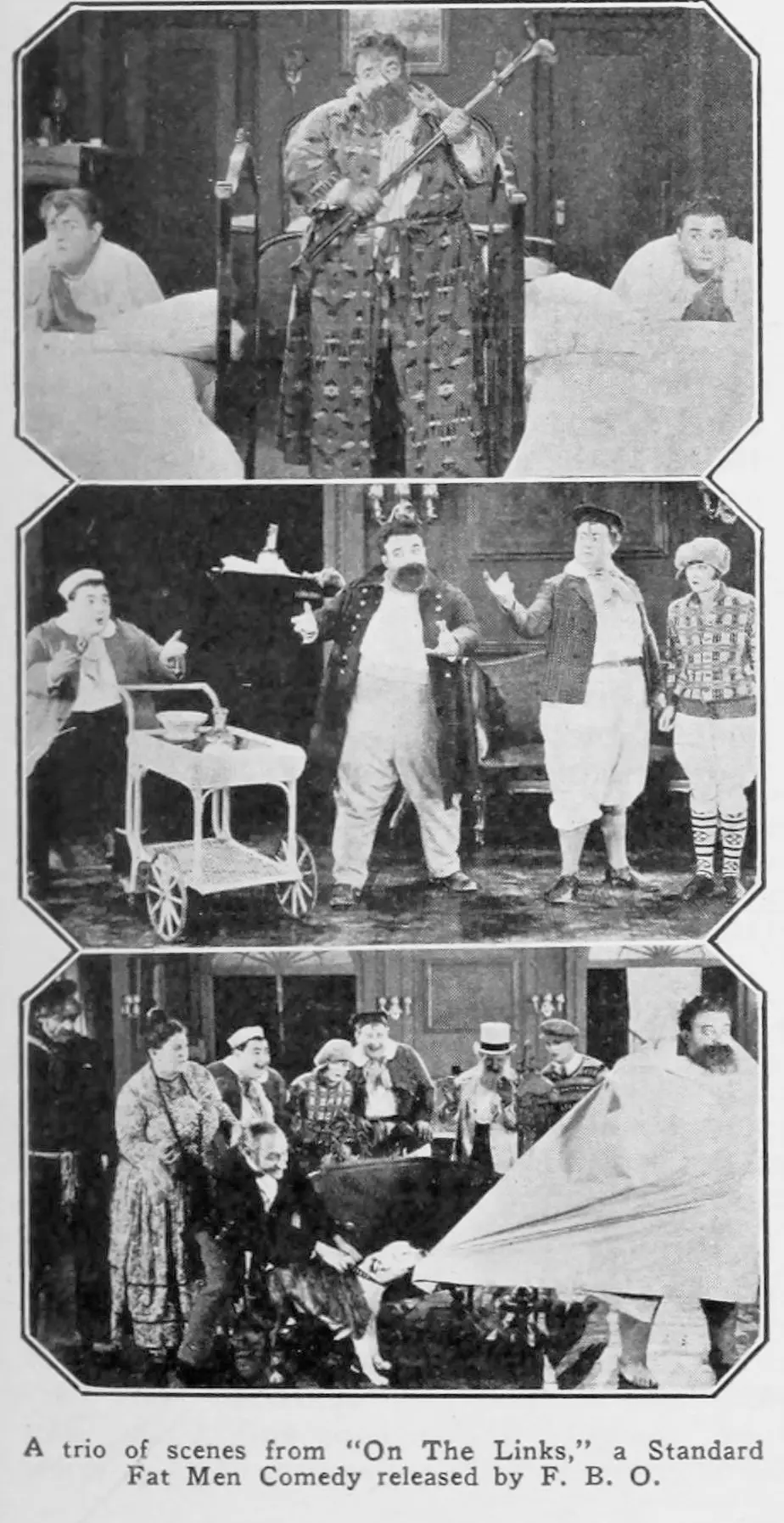
Is On the Links a lost masterpiece of silent comedy or a dusty relic of a bygone era? Short answer: It is a sweaty, energetic, and surprisingly cynical piece of slapstick that remains worth watching for anyone who values the physical commitment of 1920s performers. This film is for students of comedy history and fans of broad, heavy-set humor; it is absolutely not for those who find the repetitive tropes of silent shorts tedious or those looking for a sophisticated take on the sport of golf.
In the landscape of 1924, comedy was transitioning. We were moving away from the pure chaos of the early Keystone years toward the more structured narratives of Keaton and Lloyd. On the Links sits somewhere in the middle, leveraging the massive physical presence of Frank Alexander, Hilliard Karr, and 'Kewpie' Ross. It doesn't aim for the poetic heights of Day Dreams, but it possesses a raw, unpretentious energy that is hard to ignore.
Before we dive into the weeds of the fairway, let's establish the baseline for this viewing experience. This film works because it understands the inherent absurdity of middle-aged obsession and uses the physical scale of its leads to amplify every gag. This film fails because the narrative logic is paper-thin, even by the standards of a two-reel short, leading to a middle act that feels like a treadmill of repetitive falls. You should watch it if you want to see the early writing of Tay Garnett, who would later become a major directorial force, or if you have a penchant for the 'Ton of Fun' brand of heavyweight slapstick.
If you are looking for a quick, 20-minute burst of historical hilarity, the answer is a resounding yes. It offers a fascinating glimpse into the 1920s obsession with the 'new' leisure class. Unlike the more polished What's His Name, On the Links relies on the sheer velocity of its performers. It is a film that breathes through its movement. The sight of Frank Alexander attempting to emulate the grace of a professional golfer while possessing the physical build of a wrecking ball is a timeless visual gag. It works. But it is flawed.
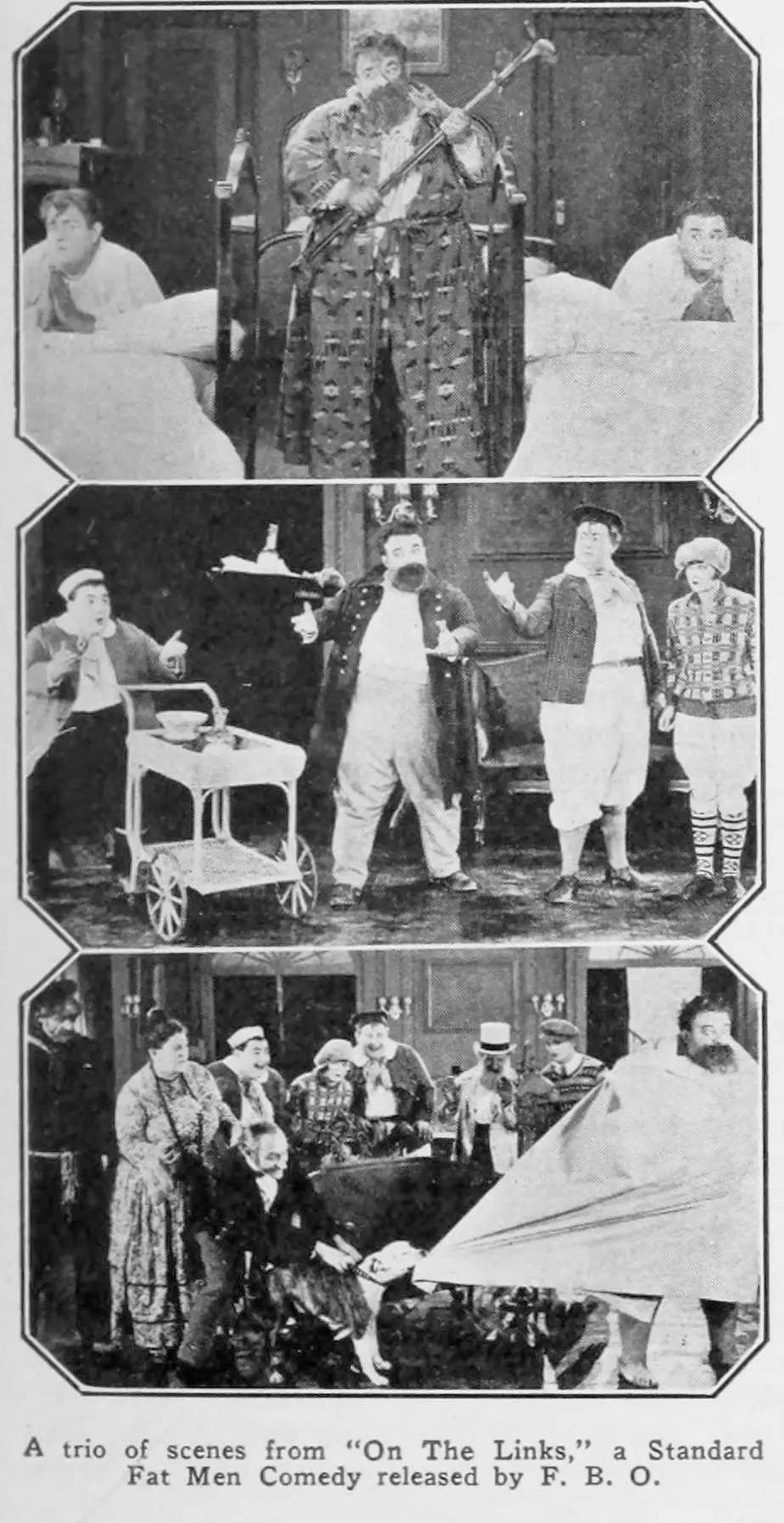
The most interesting aspect of On the Links isn't the golf itself, but the motivation behind Frank's sudden interest. The film presents golf not as a game of skill, but as a honey trap. Frank's initial mockery is loud and abrasive. He represents the common man who sees the elite's hobbies as fluff. However, the moment he sees the 'pretty partners' associated with the sport, his principles vanish. This is a cynical, human observation. It suggests that our interests are often dictated by our desires rather than our talents.
The transition scene, where Frank watches a series of golfers pass by with beautiful women on their arms, is edited with a rhythmic precision that highlights his growing envy. His eyes bulge, his jaw drops, and you can practically see the gears grinding in his head. It’s not about the hole-in-one; it’s about the trophy wife. This gives the film a slight edge that separates it from more innocent shorts like My Hero!. It’s a bit meaner, a bit more grounded in the base instincts of man.
Frank Alexander, Hilliard Karr, and 'Kewpie' Ross were marketed as the 'Ton of Fun,' and the film leans heavily into their collective weight. In modern cinema, we might find this one-note, but in 1924, the physics of comedy were different. There is a specific kind of comedy that comes from large men moving with unexpected agility, or, conversely, falling with monumental impact. When Frank takes his first swing, the entire frame seems to vibrate with the force of his miss.
The sons' attempts to 'cure' him provide the bulk of the second-half action. These interventions are essentially a series of Rube Goldberg-style traps and physical confrontations. There is a moment involving a fake golf course set up in the backyard that perfectly encapsulates the film's chaotic energy. The props are flimsy, the grass is clearly a rug, and yet the actors commit as if they are performing at the Globe. This level of sincerity in the face of absurdity is what makes silent comedy endure.
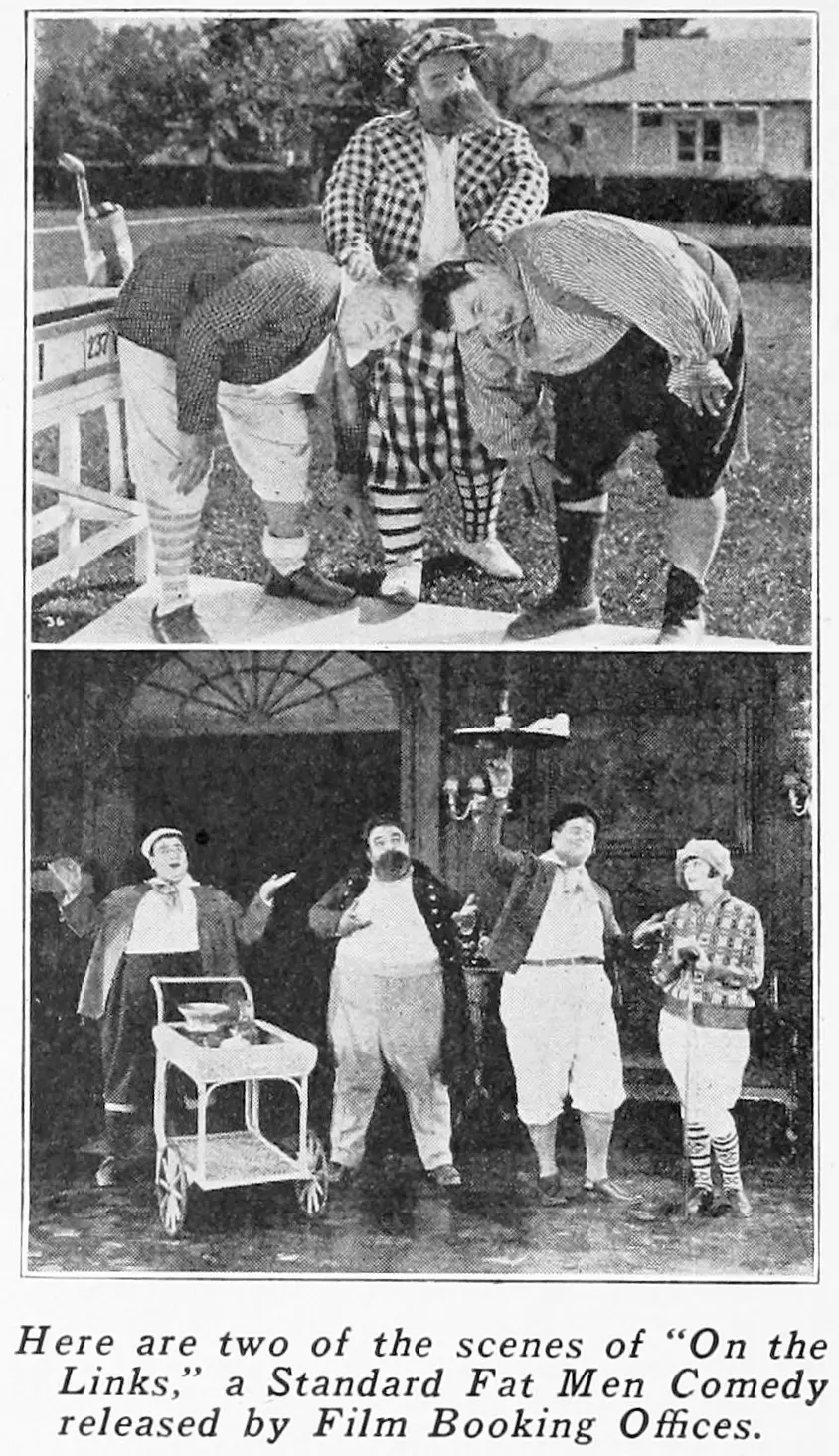
Seeing Tay Garnett’s name on the writing credits is a treat for cinephiles. Garnett would go on to direct noir classics like The Postman Always Rings Twice, and you can see the seeds of his sharp storytelling here. While the plot is simple, the gags are structured with a clear escalation. He doesn't just have Frank play golf; he has Frank become a golf zealot. The escalation from mockery to mania is a classic Garnett move—taking a character's primary trait and stretching it until it snaps.
The pacing, however, is where the film struggles. Silent shorts often suffer from 'gag-bloat,' where a single joke is extended three minutes past its expiration date. There are sequences on the links where the falling and the club-swinging become white noise. It lacks the surgical precision of a Buster Keaton short, where every movement serves the plot. Here, the movement is often its own reward, which can be exhausting for a modern viewer used to tighter editing.
Visually, On the Links is standard for its time, but it makes good use of location shooting. The bright, overexposed California sun provides a stark background for the dark suits and white golf balls. The camera stays mostly static, acting as a proscenium arch for the performers. However, there are a few moments where the camera tracks Frank’s erratic movements across the green, providing a sense of scale to his failure. It’s not as experimental as Yankee Doodle in Berlin, but it’s functional and clear.
One surprising observation is the use of close-ups to convey Frank's 'golf bug.' The film uses a distorted lens or tight framing to show his bulging eyes, creating a proto-horror aesthetic that emphasizes his loss of control. It’s a small touch, but it adds a layer of psychological depth to what could have been a very flat comedy. It suggests that obsession is a form of madness, a theme that resonates even today.
On the Links is a fascinating artifact. It isn't a high-water mark for the silent era, but it is a sturdy, professional piece of entertainment that understood its audience perfectly. It captures a specific moment in American culture where the 'common man' was grappling with the strange new rituals of the wealthy. Frank Alexander’s performance is a masterclass in 'big' acting, and while the film eventually runs out of steam, its initial premise is strong enough to carry it to the finish line. It’s a loud, crashing, and occasionally brilliant short that deserves its place in the annals of slapstick history. Watch it for the history, stay for the sweat, and leave with a newfound appreciation for the simplicity of a well-timed fall.
IMDb —
1926
Community
Log in to comment.