DbcultAccessing Vault...
Cult Review
Senior Film Conservator
Step right up, ladies and gentlemen, and prepare to delve into the melancholic grandeur of early 20th-century Danish cinema, where the grand spectacle of the circus often masked the profound human dramas unfolding beneath the canvas. Today, we cast our critical gaze upon Manegens Børn (1913), a silent film that, despite its age, still pulsates with an raw emotional intensity that many contemporary productions struggle to achieve. This isn't just a film; it’s a time capsule, a poignant artifact from an era when storytelling relied solely on the power of visual narrative, exaggerated gestures, and the audience's own empathetic projection. And what a narrative it is – a searing exploration of love, betrayal, and the devastating ripple effects of a heart scorned.
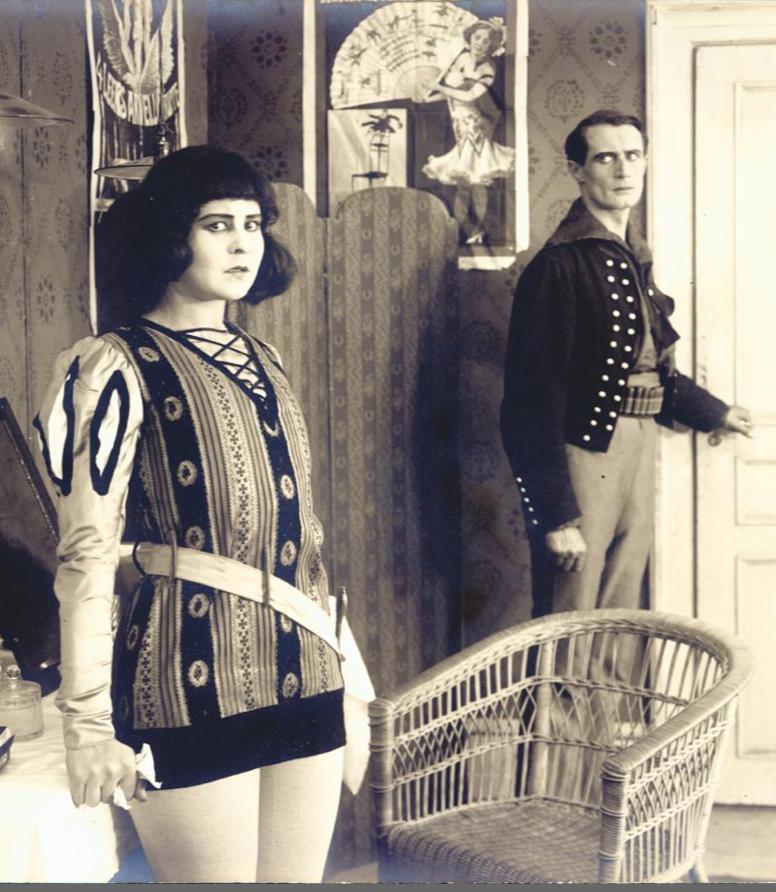
At the heart of Manegens Børn lies the tumultuous marriage of Archer Marco, portrayed with brooding intensity by Volmer Hjorth-Clausen, and his wife Marcelle, brought to life by the expressive Baptista Schreiber. Their relationship, initially presented as a partnership built on trust and a shared livelihood under the big top, is revealed to be a fragile edifice, crumbling from within. The film masterfully employs the silent medium to convey the unspoken fissures in their bond. We witness the subtle glances, the hesitant touches, the almost imperceptible distances that grow between them, long before any explicit dramatic catalyst is introduced. It's a testament to the actors' craft and the director's vision (even if uncredited, the visual storytelling speaks volumes) that this marital discord feels so palpable, so agonizingly real, even without a single spoken word.
The catalyst, when it arrives, is a classic trope, yet handled with a stark, brutal efficiency that elevates it beyond mere cliché. Marco discovers a love letter, a tangible piece of evidence of Marcelle's infidelity, penned by Lieutenant René. This discovery isn't merely a plot point; it's an emotional detonation. Hjorth-Clausen's portrayal of Marco’s immediate descent into gloom is exceptionally powerful. His previous stoicism shatters, replaced by a profound, almost existential despair. The audience feels the weight of the betrayal settle upon him, transforming him from a figure of professional precision into a man consumed by a silent, corrosive agony. This internal struggle is the film’s true focus, painting a vivid picture of a soul in torment. One might draw thematic parallels to the psychological depths explored in films like The Student of Prague, where inner demons and existential dread manifest with equally devastating consequences, albeit through a more fantastical lens. Here, the horror is purely human, rooted in the rawest of emotions.
The circus act itself, Marco's renowned display of marksmanship, serves as a potent, multi-layered metaphor throughout the film. It represents trust, precision, and the perilous dance of life and death. Marcelle, placing an apple on her head, implicitly trusts Marco with her life, a trust that has been irrevocably shattered by her actions. The act, usually a thrilling display of skill and unwavering confidence, becomes imbued with a terrifying new significance after the discovery of the letter. The tension is almost unbearable, a masterclass in building suspense through purely visual means. We, the viewers, are acutely aware of Marco's internal state, his mind clouded by jealousy and rage, and we brace ourselves for the inevitable, tragic outcome.
When Marco, as is their custom, prepares to shoot the apple from Marcelle's head, the atmosphere is thick with foreboding. The usual precision of his movements is replaced by a tremor, a hesitant uncertainty that speaks volumes. It's not a question of physical dexterity, but of psychological fortitude. His aim falters, not because of a lapse in skill, but because his very soul is in disarray. The arrow, once a symbol of his unwavering commitment and skill, becomes an instrument of tragic fate. It misses the apple, finding its mark instead in Marcelle, who falls dead. This moment is utterly devastating, a stark, brutal punctuation mark on a narrative of love twisted into something unrecognizable. The finality of the act resonates with the tragic grandeur of Greek drama, where human flaws inevitably lead to calamitous ends. The sheer audacity of such a climax in 1913 cinema is remarkable, pushing boundaries of what was considered acceptable on screen, challenging audiences to confront the darkest aspects of human nature.
The cast of Manegens Børn, under the guidance of writer Carl Muusmann, delivers performances that transcend the limitations of the silent era. Volmer Hjorth-Clausen as Marco is a revelation. His face, often a canvas of controlled intensity, transforms into a mask of anguish and despair, conveying the character's internal inferno with remarkable clarity. Every gesture, every subtle shift in his posture, communicates the erosion of his spirit. He embodies the archetypal wronged man, but with a nuanced vulnerability that prevents him from becoming a mere caricature. His performance is a masterclass in silent film acting, relying on the power of the gaze and the carefully calibrated movement to convey complex emotional states. One might compare his brooding intensity to the dramatic gravitas often seen in Russian silent films of the era, such as Obryv, where emotional depth is paramount.
Baptista Schreiber as Marcelle is equally compelling. While her character's motivations for the affair remain somewhat opaque—a common characteristic of early cinema's focus on plot over deep psychological exploration of secondary characters—Schreiber imbues Marcelle with a certain tragic grace. Her initial scenes hint at a woman perhaps stifled or longing for something more, even if her actions lead to devastating consequences. Her final moments, under the shadow of the apple, are imbued with a silent fear that is profoundly affecting. The supporting cast, including Lily Frederiksen, Ellen Kornbeck, Alf Blütecher, and Otto Detlefsen, contribute to the atmospheric world of the circus, creating a vibrant backdrop against which the central tragedy unfolds. While their roles might be smaller, their presence adds to the authenticity and depth of the film's setting, making the circus feel like a living, breathing entity, not just a stage for drama.
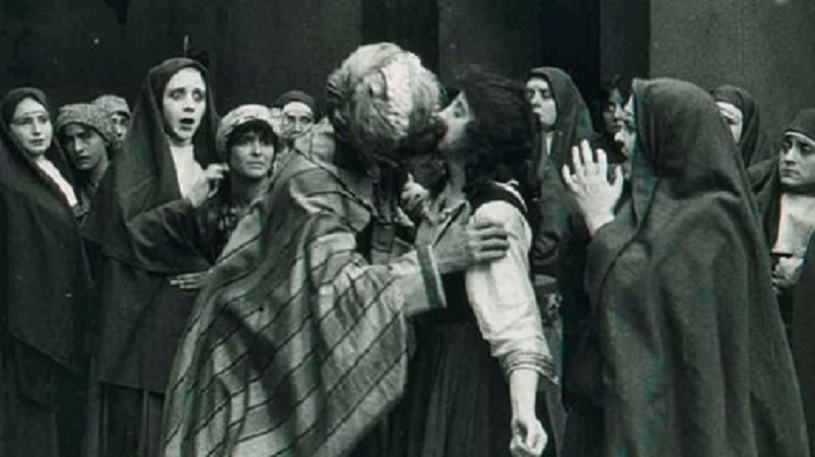
Manegens Børn stands as a significant example of early Danish cinema's prowess in crafting compelling narratives. The industry, particularly Nordisk Film, was a powerhouse in the nascent global film market, known for its dramatic flair and technical innovation. While specific directorial credits for this film are elusive, the overall aesthetic bears the hallmarks of the period's commitment to visual storytelling. The use of natural light, the framing of shots to emphasize emotional states, and the reliance on strong, clear narratives were all characteristic of the era. The film's relatively compact runtime, typical of silent features, demands efficiency in storytelling, and Manegens Børn delivers a potent punch within its confines. It’s a stark contrast to the epic scale of some contemporary films like The Life of Our Saviour; or, The Passion Play, demonstrating the breadth of cinematic ambition even in those formative years.
The thematic concerns of Manegens Børn—jealousy, betrayal, and the unraveling of domestic bliss—were universal and timeless, resonating with audiences then as they do now. The film explores the destructive nature of unchecked emotion, demonstrating how a single act of infidelity can trigger a chain reaction of despair and ultimately, tragedy. It's a cautionary tale, delivered with an almost Shakespearean sense of inexorable fate. The simplicity of its plot allows for a deeper focus on the emotional journey of its protagonist, drawing the audience into Marco's psychological turmoil with an almost visceral impact. In this regard, it shares a certain dramatic intensity with films that explore the consequences of moral failings, such as Scandal, though the circus setting adds a unique layer of theatricality to the domestic tragedy.
While Manegens Børn may not be as widely known as some of its more famous silent film contemporaries, its power and artistry are undeniable. It serves as a vital testament to the early sophistication of Danish filmmaking and the enduring appeal of human drama. For modern audiences, watching Manegens Børn offers a unique opportunity to appreciate the foundational elements of cinematic storytelling. It reminds us that compelling narratives don't require elaborate special effects or complex dialogue; sometimes, the most profound stories are told through the expressive power of the human face, the tension of a carefully choreographed scene, and the universal language of emotion. The film's ability to evoke such strong feelings without a single spoken word is a powerful reminder of cinema's unique strengths as a visual medium.
The legacy of films like Manegens Børn lies not just in their historical significance, but in their capacity to still move and provoke thought. They are echoes from a nascent art form, demonstrating that even in its infancy, cinema was capable of plumbing the depths of the human condition. It’s a film that asks us to consider the fragility of trust, the venom of jealousy, and the irreversible nature of tragic decisions. Much like the dramatic tension in Through Fire to Fortune, where characters face dire consequences for their choices, Manegens Børn underscores the profound impact of human actions. It's a somber, yet utterly captivating, piece of cinematic history that deserves to be rediscovered and appreciated for its timeless artistry and powerful emotional resonance. Its narrative, while simple in outline, is rich in emotional texture, making it a compelling watch for anyone interested in the evolution of film or simply a gripping story of human frailty.
In conclusion, Manegens Børn is far more than a historical curiosity; it is a potent, emotionally charged drama that speaks to universal themes. Its sparse narrative is amplified by the powerful performances of its lead actors, particularly Volmer Hjorth-Clausen, whose portrayal of Marco's anguish is etched into the viewer's memory. The film stands as a testament to the evocative power of silent cinema, proving that a story can be told with profound impact without the need for dialogue. It's a compelling watch for film historians, silent film enthusiasts, and anyone who appreciates a raw, unflinching look at the darker side of human relationships. The tragic climax, while shocking, feels earned, a culmination of the emotional maelstrom that Marco endures. It’s a stark reminder of how quickly love can sour into destructive obsession, and how a moment of psychological collapse can forever alter the course of lives. This film, though a century old, resonates with a timeless quality, its exploration of betrayal and its devastating aftermath remaining as relevant and poignant today as it was in 1913.

IMDb 6.9
1936
Community
Log in to comment.