DbcultAccessing Vault...
6/10
Senior Film Conservator
A definitive 6/10 rating for a film that redefined the boundaries of cult cinema. One Glorious Day remains a cornerstone of transgressive art.
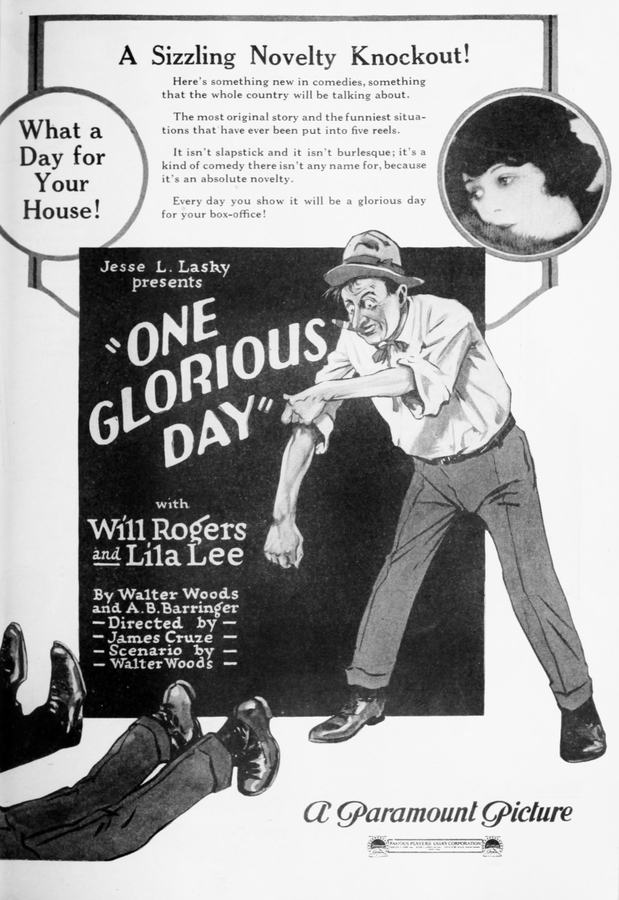
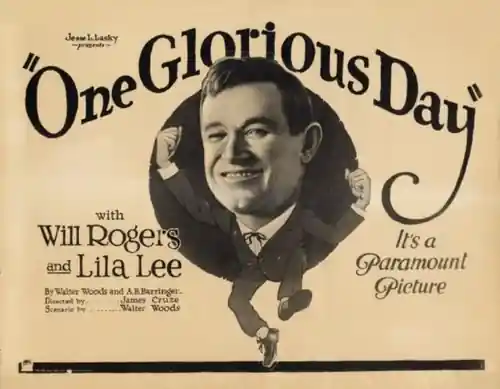
The silent era often grappled with the metaphysical in ways that modern cinema, burdened by the literalism of CGI, frequently fails to replicate. In One Glorious Day (1922), director James Cruze crafts a narrative that is both a whimsical comedy and a sophisticated ontological inquiry. The film introduces us to Ek, a spirit residing in the cosmic waiting room, whose impatience with the slow grind of the reincarnation cycle leads him to a premature, unauthorized foray into the mortal coil.
While many films of the period, such as Every Girl's Dream, utilized fantasy elements to bolster romantic tropes, One Glorious Day uses its supernatural premise to dissect the very nature of personality. Will Rogers, in a performance that predates his persona as the quintessential American sage, portrays Professor Ezra Botts—a timid, overly intellectualized shell of a man. When Ek inhabits Botts, the transformation is nothing short of miraculous. The professor’s physical carriage shifts from a stooped, hesitant shuffle to a robust, almost primal dynamism.
This duality provides a fertile ground for social commentary. The film suggests that the 'civilized' man is often a repressed one, and that a touch of the 'spirit'—even an unruly, unrefined one like Ek—is necessary to reclaim one's agency. Unlike the moralistic weight found in Whispering Devils, Cruze maintains a light, almost mercurial touch, ensuring the philosophical underpinnings never overwhelm the comedic timing.
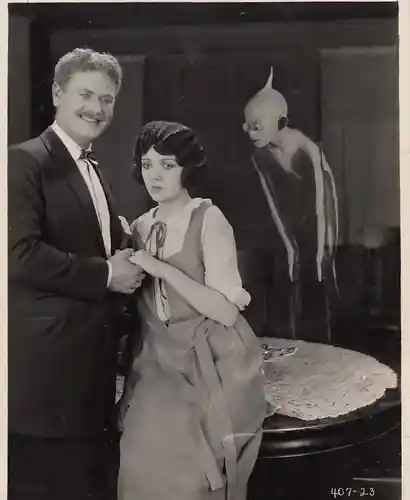
The depiction of the spirit world in 1922 was a daunting technical challenge. Cruze, working with cinematographer Karl Brown, utilizes double exposures and soft-focus lenses to create a realm that feels distinct from the crisp, often harsh reality of the earthly scenes. This visual dichotomy reinforces the narrative tension: the spirit world is a place of soft edges and infinite time, whereas the physical world is one of sharp corners and ticking clocks. We see echoes of this visual experimentation in other contemporary works like Temptation, but here it serves a more direct narrative purpose.
The sequence where Ek navigates the 'cosmos' is particularly striking. It possesses a surrealist quality that feels ahead of its time, eschewing the literalism of religious iconography for something more abstract and existential. It lacks the melodrama of Called Back, opting instead for a sense of wonder that borders on the mischievous.
Lila Lee, as the romantic interest, provides a necessary grounding for the film’s loftier ambitions. Her performance is nuanced, capturing the confusion and eventual attraction to the 'new' Ezra Botts. The chemistry between Lee and Rogers is the emotional fulcrum of the movie. While films like Gretna Green rely on standard romantic entanglements, One Glorious Day complicates the romance by making the heroine fall in love with the spirit inhabiting the man, rather than the man himself. This creates a fascinating triangle where one point is invisible.

Alan Hale and Clarence Burton provide excellent support, rounding out a cast that understands the specific demands of Cruze’s vision. The character dynamics often lean into the absurd, reminiscent of the situational irony found in Why Trust Your Husband, yet there is a sincerity here that keeps the audience invested in Ek’s journey. George Nichols and Emily Rait further enrich the domestic backdrop, providing a sense of normalcy against which the spirit's antics are contrasted.
At its heart, One Glorious Day is a critique of stagnation. Ek’s refusal to wait his turn is presented not as a sin, but as a vital impulse. In a post-war era where the world was rapidly modernizing, this theme of breaking away from tradition and 'waiting' resonated deeply. The film contrasts the 'boring' celestial order with the chaotic, vibrant, and often painful reality of life. Even the title suggests that a single day of lived experience is worth more than an eternity of spectral observation.
This theme is a sharp departure from the more traditional narratives of the time, such as The Senator or The Belgian, which often focused on duty and sacrifice within established social structures. Ek is the ultimate disruptor, a proto-existentialist hero who chooses 'being' over 'becoming.'
When looking at the landscape of 1920s cinema, One Glorious Day stands out for its intellectual curiosity. While Unclaimed Goods dealt with more tangible social issues, and A Pair of Pink Pajamas focused on lighthearted farce, Cruze’s film attempts to bridge the gap between the two. It has the DNA of a European art film—perhaps a distant cousin to the stylistic flair of Die Czardasfürstin—but it is filtered through an unmistakably American sensibility of pragmatism and humor.
The film also avoids the trap of being a mere 'body swap' comedy. It doesn't rely on the slapstick tropes seen in shorts like Felix Lends a Hand. Instead, it maintains a consistent internal logic regarding how a spirit would interact with physical stimuli for the first time—the taste of food, the sensation of wind, the complexity of human emotion.
James Cruze was a director who thrived on versatility. From the epic scale of The Covered Wagon to the intimate eccentricity of One Glorious Day, he displayed a remarkable ability to adapt his style to the needs of the story. Here, he utilizes a rhythmic editing style that mirrors the spirit's erratic energy. The pacing is brisk, mirroring the 'one day' timeframe, creating a sense of urgency that is often missing from more languid silents like Viviette or Oh, Lady, Lady.
The film’s legacy lies in its willingness to experiment with the medium's capacity for storytelling. It asks the viewer to accept a complex metaphysical premise and then rewards that acceptance with a story that is deeply human. It anticipates the high-concept comedies of the 1940s and the magical realism of modern cinema. It is a work that refuses to be categorized, much like the spirit of Ek himself.
To watch One Glorious Day today is to witness a moment in film history where the boundaries of what a 'commercial' film could be were still being negotiated. It is far more sophisticated than the suggestive comedies of the era, such as Up in Betty's Bedroom, offering a meal for the mind as well as the eyes. The collaboration between Barry Barringer and Walter Woods on the screenplay results in a script that is tight, witty, and surprisingly moving.
Ultimately, the film serves as a reminder that the most profound stories are often those that look beyond our immediate reality. Through the character of Ek, we are invited to look at our own lives with fresh eyes, to appreciate the 'glorious' nature of a single day, and to recognize the spirit that animates our own mundane existences. It is a triumph of silent cinema, a testament to Will Rogers' versatility, and a vibrant example of James Cruze’s directorial prowess. In the vast library of early 20th-century film, this is a volume that deserves to be pulled from the shelf and celebrated for its audacity and its heart.
IMDb —
1915
Community
Log in to comment.