DbcultAccessing Vault...
7.2/10
Senior Film Conservator
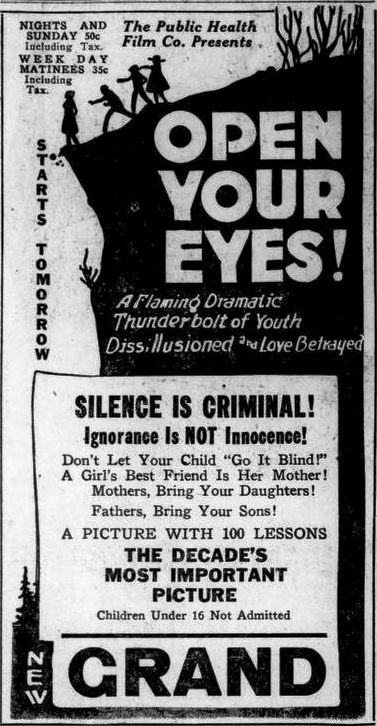
A definitive 7.2/10 rating for a film that redefined the boundaries of cult cinema. Open Your Eyes remains a cornerstone of transgressive art.
Step back in time to an era when cinema was not merely entertainment but a burgeoning tool for social commentary, a potent amplifier for moral rectitude and public enlightenment. In 1919, as the world grappled with the aftermath of a global pandemic and the seismic shifts of modernity, a film emerged from the nascent studios with a daring, almost audacious, mission: to confront the unspoken horrors of venereal disease head-on. That film was Open Your Eyes, a propagandistic melodrama that, for its time, pulled no punches in its stark portrayal of a taboo subject. It was a cinematic clarion call, designed not just to entertain, but to educate, to warn, and ultimately, to instigate a societal awakening.
The film's narrative, crafted by the insightful pens of C.B. Minty and Sam Warner, is less a complex tapestry of character development and more a meticulously constructed cautionary tale. It navigates the treacherous waters of moral indiscretion, tracing the trajectory of an individual—or perhaps, several interconnected individuals—whose lives are irrevocably altered by the insidious grip of venereal disease. This wasn't a story whispered in hushed tones; it was projected onto the silver screen, demanding attention, forcing an uncomfortable dialogue in a society that often preferred polite silence over confronting unpleasant truths. The plot, while broadly described as a melodrama, delves into the devastating personal and communal repercussions, painting a vivid, if perhaps exaggerated, picture of the physical decay, psychological torment, and social ostracism that awaited those afflicted. It's a testament to the era's belief in cinema's didactic power, a conviction that moving images could sway public opinion and alter behavior on a grand scale.
The ensemble cast of Open Your Eyes, featuring talents like Halbert Brown, Mrs. Joupert, Ben Lyon, Viola Allen, Faire Binney, Jack L. Warner, Emily Marceau, Jack Hopkins, Gaston Glass, and Eddie Beryll, were tasked with embodying the various facets of this public health tragedy. While specific character details might be lost to time for many, their collective performances undoubtedly served to underscore the film's urgent message. Halbert Brown, likely cast in a central role, would have portrayed the archetype of the 'fallen' individual, his descent into illness a visual sermon for the audience. One can imagine his portrayal oscillating between initial arrogance, devastating realization, and eventual despair, a performance designed to elicit both fear and pity.
Faire Binney, often celebrated for her youthful charm in other productions, might have been cast as the innocent victim, perhaps a fiancée or a family member, whose life is tragically marred by the protagonist's disease. Her suffering would have served as a potent emotional anchor, highlighting the collateral damage of such illnesses and amplifying the film's plea for societal responsibility. Viola Allen and Mrs. Joupert, likely portraying maternal figures or figures of moral authority, would have lent gravitas to the proceedings, their expressions of grief or judgment reinforcing the societal condemnation associated with the disease. Even the involvement of Jack L. Warner, a figure who would become synonymous with Hollywood's Golden Age, hints at the seriousness with which this project was undertaken, suggesting a commitment to leveraging cinematic power for a cause deemed vital.
The collective performances, while possibly leaning into the heightened theatricality typical of the silent era, were crucial in translating the abstract dangers of venereal disease into relatable human suffering. Ben Lyon, Gaston Glass, Jack Hopkins, Emily Marceau, and Eddie Beryll, each in their respective roles, would have contributed to building a comprehensive tableau of a society grappling with a silent epidemic, from the doctors and nurses attempting to treat the afflicted to the concerned citizens advocating for change. Their portrayals, even if broadly drawn, were fundamental to the film's success as a piece of educational propaganda, ensuring that the message resonated with an audience often more accustomed to escapist fantasies.
The directorial choices, guided by the vision of its creators, would have been instrumental in shaping the film's impact. In an era before sophisticated special effects, the power lay in composition, intertitles, and the raw emotional performances of the actors. One can envision stark contrasts in lighting—shadows clinging to the disgraced, harsh light illuminating the moments of confession or medical examination. Close-ups, used judiciously, would have magnified expressions of pain, fear, or remorse, forcing the audience to confront the human cost of the disease directly. The use of intertitles, beyond merely conveying dialogue, would have been crucial in delivering the film's explicit warnings and statistics, blending narrative with factual information to create a compelling, if somewhat didactic, experience.
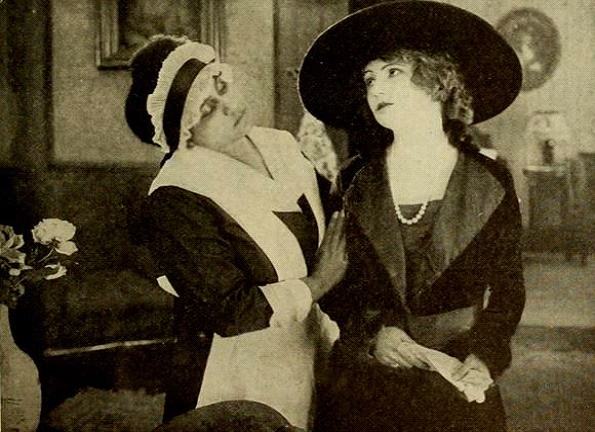
The writing by C.B. Minty and Sam Warner demonstrates a clear understanding of the melodramatic form as a vehicle for social messaging. They didn't shy away from sensationalism, understanding that a degree of shock value was necessary to break through the prevailing silence surrounding venereal disease. The plot would have been structured to build tension, leading to inevitable, often tragic, consequences for those who ignored the warnings. The narrative likely employed parallel storylines or contrasting characters—the morally upright versus the morally lax—to highlight the perceived 'right' path. This approach, while perhaps simplistic by modern standards, was exceptionally effective in an era where public health education was often rudimentary and access to information limited. Their script was a carefully calculated blend of emotional appeal and factual dissemination, designed to leave an indelible mark on the viewer's consciousness.
The cinematography of Open Your Eyes, while constrained by the technological limitations of early cinema, would have nonetheless strived for a form of visual verisimilitude to lend credibility to its stark warnings. Imagine dimly lit back alleys contrasting with the bright, sterile environments of clinics—a visual metaphor for the disease's hidden origins and its eventual, inescapable confrontation with medical reality. The film likely utilized symbolic imagery, perhaps a wilting flower to represent lost innocence or a shattered mirror reflecting a broken life, to underscore its themes without needing explicit dialogue. The pacing would have alternated between moments of quiet dread and dramatic climaxes, ensuring the audience remained engaged, if not entirely comfortable, throughout its runtime.
The artistic choices made in Open Your Eyes were not about abstract aesthetics but about visceral impact. Every frame, every intertitle, every anguished expression was a calculated effort to penetrate the audience's defenses and implant a message of caution. This wasn't subtle art; it was direct, purposeful, and unashamedly didactic. The film's creators understood that to truly 'open eyes,' they needed to present the horrors in a way that was both shocking and undeniably real, even if reality was filtered through the lens of melodrama. The visual language would have been universally understood, transcending literacy barriers and speaking directly to the collective anxieties of the public.
Placing Open Your Eyes within the broader cinematic landscape of its time reveals its unique position. While films like The Craving might have explored the destructive nature of addiction and moral downfall, Open Your Eyes tackled a specific, sexually transmitted health crisis. Both, however, shared a common thread: using melodrama to highlight societal ills and the consequences of personal choices. Similarly, one could draw parallels to films that explored the darker underbelly of urban life or the fragility of human existence, such as Sliakot bulvarnaia, if it delved into similar themes of social decay or individual struggle against overwhelming forces. These films, in their various forms, contributed to a burgeoning genre of social problem films, using the nascent medium to reflect and comment upon the challenges of the modern world.
Unlike purely escapist fare such as The Haunted Pajamas or adventure tales like The Spell of the Yukon, Open Your Eyes dared to confront an uncomfortable reality. It aligned more closely with the spirit of films that sought to inspire change or expose injustice, even if its methods were overtly moralistic. One could even see a thematic echo in films depicting overcoming adversity, like The Heart of a Lion, though Open Your Eyes often emphasized the tragic consequences rather than triumphant redemption. Its distinctiveness lay in its explicit focus on public health, a domain where cinema was just beginning to find its voice as an educational tool.
The legacy of Open Your Eyes extends far beyond its immediate impact. It stands as a pivotal example of early public health cinema, demonstrating the willingness of filmmakers like C.B. Minty and Sam Warner to tackle difficult subjects for the greater good. In an era preceding widespread sex education and open discussions about sexual health, such a film served a crucial, if sometimes sensationalized, educational purpose. It contributed to shifting public discourse, slowly eroding the culture of silence and shame that had long surrounded venereal diseases. The film, for all its melodramatic flourishes, played a part in the broader public health campaigns of the early 20th century, which sought to inform and protect populations from widespread illnesses.
While its artistic merits might be debated by modern critics, its historical significance is undeniable. Open Your Eyes represents a courageous early attempt to harness the evocative power of moving images to address a critical social issue. It reminds us that cinema, from its very inception, has been more than just a diversion; it has been a mirror reflecting society's fears and hopes, a platform for advocacy, and a powerful instrument for change. Its unflinching depiction of the 'dangers and horrors' of venereal disease was a bold step, one that paved the way for future films that dared to venture into uncomfortable territories, ultimately enriching the medium's capacity for profound social engagement. It remains a fascinating artifact, a testament to a time when filmmakers truly believed in the power of their craft to make a difference, to quite literally, 'open eyes.'
IMDb —
1920
Community
Log in to comment.